10 Oct 2026
When Should You Use Temporary Email? A Practical Privacy Guide
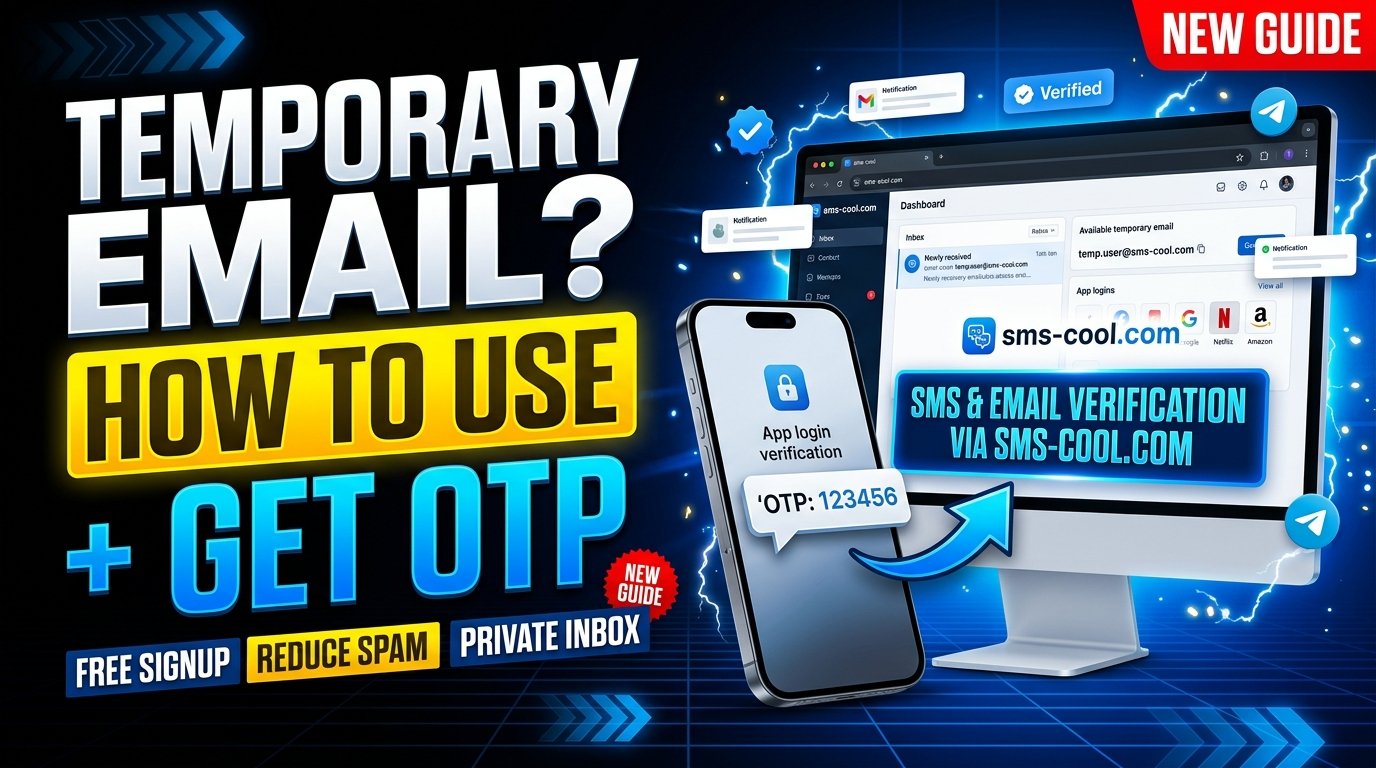
When Should You Use Temporary Email?
How many websites have asked for your email address just to let you download a file, explore a new app, or read an article? You might enter your personal address without thinking twice. A few days later, your inbox starts filling up with promotional offers, newsletters, product updates, and messages you never really wanted.
Sound familiar?
A temporary email can help you avoid this problem. Instead of sharing your everyday email address with every website, you use a separate address for suitable short-term activities. It creates a practical boundary between your personal communication and less important online interactions.
Whether you want to test a service, access a free download, or reduce unwanted messages, knowing when to use a temporary email address can make your online experience more convenient.
In this guide, we'll explore the best situations for using disposable email, its benefits and limitations, and how SMS COOL can support your temporary communication needs.
What Is a Temporary Email?
A temporary email address is an email address intended for short-term use rather than ongoing personal or professional communication.
Also known as a disposable email, throwaway email, or temp mail, it allows you to receive messages without immediately giving a website your primary email address.
A typical temporary email service provides an address and a temporary inbox for incoming messages. Depending on the provider, availability and message retention may be limited.
For example, imagine you want to try a new online tool that requires email verification. Rather than connecting the registration to your personal inbox, you could use a disposable address if the website permits it.
This helps separate that activity from your everyday correspondence.
The goal isn't to avoid all communication or misuse online services. It's to make more thoughtful decisions about where you share your contact information.
When Should You Use Temporary Email?
Temporary email is most useful when you need an email address for a specific, low-risk activity and don't expect to depend on that address in the future.
Here are the situations where it can make the biggest difference.
1. Signing Up for New Websites and Apps
Trying a new website shouldn't automatically mean giving it permanent access to your primary email address.
Many platforms request an email during registration, even when you only want to explore their features. Some send welcome sequences, promotional campaigns, and ongoing product announcements after you sign up.
A temporary email address can help you keep these interactions separate.
Practical example: You discover an online design tool and want to explore its interface before deciding whether it's worth using regularly. If the platform accepts disposable addresses, a temporary inbox may be suitable for its initial registration.
Helpful tip: Use temporary email for exploratory sign-ups, not accounts you expect to rely on for years.
2. Trying Free Trials and Limited-Time Offers
Free trials are another common reason people consider disposable email.
You might want to test a productivity tool, explore a learning platform, or evaluate an online service before committing to a paid plan.
The concern is that a trial registration can introduce a stream of marketing emails long after you've stopped using the product.
A temporary address can reduce the number of services connected to your everyday inbox.
However, remember that a disposable email address doesn't cancel a subscription, prevent billing, or remove other contractual obligations. Read the trial terms carefully and cancel any paid plan according to the provider's rules.
3. Downloading Ebooks, Templates, and Other Resources
Have you ever tried to download a checklist or PDF only to discover that the website requires your email first?
Sometimes, the resource is genuinely useful. Other times, the download form is also a way to collect marketing contacts.
If the website accepts temporary addresses, a disposable email can be useful for receiving a download link or confirmation message without adding another mailing list to your primary inbox.
This approach is particularly helpful for one-time resources, such as:
- Free design templates
- Public guides and ebooks
- Sample reports and checklists
- Non-sensitive educational resources
- Promotional materials you want to review once
Avoid using a temporary inbox when the download contains sensitive information or requires ongoing access.
4. Testing Newsletters Before Subscribing
Not every newsletter delivers the value it promises.
You may want to evaluate an unfamiliar publication before deciding whether its content deserves a permanent place in your inbox.
A temporary email can be useful for a short-term test if the publisher allows it. You can assess the content and decide whether to subscribe through your regular address later.
Keep in mind that temporary inboxes may disappear, so you could miss future issues or lose access to subscription preferences.
For newsletters you genuinely enjoy, a permanent email address or a dedicated email alias is usually the better long-term choice.
5. Protecting Your Personal Email Privacy
Your email address is more than a destination for messages. It can also become a persistent identifier connecting you to registrations, marketing databases, and online accounts.
Sharing it widely increases the number of organizations that hold your contact information.
Using a temporary email for appropriate activities can help limit that exposure.
This is especially relevant when you want to explore an unfamiliar service without immediately linking it to your personal identity.
However, anonymous email does not mean complete anonymity. Websites may still collect IP addresses, device information, browsing activity, or other identifying details.
Think of temporary email as one part of a broader email privacy strategy, not a complete privacy solution.
The Main Benefits of Temporary Email
A good temporary email service can offer several practical advantages.
Less inbox clutter
One of the most obvious benefits is fewer registration messages and promotional emails arriving at your main address. You can keep important correspondence easier to find.
Better separation between online activities
A disposable email helps distinguish casual registrations from personal communication, making your digital life easier to organize.
Convenient short-term access
When you only need to receive a confirmation message or verification link, creating a permanent mailbox may be unnecessary.
More control over personal information
You can be selective about which websites receive your everyday email address. This supports more thoughtful decisions about email privacy.
Easier experimentation
Trying a new app, exploring a website, or reviewing a non-sensitive resource becomes simpler when you don't have to connect every activity to your main inbox.
These benefits are useful, but they depend on choosing an appropriate service and understanding its limitations.
How SMS COOL Can Help With Temporary Email
If you need a convenient way to manage short-term online verification, SMS COOL is worth exploring.
SMS COOL lists temporary email among its verification-focused services. Its offering is intended to provide disposable email addresses for verification-related communication, helping users avoid exposing their regular inbox during suitable short-term registrations.
That makes it relevant when your goal is to keep temporary online activities separate from everyday communication.
For example, imagine you're exploring an unfamiliar platform that requests an email confirmation before allowing access. If the platform accepts disposable addresses, you could use an appropriate temporary email option through SMS COOL rather than automatically sharing your primary address.
A practical approach is straightforward:
- Visit the SMS COOL website.
- Explore the available temporary email option and its current terms.
- Check whether the website you're registering with accepts disposable email addresses.
- Use the temporary address for an appropriate short-term task.
- Retrieve the verification message if it arrives and complete the legitimate registration process.
SMS COOL also offers virtual phone numbers for supported SMS verification needs. These serve a different purpose from temporary email: an email address receives email messages, while a virtual number can receive supported text messages.
That distinction matters when a website asks for a phone number rather than an email address.
Before using any temporary communication service, review its current availability, pricing, access conditions, and privacy policies. SMS COOL is a practical option to consider, but no temporary email provider should be assumed to guarantee complete anonymity or universal compatibility.
Temporary Email vs. Regular Email
Which option should you choose? It depends on how important the account is and how long you'll need it.
FeatureTemporary emailRegular emailMain purposeShort-term activitiesOngoing communicationWebsite testingOften suitableSuitableOne-time downloadsOften suitableSuitablePromotional sign-upsCan help separate messagesMay increase inbox clutterPassword recoveryGenerally unsuitableUsually preferableImportant notificationsRisky if access expiresBetter for long-term accessLong-term correspondenceNot recommendedDesigned for this purpose
A regular email account remains essential for personal messages, work, bills, travel bookings, and important online accounts.
A disposable email is better treated as a tool for specific tasks.
If you want a middle ground, consider an email alias or a dedicated secondary email account. These options can provide separation while preserving access for longer periods.
When Should You NOT Use Temporary Email?
Temporary email isn't appropriate for every situation. Convenience should never come at the cost of losing access to an important account.
Avoid using a disposable address for:
- Banking and financial accounts: You may need reliable access to transaction alerts, security notices, and recovery messages.
- Account recovery: If you lose your password, an expired temporary inbox could prevent you from receiving a reset link.
- Important social media accounts: Losing access to verification messages can make account recovery difficult.
- Work and school accounts: These often require dependable, ongoing communication.
- Healthcare and government services: Such accounts may contain sensitive information and require reliable contact details.
- Long-term subscriptions and purchases: Receipts, renewal notices, and customer support messages may arrive long after registration.
Also, some websites block disposable email domains. If a platform requires a permanent address, follow its registration requirements rather than trying to bypass them.
Safety Tips for Using a Temporary Email Service
Temporary email can improve convenience, but it isn't automatically secure.
Use these practical precautions to get more value from it.
1. Never use it for sensitive information. Avoid sending or receiving financial details, confidential documents, private medical information, or password-reset messages for important accounts.
2. Check how the inbox works. Review the provider's information about expiration, message retention, and access. Don't assume an inbox is private or permanently available.
3. Be careful with verification links. Check the sender and destination before opening links. A temporary inbox doesn't make phishing emails harmless.
4. Don't reuse an address for important accounts. If a service matters to you, use an email address you control over the long term.
5. Follow website rules. Use disposable addresses only where permitted, and don't use them to evade security controls, commit fraud, or abuse free trials.
6. Combine privacy measures thoughtfully. Use strong passwords, enable multifactor authentication where available, and share only the information a service genuinely needs.
The objective is to reduce unnecessary exposure while keeping your important accounts accessible and secure.
Frequently Asked Questions
What is a temporary email address used for?
A temporary email address is useful for suitable short-term activities, including website sign-ups, free downloads, trial registrations, and one-time verification messages.
Is free temporary email safe?
It can be useful for low-risk activities, but safety depends on the provider. Review its privacy practices and inbox-access rules, and never use a disposable inbox for sensitive information.
Can temporary email help me avoid spam emails?
Yes, it can help keep certain promotional messages away from your primary inbox. However, it cannot guarantee that you will never receive spam or prevent every form of tracking.
Is temporary email the same as anonymous email?
No. A temporary address can limit the personal contact information you share, but it doesn't necessarily hide your identity, IP address, or online activity.
Can I use temporary email for account verification?
Yes, when the website accepts disposable addresses and the service can receive the required message. Some platforms reject temporary email domains.
Is SMS COOL a temporary email service?
SMS COOL lists temporary email for verification-related communication alongside other services, including virtual phone numbers for supported SMS verification. Check its official website for current availability and terms.
Should I use temporary email for my main accounts?
No. Use a permanent email address you control for banking, account recovery, work, healthcare, and other services that require dependable long-term access.
Final Thoughts: Make Temporary Email Work for You
Your primary inbox should be reserved for the messages that matter, not every website you've ever explored.
A temporary email address can help you sign up for unfamiliar services, access non-sensitive downloads, test free trials, and reduce unnecessary exposure of your everyday contact information. Used thoughtfully, it offers a simple way to separate short-term online activities from your long-term digital life.
The key is knowing where to draw the line. Temporary email is useful for convenience and inbox management, but it isn't a replacement for a permanent email account or a guarantee of anonymity.
If you're looking for a practical option for temporary verification needs, explore SMS COOL and review its temporary email service to see whether it fits your situation.
Ready to keep short-term registrations separate from your everyday inbox? Visit SMS COOL and explore your temporary communication options today.