12 Aug 2026
How Web-Based SMS Receiving Works: A Practical Complete Guide
# How Web-Based SMS Receiving Works
Imagine needing a text message but not wanting to rely on a physical phone sitting beside you. Perhaps you need an SMS verification code, want to keep a work number separate from your personal phone, or simply need a convenient way to access incoming messages from a browser.
That is where **web-based SMS receiving** comes in.
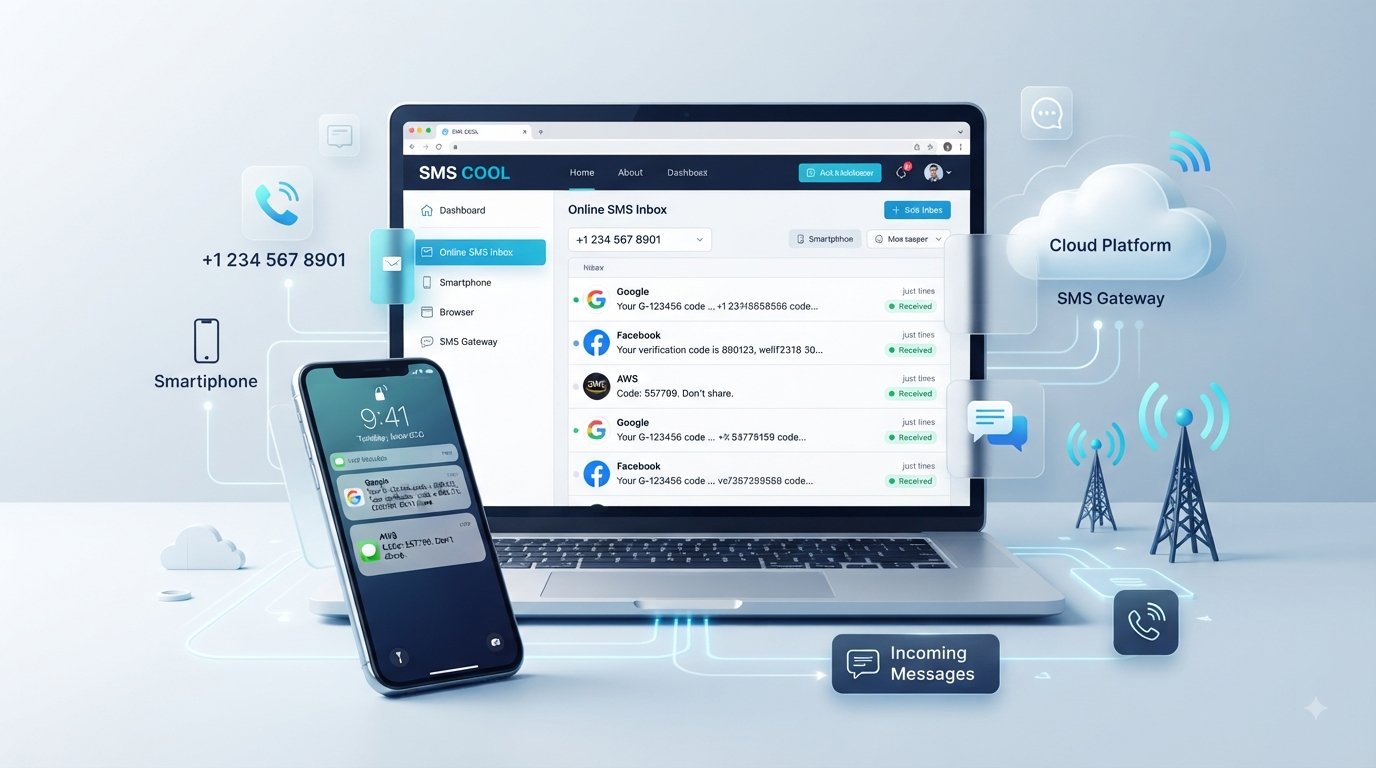
Instead of depending entirely on a traditional mobile handset, an online SMS service can connect a virtual or web-based phone number to a browser-accessible inbox. Incoming messages are routed through telecommunications infrastructure and made available through an online interface, allowing users to **receive SMS online** from a computer or other connected device.
For people who value accessibility, flexibility, and convenience, this approach can make digital communication much easier. In this guide, we will explain how SMS receiving online works, what virtual phone numbers do, where SMS gateways fit into the process, and why a service such as **SMS COOL** can be a practical option for receiving messages through the web.
## What Is Web-Based SMS Receiving?
Web-based SMS receiving is a method of accessing incoming text messages through an internet-connected platform rather than relying solely on a physical mobile phone.
At the center of the process is usually a **virtual phone number** or another number capable of receiving SMS. When a message is sent to that number, telecommunications networks deliver the message to the relevant messaging infrastructure. The online platform then makes the incoming SMS available in a web-based inbox.
In simple terms:
**Sender → Telecom Network → SMS Gateway → Online Platform → Web SMS Inbox**
The user does not necessarily need to handle the message on a traditional phone. Instead, they can open a browser, access the appropriate online SMS receiver, and view available incoming messages.
This makes it possible to **receive text messages online** while keeping the experience accessible from a web browser.
## How Does Online SMS Receiving Work?
Although the technology behind messaging networks can be complex, the basic process is relatively easy to understand.
### 1. A virtual or online phone number is provided
The process begins with a phone number capable of receiving SMS. Depending on the service, this may be described as a virtual phone number, online phone number, temporary phone number, or web-based phone number.
The number acts as the destination for incoming messages.
### 2. Someone sends an SMS to the number
A sender, application, or service sends a text message to that number just as it would send a message to a conventional mobile number.
For example, a platform may send an SMS containing a verification code or an ordinary text message.
### 3. Telecom networks deliver the message
The message travels through the telecommunications infrastructure used to route SMS traffic.
At this stage, the process is largely invisible to the user. Networks identify the destination number and route the incoming SMS toward the systems responsible for handling it.
### 4. An SMS gateway processes the message
An **SMS gateway** acts as an important bridge between telecommunications networks and software platforms.
At a high level, it helps applications and online systems communicate with SMS infrastructure. For incoming messages, the gateway or related messaging infrastructure can pass the message into the platform responsible for displaying it online.
### 5. The message appears in an online SMS inbox
Once the message reaches the web-based platform, it can appear in an **SMS inbox**.
The user opens the service in a browser and views the available incoming SMS. Depending on the platform, the interface may display information such as the sending number, message content, and time received.
The result is a straightforward way to **receive SMS through the web** without making the physical phone the center of the experience.
## What Is a Virtual Phone Number?
A virtual phone number is a phone number that is handled through software and telecommunications infrastructure rather than being tied exclusively to a traditional physical handset.
For SMS receiving, the important function is simple: the number can act as an address for incoming text messages.
A virtual number for SMS can be useful when you need a separate number for a particular online activity or want to access messages through a web-based interface.
It is important, however, to understand that virtual numbers are not universally interchangeable. Some websites and services may restrict certain number types, and some verification systems may not accept every virtual or temporary number.
That is why users should consider the requirements of the service they intend to use before choosing an online phone number.
## Common Uses for Receiving SMS Online
There are several legitimate situations in which online SMS receiving can be convenient.
### SMS verification
Many online services use **SMS verification codes** to confirm that a phone number can receive messages. An online SMS platform can provide a convenient place to view an incoming code when the chosen number is supported.
### Separating communication
A virtual number can help separate certain online communications from a primary personal number. This can make it easier to organize messages and keep different communication needs distinct.
### Access from a browser
If you work primarily from a desktop or laptop, opening a browser-based SMS inbox can be more convenient than repeatedly switching between devices.
### Temporary communication needs
Some situations require a number for a limited purpose. A **temporary phone number** may be appropriate when the service and its terms allow it.
### Digital communication workflows
Businesses, developers, and individuals may encounter workflows where incoming SMS needs to be accessible through software or a cloud-based environment. In such cases, online SMS receiving can provide another way to work with incoming messages.
## Benefits of Web-Based SMS Receiving
The appeal of online SMS receiving is not just about replacing a physical phone. It is about making message access more flexible.
### Convenience
A browser-based interface can make incoming messages easier to access when you are already working online. You can view an SMS inbox without constantly moving between devices.
### Accessibility
Web-based access can be useful when your workflow is centered around a computer. Instead of depending on a single handset for every incoming message, you can use an online platform where supported.
### Flexibility
A virtual phone number can provide an alternative to using your primary mobile number for certain appropriate purposes.
### Easier message management
An online interface can make incoming messages easier to view in one place. This is particularly useful when the main requirement is simply to check an incoming SMS or verification message.
### Practical separation
Using a separate number for appropriate online activities can help distinguish those messages from personal communications.
## Privacy and Convenience: What Should You Consider?
Privacy is an important consideration whenever you use an online SMS receiving service.
Users should understand what information a platform displays, how access to messages is managed, how long messages may remain available, and whether the service is appropriate for the type of communication involved.
Not every SMS should be treated equally. A message containing sensitive personal information, financial details, account recovery information, or other confidential content deserves particular care.
It is also worth remembering that **privacy and convenience are not the same thing**. A service may make receiving messages easier without necessarily being appropriate for every sensitive communication.
Always consider the requirements and policies of the service sending the SMS as well as the policies of the SMS receiving platform you choose.
## What to Look for in an Online SMS Service
Choosing an online SMS receiver should be based on practical requirements rather than marketing claims.
Consider the following factors:
* **Ease of use:** Can you quickly find and read incoming messages?
* **Web accessibility:** Is the service designed for straightforward browser-based access?
* **Number availability:** Does it offer the type of virtual number you need?
* **Message visibility:** Are incoming SMS clearly presented in an understandable inbox?
* **Service compatibility:** Will the intended website or application accept the number?
* **Privacy considerations:** Does the service provide information about how messages and access are handled?
* **Transparency:** Are the service's capabilities and limitations clearly explained?
* **Overall workflow:** Does the service make receiving messages simpler rather than adding unnecessary complexity?
These questions help you choose an SMS receiving service based on what you actually need.
## Why Choose SMS COOL?
For users looking for a practical way to **receive SMS online**, **SMS COOL** provides a web-based approach that keeps the process straightforward.
Instead of making SMS access dependent on constantly checking a physical phone, SMS COOL can provide an online environment for accessing incoming messages through the web.
The value of this approach is simplicity. You can work from a browser, use an appropriate online phone number, and access incoming SMS through the platform's web experience.
SMS COOL can be particularly useful for people whose digital workflows already happen primarily online. Whether you are dealing with an appropriate SMS verification process, managing separate communications, or simply need accessible incoming messages, a web-based SMS receiver can reduce unnecessary device switching.
Of course, the suitability of any number depends on the service sending the SMS and its own acceptance rules. Users should always check those requirements before relying on a particular virtual number.
The goal is not to make SMS complicated. It is to make access to supported incoming messages more convenient.
## How SMS COOL Simplifies the Process
The basic experience can be thought of as a simple workflow:
1. **Choose an appropriate number** for your intended use.
2. **Provide the number** to the service that needs to send an SMS, where permitted.
3. **Wait for the incoming message** to be delivered through the messaging network.
4. **Open SMS COOL in your browser** and access the available message.
5. **Read the incoming SMS** from the online interface.
This browser-centered approach is useful because it brings the receiving side of SMS into the same digital environment where many users already work.
Rather than treating SMS as something that must always be accessed from a personal handset, web-based receiving offers another practical option.
## Frequently Asked Questions
### What is an online SMS receiver?
An online SMS receiver is a web-based service that allows users to access incoming text messages associated with a supported phone number through an online interface.
### Can I receive SMS through a web browser?
Yes. A web-based SMS receiving service can make incoming messages available through a browser, provided the number and service support the intended use.
### What is a virtual phone number?
A virtual phone number is a phone number managed through software and telecommunications infrastructure. It can be used for supported communication functions, including receiving SMS.
### Can I receive OTP online?
You may be able to receive an OTP online when the service sending the code accepts the type of virtual number being used. Compatibility varies between websites and applications.
### Is online SMS receiving the same as using a regular mobile phone?
Not necessarily. Online SMS receiving uses a web-based platform and may involve virtual numbers and SMS gateways. A traditional mobile phone, by contrast, normally receives messages through its mobile connection and device messaging system.
### Are temporary phone numbers suitable for every verification service?
No. Some websites and applications restrict temporary or virtual numbers. Always check the requirements of the service you are trying to use.
### Why use SMS COOL for receiving messages online?
SMS COOL offers a web-based approach designed to make accessing supported incoming SMS more convenient. It can be useful for people who prefer browser-based access and want an alternative to relying exclusively on a physical phone.
## Final Thoughts
**Web-based SMS receiving** turns a familiar process—getting a text message—into a more accessible online experience. Behind the scenes, telecom networks, virtual phone numbers, SMS gateways, and cloud-based systems work together to route incoming messages from a sender to an online inbox.
For users, the result can be simple: open a browser, access the appropriate number and platform, and view incoming SMS without making a physical phone the center of the workflow.
The right service still depends on your specific needs, the type of number required, and whether the service sending the message accepts it. But when browser-based access and convenience matter, an online SMS receiving platform can be a practical solution.
If you are looking for an accessible way to **receive messages online**, explore **SMS COOL** and see how its web-based experience can fit into your SMS receiving workflow.