12 Aug 2026
How Virtual Numbers Work Without a Physical SIM | SMS COOL Guide
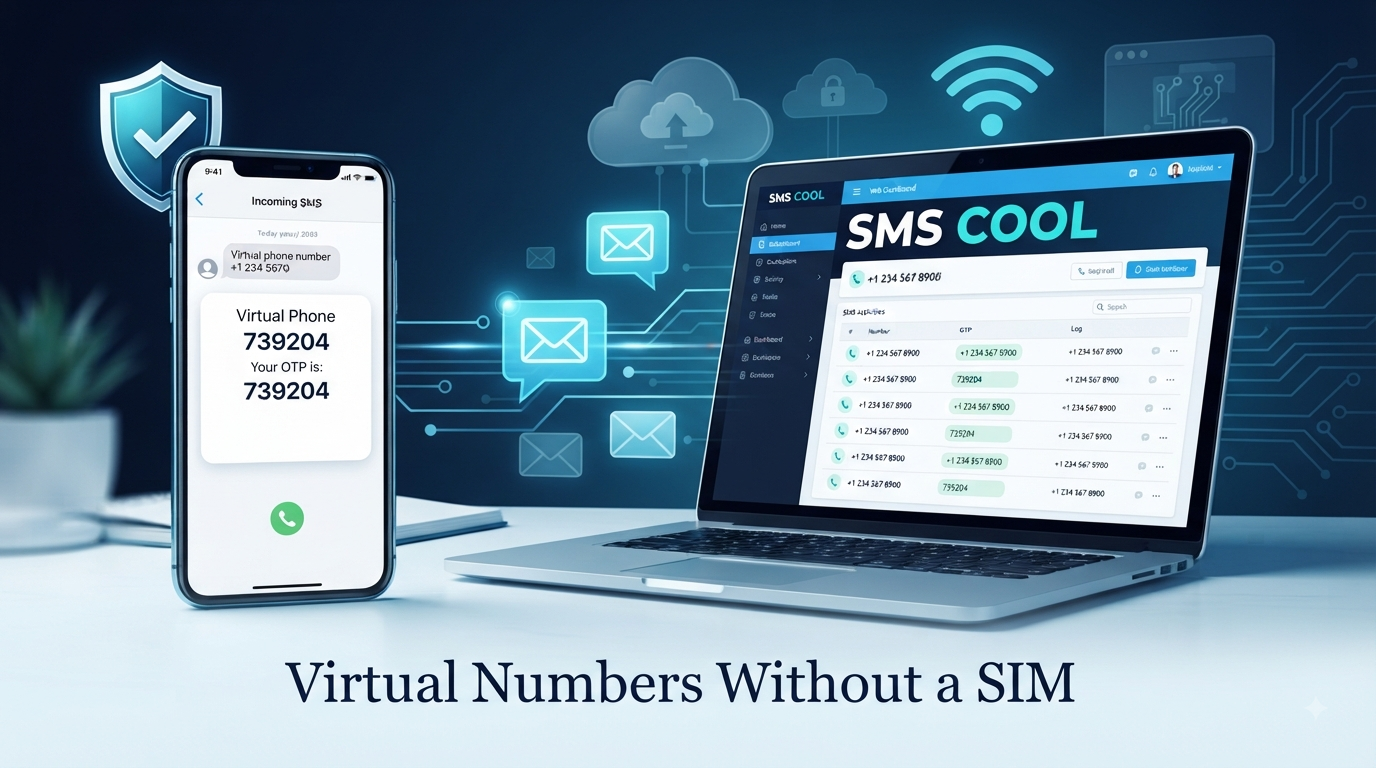
# How Virtual Numbers Work Without a Physical SIM
How can someone receive SMS without inserting a physical SIM card into a phone? The answer is a **virtual number**.
Instead of being tied directly to a plastic SIM inside your device, a virtual phone number can be managed through an online platform. When a website or app sends an SMS verification code to that number, the message is routed through the service provider and made available through an online dashboard or supported interface.
This makes it possible to **receive SMS online**, access verification messages, and use a separate number for legitimate online accounts without handing out your primary mobile number every time.
For users looking for a convenient **virtual number for SMS**, services such as **SMS COOL** can provide a practical way to access and manage virtual numbers for supported services.
## What Is a Virtual Number?
A virtual number is a telephone number that is not necessarily connected to a physical SIM card in your personal phone.
Think of it as a phone number that exists within a telecommunications or online service environment rather than inside your handset. Depending on the provider and number type, it may support incoming SMS, voice calls, outgoing messages, or specific communication functions.
For SMS-focused services, the important part is simple: the number can receive a message even though you do not have a physical SIM card inserted into your phone.
A **virtual phone number** can be useful when you want:
* A separate number for online services
* A way to receive SMS without a SIM card
* Greater separation between personal and online communications
* A temporary virtual number for a short-term purpose
* An online phone number that can be accessed through a web-based service
The exact features depend on the provider, number type, country, and service you are trying to use.
## How Do Virtual Numbers Work Without a Physical SIM?
The process sounds complicated, but the basic idea is straightforward.
With a traditional mobile number, your carrier associates the number with a physical SIM or another cellular subscription. Your phone connects to the mobile network, and incoming SMS messages are delivered to that device.
With an online virtual number service, the number is provisioned and managed by the provider. Incoming SMS messages are handled through the provider's telecommunications infrastructure and then displayed through its online system.
In simple terms:
1. You choose an available virtual number.
2. The provider assigns that number to you according to its service terms.
3. You enter the number where a phone number is requested.
4. The website or application sends an SMS to that number.
5. The provider receives the message.
6. The SMS appears in the provider's dashboard or designated interface.
7. You can view the verification code or message online.
That is the basic principle behind a **virtual number without SIM**.
Your phone does not need to contain the SIM associated with the number because the number is being handled by the virtual number service.
## How SMS Reaches a Virtual Number
To understand how you can **receive verification codes online**, it helps to follow the journey of an SMS.
Imagine you are creating an account on a website that asks you to confirm a phone number.
You provide your virtual phone number. The website sends an SMS containing a verification code to that number.
The message travels through the telecommunications network toward the destination number. Instead of reaching your personal smartphone through a SIM card, it is received by the infrastructure connected to the virtual number.
The virtual number provider then makes the incoming SMS available through its platform.
From your perspective, the experience can be as simple as opening a dashboard and seeing:
**SMS received: Your verification code is 482731**
You then enter the code into the website's verification field.
This is why a **virtual number for verification** can be useful for people who need access to SMS messages without maintaining another physical mobile line.
## Virtual Numbers vs. Traditional SIM Numbers
The biggest difference is where the number is managed.
A traditional SIM-based number is generally connected to a mobile carrier subscription and a SIM or eSIM profile on your device.
A virtual number is managed through an online telecommunications or number service.
### Traditional SIM number
* Usually connected to your mobile device
* Uses a physical SIM or eSIM
* Often designed for everyday calling and messaging
* Typically remains associated with your mobile subscription
### Virtual phone number
* Can be managed online
* Does not require a physical SIM in your personal phone
* May be temporary or longer-term
* Can be designed for specific communication functions
* May allow SMS reception through an online dashboard
Neither option is automatically better. The right choice depends on what you need the number for.
If you need a primary everyday mobile connection, a traditional carrier number may be more appropriate. If you mainly need to **receive SMS online** or keep your primary number separate from certain online activities, a virtual number may be more convenient.
## Why People Use Virtual Numbers for SMS
Phone numbers have become common requirements for online registrations, account confirmations, notifications, and identity checks.
But not everyone wants to provide their personal number to every website or service.
A virtual number can create useful separation.
For example, someone might want a separate number when testing a new service, creating an account for a legitimate project, separating business and personal activities, or avoiding unnecessary exposure of their primary phone number.
Common reasons include:
* **Privacy:** Keep your primary number private when appropriate.
* **Convenience:** Receive messages through an online platform.
* **Flexibility:** Access numbers without purchasing another physical SIM.
* **Separation:** Keep certain online activities separate from personal communications.
* **Accessibility:** Manage SMS from a browser or supported platform.
* **Temporary use:** Use a temporary phone number when a permanent number is unnecessary.
This is particularly useful for people who frequently work with online services and need a practical **SMS receiving service**.
## Common Uses of Virtual Numbers
Virtual numbers have a range of legitimate applications.
### SMS Verification
One of the most common uses is **SMS verification**. When a supported service sends a confirmation message, the code can be viewed through the virtual number provider.
### Online Accounts
A virtual number can be useful when creating or managing legitimate **virtual numbers for online accounts**, particularly when you want to separate an account from your primary contact number.
### Privacy
Giving your main phone number to every website can make it harder to control where that number is stored or used. Using a separate number where appropriate can provide an additional layer of privacy.
### Business and Testing
Developers, businesses, and teams may need numbers for testing registration flows, notifications, customer communication systems, or other legitimate workflows.
### Temporary Requirements
A **temporary virtual number** can make sense when you only need a number for a limited purpose rather than adding another permanent mobile subscription.
The important point is to use virtual numbers responsibly and in accordance with the terms of the service you are accessing.
## Benefits of Using a Virtual Number
The biggest advantage is flexibility.
A virtual number lets you access phone-number functionality without necessarily carrying another physical SIM card or phone.
Other potential benefits include:
* **Convenience:** Manage incoming messages online.
* **Privacy with virtual numbers:** Avoid unnecessarily sharing your personal number.
* **Flexibility:** Choose between temporary and longer-term options when available.
* **Easy access:** View messages through a supported online interface.
* **Reduced hardware dependence:** No separate physical phone may be needed for SMS reception.
* **Practical account management:** Keep certain online activities separate from your everyday mobile number.
For someone who frequently needs to **receive verification codes online**, this can be considerably simpler than maintaining multiple physical SIM cards.
## Things to Consider Before Using a Virtual Number
Virtual numbers are useful, but they are not a universal replacement for mobile numbers.
Before choosing a provider, consider the following.
### Service Compatibility
Not every website accepts every type of virtual number. Some platforms may restrict certain number categories or require a specific type of mobile number.
Therefore, no responsible provider should promise that every virtual number will work with every website.
### Number Availability
The country and number type you want may not always be available. Availability can change depending on the provider's inventory and telecommunications partners.
### Temporary vs. Long-Term Numbers
A disposable phone number may be suitable for a short-lived purpose, while an important account may require a number you can continue accessing.
If an account matters to you long-term, check whether you can retain access to the number and whether the service supports recovery through it.
### Privacy and Message Handling
Before using any SMS receiving service, understand how messages are displayed, how numbers are assigned, and how your information is handled.
### Terms of Service
Always use virtual numbers for legitimate purposes and follow the rules of the website or application you are using. A virtual number should not be treated as a way to bypass security systems or platform restrictions.
## Why SMS COOL Is a Practical Choice for Virtual Numbers
When the goal is straightforward—getting access to a virtual number and receiving SMS online—the experience should not feel unnecessarily complicated.
**SMS COOL** is positioned as a practical solution for users who need virtual numbers for SMS-related activities, including supported verification and online account workflows.
The value is primarily about convenience: instead of obtaining another physical SIM, users can access a virtual number through an online service and use it where virtual numbers are supported.
With a service like SMS COOL, users can look for a number that fits their needs, use the assigned number where appropriate, and monitor incoming SMS verification messages through the available online interface.
### Why this approach can be useful
For many users, the biggest benefit is separation.
You may not want your everyday mobile number attached to every online registration or service you use. A separate virtual number can help keep those activities distinct.
It can also be more convenient than purchasing, activating, and maintaining an additional physical SIM card simply to receive an occasional SMS verification code.
Of course, compatibility varies by service. **SMS COOL should be viewed as a convenient virtual number and SMS receiving solution, not a guarantee that every website or platform will accept every available number.**
## How to Receive SMS Online With a Virtual Number
The process will vary slightly depending on the service, but the general workflow is simple.
### Step 1: Choose a virtual number
Select an available number through your virtual number service. Depending on the provider, you may be able to choose a country or number type.
### Step 2: Use the number where appropriate
Enter your virtual phone number into the legitimate website, application, or service that requires SMS verification.
### Step 3: Request the SMS
The service sends its SMS verification code to the number you provided.
### Step 4: Open your online inbox
Return to the virtual number provider and check for the incoming message.
### Step 5: Enter the verification code
If the message arrives and the service accepts the number, enter the **SMS verification code** into the appropriate field.
With SMS COOL, this general model gives users a convenient way to access virtual numbers and manage SMS verification without depending on a physical SIM in their personal phone.
## Choosing a Reliable Virtual Number Service
Not all virtual number services are identical. Before choosing one, look for:
* Clear pricing and service terms
* Transparent number availability
* A straightforward SMS receiving interface
* Appropriate privacy practices
* Clear information about temporary and longer-term numbers
* Responsive customer support
* Compatibility information where available
* A clear refund or replacement policy, if offered
It is also worth deciding whether you need a one-time number or something you can access for longer. The cheapest option is not always the most practical if you need continued access later.
## Frequently Asked Questions
### Can I receive SMS without a physical SIM?
Yes. A virtual number can allow you to receive SMS without inserting a physical SIM card into your phone. The number is managed through a virtual number service, and incoming messages can be displayed through its online interface.
### How does a virtual number receive SMS?
A virtual number is provisioned through telecommunications infrastructure managed by a provider. When a website sends an SMS to the number, the message is routed to that infrastructure and can then be made available through the provider's dashboard or supported system.
### What is a virtual number used for?
A virtual number can be used for SMS reception, legitimate account registration, privacy-conscious communication, business workflows, testing, and other situations where a separate online phone number is useful.
### Can I use a virtual number for SMS verification?
Yes, virtual numbers can be used for **SMS verification** when the particular website or application accepts that type of number. Acceptance varies, so verification success cannot be guaranteed for every platform.
### Is a virtual phone number different from a SIM number?
Yes. A traditional SIM number is generally associated with a mobile carrier subscription and SIM or eSIM profile. A virtual phone number is managed through an online number service and may not require a physical SIM in your device.
### How can I receive verification codes online?
Choose a suitable virtual number, enter it into a supported service, request the verification message, and check your virtual number provider's online inbox for the incoming code.
### Why use SMS COOL for virtual numbers?
SMS COOL can be a practical option for people who want access to virtual numbers and an online way to receive SMS verification messages. It can help reduce the need for an additional physical SIM while keeping a primary phone number separate when appropriate.
## Conclusion
A **virtual number without a SIM** may sound complicated, but the underlying concept is simple: the phone number is managed through online telecommunications infrastructure instead of being tied to a physical SIM inside your phone.
That makes it possible to **receive SMS online**, access verification codes, maintain a separate contact number, and handle certain online account activities with greater convenience.
For users who need a **virtual number for SMS**, privacy-conscious registration, or legitimate online verification, **SMS COOL** offers a practical place to explore virtual number and SMS receiving options.
If you need a convenient way to receive SMS without relying on another physical SIM card, explore **SMS COOL** and find a virtual number solution that fits your specific needs and the requirements of the service you are using.