11 Aug 2026
Virtual Number API: A Practical Guide for Business Teams
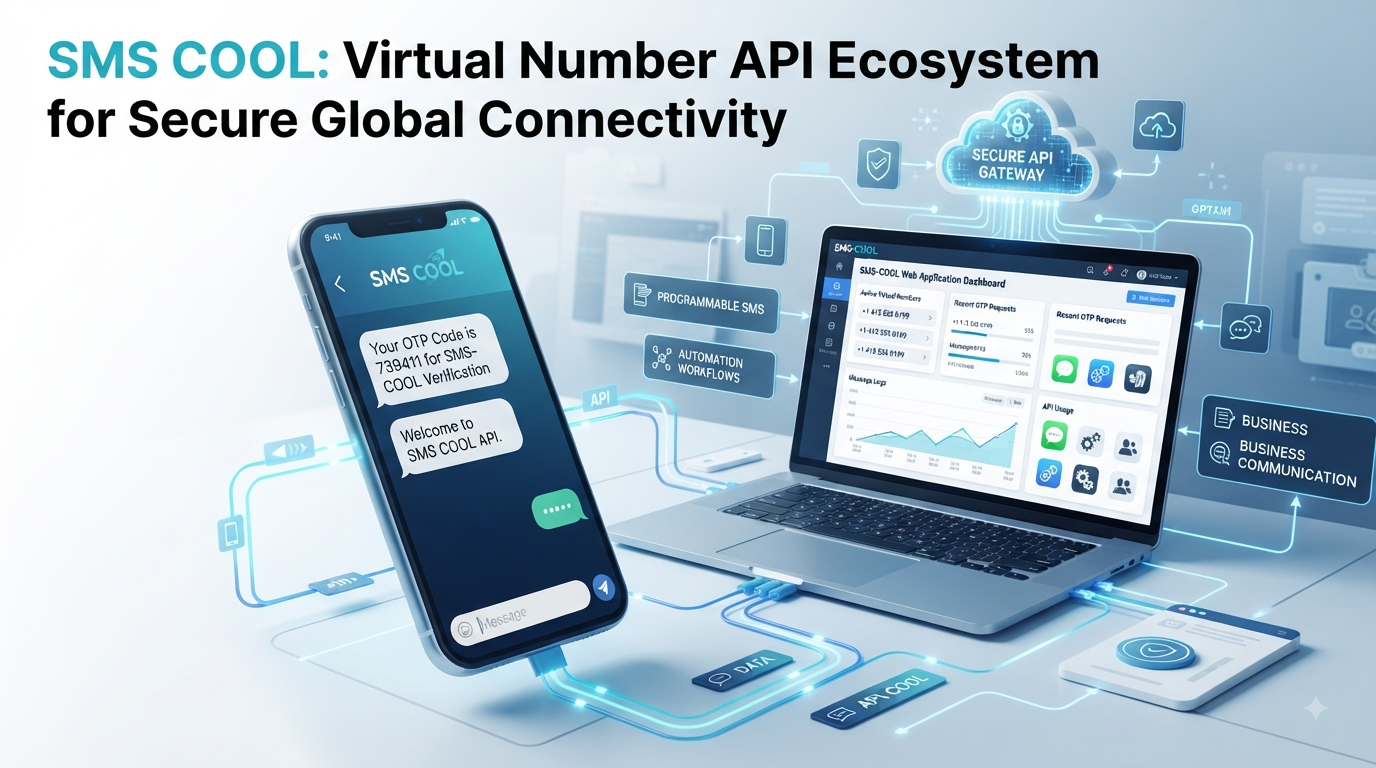
irtual Number API Explained
Modern businesses increasingly rely on digital communication to verify users, send alerts, support customers, and automate important workflows. Yet managing phone numbers for these tasks can become complicated when applications need to communicate with mobile networks automatically.
This is where a Virtual Number API becomes useful.
Instead of treating a phone number as something that only works through a physical handset, an API allows software to interact with virtual numbers programmatically. Businesses and developers can use this approach for SMS verification, OTP delivery, notifications, account authentication, customer communication, and other automated workflows.
For companies looking for a practical way to connect applications with virtual numbers, SMS COOL provides a straightforward solution focused on virtual numbers and SMS-based communication. By combining virtual phone numbers with API integration, businesses can build communication workflows without relying entirely on manual processes.
What Is a Virtual Number API?
A Virtual Number API is a software interface that allows an application, website, or business system to interact with a virtual phone number.
First, it helps to understand what a virtual number is. A virtual number is a phone number that is not necessarily tied to a physical SIM card or traditional phone line in the way a conventional business number may be. Depending on the service, it can be used to receive or send SMS through an online platform or connected application.
An API, or Application Programming Interface, provides the connection between that number and your software.
For example, imagine an online platform that needs to send a verification code when someone creates an account. Instead of an employee manually sending the message, the platform can communicate with a phone number through an API. The application triggers the SMS workflow, and the message is handled automatically.
This makes a virtual phone number API particularly valuable for developers building applications that need reliable communication capabilities.
How Does a Virtual Number API Work?
Although the technical implementation can vary between providers, the basic process is easy to understand.
1. Select or obtain a virtual number
A business first chooses an appropriate virtual number based on its communication requirements and the availability offered by the provider.
2. Connect the number through an API
The developer connects the application to the provider's API using the available documentation, credentials, and integration methods.
3. Send or receive SMS
Once connected, the application can use supported API functionality to handle SMS communication. Depending on the service and use case, this may include sending messages, receiving messages, or processing incoming verification texts.
4. Process verification messages
For authentication workflows, the application can identify an incoming verification message and use the information according to its programmed workflow.
5. Connect the API to business systems
The API can become part of a website, mobile application, CRM, authentication system, customer portal, or other software environment.
6. Automate communication
Once everything is connected, repetitive communication tasks can happen automatically. A registration can trigger an OTP, a customer action can generate a notification, or an internal system can process incoming SMS without manual intervention.
For developers, this is the key advantage: the phone number becomes part of the software workflow rather than a separate communication channel.
Why Businesses Use Virtual Numbers
Businesses use virtual numbers for many different reasons. The right application depends on the industry, communication model, and technical requirements.
Common use cases include:
- SMS verification: Confirming that a user has access to a phone number.
- OTP delivery: Sending one-time passwords during account registration or login.
- Two-factor authentication: Adding an SMS-based security layer to account access.
- Customer communication: Sending updates, reminders, and service messages.
- Account verification: Helping platforms confirm new registrations.
- Notifications: Informing users about important events or actions.
- Online services: Providing phone-based communication without requiring physical infrastructure.
- Marketing communication: Supporting permission-based promotional messaging where appropriate.
- Business support: Creating additional communication channels for customers.
- Application testing: Supporting development and testing workflows that require phone-based messaging.
For companies operating across multiple markets, virtual numbers for business can also provide greater flexibility than maintaining a collection of traditional phone lines.
Key Benefits of a Virtual Number API
A Virtual Number API can turn ordinary SMS communication into an integrated business process.
Automation
Automation is one of the biggest advantages. Applications can trigger SMS messages based on specific events without requiring someone to send each message manually.
This is especially useful for OTP verification, account notifications, onboarding, and other repetitive processes.
Scalability
As communication requirements grow, businesses need systems that can handle more workflows without adding the same amount of manual effort. An API-based approach makes it easier to incorporate SMS into scalable applications.
Faster communication
Automated SMS workflows can respond immediately to events within an application. This can create a smoother experience for customers who need verification codes, alerts, or important updates.
Global accessibility
Virtual numbers can make it easier for businesses to manage communication remotely. Depending on provider availability and local requirements, organizations can select numbers suited to their target markets.
Reduced manual work
A connected API removes many repetitive steps from business communication. Developers can build rules that determine when and how messages should be processed.
Developer-friendly integration
A good developer API allows technical teams to connect communication features to existing software instead of building an entire messaging infrastructure from scratch.
Flexible number management
Businesses can manage communication numbers as part of a broader digital communication strategy rather than treating each number as a standalone physical asset.
Better customer experience
Fast verification and timely notifications can reduce friction during registration, login, onboarding, and other customer interactions.
Virtual Number API for SMS Verification
One of the most common reasons businesses search for a Virtual Number API is SMS verification.
Consider a user registering for a new application. The system needs to confirm the phone number before allowing the account to proceed. The application generates a verification code, sends it through an SMS workflow, and asks the user to enter the code.
The same principle can support:
- Account registration
- Login verification
- Password recovery
- OTP authentication
- Two-factor authentication
- New-device verification
- Customer onboarding
When the process is connected through an API, the workflow can operate automatically. The application can request the message, handle the response, and move the user through the next step without manual intervention.
For businesses that need virtual numbers and SMS functionality without adding unnecessary complexity, SMS COOL is a practical option to consider. Its focus on virtual number and SMS-based communication makes it relevant for verification workflows where software needs to interact with phone numbers.
How SMS COOL Makes Virtual Number API Integration Easier
Choosing the right virtual number API provider matters because the provider becomes part of your application's communication infrastructure.
SMS COOL is designed around the practical needs of businesses and developers working with virtual numbers and SMS communication. Instead of treating phone numbers as an isolated service, businesses can consider how virtual numbers fit into their broader application and communication workflows.
SMS COOL can be useful for requirements involving:
- Virtual number access
- SMS communication
- API integration
- Verification workflows
- Automated SMS processes
- Business communication
- Developer-focused applications
- Scalable communication requirements
For developers, the important consideration is how easily the communication layer can fit into an existing application. A well-planned integration can connect a virtual phone number API with registration systems, authentication workflows, customer portals, notification engines, or other software.
Businesses should still review the available documentation, supported capabilities, number availability, and applicable terms before implementing a specific workflow. This helps ensure the chosen setup matches the technical and operational requirements of the project.
Common Use Cases for Virtual Number APIs
A communication API can support a wide range of digital products.
SaaS platforms
Software-as-a-service platforms can use SMS for user onboarding, login verification, alerts, and account security.
Mobile applications
Apps can integrate SMS functionality into registration, authentication, and user notification workflows.
E-commerce
Online stores can use messaging for customer updates, account verification, order-related notifications, and service communication.
Customer onboarding
Businesses can automate phone verification when a new customer creates an account or begins using a service.
Authentication systems
Applications can incorporate OTP verification and 2FA into their login processes.
Online platforms
Marketplaces, communities, booking services, and other online platforms may need SMS as part of account management and customer communication.
Business messaging
Organizations can integrate programmable SMS into internal or customer-facing workflows.
The common theme is simple: whenever an application needs phone-based communication as part of an automated process, a Virtual Number API may be worth considering.
What to Look for in a Virtual Number API Provider
Not every provider will be suitable for every project. Before choosing an SMS API provider, evaluate the service against your actual technical and business requirements.
A useful checklist includes:
- API documentation: Is the documentation clear enough for developers to understand integration requirements?
- Integration simplicity: Can the API fit into your existing application architecture?
- Number availability: Are suitable virtual numbers available for your intended use case and market?
- SMS reliability: Can the service support the communication workflows your business depends on?
- Scalability: Can the solution accommodate changing volumes and growing business requirements?
- Developer experience: Are the API tools and technical resources practical to work with?
- Security: Does the provider offer an approach appropriate for your verification and communication workflows?
- Support: Is help available when technical or operational questions arise?
- Number management: Can your team manage numbers efficiently?
- Pricing transparency: Are costs understandable before implementation?
- Business suitability: Does the service align with your intended communication use cases?
SMS COOL deserves consideration on this checklist for businesses specifically looking for a virtual number and SMS-focused solution. As with any communication provider, reviewing the available capabilities and documentation before deployment is an important part of making the right decision.
Virtual Number API vs Traditional Phone Numbers
Traditional phone numbers can work well for voice calls and conventional business communication, but they are not always ideal when software needs to manage SMS workflows automatically.
A virtual number API offers several practical differences:
Virtual Number APITraditional Phone NumberDesigned for software integrationPrimarily designed for direct phone useSupports automated workflowsOften requires manual interactionCan be managed remotelyUsually connected to physical or carrier infrastructureSuitable for application-based SMSBetter suited to conventional communicationEasier to incorporate into scalable workflowsScaling may require additional phone infrastructure
The right choice depends on the business. However, for applications that need automation, API integration, or programmable SMS, a virtual number can provide a more flexible foundation.
Is a Virtual Number API Right for Your Business?
A Virtual Number API may be a strong fit if your business or application needs to send or process SMS as part of an automated workflow.
You may benefit from this approach if you:
- Run a SaaS product
- Develop mobile or web applications
- Need automated SMS verification
- Use OTP-based authentication
- Want to implement 2FA
- Need business phone numbers for digital workflows
- Manage customer onboarding
- Send automated notifications
- Build communication-heavy online services
- Need a scalable SMS solution
It can also be useful for developers who want to separate communication infrastructure from the application's core logic. Rather than manually managing phone interactions, the application can communicate with the SMS system through an API.
Before implementation, define your requirements clearly. Consider the countries or markets involved, message types, expected usage, security needs, integration requirements, and number-management processes. This makes it easier to determine whether a particular provider and API setup are appropriate.
Final Thoughts
A Virtual Number API provides a practical bridge between phone-based communication and modern software. It allows businesses and developers to incorporate virtual numbers, SMS verification, OTP delivery, notifications, authentication, and other communication workflows directly into applications.
The biggest advantage is not simply having an online phone number. It is the ability to make that number part of an automated digital process.
For businesses looking for a practical way to manage virtual numbers and SMS-based communication, SMS COOL offers a solution worth exploring. Its focus on virtual numbers, SMS functionality, API integration, and business communication can make it a relevant choice for developers and organizations building automated communication workflows.
If your application needs verification messages, programmable SMS, business notifications, or a flexible communication API, explore SMS COOL and evaluate how its virtual number capabilities can fit into your workflow.