11 Aug 2026
Temporary Phone Numbers Explained: SMS Verification & Privacy
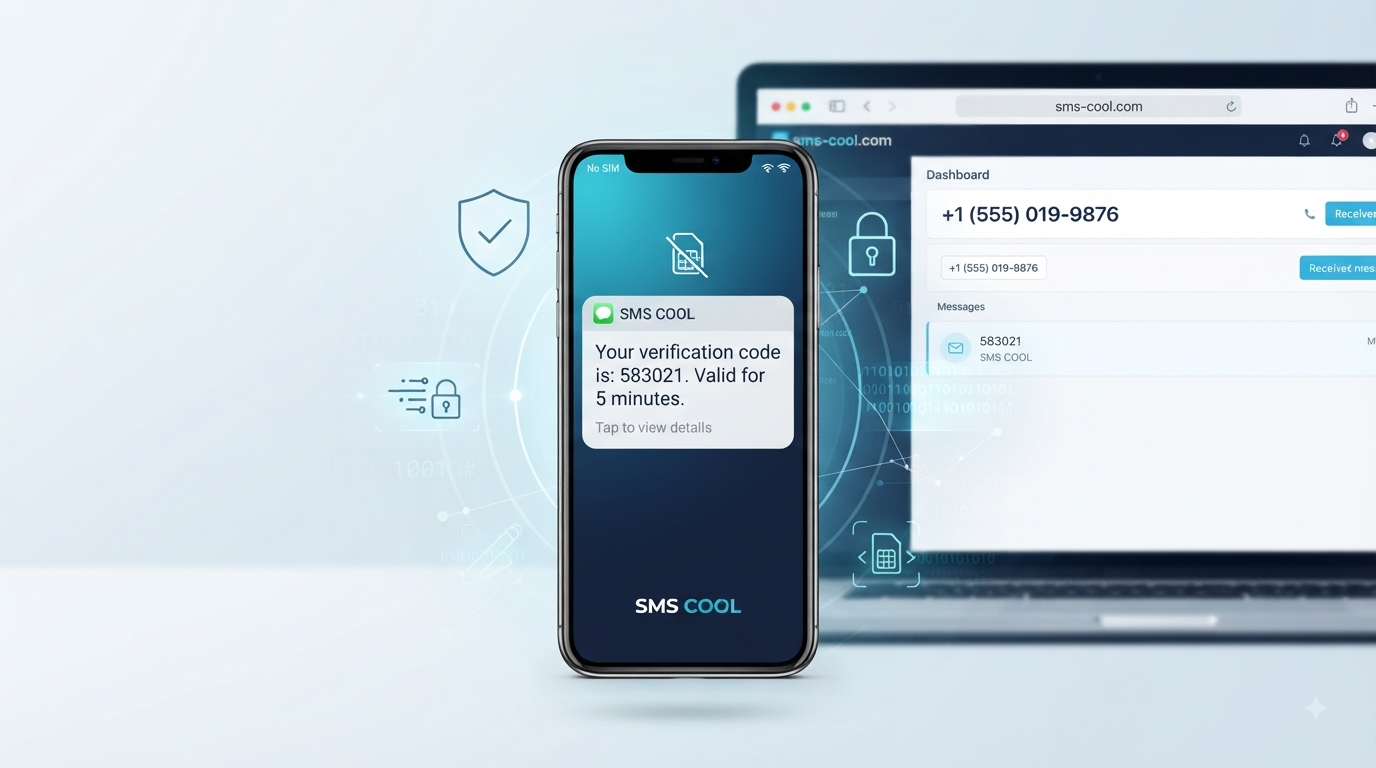
Temporary Phone Numbers Explained
When an online service asks for your phone number, the request can feel simple enough. But giving your personal number to every website, app, marketplace, or online service can create unnecessary privacy concerns and eventually lead to unwanted messages or spam.
That is where temporary phone numbers can be useful.
A temporary phone number is a number that can be used for a limited purpose, such as receiving an SMS verification code, without exposing your primary personal number. Depending on the provider and service, users can obtain a number, enter it during registration or verification, and receive the required SMS online.
For people who regularly encounter SMS verification, temporary numbers offer a practical way to separate personal communication from online activity. They can also help users protect their phone number when signing up for services where sharing a personal number is unnecessary.
What Is a Temporary Phone Number?
A temporary phone number is a phone number intended for short-term or limited use rather than everyday personal communication.
Unlike your regular mobile number, which may be connected to friends, family, banking services, important accounts, and other long-term services, a temporary number can be used for a specific online task.
For example, imagine you want to register for an online service that requires a phone number for verification. Instead of immediately giving the service your personal number, you may choose a temporary number and use it to receive the required SMS verification code.
Temporary numbers are sometimes also called temporary SMS numbers, depending on how they are provided and used.
The key idea is simple: use a separate number for a specific online purpose instead of exposing your primary number unnecessarily.
How Do Temporary Phone Numbers Work?
The basic process is straightforward.
A service providing temporary numbers makes phone numbers available for users who need to receive SMS messages. You select an available number and use it during an online registration or verification process.
If the relevant service sends an SMS verification code to that number, the message can then be displayed through the temporary-number service.
In a typical situation, the process looks like this:
- Select a temporary phone number.
- Enter that number on the website or app requesting verification.
- Request or trigger SMS verification.
- Wait for the SMS verification code.
- View the incoming message through the temporary-number service.
- Enter the verification code where required.
This makes it possible to receive SMS online without relying on your primary mobile number for every registration.
The exact experience can vary between providers, so reliability, number availability, and compatibility with a particular service are important considerations.
Why Do People Use Temporary Phone Numbers?
There is no single reason people use temporary phone numbers. In many cases, the motivation is simply convenience and better control over personal information.
SMS Verification
Many websites require users to confirm a phone number before completing registration. A temporary number can provide an alternative for receiving SMS verification codes when sharing a personal number is not necessary.
Online Registrations
People often sign up for newsletters, websites, apps, trials, communities, and other online services. A temporary number can help keep these registrations separate from personal communication.
Privacy Protection
Your phone number is personal information. Using a separate number can help reduce the number of websites and services that have access to your primary number.
For users concerned about online privacy, this separation can be especially useful.
Avoiding Spam
Not every service treats contact information the same way. Using a temporary number for certain online activities may help users avoid spam calls and avoid unwanted messages reaching their primary number.
Testing Services
Developers, testers, and other users may sometimes need a phone number during testing or evaluation. A temporary number can be more convenient than repeatedly using a personal number for these limited tasks.
Temporary Phone Numbers for SMS Verification
One of the most common applications is using temporary phone numbers for SMS verification.
When a website requests a phone number, it may send an SMS verification code to confirm that the number can receive messages. If you have access to a suitable temporary number, you can use it to receive the code and complete the verification process.
This can be useful when you want to complete online SMS verification without immediately connecting the service to your personal phone number.
However, temporary numbers are not suitable for every type of account. If an account is important and you may need the same number for password recovery, identity checks, or future access, using a number intended only for temporary use may create problems later.
In other words, convenience should not come at the expense of account security or long-term access.
Temporary Phone Numbers vs. Disposable Phone Numbers
The terms temporary phone number and disposable phone number are often used interchangeably, but there can be a subtle distinction.
A temporary phone number generally emphasizes the short-term nature of the number. A disposable phone number emphasizes that the number may be used for a limited purpose and then discarded.
Both concepts focus on separating a user's primary number from a specific online activity.
The important thing is to understand how the provider handles the number and how long it may remain available. Before relying on a number for an important account, users should understand whether they can access it again later.
Temporary Phone Numbers vs. Virtual Phone Numbers
A virtual phone number is a broader category.
Virtual numbers can be designed for longer-term use and may support ongoing communication, business operations, customer service, or other purposes. A temporary number, by contrast, is generally intended for a shorter or more specific use.
A simple way to think about the difference is:
- Temporary phone number: Primarily intended for short-term or specific online needs.
- Virtual phone number: Can be maintained for longer-term communication or other purposes.
- Temporary SMS number: Focused specifically on receiving SMS messages for temporary needs.
The right choice depends on how long you need the number and what you intend to use it for.
Benefits of Using a Temporary Phone Number
A temporary number can provide several practical advantages.
Better Privacy
You can avoid exposing your personal number every time an online service requests one.
Less Spam
Separating online registrations from your personal number may help reduce unwanted messages and calls reaching your primary line.
Convenience
If your main requirement is to receive SMS verification codes, a temporary number can be a simple solution for that specific task.
Easy Access to SMS
Online services can make it possible to receive SMS online, allowing you to view verification messages without using your everyday number.
Separation of Personal and Online Activity
Keeping personal communication separate from online registrations creates a cleaner boundary between your private life and your internet activity.
Reduced Exposure
Every time you provide a personal phone number online, you increase the number of organizations or services that have access to it. A temporary number can reduce unnecessary exposure.
Are Temporary Phone Numbers Safe?
Temporary phone numbers can be useful, but they should not be treated as automatically safe or completely anonymous.
Safety and reliability depend on the provider, the specific number, and the service where the number is being used.
Users should choose a reputable SMS verification service and understand how the service handles temporary numbers and incoming messages.
It is also important to recognize when a temporary number is inappropriate. Avoid relying on one for accounts where permanent access, account recovery, financial security, or identity verification is essential unless you know the number will remain available to you.
A good rule is simple: use temporary numbers for temporary needs, and use a long-term personal or virtual number when an account requires dependable future access.
How to Choose a Temporary SMS Number Service
Not every temporary number service provides the same experience. Before choosing one, consider the following factors:
Number Availability
The service should make it reasonably easy to find an available number suitable for your intended purpose.
SMS Delivery Speed
When you need a verification code, waiting unnecessarily can be frustrating. A practical service should provide a straightforward way to access incoming SMS messages.
Supported Services
Some websites and platforms may have restrictions on certain types of phone numbers. Check whether the number is appropriate for the service you intend to use.
Reliability
A temporary number is only useful if you can actually receive the message you need. Reliability should therefore be an important part of your decision.
Privacy
Consider whether the service aligns with your privacy expectations and whether using a separate number helps you achieve your goal of protecting your personal number.
Ease of Use
The process should be simple enough that you can select a number, receive an SMS, and find the verification code without unnecessary complexity.
Number Quality
The suitability of a number can vary depending on the online service you are trying to verify. Choose a provider that gives you a clear and practical experience rather than assuming every number will work everywhere.
Why SMS COOL Is a Smart Choice
For users who need a temporary number for SMS, SMS COOL offers a practical option to consider.
The main appeal is straightforward: if you do not want to expose your personal phone number for a particular online activity, SMS COOL can help provide a temporary phone number for receiving SMS verification messages.
This makes SMS COOL useful for people who want a simpler way to handle temporary SMS needs while keeping their primary number separate from online registrations.
SMS COOL can be particularly relevant when your goal is to:
- Receive SMS verification codes without immediately using your personal number
- Keep online registrations separate from personal communication
- Reduce unnecessary exposure of your phone number
- Handle temporary SMS needs through an online service
- Add a layer of convenience to routine verification tasks
As with any temporary number service, the best approach is to use it for appropriate short-term purposes and avoid depending on a temporary number for accounts that require permanent access.
How to Use SMS COOL for Temporary SMS Verification
Using SMS COOL for a temporary SMS verification task can follow a simple process:
- Visit SMS COOL.
- Choose an available temporary phone number.
- Enter the number where SMS verification is required.
- Wait for the verification message to arrive.
- View the received SMS through SMS COOL.
- Enter the verification code on the relevant service.
The exact experience can vary depending on the service you are verifying and the number available at the time. The important point is that the process keeps the temporary verification task separate from your primary phone number.
Tips for Using Temporary Phone Numbers
To get the most value from a temporary phone number, keep these practical tips in mind:
- Use temporary numbers for appropriate short-term purposes. Do not rely on them for accounts that require permanent access unless you know you can retain the number.
- Choose a reputable provider. Reliability and privacy practices matter.
- Protect the verification code. Treat SMS verification codes as sensitive information and do not share them unnecessarily.
- Check the service requirements first. Some websites may restrict certain phone numbers or verification methods.
- Do not assume complete anonymity. A temporary number can reduce exposure of your personal number, but it does not automatically make all online activity anonymous.
- Keep important accounts tied to dependable contact information. For banking, recovery, identity-related services, and other critical accounts, use a number you can reliably access.
- Think about the purpose before choosing a number. A temporary number is most useful when the need itself is temporary.
Final Verdict
Temporary phone numbers offer a practical way to handle SMS verification while reducing unnecessary exposure of your personal phone number. Whether you want to receive SMS online, complete a registration, separate online activity from personal communication, or reduce unwanted messages, a temporary number can be a useful privacy-conscious option.
The key is to use temporary numbers thoughtfully. They are best suited to short-term verification and other situations where permanent access to the same number is not essential.
If you need a convenient solution for receiving verification messages without immediately sharing your personal number, SMS COOL is a practical option to consider. It provides a straightforward approach to temporary SMS needs while helping users keep their personal phone number separate from selected online activities.