11 Aug 2026
Temporary Number API Guide: SMS Verification with SMS COOL Online
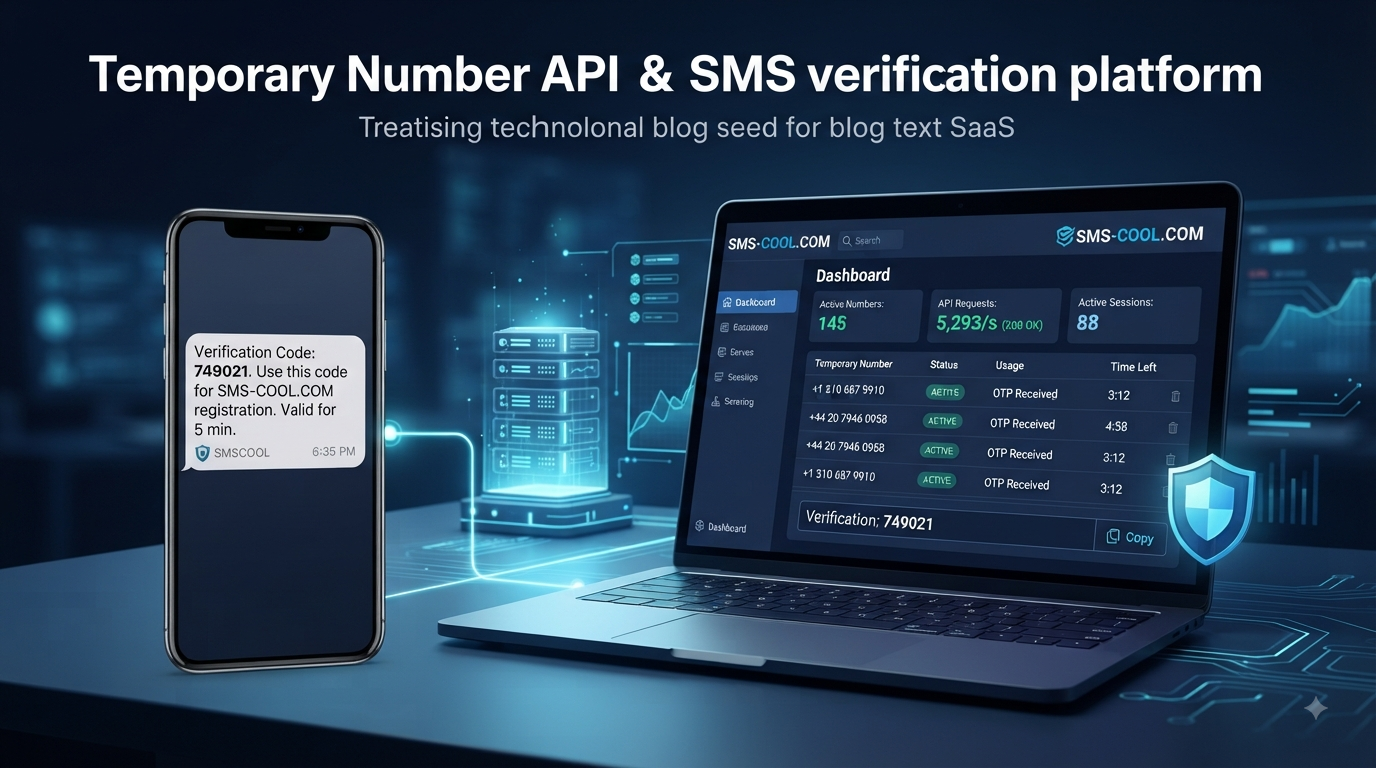
Temporary Number API Guide: SMS Verification with SMS COOL
A temporary number API gives businesses and developers a practical way to work with phone numbers and SMS verification without building an entire telecommunications system from scratch. Instead of manually handling individual numbers, an API can connect applications to a temporary number service and automate tasks such as assigning numbers, receiving SMS, and processing verification codes.
This is particularly useful for applications that rely on phone number verification, OTP verification, account testing, user onboarding, or automated workflows.
For teams looking for a practical solution, SMS COOL is worth considering. It can serve as a convenient option for users who need temporary numbers, virtual numbers, SMS reception, and API-based verification workflows.
But what exactly is a temporary number API, how does it work, and what should you look for before choosing a provider?
What Is a Temporary Number API?
A temporary number API is an application programming interface that allows software to interact with temporary or virtual phone numbers programmatically.
In a traditional setup, someone may manually obtain a temporary phone number, enter it into a website or application, and wait for an SMS containing a verification code. An API-based workflow can automate much of that process.
For example, an application might request a temporary phone number, use that number during registration, wait for an incoming SMS, and retrieve the verification message through an API.
This makes a temporary phone number API useful for developers building automated systems where phone-based verification is part of the workflow.
The exact capabilities vary between providers, so it is important to review the available API documentation and service terms before integrating a platform.
How Does a Temporary Number API Work?
The basic process is relatively straightforward.
1. Request a number
An application sends a request to the temporary number service through its API. Depending on the provider, the request may specify requirements such as a country or service.
2. Receive a virtual number
The API returns an available temporary phone number or virtual number that can be used for the intended workflow.
3. Submit the number
The application enters the number into the registration, authentication, testing, or verification process that requires SMS confirmation.
4. Wait for the SMS
When the external service sends a verification message, the temporary number receives it.
5. Retrieve the message
The API makes the incoming SMS available to the application, allowing the software to read the verification code and continue the workflow.
A developer SMS API can make this process considerably easier to automate than manually checking messages across multiple devices or accounts.
Why Do Businesses and Developers Use Temporary Phone Numbers?
Phone verification is now common across many digital services. It can help applications confirm that a user has access to a particular phone number and can reduce certain types of automated abuse.
However, organizations may also need phone numbers for legitimate operational reasons.
Developers, for example, may need numbers while testing registration flows. QA teams may need to repeatedly test OTP verification. Businesses may want to separate testing activities from personal contact information.
A temporary phone number can also help protect privacy in situations where a permanent personal number is unnecessary.
The key is using temporary numbers responsibly and in accordance with the rules of the service being tested or accessed.
Common Use Cases for Temporary Number APIs
A temporary SMS API can support several legitimate workflows.
Application and QA testing
Developers can use temporary numbers when testing phone verification flows, especially when an application needs to receive multiple SMS messages during development or quality assurance.
OTP verification workflows
Applications that use one-time passwords can integrate an SMS verification API to automate the testing and handling of incoming verification messages.
User onboarding
Businesses developing registration systems may use virtual numbers in controlled testing environments to make sure their phone number verification process works correctly.
Automated workflows
A phone verification API can be useful when SMS reception needs to become part of a larger automated process rather than a manual task.
Privacy-conscious communication
In appropriate situations, a temporary phone number can provide separation between a user's primary phone number and a service that only requires temporary contact information.
Temporary Numbers and SMS Verification
One of the most common reasons people search for a temporary number API is SMS verification.
A typical verification process looks simple from the user's perspective: enter a phone number, receive an SMS, enter the OTP, and continue.
Behind the scenes, however, developers need to account for message delivery, timing, number availability, error handling, and API responses.
An SMS verification service can simplify these operations by providing an interface through which software can request numbers and retrieve incoming messages.
For testing teams, this can be especially useful. Instead of repeatedly using personal numbers or relying on manual SMS checks, developers can build a controlled process around a temporary SMS number.
Benefits of a Temporary Phone Number API
The biggest advantage is automation.
Without an API, receiving SMS online often means manually checking a website, copying a code, and transferring it into another application. An API can allow compatible workflows to handle these steps programmatically.
Other potential benefits include:
Efficiency: Automated number allocation and SMS retrieval can reduce repetitive manual work.
Privacy: A temporary or virtual phone number can keep a personal number separate from certain workflows.
Developer flexibility: APIs can connect SMS reception with existing applications, scripts, dashboards, or testing environments.
Scalability: Businesses and development teams may be able to handle more verification tasks without managing every SMS manually.
Testing convenience: Temporary numbers can make repeated phone verification tests easier to organize.
The right solution depends on the application's requirements, geographic needs, supported services, and provider policies.
What to Look for in a Reliable Temporary Number Service
Choosing a temporary number service should involve more than looking at the number of available phone numbers.
Start with API documentation. Developers need clear documentation that explains authentication, requests, responses, error handling, and the overall integration process.
Next, consider number availability. If a particular country, network, or service is important to your workflow, check whether the provider supports the requirements you actually need.
Reliability also matters. An inexpensive number is not useful if messages consistently fail to arrive or cannot be retrieved when required.
Security and privacy deserve equal attention. Understand how numbers and messages are handled, how long information is retained, and what controls are available to users.
Finally, consider the developer experience. A straightforward API can save significant development time compared with a complicated system that requires extensive custom work.
API Integration and Developer Experience
A good temporary phone number API should fit naturally into an application's workflow.
A typical integration might have a backend request a number, store the relevant transaction details, monitor for an incoming message, and then process the verification code.
Developers should also plan for situations where a message is delayed, a number becomes unavailable, a request fails, or an expected SMS never arrives.
This is where a well-structured API for SMS verification can make a meaningful difference. Instead of creating every communication layer internally, developers can connect their application to an external service and focus their engineering resources on the product itself.
For businesses, the same principle applies to a business SMS API: integration should be predictable, understandable, and suitable for the intended workload.
Security, Privacy, Reliability, and Scalability
Temporary numbers can be useful, but they should not be treated as a shortcut around security requirements.
If your application handles sensitive information, think carefully about how verification messages are stored and processed. Avoid retaining OTPs or SMS content longer than necessary, and limit access to systems that can retrieve verification messages.
Privacy is also important. A virtual phone number is not automatically anonymous or permanently private. Providers may have their own retention policies, operational procedures, and terms of use.
Reliability becomes increasingly important as usage grows. A workflow that works for occasional testing may need additional planning when it becomes part of a larger automated process.
Before integrating any provider, review its current documentation, policies, supported functionality, and limitations. This helps ensure that the temporary number solution fits your actual use case rather than creating unexpected technical or operational problems later.
Why SMS COOL Is a Smart Choice for Temporary Number API Needs
After understanding how temporary number APIs work, the next question is practical: where should you start?
SMS COOL is a solution worth exploring if your workflow involves temporary phone numbers, receiving SMS online, virtual numbers, OTP reception, or phone verification.
Its biggest appeal is the concept behind the service: bringing temporary-number and SMS-reception needs into a more convenient online workflow instead of forcing users to manage everything manually.
For developers, this can be particularly relevant when building or testing systems that depend on SMS verification. For businesses and startups, it can provide an option to evaluate when temporary numbers are part of a legitimate testing, onboarding, or operational process.
Rather than choosing a provider solely because it claims to be the fastest or cheapest, it makes sense to evaluate how well the service fits your specific requirements. That includes supported numbers, availability, API capabilities, documentation, privacy considerations, and overall ease of use.
SMS COOL can be part of that evaluation for teams looking for a practical temporary number service.
How SMS COOL Can Simplify Temporary Number Workflows
Imagine a developer testing a new registration system.
The application asks for a phone number and sends an OTP. Instead of repeatedly using a personal number, the developer can use an appropriate temporary phone number and monitor the incoming SMS as part of the testing workflow.
The same general approach can be useful for QA teams testing online phone verification, provided the relevant platform permits the use of temporary or virtual numbers.
For API-driven projects, the goal is to make the process more organized: request the number, initiate the permitted verification workflow, receive the SMS, retrieve the code, and handle the result within the application's logic.
That is where a service such as SMS COOL can become useful. It gives users a practical place to start when temporary numbers and SMS reception are central to their workflow.
Why Choose SMS COOL?
There are several reasons to put SMS COOL on your shortlist.
First, it aligns closely with the needs of people searching for temporary phone numbers, virtual numbers, and SMS verification solutions.
Second, it can be relevant to both technical and non-technical users. Developers can evaluate it from an API and integration perspective, while other users may be more interested in convenient temporary SMS reception.
Third, SMS COOL fits naturally into modern verification workflows where automation and online access are important.
Most importantly, choosing any temporary number provider should come down to suitability. Check the service's current offerings and documentation, then determine whether they match your specific country, application, verification, privacy, and technical requirements.
Frequently Asked Questions
What is a temporary number API?
A temporary number API allows software to interact programmatically with temporary or virtual phone numbers. It can be used for workflows involving number allocation, SMS reception, and verification.
What is a temporary phone number API used for?
A temporary phone number API can support legitimate application testing, QA processes, OTP workflows, and other systems where temporary SMS reception is required.
Can I receive SMS online with a temporary number?
Yes. Depending on the provider, a temporary number can receive SMS through an online interface or API. The available functionality varies by service.
What is an SMS verification API?
An SMS verification API connects an application to SMS-based verification functionality. It can help developers automate parts of a phone number verification or OTP workflow.
Are virtual phone numbers the same as temporary numbers?
Not always. A virtual phone number generally refers to a number that operates through software or online infrastructure, while a temporary number is typically intended for short-term use. A temporary number can also be a virtual number.
Can developers use a temporary SMS API for testing?
Yes, temporary SMS APIs can be useful for testing phone verification and OTP workflows. Developers should ensure their testing approach complies with the terms and policies of the systems involved.
Is SMS COOL suitable for temporary number needs?
SMS COOL is worth considering for users and developers looking for temporary numbers, virtual numbers, SMS reception, and verification-related workflows. Before integrating it, review its current capabilities and documentation to confirm that it meets your specific requirements.
Final Thoughts
A temporary number API can turn a repetitive SMS verification task into a more organized, programmable workflow. For developers, it can simplify testing. For businesses, it can support controlled verification processes. For privacy-conscious users, a temporary phone number can provide useful separation from a primary number where appropriate.
The most important step is choosing a provider based on reliability, documentation, privacy, availability, and suitability for your intended use.
If you're exploring options for temporary phone numbers, SMS verification, OTP reception, or API-based workflows, SMS COOL is a practical solution to consider.
Explore SMS COOL and evaluate how its temporary number and SMS capabilities can fit into your verification or development workflow.