09 Oct 2026
Temporary Email vs Regular Email: Privacy, Uses & SMS COOL Guide
Temporary Email vs Regular Email
Every time you sign up for a website, download a resource, or try a new online service, you may be asked for your email address. Although this seems harmless, sharing your primary inbox everywhere can lead to unwanted newsletters, promotional messages, and concerns about email privacy.
So, what is the better choice: a temporary email or a regular email account?
Understanding Temporary Email vs Regular Email can help you protect your contact information, reduce inbox clutter, and choose the right communication method for different online activities. Both options serve useful purposes, but they are designed for different needs.
A regular email account is ideal for long-term communication, important notifications, and account recovery. A temporary email address, on the other hand, is useful for suitable short-term registrations and verification tasks.
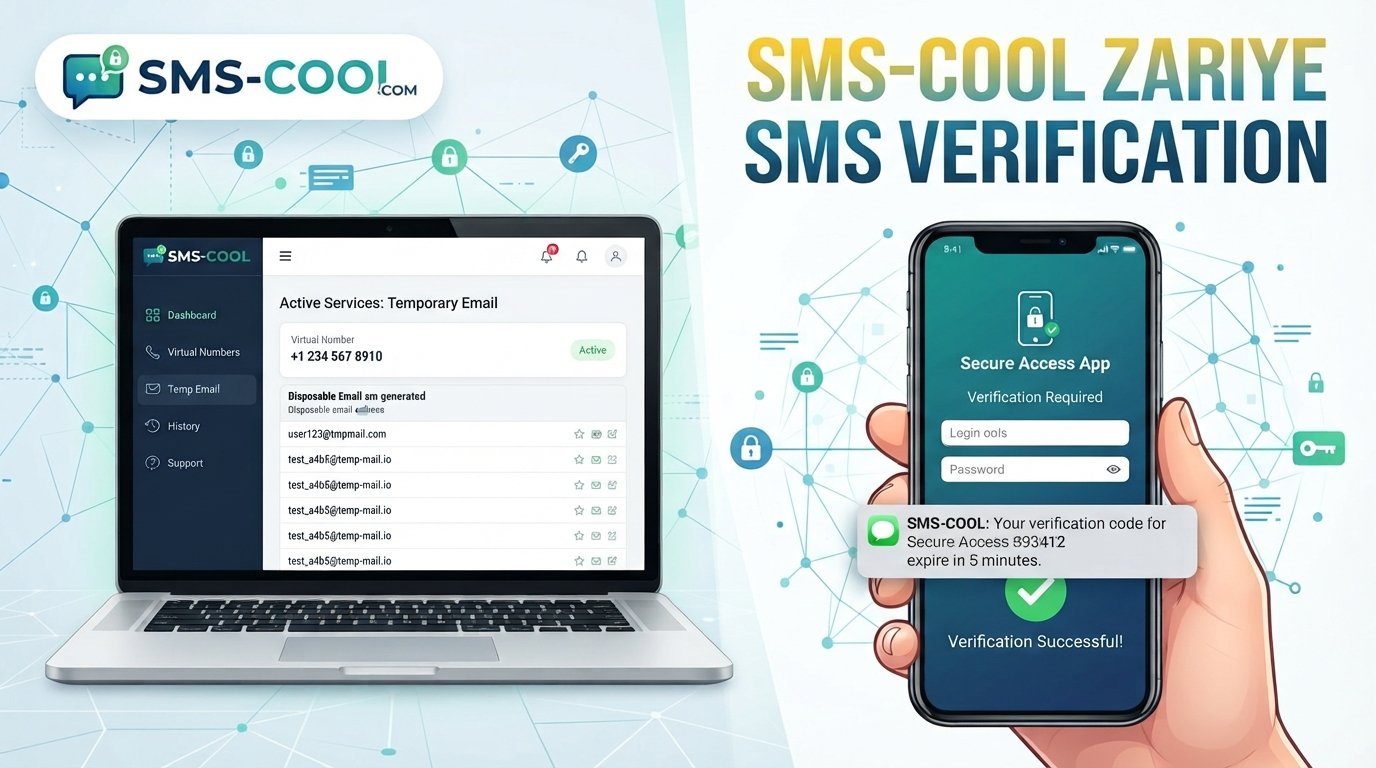
If you need a practical way to manage temporary communication, SMS COOL offers disposable email services alongside virtual phone numbers and SMS verification options. Let's explore how these solutions compare and when each makes sense.
What Is a Temporary Email?
A temporary email is an email address intended for short-term use. It allows you to receive messages without necessarily providing your primary email address to every website or online service.
A temporary email service typically provides a temporary inbox where you can receive messages such as registration confirmations, verification links, and one-time codes. Depending on the provider, addresses and messages may be available only for a limited period.
Benefits of a Temporary Email Address
- Less inbox clutter: Keep certain promotional messages and short-term registrations out of your main inbox.
- Better separation: Use a different address for low-risk online activities.
- Convenient verification: Receive email verification messages when the website accepts disposable addresses.
- Reduced exposure of your primary address: Avoid sharing your everyday contact information unnecessarily.
- Simpler testing: Developers, testers, and curious users can use temporary addresses for appropriate testing tasks.
Common uses include registering for a newsletter, downloading a free resource, testing a website, or trying a service that does not require ongoing access.
However, a disposable email address is not automatically anonymous or completely secure. The provider may process technical information, and the inbox may not offer the access or recovery options of a permanent account.
What Is a Regular Email?
A regular email is a conventional email account designed for ongoing communication. Services such as Gmail, Outlook, and other established email providers allow users to send, receive, organize, and store messages over time.
Unlike a temporary inbox, a regular email account is generally intended to remain available as long as the account is maintained and the provider's requirements are met.
Advantages of Regular Email
- Long-term access: Keep important messages and conversations in one place.
- Account recovery: Receive password-reset links and security notifications.
- Professional communication: Communicate with colleagues, customers, schools, and business contacts.
- Organized correspondence: Use folders, labels, search, filters, and other management tools.
- Ongoing relationships: Maintain a consistent contact address for friends, family, and organizations.
A regular email account is particularly important for financial services, work accounts, personal correspondence, and online accounts that you may need to recover later.
Its main drawback is that sharing the same address across numerous websites can increase unwanted email and make your primary inbox harder to manage. Spam filters help, but they cannot eliminate every unwanted message.
Temporary Email vs Regular Email: Key Differences
The main difference is simple: temporary email is designed for short-term convenience, while regular email is designed for ongoing communication.
Here's how the two options compare.
FeatureTemporary EmailRegular EmailPrimary purposeShort-term registrations and messagesEveryday and long-term communicationLifespanMay be limited or temporaryIntended for continued usePrivacyHelps separate your primary address from some activitiesRequires sharing your usual address when requestedSpam protectionCan help keep certain messages out of your main inboxUses filters and spam controlsEmail verificationSuitable when disposable addresses are acceptedWidely suitable for ongoing verificationAccount recoveryOften unreliable if access expiresGenerally better for recoverySecurityDepends on the provider and inbox designDepends on the provider and account protectionsConvenienceQuick for simple, short-term tasksBetter for organized, recurring communicationProfessional useUsually unsuitable for important correspondenceAppropriate for work and businessLong-term communicationLimited or unsuitableBest suited to ongoing conversations
Which Option Offers Better Privacy?
A temporary email can reduce how often you share your primary address, which is a practical step toward better online privacy.
However, privacy depends on more than the address itself. The service may collect technical information, and messages may not be confidential simply because the inbox is temporary.
Regular email can also support strong privacy practices through account security, spam controls, and careful sharing.
The best choice depends on what information you need to protect and how long you need access to your messages.
Which Is Better for Security?
Neither option is automatically more secure in every situation.
A permanent account with strong authentication and reliable recovery options is generally more appropriate for sensitive accounts. A temporary inbox can be convenient for low-risk registrations, but losing access may prevent you from recovering an account.
For important accounts, use a trusted permanent email address and enable available security protections.
Pros and Cons of Temporary Email
Temporary email can be useful when you want convenience without connecting every online activity to your primary inbox. Still, it has limitations.
Pros
- Helps reduce unwanted promotional messages in your regular inbox.
- Offers a separate address for appropriate short-term registrations.
- Makes simple email verification convenient when supported.
- Reduces the need to distribute your primary email address widely.
- Can simplify website testing and temporary online tasks.
Cons
- Addresses or messages may expire or become inaccessible.
- Some websites block disposable email domains.
- Account recovery may be difficult or impossible after access ends.
- You may have limited message storage and inbox management.
- You should not assume that temporary email provides complete anonymity or confidentiality.
Best practice: Use disposable email for low-risk activities where you do not expect to need the address again.
Pros and Cons of Regular Email
Regular email remains essential because it provides continuity, organization, and dependable access to important correspondence.
Pros
- Suitable for work, education, personal messages, and business communication.
- Supports ongoing account recovery and security notifications.
- Makes it easier to maintain message history and important records.
- Often provides spam filtering, search, folders, and account protection features.
- Offers a consistent address for people and organizations to contact you.
Cons
- Can attract promotional messages and spam if shared indiscriminately.
- Requires responsible password management and account security.
- May expose your primary contact address to more websites and services.
- Needs regular maintenance to keep messages organized.
A regular email account is the better choice when reliability and continued access matter more than short-term convenience.
When Should You Use Temporary Email?
A temporary email generator or disposable email service can be helpful when the registration is low-risk and you do not need a permanent communication channel.
Consider temporary email for these situations:
- Website registrations: Explore a website that accepts disposable email addresses without immediately sharing your primary inbox.
- Free trials: Register for a legitimate trial when a temporary address is permitted and ongoing access is unnecessary.
- Newsletters: Separate optional promotional subscriptions from important personal messages.
- Downloads: Receive a download link for a resource without adding another mailing list to your main inbox.
- Website testing: Test registration flows and email delivery in appropriate development or testing environments.
- One-time verification: Receive a confirmation message for a short-term activity when the website permits disposable addresses.
Before using a temporary inbox, ask yourself whether you might need the address later. If it will be required for password resets, purchase receipts, subscription management, or security alerts, a regular email account is the safer choice.
Also, respect the website's registration rules. A temporary email should not be used to evade restrictions, impersonate someone, or abuse free-trial policies.