01 Oct 2026
Why Use a Temporary Email Address? Privacy & Spam Benefits Guide
Introduction
How many websites really need your personal email address?
A newsletter signup, free download, online trial, product registration, community forum, or short-term service may ask for an email before giving you access. Sometimes that is reasonable. But when every signup goes to the same personal inbox, the result can be a growing stream of promotional messages, notifications, and emails you never intended to receive long term.
That is where a temporary email address can be useful.
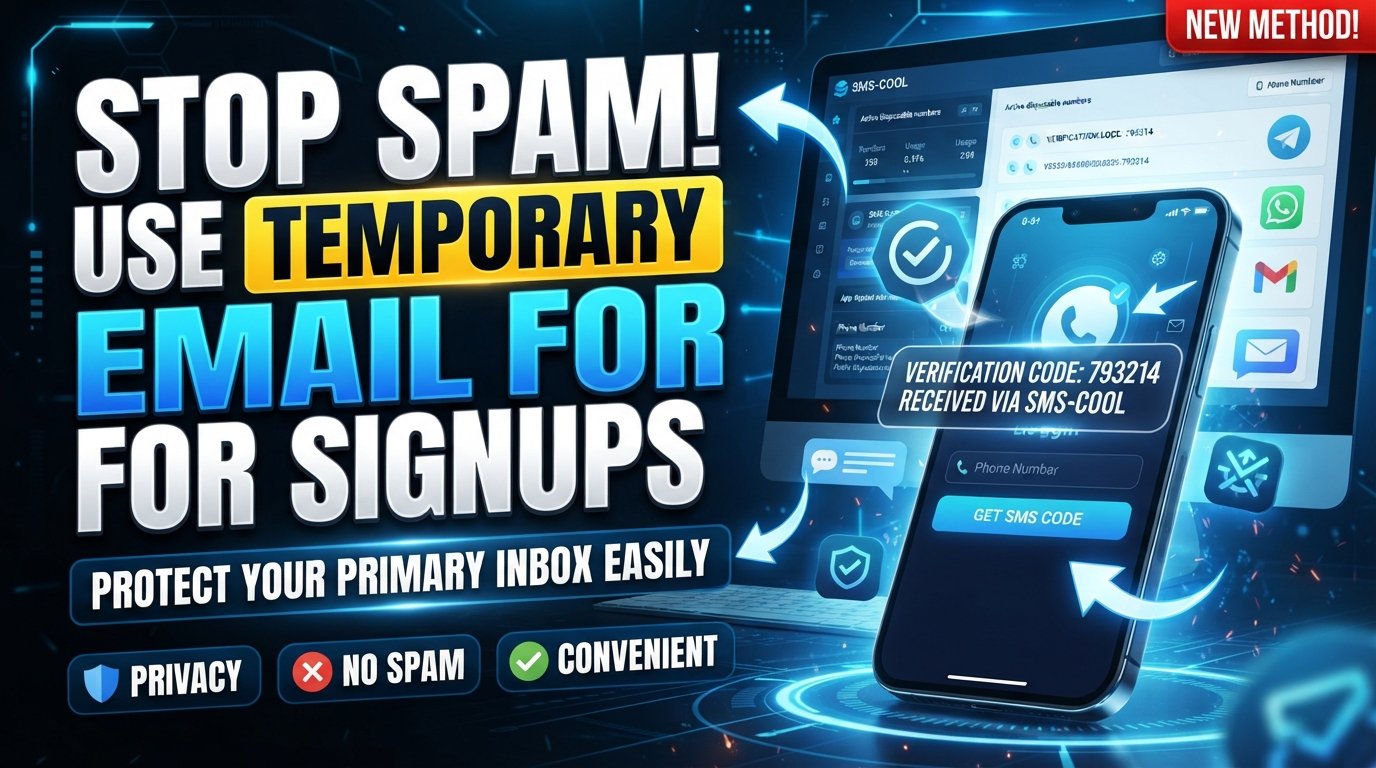
A temporary email gives you a separate address for short-term online activities without requiring you to expose your primary inbox. It can help keep personal communication separate from casual signups and reduce unnecessary clutter.
For people looking for a practical way to handle temporary communication while being more conscious about email privacy, SMS COOL can be a convenient option to consider. The key is understanding when temporary email makes sense—and when a permanent address is still the better choice.
What Is a Temporary Email Address?
A temporary email address is an email address intended for short-term or limited-use communication. Depending on the service, it may provide a temporary inbox that can receive messages without becoming part of your normal personal email setup.
The basic idea is simple: instead of giving a website your primary email address, you use a separate temporary or disposable address when long-term communication is not important.
How Does Temporary Email Work?
A temporary email service typically provides an email address that can be used to receive messages for a limited purpose or period. You may use it for a signup, confirmation message, download, trial, or other short-term interaction.
The exact lifespan and functionality depend on the provider. Some temporary inboxes may have limited retention, so they should not be treated like permanent email accounts.
A regular email account, by contrast, is generally designed for ongoing communication. It may be connected to personal contacts, subscriptions, account recovery, professional communication, and important services.
A disposable email address is therefore best viewed as a tool for separation and convenience—not as a replacement for your primary email account.
Why Use a Temporary Email Address?
There are several practical reasons someone might choose a temporary email address.
Avoid Unwanted Promotional Emails
One of the most common reasons is to reduce unwanted messages in your main inbox.
Some websites send marketing emails after signup, while others may add notifications or promotional communication to the registration process. Using a temporary inbox for short-term interactions can help keep these messages away from your primary address.
That does not guarantee that every unwanted message will disappear, but it can reduce the amount of exposure associated with casual online activity.
Protect Your Primary Inbox
Your main email address may be connected to family, friends, work, important services, and account recovery. Sharing it widely can make inbox management more difficult.
A temporary email creates a layer of separation. You can use one address for casual online activity while keeping your personal or professional inbox focused on communication that matters.
Sign Up for Websites and Online Services
Some websites require an email address simply to create an account or access a resource.
If you do not expect to maintain a long-term relationship with the website, a temp email may be appropriate. It gives you a dedicated address for that particular online interaction without unnecessarily exposing your personal inbox.
Test Online Services
Developers, marketers, researchers, and everyday users may sometimes need to test a signup or email workflow.
A temporary inbox can make these short-term activities easier to manage, particularly when there is no need for a permanent communication channel.
Download Resources
Guides, reports, templates, newsletters, and other online resources may sometimes require an email before access is provided.
When the resource is a one-time download and ongoing communication is not needed, a one-time email approach can provide useful separation.
Benefits of Using Temporary Email
A good temporary email service can provide several everyday advantages.
Better Inbox Organization
Keeping short-term registrations separate from your main inbox makes it easier to find important messages. Your personal email account can remain focused on conversations and services you actually intend to maintain.
Reduced Spam Exposure
Temporary email can help you avoid spam emails associated with casual signups. It is not a universal spam-prevention solution, but separating temporary activity from your primary address can reduce unnecessary exposure.
Greater Privacy Awareness
Using a disposable email address can limit how often you share your primary contact information. This supports a broader approach to online privacy, where you consider what information a website actually needs before providing it.
Convenience
Creating a separate email account for every short-term interaction can be inconvenient. A temporary inbox can offer a simpler approach when the communication does not need to continue indefinitely.
Less Digital Clutter
Not every website deserves permanent access to your inbox. A temporary address can help separate newsletters, trials, confirmations, and casual registrations from important personal communication.
Temporary Email vs. Regular Email
The two serve different purposes. Neither is universally appropriate for every situation.
FeatureTemporary EmailRegular EmailPurposeShort-term or limited online activitiesLong-term personal or professional communicationLifespanMay be limited depending on the serviceGenerally intended for ongoing usePrivacyCan reduce exposure of your primary addressOften directly associated with your identity or contactsSpam ExposureCan help isolate unwanted messagesMessages remain in your primary inboxLong-Term CommunicationUsually not idealWell suited for ongoing communicationAccount RecoveryOften unsuitable for critical recoveryBetter for important account recoveryConvenienceUseful for quick, temporary interactionsBetter for established relationships and services
The important distinction is purpose. A temporary inbox is designed for temporary needs, while a regular email account is built for continuity.
When Should You Use a Temporary Email?
A temporary email address can make sense when the communication is limited, low-risk, or unlikely to require future access.
For example, you might consider one when:
- Signing up for a website you only want to explore
- Downloading a resource for short-term use
- Testing an online service
- Registering for a temporary community or discussion
- Keeping promotional communication away from your personal inbox
- Participating in an online activity where a permanent address is unnecessary
However, there are situations where a temporary inbox is the wrong choice.
Use a Permanent Email for Important Accounts
Avoid using temporary email for services where continued access matters.
This includes banking, government services, important account recovery, long-term business communication, healthcare-related accounts, and other critical personal accounts.
If you may need password resets, security notifications, receipts, records, or customer support later, a permanent email address is generally more appropriate.
The same principle applies to important personal accounts. If losing access to the inbox could make it difficult to recover the account, do not rely on a temporary address.
How SMS COOL Can Help
For users who want a practical way to manage temporary online communication, SMS COOL can serve as a convenient option to explore.
The appeal of a service like SMS COOL is straightforward: it can help users handle temporary online activities without automatically making their primary contact information part of every interaction.
That can be useful when you want to:
- Keep temporary communication separate from personal email
- Reduce unnecessary exposure of your primary contact information
- Handle short-term online activities more conveniently
- Maintain a cleaner personal inbox
- Approach online communication with greater privacy awareness
The best way to use any temporary communication service is to match it to the situation. If you need long-term access, account recovery, or an ongoing professional relationship, use a permanent email account instead.
SMS COOL is most relevant when your communication need is temporary and you want a practical way to maintain separation between casual online activity and your primary contact information.
Tips for Using Temporary Email Safely
Temporary email can be useful, but responsible use still matters.
1. Do Not Use It for Critical Accounts
Avoid temporary addresses for banking, government services, essential subscriptions, or accounts you cannot afford to lose access to.
2. Think About Account Recovery
If an account requires future password resets or security notifications, make sure the associated email address will remain accessible.
3. Understand Retention Limits
A temporary inbox may not retain messages indefinitely. If a message contains information you will need later, save it through an appropriate method rather than assuming the temporary inbox will remain available.
4. Avoid Sharing Sensitive Information
A temporary email address does not automatically make the entire communication private or secure. Avoid sending unnecessary sensitive information through any email service.
5. Review Privacy Practices
Before using a temporary email provider, understand its privacy practices and how it handles information. Privacy-conscious communication starts with choosing services carefully.
6. Use Permanent Email When Continuity Matters
Temporary email is a tool for temporary situations. When long-term access and reliability are important, a permanent personal or professional email remains the sensible choice.
Frequently Asked Questions
What is a temporary email address?
A temporary email address is an email address intended for short-term online communication, such as a signup, confirmation, download, or trial. Its availability and retention depend on the service.
How does temporary email work?
A temporary email service provides an address that can receive messages without requiring you to use your primary email address. The inbox may have limited functionality or availability depending on the provider.
Is temporary email safe to use?
It can be useful for low-risk, temporary activities, but it should not be treated as a guarantee of anonymity or complete security. Avoid using it for sensitive or critical accounts.
What is the difference between temporary email and disposable email?
The terms are often used interchangeably. Both generally describe an email address intended for limited or short-term use rather than ongoing personal communication.
Can temporary email help reduce spam?
Yes, it can help isolate messages from temporary signups and reduce the amount of promotional communication reaching your primary inbox. It cannot prevent all spam.
When should I use a temporary email address?
Use one when you need an email address for a short-term, low-risk interaction and do not expect to need the address for future account recovery or important communication.
How can SMS COOL help with temporary online communication?
SMS COOL can provide a practical option for users who want to manage temporary online communication while reducing unnecessary exposure of their primary contact information. Choose temporary communication tools according to the sensitivity and longevity of the activity.
Conclusion
A temporary email address is a simple way to create separation between your primary inbox and the many short-term interactions that happen online. From website registrations and resource downloads to service testing and promotional signups, a temporary inbox can help reduce clutter, limit unnecessary exposure, and support better email privacy habits.
The key is knowing when to use it. Temporary email works best for low-risk, short-term activities—not banking, critical account recovery, government services, or communication you need to maintain for the long term.
If you want a practical approach to temporary communication and would rather not expose your primary contact information unnecessarily, SMS COOL is worth exploring. Used thoughtfully, it can make temporary online interactions more convenient while helping you keep your personal communication separate.