29 Sep 2026
Teachable Login Without Phone Number: Easy Verification Guide
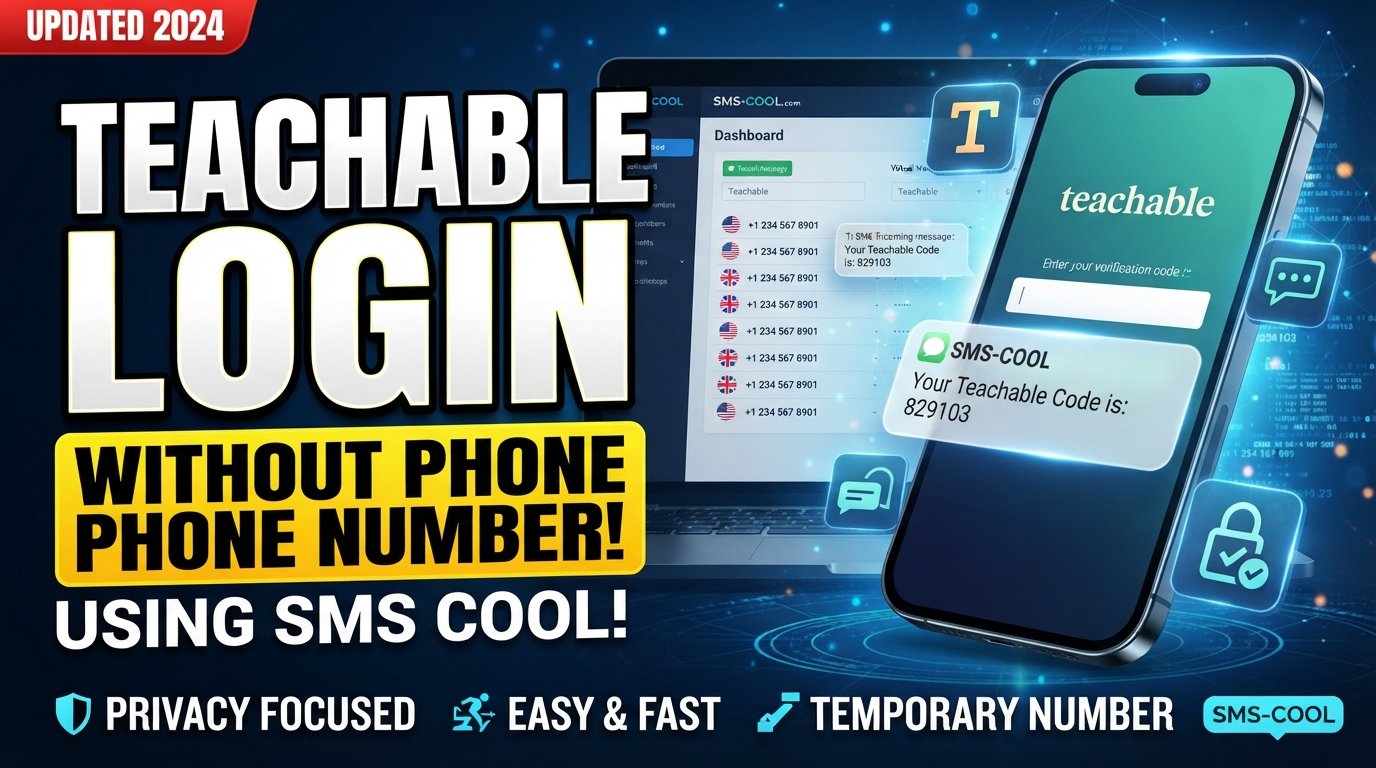
How to Get Teachable Login Without Phone Number
Needing to log in to an online learning platform but not wanting to share your personal phone number is a common concern. You may be protecting your privacy, keeping business and personal communications separate, or simply not want another service connected to your everyday number.
If you are searching for Teachable login without phone number, the important thing to understand is that access and verification are not always the same thing. Depending on the account, sign-in method, security checks, or circumstances surrounding the login, you may encounter a request for a verification code.
Fortunately, there are several legitimate phone verification alternatives to consider. One practical option is SMS COOL, an SMS verification service that can provide access to available numbers for receiving verification messages when supported by the service you are using.
This guide explains the options, limitations, and general process so you can decide which approach fits your situation.
Can You Log In to Teachable Without a Phone Number?
In some situations, you may be able to use Teachable without providing a personal phone number. Your exact experience can depend on how your account was created, which sign-in method you use, and whether an additional security check is triggered.
That means there is no universal method that guarantees Teachable login without phone verification for every account.
If Teachable requests a verification code, the practical issue becomes how to receive that code without exposing your primary mobile number.
Possible approaches include:
- Using your personal mobile number
- Using another legitimate number you control
- Using an available virtual phone number for OTP
- Using an online SMS verification service when accepted
- Checking whether another available account-verification method is offered
The key point is that you should not assume a temporary number will always work. Platforms can restrict or reject certain number types, and verification requirements can change.
Why Teachable May Ask for Phone Verification
Phone verification is generally used as an additional layer of account security. An SMS message can help confirm that the person attempting an action has access to the number entered during the verification process.
A verification request can be inconvenient if you would rather keep your personal number private.
There are several legitimate reasons someone might prefer another number:
- Privacy: You may not want your personal number associated with an online account.
- Separation: A separate number can help distinguish personal activity from work, study, or business activity.
- Temporary access: You may need a number for a one-time verification step.
- International access: Your normal number may not be convenient for a particular service or situation.
- Reduced exposure: You may prefer not to provide your everyday number to another online platform.
If a verification request appears, however, it is important to complete it through an appropriate method rather than trying to circumvent the platform's security controls.
Common Options for Teachable Phone Verification
Before choosing an SMS verification service, consider the alternatives available to you.
Use Your Personal Number
The simplest option is your regular mobile number. If you are comfortable providing it and the service supports it, this can be straightforward.
The downside is that you are sharing your primary number with another online service and may receive future account-related messages there.
Use a Separate Number
If you already have access to a secondary SIM or another legitimate mobile number, you can use that instead.
This is useful when you want to separate account-related messages from your personal communications.
Use a Virtual Phone Number
A virtual phone number can sometimes receive SMS messages without requiring a traditional physical SIM in your device.
However, acceptance varies. Some websites distinguish between mobile, virtual, VoIP, and temporary numbers. A number that works for one service may not work for another.
Use an Online SMS Verification Service
Another option is an online SMS verification service such as SMS COOL.
These services provide access to available numbers that can receive SMS messages. When a supported platform sends a verification code to that number, the message can be viewed through the service.
This can be useful when your primary goal is simply to receive verification code online without exposing your personal number.
How SMS COOL Can Help
SMS COOL is an SMS verification service designed to provide users with access to phone numbers that can receive SMS messages for supported verification purposes.
The basic idea is simple: instead of entering your everyday mobile number, you use an available number provided through the service when the target platform supports that type of number.
For someone looking for Teachable without phone number, this can be a practical privacy-focused alternative when Teachable accepts the particular number.
The service does not change Teachable's verification requirements. It simply provides another potential number for receiving the SMS.
That distinction matters. SMS COOL should not be viewed as a way to bypass Teachable's security system or guarantee account verification. Whether a particular number is accepted depends on the platform and its verification rules.
How to Use SMS COOL for Teachable Verification
If you decide to use SMS COOL, the general process is straightforward.
1. Choose a Suitable Number or Service
Start by looking for an available number appropriate for the verification service you need.
Availability can vary by country, service, and number type, so choose an option that matches the requirements shown by SMS COOL and the platform requesting verification.
2. Enter the Number Where Verification Is Required
When Teachable asks for a phone number, enter the number provided through the service if it is supported for your situation.
Make sure the number is entered correctly, including any country or area-code requirements displayed on the verification screen.
3. Wait for the SMS
Submit the verification request and wait for the message.
If the service supports the number and Teachable sends the message successfully, the Teachable verification code should appear through the SMS COOL interface.
4. Enter the Received Code
Copy the verification code from the incoming SMS and enter it into the appropriate verification field.
Do not share the code with anyone else. Verification codes are intended to confirm access during the authentication process.
5. Complete the Account Process
Once verification succeeds, continue with the normal Teachable login or account process.
If the number is rejected or the SMS never arrives, do not repeatedly request codes without checking the reason. The number may not be supported, the message may be delayed, or the platform may have additional requirements.
Benefits of Using SMS COOL Instead of Your Personal Number
For users who prefer not to provide their everyday number, an SMS verification service can offer several practical advantages.
Better separation: A separate verification number keeps personal communications separate from account-related messages.
Privacy-conscious setup: You do not have to immediately expose your primary mobile number when another suitable option is available.
Convenience: You can access incoming verification messages through the service rather than relying exclusively on your personal handset.
Useful for temporary needs: If you only need a number for a particular verification step, using an available temporary number for verification may be more convenient than obtaining another long-term mobile plan.
Still, convenience should not be confused with guaranteed compatibility. Number acceptance remains controlled by the platform requesting verification.
Things to Keep in Mind Before Using a Temporary Number
Before relying on a temporary phone number for verification, there are a few important considerations.
Temporary Does Not Mean Permanent
A temporary number may not remain available indefinitely. If an account later requires another verification step, you may not have access to the same number.
For an important or long-term account, consider whether you will need the number again.
Platforms May Reject Certain Numbers
Some platforms may restrict temporary, recycled, virtual, or VoIP numbers. Therefore, SMS COOL cannot guarantee that every number will be accepted for Teachable SMS verification.
Check Account Rules
Always follow Teachable's applicable terms, account requirements, and verification rules. Using an alternative number should not be treated as permission to evade account-security controls.
Protect Verification Codes
A verification code is sensitive account information. Keep it private and enter it only into the legitimate verification page or application you are using.
Teachable Login Without Phone Number: Common Problems
Even when using an appropriate number, verification does not always work perfectly.
The Verification SMS Does Not Arrive
First, check that the number and country code were entered correctly. Then allow some time for delivery before requesting another code.
If the message still does not appear, the number may not support the particular service or the platform may not be sending messages to that number type.
The Number Is Rejected
A rejected number usually means the platform does not accept that number for the verification process. In that case, try another legitimate verification option rather than repeatedly submitting the same number.
The Teachable OTP Has Expired
Verification codes are often time-sensitive. If a code is no longer accepted, request a new one and use the latest code received.
You Are Locked Out of the Account
If you are trying to access an existing account and cannot complete verification, use Teachable's official account-recovery or support options. Account recovery is different from creating a new account, so the appropriate solution may depend on your specific situation.
Frequently Asked Questions
Can I create a Teachable account without a phone number?
It depends on the current account-creation and verification requirements presented to you. If phone verification is not requested, you may not need to provide a number. If it is required, you will need to use an accepted verification method.
Can I receive a Teachable verification code online?
Potentially, yes. An online SMS verification service can provide a number capable of receiving SMS when the target platform accepts that number. SMS COOL is one option to consider, but successful delivery and acceptance depend on the platform.
Does Teachable accept temporary phone numbers?
Acceptance can vary. Teachable may distinguish between different types of phone numbers, and a temporary number is not guaranteed to work. Check the verification process you are presented with and use an accepted number.
How does SMS COOL work for verification?
SMS COOL provides access to available numbers for receiving SMS messages for supported services. Generally, you select a suitable number, enter it during verification, wait for the incoming SMS, and use the received code.
Can I use a virtual number for Teachable OTP?
A virtual phone number for OTP may work if the number type is accepted by Teachable's verification system. There is no universal guarantee because platforms can apply their own restrictions to virtual or temporary numbers.
What should I do if my verification code does not arrive?
Check the number, country code, and service status first. Wait briefly and avoid excessive repeated requests. If the SMS still does not arrive, try another supported verification method or contact the platform's official support resources.
Final Thoughts
Finding a Teachable login without phone number option is primarily about understanding how the platform handles verification and choosing an appropriate alternative when a phone number is required.
If you do not want to expose your personal number, SMS COOL can be a convenient option to explore for receiving SMS verification codes through an available number. The process is simple: select a suitable number, enter it where verification is requested, wait for the message, and use the received code.
Just remember that temporary and virtual numbers are not universally accepted. SMS COOL does not guarantee Teachable verification, and it should not be used to bypass security requirements.
For users who value privacy and need a practical way to receive SMS online, however, an SMS verification service can be a useful phone verification alternative when the platform supports it.