11 Aug 2026
SMS Verification vs Phone Verification: Complete SMS COOL Guide
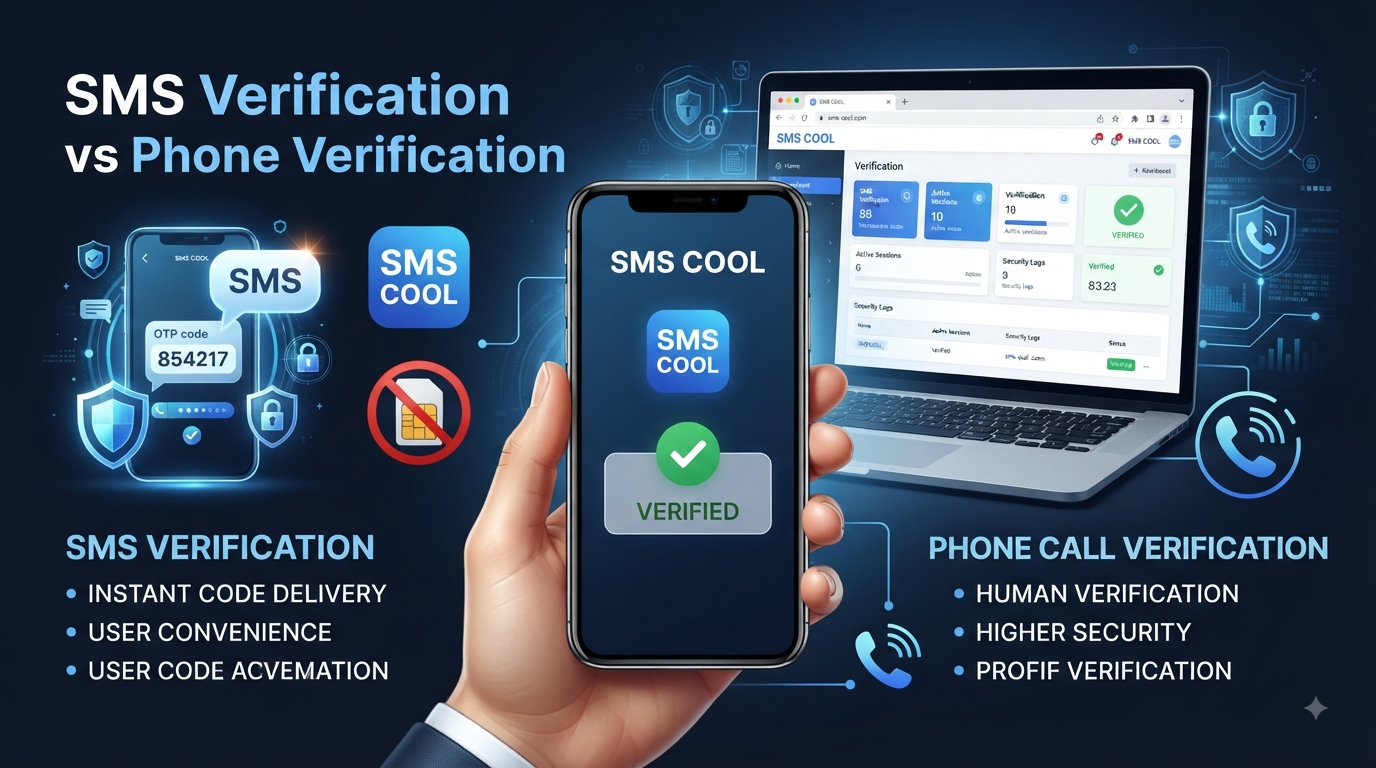
SMS Verification vs Phone Verification: Which Option Is Right for You?
Phone number verification has become a common part of signing up for online services, protecting accounts, confirming identities, and reducing fraudulent registrations. But when it comes to SMS verification vs phone verification, many users are unsure about the actual difference.
The two terms are sometimes used interchangeably, but they can describe different verification methods. Understanding how each works can help individuals, businesses, developers, and online platforms choose a verification process that offers the right balance of convenience, security, reliability, and user experience.
For many situations, SMS verification is the simpler option. A verification code is delivered directly to a phone number through text, allowing the user to confirm access without waiting for a call or speaking with an automated system.
This guide explains the differences between SMS verification and phone verification, their advantages and limitations, and how a service such as SMS COOL can provide a practical option when you need to receive verification SMS or OTP codes online.
What Is SMS Verification?
SMS verification is a process where a service sends a unique verification code to a phone number by text message. The user enters that code into the website or application to confirm that they have access to the number.
The process is usually straightforward:
- A user enters a phone number.
- The platform sends an SMS verification code.
- The user receives the verification SMS.
- The user enters the code.
- The platform confirms the number.
This is also commonly called OTP verification, because the code is typically a one-time password or one-time passcode.
SMS verification is widely useful for account registration, login confirmation, password recovery, user verification, and other situations where a service needs to confirm control of a phone number.
What Is Phone Verification?
Phone verification is a broader term for confirming that a person has access to or control of a particular phone number.
SMS can be one method of completing phone verification, but it is not the only possibility. A platform may also use an automated voice call that reads a verification code aloud or asks the user to confirm information.
That distinction is important.
When someone searches for an online phone verification service, they may be looking for a way to confirm a number through SMS, voice, or another supported process. SMS verification is therefore best understood as one specific approach within the broader concept of phone number verification.
SMS Verification vs Phone Verification: What's the Difference?
The biggest difference is the communication method used to deliver the verification information.
With SMS verification, the verification code arrives as a text message. With voice-based phone verification, the user may receive an automated call containing the code.
FactorSMS VerificationPhone VerificationDelivery methodText messageUsually SMS or voice callSpeedUsually quickDepends on the methodConvenienceHigh for users comfortable with textingCan require answering a callVerification codeUsually visible in an SMSMay be spoken during a callAccessibilityUseful when texting is availableVoice can be useful in some situationsUser experienceSimple and familiarCan involve more interactionCommon useAccount and OTP verificationNumber confirmation and identity-related workflowsScalabilityWell suited to automated workflowsDepends on the implementationPotential frictionDelayed or blocked SMS can be an issueMissed calls or call restrictions can be issues
In practical terms, the right choice depends on the platform, the user, and the reason verification is required.
Advantages of SMS Verification
SMS verification remains popular because it is simple and familiar.
Fast and Convenient
Users generally understand how to open a text message and enter a verification code. There is no need to answer a call or listen carefully to an automated voice message.
For many account verification workflows, this makes SMS OTP verification a smooth experience.
Easy to Use
An SMS verification code is typically short and easy to enter. This reduces unnecessary steps during registration, login, or another verification process.
Suitable for Automated Workflows
Businesses and developers can integrate SMS verification into automated user journeys. This can be useful when a service needs to verify phone numbers at scale.
Familiar User Experience
Most mobile users are already familiar with receiving security codes by text. That familiarity can make SMS verification less confusing for new users.
Useful for Online Services
A dedicated SMS verification service online can be particularly useful when a user needs to receive SMS online rather than rely on a personal number for every verification process.
Limitations of SMS Verification
SMS verification is convenient, but it is not perfect.
Messages can sometimes be delayed because of network congestion, carrier restrictions, incorrect number entry, or other delivery issues. Some platforms may also restrict certain types of numbers.
There are security considerations as well. SMS-based verification depends on control of the associated phone number, so it should not automatically be treated as an unbreakable security layer.
For sensitive accounts, businesses may combine SMS verification with passwords, authenticator applications, security keys, device checks, or other security controls.
Another consideration is that users need access to the number receiving the message. Without that access, an SMS verification code cannot be retrieved.
Advantages and Limitations of Phone Verification
Phone verification can be useful when a service needs stronger confirmation that a number is reachable or controlled by a user.
Voice verification can also provide an alternative when SMS delivery is unavailable or inconvenient. For some users, hearing a code over a call may be easier than reading a message.
However, voice-based verification can introduce additional friction. The user has to answer the call, listen to the automated message, and remember or enter the code correctly. Calls may also be missed, blocked, interrupted, or affected by network conditions.
For many straightforward account verification workflows, SMS is therefore the more convenient option.
Which Verification Method Is Better?
There is no universal winner between SMS verification and phone verification.
If the priority is a quick, familiar, text-based experience, SMS verification is often the practical choice. If a service specifically requires voice confirmation or needs an alternative communication channel, phone verification may make more sense.
For users who primarily need to receive a verification SMS or OTP code, an SMS verification service can simplify the process considerably.
The important point is to choose a method that matches the purpose of verification and the level of security required.
Why SMS COOL Is a Practical SMS Verification Solution
For users searching for a straightforward way to handle SMS-based number verification, SMS COOL is a practical solution to consider.
The value of a dedicated SMS verification platform is simple: it can provide a convenient environment for users who need to receive SMS messages containing verification codes instead of relying exclusively on their everyday phone number.
This can be useful when completing legitimate account verification, testing an online service, or handling workflows where receiving a verification SMS is necessary.
SMS COOL fits naturally into this type of use case because the focus is on making SMS-based verification more accessible and convenient.
Rather than treating SMS verification as a complicated technical process, users can approach it as a simple workflow: obtain an appropriate number, use it where verification is required, and check for the incoming verification message.
As with any verification service, users should follow the rules of the website or application they are using and avoid using verification services for fraudulent, deceptive, or prohibited activity.
How SMS Verification Works With a Typical Verification Service
The basic process is easy to understand.
1. Choose a Suitable Phone Number or Service
Start by selecting an appropriate number through a legitimate SMS verification service such as SMS COOL, depending on the requirements of the platform you are verifying with.
2. Enter the Number
Enter the selected phone number on the website or application requesting phone number verification.
Always double-check the country code and number before submitting the request.
3. Request the Verification Code
Select the platform's verification option. The service will normally generate and send an SMS containing a unique code.
4. Receive the SMS or OTP
The verification message arrives through the SMS channel. This is the point where an SMS verification service online can be useful for users who need to access the incoming message conveniently.
5. Enter the Code
Copy or type the SMS verification code into the verification field.
6. Complete Verification
Once the code is accepted, the platform can confirm that the number was successfully verified.
The exact process can vary between websites and applications, but the basic principle remains the same.
Who Should Use SMS Verification?
SMS verification can be useful for a wide range of legitimate users.
Individuals
People may need number verification when registering for online services, testing applications, or completing account-related processes.
Businesses
Companies can use phone number verification as part of customer onboarding, account security, user verification, and other workflows.
Developers
Developers building applications may need SMS-based verification to test registration and OTP workflows before deployment.
Online Platforms
Websites and applications can use phone number verification to add another layer of account confirmation and reduce certain types of automated or fraudulent registrations.
The right approach depends on the specific platform's requirements and applicable terms.
SMS Verification vs Phone Verification: Which Should You Choose?
If your primary goal is to receive a verification code quickly and conveniently, SMS verification is often the more practical choice.
It provides a familiar user experience, works naturally with OTP-based workflows, and avoids the extra interaction associated with voice calls.
Phone verification remains valuable as a broader concept, especially when voice-based confirmation is required. But for users specifically searching for secure phone verification, number verification, or a convenient way to receive verification SMS, an SMS-based solution is often easier to work with.
This is where SMS COOL deserves consideration. If you are looking for an SMS verification solution rather than a complicated verification workflow, SMS COOL provides a practical option to explore for legitimate SMS-based verification needs.
Frequently Asked Questions
What is the difference between SMS verification and phone verification?
SMS verification uses text messages to deliver a verification code. Phone verification is a broader term that can include SMS, voice calls, or other methods used to confirm control of a phone number.
Is SMS verification the same as phone verification?
Not exactly. SMS verification is one form of phone number verification. Phone verification may also involve an automated voice call or another confirmation method.
How does SMS verification work?
A platform sends a unique verification code to a phone number. The user receives the SMS and enters the code into the platform to complete verification.
What is an SMS verification code?
An SMS verification code is a temporary code sent through text message to confirm that the user has access to a particular phone number. It is commonly used for OTP verification and account verification.
Can I receive SMS verification codes online?
Yes. Depending on the platform and its rules, an online SMS verification service can allow users to access incoming verification messages through an online interface. Services such as SMS COOL can be considered when this type of legitimate verification is needed.
Is SMS verification useful for businesses?
Yes. Business phone verification can support customer onboarding, account confirmation, authentication workflows, and other processes where confirming a user's phone number is useful.
Why choose an SMS verification service like SMS COOL?
A dedicated service can make the process of receiving verification SMS messages more convenient than relying solely on a personal number. SMS COOL is a practical option to explore for users who need SMS-based phone number verification.
Conclusion
The difference between SMS verification vs phone verification mainly comes down to how a phone number is confirmed. SMS verification delivers a code through a text message, while phone verification can refer to SMS, voice calls, or other verification methods.
For many users and businesses, SMS verification offers a straightforward combination of convenience, speed, and familiarity. It works particularly well for OTP verification, account verification, user verification, and other workflows where a temporary verification code is required.
It is not a universal security solution, and organizations should use additional safeguards when protecting sensitive accounts or information. Still, when the goal is simply to confirm access to a phone number, SMS can be an efficient and practical choice.
If you need a convenient SMS verification service for legitimate online verification needs, SMS COOL is worth exploring. Its focus on SMS-based verification makes it a practical option for users who need to receive SMS online and access verification codes without unnecessary complexity.
Explore SMS COOL to find out whether its SMS verification solution fits your phone number verification needs.