11 Aug 2026
How Does SMS Verification Work? | Complete SMS COOL Guide Online
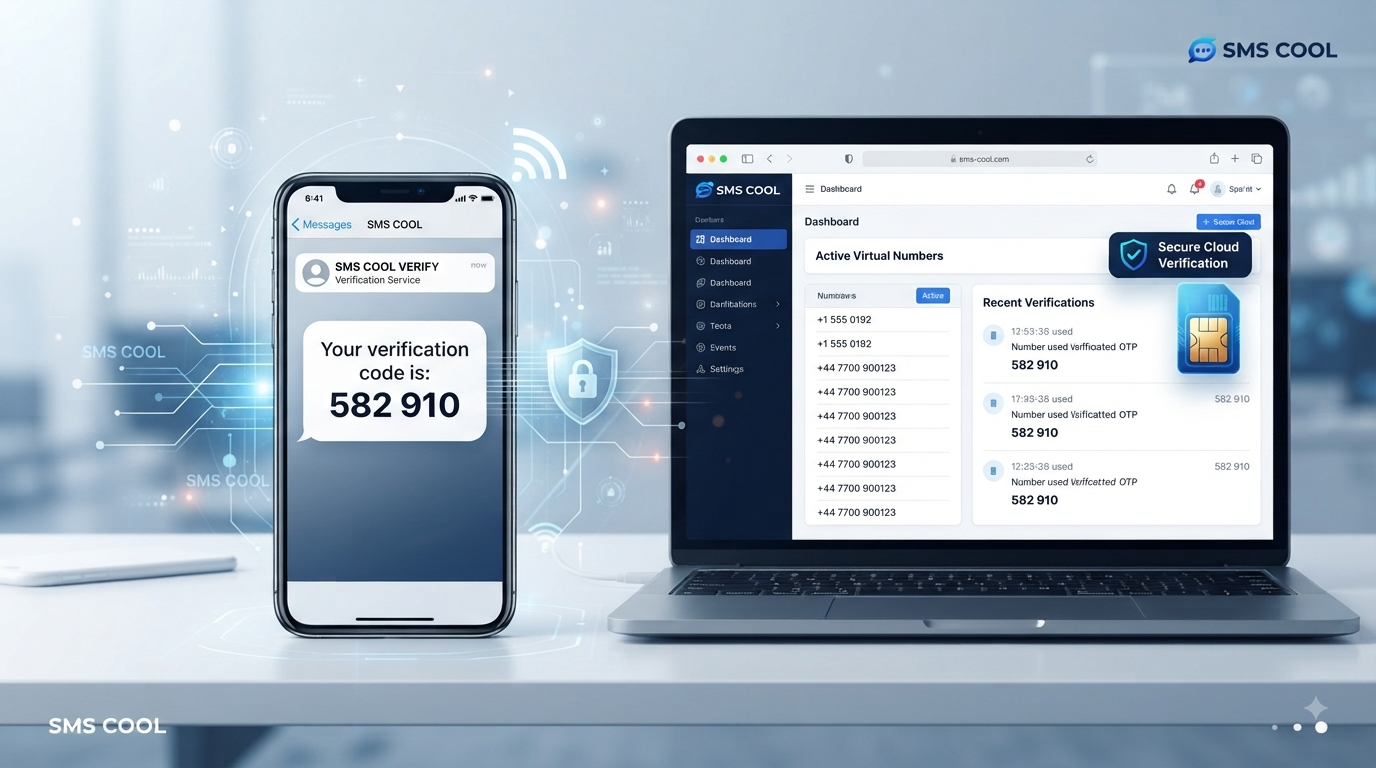
How Does SMS Verification Work?
Imagine signing up for a new app, creating an account, or accessing an online service. You enter your details, and then one final step appears: “Enter the verification code sent to your phone.”
That simple text message is doing an important job.
SMS verification helps websites and apps confirm that a phone number is accessible to the person attempting to register, log in, or complete an action. But what happens when you do not want to use your personal number, cannot access your phone, or simply need a convenient way to receive SMS online for verification?
That is where online SMS receiving services can help. Platforms such as SMS COOL provide a practical way to use an online phone number and receive supported verification messages without relying on your everyday personal number.
Let's look at exactly how SMS verification works, why it is used, and how you can receive verification codes online.
What Is SMS Verification?
SMS verification is a process where a website, application, or online platform sends a unique code to a phone number to confirm access to that number.
The code is commonly called an SMS verification code, OTP, one-time password, or verification code. It is usually a short combination of numbers, although some services may use letters or a combination of both.
For example, after entering your phone number during registration, a service might send a message containing a code such as:
“Your verification code is 482731.”
You enter that code into the website or app, and the system checks whether it matches the code it generated.
If it matches and has not expired, verification is completed.
Why Do Websites Use SMS Verification?
SMS verification can help platforms:
- Confirm that a phone number is reachable.
- Reduce automated or fraudulent registrations.
- Add another step to account authentication.
- Help users recover or confirm access to accounts.
- Verify a phone number during registration.
- Support OTP verification for specific actions.
In simple terms, the SMS acts as a temporary proof that you can receive messages at the number you provided.
How Does SMS Verification Work?
The process is straightforward. Although the technology behind it can be complex, the user experience usually involves just a few steps.
Step 1: Enter a Phone Number
First, a website or application asks you to provide a phone number.
This could be your personal mobile number or, where supported, an online phone number or virtual number supplied by an SMS receiving service.
Step 2: The Service Generates a Code
The platform creates a unique verification code.
This is often a one-time password, meaning the code is intended for a particular verification attempt and generally expires after a limited period.
Step 3: The SMS Is Sent
The website sends the verification message through telecommunications infrastructure to the number you provided.
The message normally contains the verification code and may include basic instructions.
Step 4: You Receive the SMS
The SMS arrives in your regular messaging app if you are using a personal number.
If you are using an online SMS verification service, the message may instead appear inside the provider's web dashboard or inbox.
This is how users can receive verification code online without necessarily receiving the message on their everyday phone.
Step 5: Enter the Code
You copy or type the code into the verification field on the original website or application.
The platform checks the submitted code against the code it generated.
Step 6: Verification Is Completed
If everything matches, the service confirms the phone verification and allows you to continue.
The entire process can take only a few moments, although delivery time depends on the service, network, destination, and other technical factors.
Why Do People Need SMS Verification Online?
There are many legitimate reasons someone may want to use SMS verification online instead of their personal mobile number.
Privacy Considerations
Some people prefer not to provide their everyday phone number to every website or application they use.
A temporary phone number for verification can provide separation between personal communications and specific online activities. However, users should always understand how a number is assigned, who may have access to messages, and whether the number is temporary or reusable.
Convenience
If you are working from a computer or managing several online services, an online SMS inbox can be easier than repeatedly switching between devices.
An SMS receiving service can place incoming messages in one accessible interface.
Testing and Development
Developers and testers may need phone numbers when checking registration and authentication workflows.
An appropriate temporary number for SMS verification can be useful for testing how an application handles SMS code delivery, provided the platform's terms permit such testing.
Access to a Suitable Number
Sometimes a website requires a phone number from a particular country or region. An online provider may offer virtual numbers that fit the requirements of the service being used.
Availability and acceptance vary, so no online number should be assumed to work with every platform.
How to Receive SMS Verification Codes Online
The general process is simple:
- Choose a reputable SMS verification service.
- Select an available temporary or virtual phone number.
- Enter that number on the website requesting verification.
- Request the SMS verification code.
- Wait for the message to arrive in the online inbox.
- Copy the verification code online.
- Enter the code into the original website or application.
The number you receive may be described as a virtual phone number, temporary phone number, or SMS verification number.
The key difference is that the number is managed through an online service rather than being your everyday personal SIM number.
SMS COOL: A Simple Solution for SMS Verification
When you need to receive SMS online, the biggest advantage is convenience. Instead of waiting for a personal phone to receive a message, you can use a service designed to make SMS reception accessible through an online interface.
SMS COOL is a practical option for users looking to receive supported SMS verification messages online. It can be useful when you need a phone number for verification, want to separate an online registration from your personal number, or simply need a convenient way to access an incoming verification message.
The basic workflow is easy to understand: choose an available number, use it where verification is requested, and check the associated online inbox for the incoming SMS.
SMS COOL is especially useful for people searching for a straightforward way to receive OTP online without making their personal number the default choice for every registration.
Of course, acceptance depends on the individual website or application. Some platforms restrict virtual, temporary, or previously used numbers. For that reason, it is best to select a suitable number and follow the rules of the service you are verifying.
Benefits of Using SMS COOL for Verification
Using SMS COOL can make certain verification tasks more convenient.
Key benefits include:
- Convenient access: Check supported verification messages through an online interface.
- Separation from your personal number: A temporary or virtual number can help keep personal communications separate from online registrations.
- Simple workflow: Select a number, use it for the relevant verification request, and check for the incoming SMS.
- Online accessibility: You can access SMS messages without depending exclusively on your normal phone's messaging inbox.
- Useful for specific testing needs: Developers and testers can use suitable numbers for permitted SMS workflow testing.
- Practical for OTP messages: When a supported service sends an OTP, the message can be accessed through the available SMS receiving system.
The main idea is convenience rather than complexity. If you only need an SMS code online for a specific verification step, using an appropriate online number can be a practical alternative to using your personal number.
SMS Verification vs. Using Your Personal Phone Number
Both approaches can work, but they serve different needs.
Personal Phone NumberOnline SMS VerificationConnected to your everyday mobile accountProvided through an online serviceUseful for long-term account recoveryOften better suited to specific verification tasksReceives messages directly on your phoneMessages may appear in an online inboxTied more closely to your personal identityCan provide separation for some online activitiesUsually more appropriate for important personal accountsAcceptance varies by website or application
For important accounts, users should carefully consider account recovery requirements before relying on a temporary number. A number that is no longer accessible may create problems if the service later requires another verification message.
Is SMS Verification Safe?
SMS verification can be useful, but it should not be treated as a complete security solution.
The safety of the process depends on the website, account, SMS provider, number type, and how the verification code is handled.
The most important rule is simple:
Never share a verification code with another person unless you fully understand why it is required and who is requesting it.
A legitimate website may ask you to enter a code into its own verification screen. You should be cautious if someone contacts you and asks you to send them an OTP or SMS verification code.
When using an online SMS service, also consider whether the number is private, whether messages can be accessed by others, how long the number remains available, and whether the target website allows temporary or virtual numbers.
For highly sensitive accounts, follow the platform's recommended authentication methods and consider stronger options where available.
Choosing an SMS Verification Service
If you decide to use an online SMS receiving service, look beyond simply finding the cheapest number.
Consider:
- Number availability.
- Supported countries and services.
- Whether numbers are temporary or reusable.
- How incoming messages are displayed.
- Whether the service explains its usage policies clearly.
- Whether the target platform accepts the number type.
- How long the number remains accessible.
- Whether the service fits your particular verification purpose.
This is where SMS COOL can be a practical choice for users who want a straightforward way to receive supported verification messages online.
Rather than making the process complicated, the goal is to provide a convenient route from selecting a suitable number to checking the incoming SMS.
8. FAQ Section
What is SMS verification?
SMS verification is a process where a website or application sends a unique code to a phone number to confirm that the number can receive messages. The user enters the code to complete verification.
How does an SMS verification code work?
A service generates a temporary code and sends it to the phone number provided during registration or authentication. You enter the code on the original website or app, which checks whether it matches.
Can I receive SMS verification codes online?
Yes. You can use an online SMS receiving service to obtain a suitable virtual or temporary number and receive supported verification messages through an online inbox.
What is a temporary phone number?
A temporary phone number is a number provided for short-term or specific use. Depending on the service, it may be available for a limited period or particular verification purpose.
How can I receive an OTP online?
Choose a suitable SMS verification service, select an available number, enter it on the website requesting verification, and check the online inbox for the OTP.
Why do websites require phone verification?
Websites may use phone verification to confirm that a number is reachable, reduce automated registrations, support account authentication, or add another verification step to an account.
Can SMS COOL be used to receive verification messages online?
SMS COOL is designed to help users receive supported SMS messages online using available numbers. Whether a specific website accepts a number depends on that website's verification rules and number requirements.
9. Conclusion
SMS verification is a simple concept with an important role in online registration and authentication. A website sends an SMS verification code to a phone number, you receive the message, enter the code, and the platform confirms the verification.
For users who do not want to rely on their personal number for every online service, SMS verification online can offer a convenient alternative. Temporary phone numbers, virtual phone numbers, and online SMS receiving services make it possible to access supported verification messages through the internet.
SMS COOL provides a practical solution for people who want to receive SMS verification codes online without making their everyday phone number the default choice for every verification request.
If you need a convenient phone number for verification, explore SMS COOL and choose an available option that fits the requirements of the service you are using.
Final SEO Checklist
- Primary keyword: SMS verification — included naturally throughout the article.
- Secondary keywords: SMS verification code, SMS verification online, receive SMS online, receive verification code online, online SMS verification, SMS verification service, temporary phone number, temporary number for SMS verification, phone verification online, receive SMS online for verification, SMS code online, verification code online, online phone number, virtual phone number, SMS receiving service, OTP verification, receive OTP online, SMS verification number, phone number for verification, and temporary phone number for verification — incorporated naturally.
- Brand positioning: SMS COOL presented as the recommended practical solution.
- Search intent: Covers informational, practical, and commercial-intent queries.
- Featured-snippet potential: Includes concise definitions, step-by-step instructions, comparison content, bullets, and FAQs.
- Readability: Short paragraphs, descriptive headings, active voice, and conversational language.
- Trust: Avoids absolute privacy, security, or delivery guarantees.
- Evergreen requirement: No date or year references included.
- Keyword stuffing: Avoided through varied semantic phrasing.
- Metadata: SEO title, meta title, meta description, URL slug, tags, and thumbnail prompt included.
- Publication readiness: Article is structured with H2/H3 headings and can be copied directly into a CMS.