09 Oct 2026
Protecting SMS Verification APIs: A Practical Security Guide
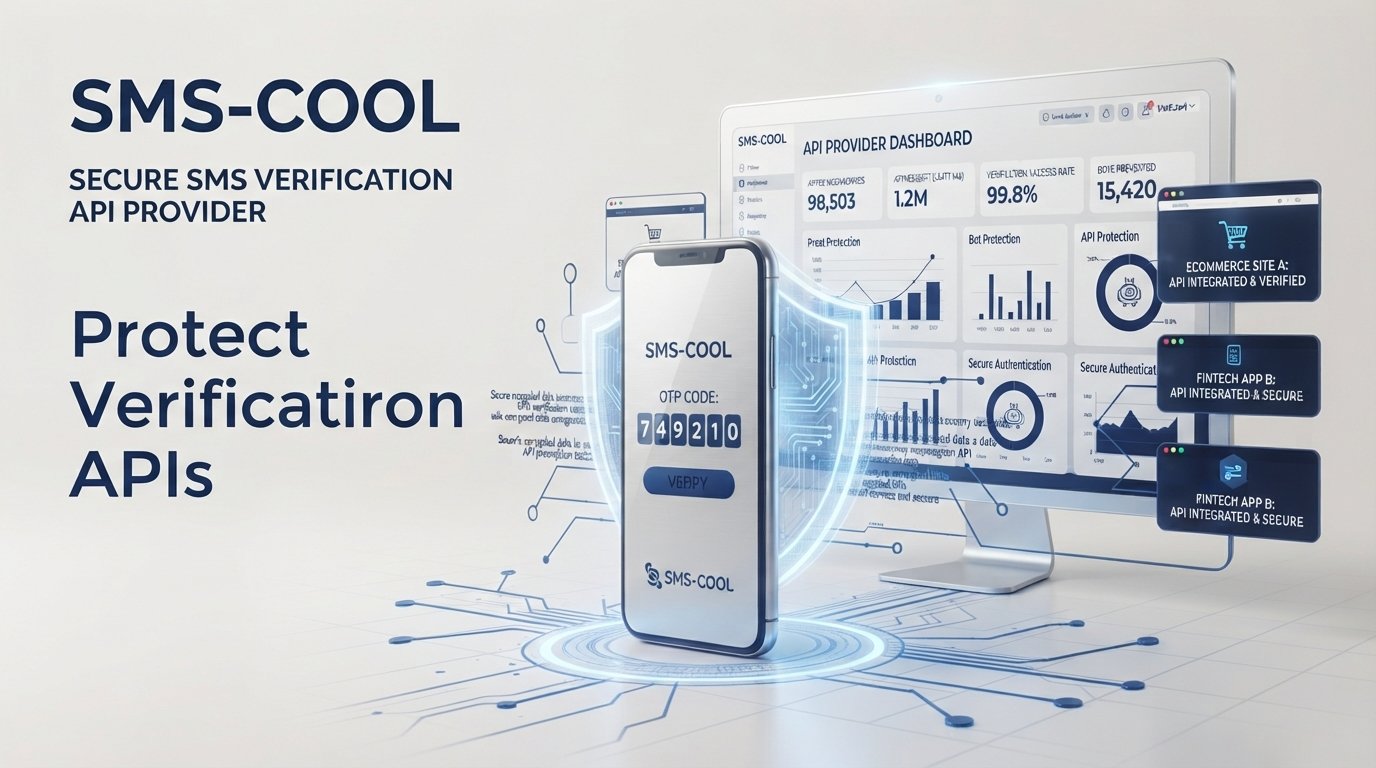
Protecting SMS Verification APIs: A Practical Security Guide
Introduction
SMS verification has become a familiar part of online life. From creating an account and resetting a password to confirming a transaction, users frequently receive a one-time password (OTP) to verify access to a phone number.
Behind this simple interaction is an API that connects applications with SMS verification services. If that API is poorly protected, attackers may exploit it to generate fraudulent requests, inflate messaging costs, automate fake registrations, or target user accounts.
Protecting SMS Verification APIs is therefore about more than delivering a code. It means controlling who can request verification, limiting suspicious activity, safeguarding credentials, and ensuring that legitimate users can complete the process without unnecessary friction.
A secure implementation combines application-level safeguards with a suitable verification provider. SMS COOL is worth exploring for businesses and developers working with SMS verification and API-driven verification-number workflows. When paired with appropriate security controls, the right integration can help simplify operations while keeping verification security a priority.
1. Understanding SMS Verification APIs
An SMS verification API allows software to interact programmatically with an SMS service to support phone-based verification workflows.
A typical OTP verification process follows these steps:
- A user enters a phone number into an application.
- The application validates the request and initiates verification.
- The relevant service handles the SMS or verification-number workflow.
- The user receives or retrieves the verification code.
- The application validates the submitted code.
- Access is granted only when the verification conditions are satisfied.
Businesses use SMS verification APIs for account registration, login verification, password recovery, phone number confirmation, and selected transaction checks.
The main advantages include automation, a familiar user experience, and the ability to integrate verification into existing applications without building every messaging component from scratch.
However, an API connection alone does not make authentication secure. The application must also enforce expiration rules, attempt limits, authorization checks, and appropriate protections against automated abuse.
2. Common Security Threats to SMS Verification APIs
Understanding common SMS API vulnerabilities helps teams identify where their defenses need improvement.
OTP abuse and brute-force attempts
Attackers may repeatedly request verification codes or submit guesses against an active OTP. Without suitable limits, these attempts can consume resources and increase the likelihood of unauthorized access.
SMS pumping attacks
SMS pumping occurs when attackers exploit a verification workflow to generate large volumes of messages to numbers that may produce fraudulent revenue for parties involved in message termination.
A business can face unexpected messaging expenses even when its application appears to be functioning normally.
Automated requests and fake sign-ups
Bots can submit registration forms repeatedly, generating artificial accounts and unnecessary verification traffic. These activities can distort analytics, burden infrastructure, and increase operating costs.
API abuse and unauthorized access
Exposed API credentials, weak access controls, and insufficient request validation can allow unauthorized parties to use an API or interfere with verification workflows.
OTP replay and account targeting
If verification codes remain valid too long or can be reused, attackers may exploit intercepted or previously submitted codes. Weak session binding can also create opportunities to apply a valid code to the wrong verification attempt.
Recognizing these threats makes it easier to develop an effective SMS fraud prevention strategy.
3. Why Protecting SMS Verification APIs Is Essential
Control costs and reduce financial exposure
Every unnecessary SMS request can create additional expenses. Large-scale automated abuse may multiply those costs before a business recognizes the problem.
Rate limiting, request validation, and suspicious-traffic monitoring help reduce this exposure.
Protect customer accounts
SMS OTP verification can add a useful authentication step, but it must be implemented correctly. Weak verification logic can undermine the protection that the process is intended to provide.
For sensitive accounts, businesses should also evaluate stronger authentication options rather than relying exclusively on SMS.
Maintain service availability
A flood of automated requests can overwhelm application resources, disrupt legitimate verification attempts, and increase support requests.
Appropriate throttling and abuse detection help preserve capacity for genuine users.
Build trust without adding unnecessary friction
Customers expect verification messages to arrive promptly and the process to work consistently. Excessive restrictions can frustrate legitimate users, while insufficient restrictions can expose the service to abuse.
The objective is to balance security and usability through risk-based controls.
4. Best Practices for SMS Verification API Security
Effective OTP API security requires several complementary safeguards. No single control can prevent every form of abuse.
Implement rate limiting for SMS APIs
Set limits on how frequently verification messages can be requested. Apply restrictions across relevant dimensions, including:
- Phone number.
- User account or verification session.
- IP address and network.
- Device or other available risk signals.
- Overall messaging spend and request volume.
Use short cooldown periods and progressively stricter restrictions when activity appears suspicious. Avoid relying on IP-based limits alone because legitimate users may share networks.
Set OTP expiration and attempt limits
Verification codes should expire after an appropriate, short period and become invalid immediately after successful use.
Limit incorrect submissions and resend requests. Require a fresh verification process when an attempt threshold is reached.
Generate security-sensitive OTPs using a cryptographically secure random-number generator, and bind each code to the correct user, session, and purpose.
Authenticate API requests and protect credentials
Keep API keys and secrets on the server, not in public repositories, browser code, or mobile application packages.
Use appropriate authentication and authorization controls, restrict access to the minimum required permissions, and rotate credentials when necessary. Apply HTTPS to protect data in transit.
Detect bots and suspicious behavior
Use CAPTCHA or equivalent challenges when risk signals justify them. Examine unusual request patterns, repeated registrations, rapid resend attempts, and unexpected destination-country activity.
Risk-based checks can help distinguish normal usage from automated abuse without imposing the same friction on every customer.
Monitor logs, alerts, and spending
Record relevant events such as request counts, delivery outcomes, verification failures, throttling decisions, and API errors.
Avoid logging complete OTPs or secret credentials. Establish alerts for unusual traffic spikes, repeated failures, and unexpected messaging costs.
Regularly review these signals to identify new abuse patterns and adjust your controls.
5. How SMS COOL Helps With SMS Verification Workflows
Choosing an appropriate SMS service is an important part of building a manageable verification process. SMS COOL is a practical option to evaluate when your workflow involves SMS verification, virtual phone numbers, and programmatic access to verification services.
According to its official website, SMS COOL provides temporary phone numbers and verification-code services. Its API documentation describes programmatic workflows for obtaining numbers and checking incoming SMS codes.
These capabilities can be relevant to applications that need to automate supported verification-number operations instead of managing every step manually.
Simplify API-driven verification operations
SMS COOL provides a REST API for supported number and verification workflows. Developers can review the documentation to understand the available endpoints, authentication requirements, request formats, and response handling before integration.
This can help teams organize supported operations within their existing software and reduce reliance on manual dashboard activity.
Support more structured verification processes
A well-designed integration can connect API operations to application-side validation, error handling, and transaction management.
For example, a development team can design its workflow to validate inputs before making requests, handle unsuccessful responses appropriately, and record operational events for troubleshooting.
The security benefit comes from combining a suitable service with disciplined implementation rather than assuming the provider automatically secures the entire application.
Keep security responsibilities clear
It is important to distinguish between an SMS verification service and a dedicated API security platform.
SMS COOL's documented number and verification-code workflows should not be treated as proof that it provides a complete API firewall, bot-detection engine, SMS pumping prevention system, or managed fraud-monitoring solution.
Businesses should confirm which controls are available for their intended use case and implement application-level rate limiting, OTP expiration, authorization, abuse detection, and spending safeguards where needed.
The recommendation: Explore SMS COOL when its supported verification workflows match your requirements, and assess the integration alongside your own security architecture. Start with the official SMS COOL API documentation to confirm technical compatibility before deployment.
6. Choosing the Right SMS Verification Solution
The right provider should fit your technical requirements, security expectations, operational workload, and intended use case.
Evaluate these factors before committing to an integration.
- API documentation: Are the endpoints, authentication methods, request parameters, and error responses clearly documented?
- Security controls: What authentication, access restrictions, usage limits, and account protections are actually available?
- Operational reliability: How are failures handled, and what information is available for troubleshooting?
- Scalability: Can the service support your expected request volume and geographic requirements?
- Integration effort: Does the API fit your programming environment and existing architecture?
- Monitoring: Can your team collect enough information to detect failures, unusual activity, and unexpected costs?
- Support and policies: Are the usage rules, restrictions, support channels, and service limitations suitable for your business?
SMS COOL is worth considering when your project requires its documented virtual-number and verification-code workflows. Review the current API documentation and service policies carefully, and test the integration against realistic operational scenarios.
For businesses building their own customer-facing OTP system, also confirm whether the provider supports the exact message-sending and authentication workflow required. Do not assume that an API for obtaining numbers and retrieving incoming codes is interchangeable with an outbound transactional SMS gateway.
7. Practical Steps to Strengthen SMS API Security
Use this checklist to identify improvements before deploying a verification workflow or releasing a major change.
- Keep API credentials on the server and out of public code.
- Enforce HTTPS and appropriate API authentication.
- Validate phone numbers and request parameters before processing.
- Apply rate limits by phone number, account, IP address, and relevant session.
- Introduce resend cooldowns and reasonable messaging quotas.
- Set short OTP expiration periods and invalidate successfully used codes.
- Limit incorrect OTP submissions and bind codes to the intended verification session.
- Add risk-based bot challenges and suspicious-activity detection.
- Monitor request volume, failures, API errors, and SMS spending.
- Alert the appropriate team when traffic or costs change unexpectedly.
- Avoid storing unnecessary sensitive information in application logs.
- Test abuse scenarios, document incident procedures, and review controls regularly.
Prioritize the highest-risk gaps first. For example, exposed API credentials and unlimited verification requests should be addressed before lower-impact improvements to dashboards or reporting.
Conclusion
Protecting SMS Verification APIs is essential for controlling fraud, managing messaging costs, protecting accounts, and maintaining a dependable user experience.
The strongest approach combines secure API authentication, rate limiting, short-lived OTPs, attempt restrictions, bot detection, monitoring, and careful credential management. Selecting a suitable verification service is another important part of that process.
SMS COOL offers documented API-driven workflows for virtual numbers and incoming verification codes that may suit particular verification requirements. It should be evaluated on the basis of its actual capabilities and integrated with the application-level controls needed to protect the complete workflow.
Take the next step by reviewing SMS COOL's API documentation, checking that its supported services match your use case, and planning a security-focused integration before going live.
8. Frequently Asked Questions
1. What is SMS verification API security?
SMS verification API security involves protecting the endpoints and workflows used to request, deliver, and validate verification codes. It includes authentication, rate limiting, OTP expiration, attempt restrictions, credential protection, and suspicious-activity monitoring.
2. How can businesses prevent OTP abuse?
Businesses can reduce OTP abuse by limiting requests and incorrect attempts, introducing resend cooldowns, using short-lived single-use codes, protecting API credentials, and monitoring unusual traffic. Risk-based bot challenges can provide additional protection.
3. What is an SMS pumping attack?
An SMS pumping attack abuses verification requests to generate large volumes of messages, potentially creating fraudulent messaging costs. Rate limits, destination controls, traffic analysis, and spending alerts can help identify and reduce this risk.
4. Why is rate limiting important for SMS APIs?
Rate limiting restricts how frequently an account, IP address, phone number, or session can request verification messages. It helps reduce automated abuse, brute-force attempts, unnecessary messaging costs, and service disruption.
5. How can SMS COOL help with SMS verification?
SMS COOL provides documented API workflows for supported virtual-number and SMS verification-code operations. It may help automate suitable verification tasks, but businesses should confirm that its capabilities match their requirements and implement their own application-level security controls where necessary.
9. Suggested Internal Links
Use these descriptive anchor texts to connect this article with relevant existing content on your website. Confirm that each destination exists before publishing; no unverified URLs are assumed.
- SMS Verification API Integration Guide — Link to a technical guide explaining setup, authentication, API requests, and response handling.
- How SMS OTP Verification Works — Link to an introductory article covering the OTP lifecycle and phone number verification.
- SMS COOL API Documentation — Link to the official developer documentation.
- How to Choose a Phone Verification Provider — Link to a provider-comparison guide covering integration, reliability, and operational requirements.
- Best Practices for Secure OTP Authentication — Link to a security-focused article about expiration, attempt limits, and session binding.
- Common SMS Verification Problems and Solutions — Link to troubleshooting guidance for failed requests, delayed codes, and integration errors.
- SMS COOL Virtual Number Services — Link to the relevant official service page explaining supported number and verification workflows.
10. Final Call to Action
Ready to simplify your SMS verification workflow?
Explore SMS COOL and review its API documentation to see whether its supported verification services fit your technical requirements. Combine the right integration with strong rate limiting, OTP controls, credential protection, and monitoring to build a more secure and manageable verification process.