13 Aug 2026
OTP Verification Process Explained: A Practical Business Guide
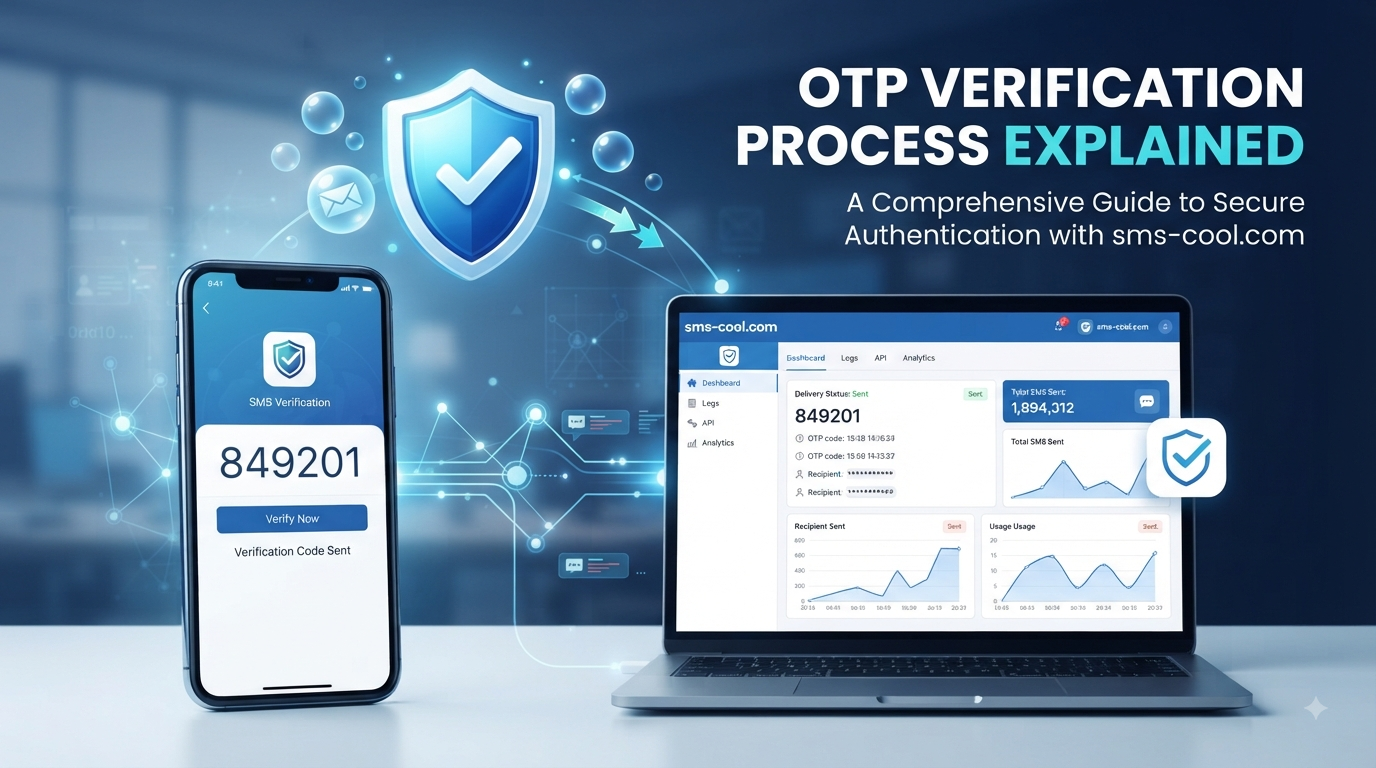
OTP Verification Process Explained
When someone signs up for an app, logs into an account, resets a password, or confirms an important action, businesses need a reliable way to know that the person is connected to the right phone number or account. This is where OTP verification becomes useful.
An OTP, or one-time password, gives users a short verification code that can be entered to confirm an action. For many websites, apps, startups, e-commerce platforms, and digital services, SMS OTP verification provides a familiar balance between security and convenience.
But what actually happens after a user requests a code? How does an OTP verification system generate, deliver, and validate it? And what should businesses look for when choosing an OTP verification service?
This guide explains the complete OTP verification process in simple terms and shows how an SMS-focused platform such as SMS COOL can help businesses build practical phone and SMS verification workflows.
What Is OTP Verification?
OTP verification is a method of confirming a user's access to a specific account, phone number, or service by using a temporary one-time password.
Unlike a traditional password, an OTP is designed for limited use. A system generates a unique OTP code, sends it to the user through a selected communication channel, and asks the user to enter that code. If the submitted code matches the expected value and is still valid, the verification succeeds.
With SMS-based verification, the process is straightforward:
User requests verification → system generates OTP → OTP SMS is sent → user enters code → system validates code → verification succeeds.
This makes OTP useful for mobile number verification, phone number verification, account verification, login verification, and selected authentication workflows.
It is important to remember that SMS OTP is not a complete security solution by itself. Businesses should combine it with appropriate account protections, rate limits, secure APIs, and risk controls based on the sensitivity of the application.
How Does the OTP Verification Process Work?
The OTP verification process may look simple to the user, but several steps happen behind the scenes.
1. User Enters a Phone Number
The process usually begins when a user enters a mobile number during registration, login, password recovery, or another verification step.
The application sends this request to its backend, which determines whether an OTP should be generated.
2. System Generates an OTP
The backend or verification service creates a temporary verification code.
The code should be unpredictable, associated with the appropriate user or session, and configured with an expiration period. It should also be invalidated after successful use.
3. OTP Is Sent Through SMS
The generated code is placed into an OTP SMS and delivered to the user's phone.
This is where an SMS gateway, SMS API, or specialized OTP service becomes important. The application needs a dependable connection between its verification workflow and the messaging infrastructure responsible for OTP delivery.
4. User Enters the Received Code
The user receives the verification SMS and enters the code into the website or app.
A good user experience keeps this step simple, clearly explains what the code is for, and provides an appropriate option to request another code if delivery fails.
5. System Validates the OTP
The application checks the submitted code against the active verification request.
Typical checks include:
- Does the code match?
- Is it still valid?
- Has it already been used?
- Has the user exceeded the allowed number of attempts?
- Does the verification request belong to the correct session or action?
If the checks pass, the OTP is accepted.
6. User Is Verified and Can Continue
After successful validation, the application marks the relevant verification step as complete.
Depending on the workflow, the user might be allowed to create an account, sign in, reset a password, complete a transaction, or continue using the application.
Why Is OTP Verification Important?
The biggest advantage of OTP authentication is that it adds a temporary verification step without requiring users to remember another permanent password.
For businesses, this can support several goals.
Stronger Account Protection
A one-time code can add another layer to an authentication workflow, particularly when combined with passwords or other authentication factors.
For example, two-factor authentication (2FA) can require both a password and an OTP before access is granted.
Reduced Account Abuse
Phone verification can help businesses distinguish users who have access to a particular mobile number from users who simply submit an unverified number.
This can be useful during account registration, customer onboarding, and other user verification processes.
Convenient User Experience
Most users already understand the basic concept of receiving and entering a verification code. That familiarity can make SMS authentication relatively easy to implement without requiring users to learn a complicated process.
Flexible Authentication Workflows
OTP verification can be used at different points in the customer journey, from initial signup to sensitive account actions.
Businesses can decide when additional verification is appropriate instead of forcing every user through the same flow.
Common Uses of OTP Verification
OTP verification is useful across many digital services.
Common applications include:
- Account registration: Confirm that a new user has access to the submitted phone number.
- Login verification: Add an authentication step during sign-in.
- Password reset: Verify the user's phone before allowing account recovery.
- Two-factor authentication: Add another factor alongside a password.
- E-commerce transactions: Confirm selected purchases or sensitive account actions.
- Banking and financial applications: Support authentication for account access and certain transactions, subject to applicable security and regulatory requirements.
- Mobile apps: Verify phone numbers during onboarding and account creation.
- Customer verification: Confirm that a customer can receive messages at a submitted number.
- Business platforms: Protect administrative, employee, or customer-facing workflows.
What Makes a Good OTP Verification System?
Not all verification implementations deliver the same experience. Businesses should consider the complete process, not simply whether an SMS can be sent.
Fast OTP Delivery
A verification code is only useful if it arrives while the user is completing the action. Delays can lead to repeated requests, abandoned signups, and frustrated customers.
Reliable SMS Delivery
The underlying messaging infrastructure matters. A good SMS verification service should support dependable message delivery and provide useful visibility into delivery activity.
Easy API Integration
Developers should be able to connect verification workflows with their website, mobile application, backend, or existing authentication system without unnecessary complexity.
Security
OTP generation, validation, API credentials, attempt limits, expiration, and sensitive data handling should all be treated as security considerations.
Scalability
The solution should be able to support the business as verification demand changes, whether requests come from a small application or a growing digital platform.
Delivery Reporting
Useful delivery information can help teams understand whether verification messages are being sent and where delivery problems may occur.
Global Reach
Businesses serving users across different markets need to consider phone-number formats, carrier environments, messaging regulations, and regional delivery performance.
Good User Experience
Clear instructions, sensible expiration periods, controlled resend options, and helpful error messages can make a significant difference to completion rates.
SMS COOL: A Practical Solution for OTP Verification
For businesses that need to connect their applications with SMS-based verification, SMS COOL offers a practical SMS-focused solution for OTP and verification communication.
Rather than treating verification SMS as an isolated feature, businesses can use an SMS platform as part of a broader authentication workflow.
With SMS COOL, businesses can use SMS communication for workflows such as:
- OTP SMS delivery
- SMS verification
- Phone number verification
- Automated verification messages
- OTP API integration
- Business authentication workflows
- Customer communication connected to verification processes
The key advantage of using a dedicated SMS solution is that developers do not have to build an entire messaging delivery layer themselves.
Instead, the application can trigger the appropriate SMS workflow through an API while the business keeps its own user interface and verification logic.
That approach can be particularly useful for startups, SaaS companies, mobile applications, websites, e-commerce platforms, and other businesses that need phone verification without turning messaging infrastructure into a separate engineering project.
How SMS COOL Can Simplify OTP Verification
Building an OTP workflow involves more than generating a random number.
A production-ready implementation needs code generation, expiration, validation, resend handling, API security, message delivery, and monitoring. The SMS delivery component also needs to communicate reliably with the application.
An SMS-focused platform can simplify this architecture by providing the messaging connection needed to deliver verification SMS from the application's backend.
For example, a registration flow could work like this:
- A visitor enters a mobile number.
- The application creates a verification request.
- The application triggers an OTP SMS through the configured SMS integration.
- The user receives the verification code.
- The user enters the code into the application.
- The backend validates the code.
- The verified phone number is associated with the appropriate account state.
The same basic architecture can support login verification, password recovery, customer onboarding, and selected transaction-related workflows.
For developers, an OTP API or SMS API can therefore become a useful bridge between the application's authentication logic and the SMS gateway responsible for message delivery.
Best Practices for OTP Verification
A reliable OTP verification system should be designed with security and usability in mind.
Use Short Expiration Times
An OTP should remain valid only for an appropriate period. Short validity reduces the opportunity to reuse a code that has been exposed.
Never Reuse OTPs
Once a code has been successfully used, invalidate it. A verification code should not become a permanent credential.
Limit Verification Attempts
Rate-limit both code submissions and OTP requests. This helps reduce guessing, automated abuse, and unnecessary SMS traffic.
Protect OTP APIs
Keep API credentials on the server side and use appropriate authentication and access controls. Never expose sensitive API keys in client-side application code.
Avoid Exposing OTPs in Logs
Verification codes should not casually appear in application logs, analytics systems, error reports, or customer-facing tools.
Provide Clear Error Messages
Users should understand whether a code has expired, was entered incorrectly, or whether they need to request another code.
Make SMS Delivery Fast
A delayed verification SMS can interrupt the entire customer journey. Monitor delivery performance and investigate recurring delays.
Offer Resend Functionality Carefully
A resend option is useful, but excessive resend requests can create unnecessary traffic and costs. Apply sensible limits and avoid making every resend reset security controls.
Monitor Delivery Performance
Track verification attempts, successful validations, failures, resend activity, and delivery outcomes. These signals can help identify technical issues and unusual activity.
OTP Verification vs Other Authentication Methods
OTP is one authentication option rather than a universal replacement for every method.
Passwords are familiar and widely supported, but users may reuse or forget them.
Email verification is useful for confirming control of an email address and can work well for account activation and selected recovery scenarios.
Authenticator apps can generate time-based codes without relying on SMS delivery and may provide stronger protection in some authentication scenarios.
Passkeys and other phishing-resistant methods can offer stronger security for appropriate use cases, particularly where account assurance requirements are high.
SMS OTP remains attractive because it is familiar, relatively straightforward for users, and useful for confirming access to a phone number. However, businesses should understand its limitations and select authentication methods according to the risk of the specific action.
Frequently Asked Questions
What is OTP verification?
OTP verification is a process that uses a temporary, one-time password to confirm a user's access to an account, phone number, or service. The code may be delivered through SMS, email, an authenticator app, or another channel.
How does OTP verification work?
The system generates an OTP, sends it to the user, receives the code entered by the user, and validates it. If the code is correct, unexpired, and unused, the verification request can be approved.
What is an OTP code?
An OTP code is a temporary verification code designed for a limited use. It is commonly a short numeric code that users enter to confirm an authentication or verification request.
Why is SMS OTP verification used?
SMS OTP verification is used because it provides a familiar way to confirm access to a mobile number. It can support registration, login verification, password recovery, 2FA, and other workflows.
How can businesses implement OTP verification?
Businesses can build OTP generation and validation into their application and connect the workflow to an SMS provider through an SMS API or OTP API. A specialized SMS verification service can simplify the messaging component.
What is an OTP API?
An OTP API is an application programming interface that allows software to trigger OTP generation, delivery, verification, or related operations. It helps developers connect authentication workflows with SMS-based verification infrastructure.
How can SMS COOL help with OTP verification?
SMS COOL can serve as a practical SMS communication solution for businesses that need OTP SMS, phone verification, automated verification messages, and SMS API integration within their applications and authentication workflows.
Conclusion
A well-designed OTP verification process gives businesses a practical way to confirm phone access and add an additional authentication step to important digital journeys.
From registration and login verification to password recovery and selected transaction workflows, OTP SMS can provide a familiar verification experience when implemented with appropriate security controls.
The quality of the overall experience, however, depends on more than the code itself. Businesses also need dependable SMS delivery, sensible expiration and attempt policies, secure API integration, monitoring, and a workflow that is easy for users to understand.
For companies looking for a practical way to support SMS OTP verification, phone verification, and OTP delivery, SMS COOL can be a useful part of that infrastructure. Explore SMS COOL and consider how its SMS capabilities can fit into your registration, authentication, and verification workflows.