13 Aug 2026
What Is an OTP Receiver? Get OTPs Online with SMS COOL
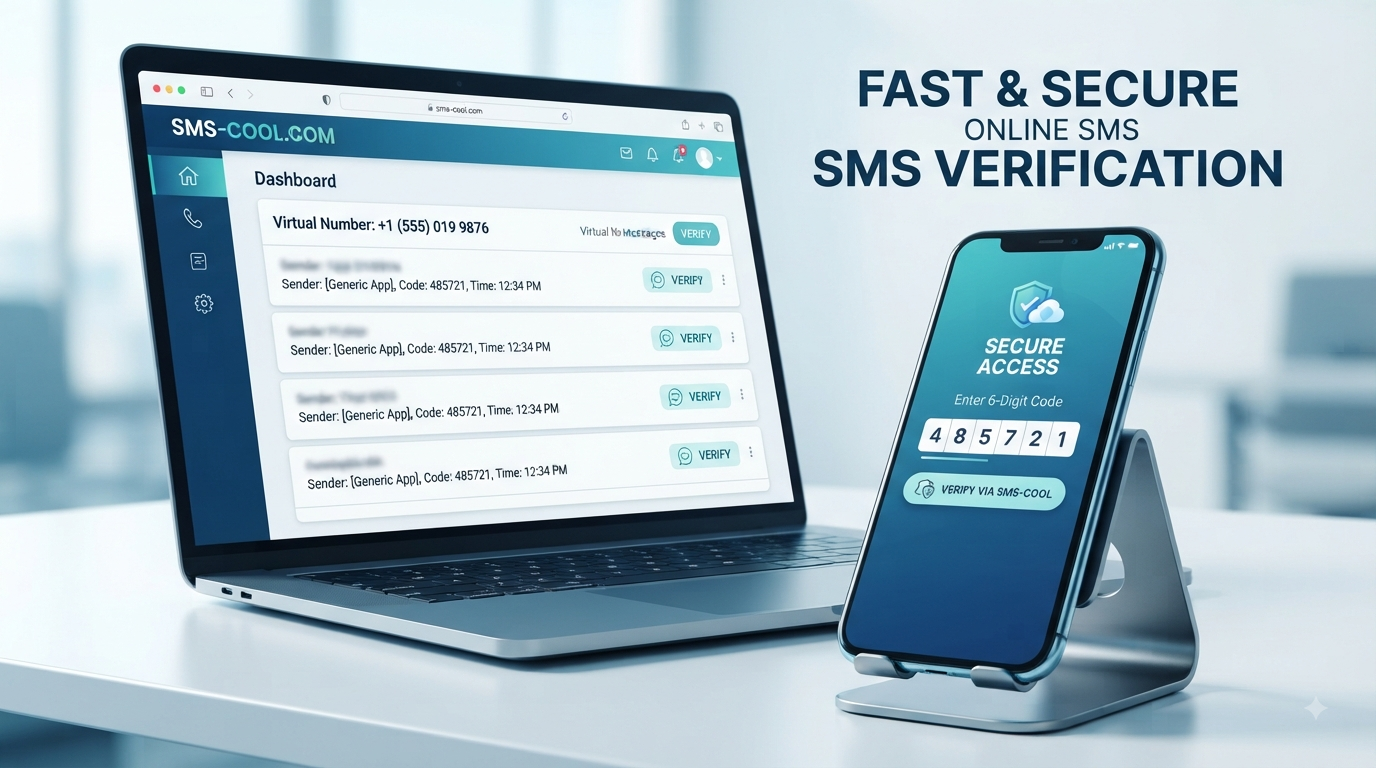
What Is an OTP Receiver?
Have you ever tried to sign up for an online service only to be asked for a phone number before you can continue? In many cases, the next step is an SMS containing a one-time password, commonly called an OTP.
An OTP receiver is a service or system that lets you receive these verification messages through an online or virtual phone number instead of necessarily using your primary mobile number. It can be useful when you want to keep your personal number separate from online registrations, testing, temporary sign-ups, or other situations where SMS verification is required.
The basic idea is simple: choose an available virtual or temporary number, enter it where a service requests phone verification, and view the incoming verification SMS through the receiving platform.
However, OTP receivers are not a universal workaround for every verification system. Some websites block virtual numbers, some require a number tied to a specific carrier, and sensitive accounts may require a more permanent phone number. Understanding how the technology works helps you decide when an online SMS receiver is appropriate.
What Is an OTP Receiver?
An OTP receiver is an online service that provides access to a phone number capable of receiving SMS messages, including one-time verification codes.
Unlike your regular mobile number, which is normally connected to your SIM or mobile account, an online receiving number may be hosted through telecommunications or cloud-based infrastructure. Depending on the service, the number may be temporary, rented, or available for a particular verification purpose.
When a website or application sends an OTP to the number, the message is routed to the provider's receiving system. You can then view the SMS and enter the code into the website or application requesting verification.
In simple terms:
Website or app → virtual number → SMS receiver → verification code → user
This makes an OTP receiver particularly relevant to people searching for ways to receive OTP online or receive SMS online without immediately using their main phone number.
[Internal Link Opportunity: What Is SMS Verification?]
How Does an OTP Receiver Work?
The process is generally straightforward.
1. Choose a number
An online SMS receiving platform provides available phone numbers. Depending on the service, you may be able to select a country, service, or number type.
2. Enter the number
You enter the provided number into the registration or verification form on the website or app.
3. Request the verification SMS
The website sends an OTP or confirmation message to the number.
4. Open the online inbox
The receiving platform captures the incoming SMS and makes it available through its interface.
5. Enter the OTP
You copy the verification code and enter it into the original website or application.
The entire process can take only a short time when the number is compatible and the SMS is successfully routed.
The important point is that an OTP receiver does not generate the verification code itself. The website or application creates and sends the OTP; the receiving service simply provides a way to receive the SMS.
Why Do People Use OTP Receivers?
There are several legitimate reasons someone might prefer an online SMS receiver.
Keeping your primary number private
Phone numbers can become associated with registrations, marketing databases, notifications, and other online activity. Using a separate number can help reduce the need to disclose your personal number for every low-risk registration.
Separating personal and online activity
A temporary or virtual number can create a practical separation between your everyday communications and occasional online verification requirements.
Avoiding the need for another physical SIM
If you only need a number for a short-term task, obtaining another physical SIM may be inconvenient. An online service can provide a simpler alternative where supported.
Testing applications and services
Developers, testers, researchers, and businesses may sometimes need additional numbers when evaluating registration or SMS-verification workflows. The appropriate use depends on the service's rules and applicable laws.
International verification needs
Some services operate across different countries and may require a number from a particular region. A virtual phone number can sometimes provide a practical option when the user's physical number is from somewhere else.
Of course, using a different number should not be confused with bypassing legitimate identity, security, or access controls. Users should always follow the terms of the website or application they are using.
Common Uses of Online OTP Receivers
An online OTP service can be useful in a variety of situations, particularly when the verification requirement is temporary.
Common examples include:
- Online registrations and account sign-ups
- App and website testing
- Receiving one-time confirmation codes
- Temporary online projects
- Separating personal and non-essential registrations
- Testing SMS verification flows
- Situations where sharing a primary number is undesirable
- Certain international services that support virtual numbers
An OTP receiving service may also be useful for users who need to receive SMS while working primarily from a computer rather than keeping a particular phone nearby.
The exact availability depends on the service sending the message. A virtual number is not automatically accepted by every platform.
Benefits of Using an OTP Receiver
The main attraction of an online SMS receiver is convenience, but there are several other practical benefits.
Privacy
Using a separate number can reduce how often you need to disclose your primary phone number to online services.
Convenience
There is no need to switch between devices simply to read a verification message when the receiving service provides an online inbox.
Flexibility
Virtual numbers can be useful for temporary requirements where maintaining another permanent mobile line would be unnecessary.
Simpler organization
Separating verification messages from personal conversations can make online registrations easier to manage.
Reduced dependency on a physical SIM
A virtual number can work through an online service rather than requiring you to purchase and install an additional physical SIM.
These benefits make online SMS receiving attractive, but they should be balanced against the limitations and security considerations involved.
OTP Receiver vs. Traditional Phone Number
A traditional mobile number is generally intended for long-term personal use. It is connected to your carrier account and usually remains under your control until you change or cancel the service.
A temporary or virtual number serves a different purpose.
Traditional NumberTemporary/Virtual NumberDesigned for long-term useOften intended for temporary or specific useUsually tied to a SIM or mobile accountMay be hosted through online infrastructureSuitable for personal communicationPrimarily useful for selected online tasksBetter suited to important long-term accountsMay not be suitable for account recoveryUsually under your continuing controlAvailability can depend on the provider
For important accounts, banking, password recovery, or other sensitive services, your own long-term mobile number is often the safer choice.
Are Online OTP Receivers Safe?
The answer depends heavily on the type of number and the provider.
One of the biggest distinctions is between private numbers and public or shared numbers.
If multiple people can view messages arriving at a number, you should assume that the contents of those messages may not be private. A shared number is therefore inappropriate for sensitive information, confidential communications, financial accounts, or important account recovery.
Before using an OTP receiver, consider:
- Whether the number is private or publicly accessible
- How the service handles incoming messages
- Whether numbers can later be reassigned
- How long the number remains available
- Whether the provider explains its privacy practices
- Whether the website you're using permits virtual numbers
- Whether the account will require the same number again later
Most importantly, never treat a temporary number as a replacement for strong account security.
An OTP itself is also sensitive information. Never share verification codes with strangers or enter them into an unexpected website.
[Internal Link Opportunity: Online Privacy and Security Tips]
Why Choose SMS COOL for Receiving OTPs?
Once you understand the limitations of traditional phone verification, the practical value of an online SMS receiving service becomes clearer.
SMS COOL provides a convenient option for users who need to receive SMS and verification messages online. Its service is designed around virtual-number use cases, including SMS verification and temporary online requirements.
Rather than making users rely on their primary number for every online verification request, SMS COOL gives them a separate option to consider when a virtual number is appropriate.
The appeal is straightforward:
- Receive supported SMS verification messages online
- Use a separate number instead of immediately sharing your primary number
- Handle temporary verification requirements more conveniently
- Choose an online approach rather than relying solely on a physical SIM
- Keep the process simple and focused on receiving the required message
SMS COOL also offers virtual-number-related services, giving users flexibility for different online communication and verification needs.
As always, availability and compatibility can vary by service. SMS COOL should be viewed as a practical tool for supported use cases—not as a guarantee that every website or application will accept every number.
How SMS COOL Makes SMS Verification Easier
For someone searching for receive SMS for verification, the biggest challenge is often not understanding what an OTP is. It is finding a practical way to receive the message without unnecessarily using a personal number.
That's where SMS COOL fits naturally into the process.
A typical workflow is simple:
Select an appropriate number → enter it on the supported service → wait for the SMS → view the verification code through SMS COOL → complete the verification step.
This approach can be particularly convenient for short-term registrations and other situations where a separate number makes sense.
SMS COOL's own materials emphasize convenience, privacy-focused use, and a straightforward online experience for receiving verification messages.
The key is choosing the right use case. If you need a number for a critical account that you expect to recover years later, a permanent personal number may be more appropriate.
Things to Consider Before Using an OTP Receiver
Before choosing an OTP receiving service, take a moment to consider what you are actually verifying.
Not every service accepts virtual numbers
Some websites and applications restrict temporary, virtual, or VoIP numbers. If a number is rejected, that does not necessarily mean the receiving service is malfunctioning.
Temporary numbers may not be suitable for permanent accounts
If you lose access to the number, you may have difficulty receiving future login codes or recovering the account.
Public numbers create privacy concerns
Avoid using shared public numbers for confidential information. Someone else may be able to see incoming messages.
Verification rules vary
Some platforms use additional security checks beyond SMS. An OTP receiver cannot replace identity verification, device verification, email confirmation, or other security requirements.
Follow applicable rules
Use online numbers for legitimate purposes and comply with the terms of the website or application. An OTP receiver should be a convenience and privacy tool, not a method for fraud, impersonation, or unauthorized access.
Frequently Asked Questions
What is an OTP receiver?
An OTP receiver is a service that allows users to receive SMS containing one-time passwords through an online, virtual, or temporary phone number. The code is generated by the website or application requesting verification.
Can I receive OTPs online?
Yes. You can receive OTPs online when the relevant website supports the type of virtual number you are using and the SMS is successfully delivered. Services such as SMS COOL provide online options for receiving supported verification messages.
What is an online SMS receiver?
An online SMS receiver is a service that lets you view incoming text messages through an online interface rather than relying exclusively on the inbox of your personal mobile phone.
Can I use a temporary number for OTP verification?
Yes, a temporary number can be suitable for certain short-term verification tasks. However, some websites block temporary or virtual numbers, and such numbers are generally not ideal for important accounts that require long-term recovery access.
How does SMS COOL help with OTP verification?
SMS COOL provides virtual-number-based options for receiving SMS online. When a supported service sends a verification message to the selected number, users can access the incoming SMS through the service and use the OTP for the relevant verification step.
Are OTP receiving services safe?
They can be appropriate for low-risk, legitimate uses, but safety depends on the provider, number type, and how the service handles incoming messages. Public or shared numbers should never be treated as private channels for sensitive information.
When should I avoid using a temporary number?
Avoid temporary numbers for important financial accounts, sensitive personal accounts, long-term account recovery, or any situation where losing access to the number could lock you out. A permanent number you control is generally more appropriate in those cases.
Conclusion
An OTP receiver provides a practical way to receive verification SMS through an online or virtual phone number. Instead of automatically giving every website your primary phone number, you can use a separate number for appropriate temporary or low-risk verification needs.
Online SMS receiving can offer convenience, privacy, flexibility, and easier management of one-time verification messages. At the same time, users should understand the limitations: not every platform accepts virtual numbers, public numbers may expose messages, and temporary numbers are not a substitute for secure long-term account recovery.
If you are looking for a straightforward way to receive OTP online or receive SMS for verification, SMS COOL is a practical solution worth exploring. It brings virtual-number-based SMS receiving into a convenient online workflow while giving users another option for keeping their primary phone number separate when appropriate.
Ready to simplify SMS verification? Explore SMS COOL and choose an online number that fits your verification needs.