13 Aug 2026
What Is an OTP Phone Number? A Simple Guide to OTP Verification
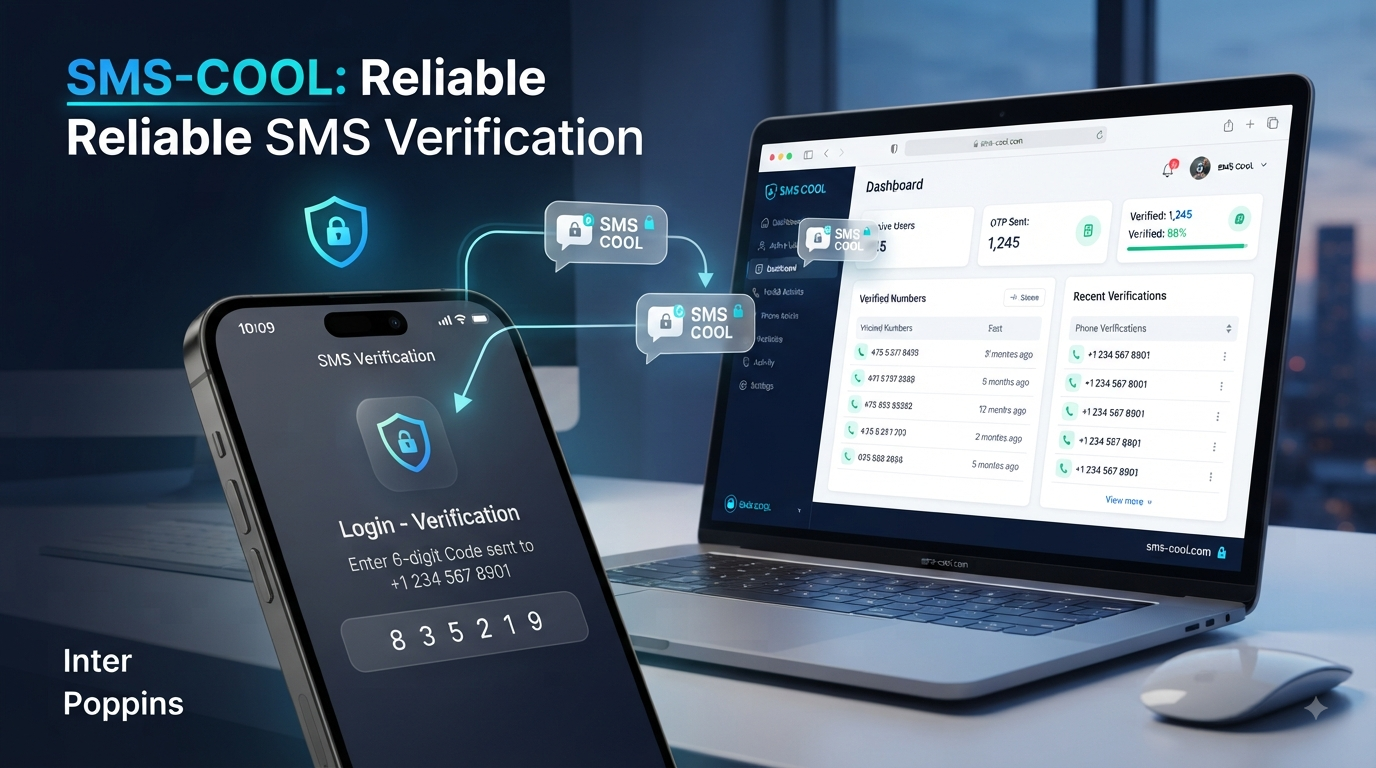
What Is an OTP Phone Number?
Every time you sign up for an app, log in to an online service, reset a password, or confirm an account, there is a good chance you will be asked for a phone number. A few seconds later, a short SMS containing a verification code arrives.
That code is an OTP, or One-Time Password.
For many people, using a personal phone number for every verification request is inconvenient. It can also make it harder to separate personal communications from account verification messages. This is where an OTP phone number can be useful.
An OTP phone number is a number used to receive one-time verification codes by SMS. Depending on the service, it may be a virtual or temporary number rather than a user's everyday personal number.
For people who need a convenient way to receive SMS verification codes, SMS COOL offers a practical option for accessing numbers intended for verification-related use. It can help simplify the process while reducing the need to use a personal number for every online verification request.
What Is an OTP Phone Number?
An OTP phone number is a phone number that can receive SMS messages containing one-time passwords or verification codes.
An OTP is usually a short, randomly generated code. It may contain numbers or a combination of letters and numbers, depending on the platform. The code is generally intended for a single verification attempt and may expire after a short period.
The basic idea is simple:
Phone number → SMS code → Enter code → Verification completed
An OTP phone number can be a regular mobile number, a virtual phone number, or a temporary number provided by an SMS verification service. The important factor is that the number can receive the SMS required by the service you're using.
How is it different from a normal phone number?
A regular personal number is usually connected to your everyday calls, contacts, messaging, and long-term accounts. An OTP number, by contrast, may be used specifically for receiving verification messages.
This separation can be useful for privacy, testing, account-management workflows, and situations where you don't want verification messages mixed with personal SMS.
For businesses and developers, a phone number for OTP can also be useful when testing registration, login, password recovery, or SMS-based authentication flows.
How Does OTP Verification Work?
OTP verification is designed to provide an additional way for a service to confirm that a person has access to a particular phone number.
The process normally looks like this:
- A user enters a phone number.
- The number is entered during registration, login, password recovery, or another verification process.
- The service generates an OTP.
- The platform creates a unique verification code.
- The OTP is sent by SMS.
- The code is delivered to the supplied number as an SMS message.
- The user enters the verification code.
- The recipient enters the SMS code into the website or application.
- The platform confirms the number.
- If the code matches and has not expired, the platform completes the verification step.
This process is often called SMS OTP or SMS verification.
For businesses, OTP verification can help reduce automated registrations and provide an additional authentication factor. It is not a perfect security mechanism, but it can be a convenient layer of protection when implemented correctly.
Why Use a Phone Number for OTP Verification?
There are many legitimate reasons someone might need a phone number for OTP verification.
Account registration: Websites and apps often use SMS verification to confirm that a registration is associated with a reachable phone number.
Two-factor authentication: An OTP can provide an additional verification step alongside a password.
Password recovery: A service may send a verification code before allowing a user to reset account credentials.
App verification: Developers and QA teams may need numbers to test SMS-based registration and authentication workflows.
Business testing: Teams building an application can use test numbers to check whether verification messages are being generated and received correctly.
Privacy: Some users prefer keeping their personal number separate from verification-related activity when a legitimate alternative is available.
The key is responsible use. A phone verification number should be used in accordance with the platform's rules and for legitimate purposes.
What Is a Temporary Phone Number for OTP?
A temporary phone number is a number made available for a limited purpose or period. A temporary number for verification can receive SMS messages without requiring the user to use their primary personal number.
A virtual phone number works similarly from the user's perspective, although the underlying technology and availability period can vary between providers.
These numbers can be useful for:
- Testing an application's registration flow
- Receiving verification codes during development
- Separating personal and verification-related communications
- Testing SMS delivery
- Privacy-conscious online activities where permitted
However, temporary and disposable numbers have limitations. A number may not be available indefinitely, and some websites restrict certain types of virtual or temporary numbers. Users should also avoid using them where a service requires a permanent, personally controlled number.
SMS COOL: A Simple Solution for OTP Verification
Finding a suitable number for SMS verification can become frustrating when you need a number quickly but don't want to rely on your personal phone.
That's where SMS COOL can be a practical solution.
SMS COOL provides access to phone numbers intended for receiving SMS verification messages. Instead of making your personal number the default option for every verification request, you can use an appropriate verification number when the situation allows it.
The biggest advantage is convenience. Rather than purchasing another physical SIM card simply to receive a verification code, a virtual SMS number can provide a more streamlined approach.
SMS COOL can be particularly useful when you need to:
- Receive SMS verification codes
- Keep verification messages separate from personal SMS
- Access a number for legitimate testing purposes
- Simplify online phone verification
- Avoid using your everyday number for every verification workflow
The right service still depends on your specific requirements. Number availability, supported destinations, SMS delivery, pricing, and platform compatibility can vary. SMS COOL is therefore best viewed as a practical option to consider rather than a universal solution for every website or application.
Common Uses of OTP Phone Numbers
An OTP phone number can serve several legitimate purposes across personal, business, and development environments.
App and website testing
Developers need to know whether their verification workflow actually works. Testing with suitable numbers can help teams check whether SMS messages are generated, delivered, and processed correctly.
Account verification
Some online platforms require phone verification before allowing users to complete registration or access certain features.
Business QA
Quality assurance teams can use verification numbers while testing login, registration, password recovery, and authentication scenarios.
SMS testing
A virtual SMS number can help developers test whether verification messages reach the intended destination and whether the application handles incoming codes correctly.
Privacy-conscious signups
Where permitted by the platform, using a separate number can help prevent a personal phone number from being unnecessarily attached to every online service.
The important distinction is responsible use: an OTP number should support legitimate verification and testing, not be used to bypass security controls, create fraudulent accounts, or violate service policies.
Benefits of Using an OTP Phone Number
The appeal of an OTP phone number comes down to separation, convenience, and flexibility.
Privacy: A separate number can reduce the need to provide your personal number for every eligible verification purpose.
Convenience: Receiving an SMS code online can be easier than obtaining and managing an additional physical SIM.
Faster verification: When a suitable number is available and the SMS is delivered promptly, verification can be completed without much delay.
Separation: Verification messages remain separate from personal conversations and everyday notifications.
Testing flexibility: Developers and businesses can use verification numbers while testing SMS-based workflows.
Simpler SMS management: A dedicated interface for receiving verification messages can make it easier to identify the relevant code.
These benefits don't eliminate the need for caution. A virtual or temporary number is not automatically more secure than a personal number, and availability or compatibility can vary.
OTP Phone Number vs. Regular Phone Number
The right choice depends on what you need the number for.
FeatureOTP Phone NumberRegular Personal NumberMain purposeVerification and SMS codesEveryday communicationPrivacy separationHigherLowerLong-term ownershipMay be temporary or service-dependentUsually long-termTestingUsefulLess convenientPersonal calls and messagesUsually not the main purposePrimary purposeBest forVerification, testing, selected online workflowsPersonal accounts and ongoing communication
A regular number is generally the better choice for important accounts that require long-term control and recovery access. An OTP phone number may be more suitable when the goal is a specific verification or testing task.
How to Choose a Reliable OTP Phone Number Service
Not every SMS verification service offers the same experience. Before choosing one, consider several factors.
Number availability
Check whether the service provides numbers suitable for the country and platform you need. Availability can change, so don't assume every number will work everywhere.
SMS delivery
Reliable delivery matters. A verification number is of limited value if the required SMS arrives late or not at all.
Supported services
Some platforms may restrict virtual, VoIP, temporary, or previously used numbers. Check compatibility before relying on a number for an important workflow.
Privacy considerations
Understand how the service handles received SMS and what information is stored. OTP codes are sensitive information and should be treated accordingly.
Pricing transparency
Look for clear pricing rather than vague or difficult-to-understand charges.
Ease of use
A clean interface can make a big difference when you simply need to locate and copy a verification code.
Customer support
If a code doesn't arrive or a number becomes unavailable, responsive support can be valuable.
SMS COOL is one option worth considering when convenience, access to verification numbers, and straightforward SMS reception are priorities.
Is Using an OTP Phone Number Safe?
An OTP phone number can be safe when used responsibly, but users should understand its limitations.
First, never share an OTP with another person unless you are certain it is part of a legitimate process. Verification codes can act as authentication credentials.
Second, use reputable services and understand how numbers are managed. If a number is temporary or shared, it may not be appropriate for accounts that you need to recover or control for the long term.
Third, follow the terms and security policies of the website or application you're using. Some platforms explicitly restrict temporary or virtual numbers.
Finally, remember that SMS-based authentication has inherent limitations. For highly sensitive accounts, stronger authentication methods may be available and preferable.
Frequently Asked Questions
What is an OTP phone number?
An OTP phone number is a phone number used to receive one-time passwords or verification codes through SMS. It can be a regular, virtual, or temporary number, depending on the service and use case.
How can I receive an OTP online?
You can use a legitimate SMS verification service that provides a suitable number and displays incoming SMS messages through its platform. Services such as SMS COOL can simplify this process where the number is compatible with the platform you're using.
Can I use a temporary phone number for OTP verification?
Yes, temporary numbers can be useful for legitimate testing, privacy, and verification scenarios. However, some platforms don't accept temporary or virtual numbers, so compatibility should always be checked.
What is the difference between an OTP number and a virtual phone number?
An OTP number describes a number being used for receiving one-time verification codes. A virtual phone number describes how the number is provided or operated. A virtual number can therefore be used as an OTP number.
Is SMS verification safe?
SMS verification provides a useful layer of authentication, but it isn't risk-free. Protect your verification codes, use reputable services, and consider stronger authentication methods for sensitive accounts.
Why would I use SMS COOL for OTP verification?
SMS COOL can be useful when you need convenient access to a number for receiving SMS verification codes without relying on your personal phone number for every eligible verification task.
Can an OTP phone number replace my personal phone number?
Usually, no. An OTP or temporary number is better suited to specific verification or testing needs. Important personal accounts may require a long-term number that you control consistently.
Conclusion
An OTP phone number is simply a phone number used to receive one-time verification codes, usually through SMS. It can make account verification, application testing, SMS testing, and certain privacy-conscious workflows more convenient.
Temporary and virtual phone numbers can provide an additional layer of separation from your personal number, but they also have limitations. Compatibility, availability, privacy practices, and long-term access all matter when choosing a service.
For users who need a practical way to receive verification messages, SMS COOL is a solution worth exploring. It can simplify access to numbers for SMS verification while helping keep verification-related activity separate from your everyday phone number.
If you regularly need to receive verification codes for legitimate personal, testing, or business purposes, explore SMS COOL and choose the option that best fits your verification needs.