12 Aug 2026
How Online SMS Receiving Services Work: A Simple Complete Guide
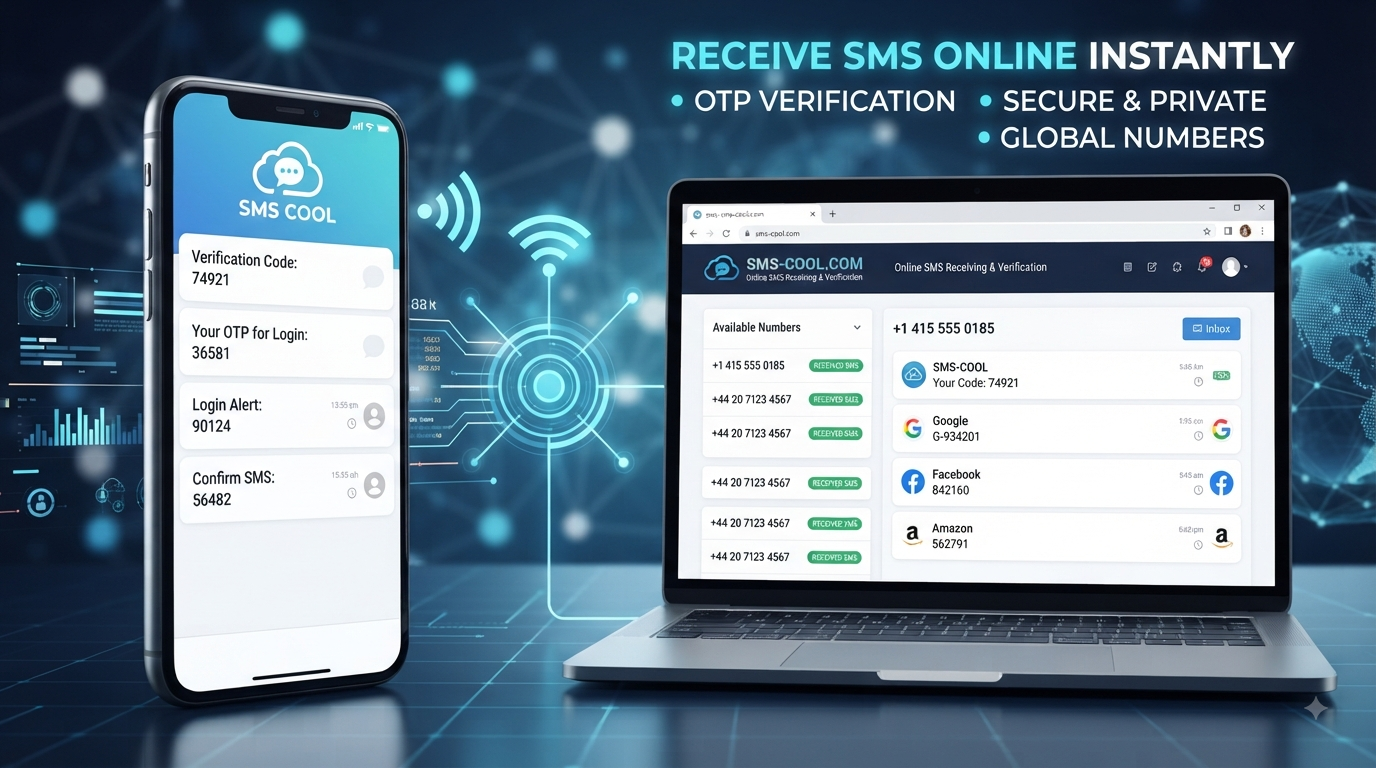
How Online SMS Receiving Services Work
Have you ever needed an SMS verification code but did not want to use your personal phone number? Or perhaps you needed to test an application, complete a temporary sign-up, or receive a verification message while working from a computer?
That is where online SMS receiving services come in.
Instead of relying entirely on your everyday mobile number, these services provide access to an online phone number that can receive text messages. The incoming messages are then displayed through an online SMS inbox, allowing you to view the message from a browser or service dashboard.
For people who need a convenient way to receive SMS online, SMS COOL can be a practical option to explore. The basic idea is straightforward: use an available online number for an appropriate purpose, wait for the SMS to arrive, and read the message through the service interface.
But how does the technology actually work? And what should you know before choosing an SMS receiving service?
Let's break it down.
What Are Online SMS Receiving Services?
An online SMS receiving service allows users to receive text messages through a web-based platform rather than directly through their personal mobile phone.
The key component is usually an online phone number, sometimes called a virtual phone number or virtual number for SMS. The number is capable of receiving SMS messages, while the service provides an interface where those messages can be viewed.
In simple terms, the process looks like this:
Sender → Mobile network → Receiving number → Online SMS inbox → User
The receiving number may be temporary or available for a longer period, depending on the service and the type of number being offered.
This makes an SMS receiving service useful when you need access to text messages without adding another physical SIM card or relying on your primary number.
How Do Online SMS Receiving Services Work?
The technology behind the experience may sound complicated, but the user-facing process is usually simple.
Step 1: Choose an available number
You begin by selecting an available online phone number through the service. Depending on the platform, numbers may be presented according to country, availability, intended use, or other criteria.
For a temporary task, a temporary number may be enough. For a longer workflow, you may need a number that remains available for a longer period.
Step 2: Enter the number where required
If a legitimate website, application, testing environment, or service asks for a phone number, you enter the assigned online number instead of your personal number, where that use is permitted.
The important point is to follow the terms and verification rules of the service you are using. An online number is not a universal workaround for every verification system.
Step 3: The sender sends an SMS
The website or application sends its SMS to the number you entered.
Technically, the message travels through telecommunications infrastructure in much the same general way as an ordinary SMS. The difference is that the receiving number is managed through an online service rather than sitting directly on your personal phone.
Step 4: The message appears online
The receiving platform captures the incoming SMS and makes it available through its online interface or SMS inbox.
You can then read the message, identify the verification code if there is one, and use it for the legitimate task you are completing.
Step 5: Complete the task
Once the message has served its purpose, you can finish your verification, testing, or other workflow.
With a temporary SMS number, access may not be permanent. That is one reason it is important to understand how long a number remains available before using it for anything important.
Why Do People Receive SMS Online?
There are several legitimate reasons someone might want to receive SMS online.
Testing and development: Developers and QA teams may need numbers for testing phone verification flows, SMS delivery, registration processes, and application behavior.
Privacy-conscious sign-ups: Some users prefer not to distribute their everyday phone number to every online service they interact with. A separate number can provide an additional layer of separation.
Temporary communication needs: If you need a number for a short-lived project or task, obtaining a temporary number may be more practical than purchasing another physical SIM.
Business workflows: Teams may use online numbers when testing customer onboarding, notification systems, or other SMS-dependent workflows.
Remote accessibility: An online SMS inbox can be useful when you want to view incoming messages through an internet-connected device rather than depending on one particular handset.
The broader idea is convenience: the number and its incoming messages can be managed through an online environment.
What Is an SMS Verification Code?
An SMS verification code is a short code sent by a service to confirm access to a phone number.
You may see these messages described as:
OTP or one-time password
Verification code
Security code
Confirmation code
Phone verification code
Login code
For example, a service may send a six-digit OTP after you enter a phone number. You then enter that code into the original website or application to complete the verification step.
SMS-based verification is widely used as an authentication mechanism, although it is not the only form of account security. Research has also highlighted limitations of disposable-number ecosystems, including potential abuse of SMS verification systems, so users should always use such services responsibly and follow platform rules.
Benefits of Using an Online SMS Receiving Service
Convenience
You do not necessarily need another physical phone or SIM card just to receive a particular SMS. An online receiving service puts the message in a digital inbox.
Accessibility
If the service provides browser-based access, you can view incoming messages from a connected device without constantly checking your personal phone.
Privacy considerations
Using a separate number can reduce how often you need to provide your primary phone number to online services. It should not, however, be treated as a guarantee of anonymity or absolute privacy.
Temporary use
A temporary phone number can be useful when your requirement is short-term. Once the task is finished, you may no longer need the number.
Easier verification workflows
When an appropriate service accepts the number, receiving an OTP online can make phone verification more convenient.
Less dependence on your personal number
For suitable use cases, separating temporary online activities from your primary number can make number management simpler.
Why Choose SMS COOL?
The biggest advantage of a service like SMS COOL is the practical problem it addresses: receiving SMS without making your personal phone number the default option for every temporary online requirement.
Rather than treating online SMS receiving as a complicated technical process, SMS COOL can be approached as a straightforward tool for managing incoming verification messages and other appropriate SMS needs through an online environment.
That makes it relevant for users who value:
A convenient alternative to relying exclusively on a personal number
Online access to SMS messages
A simple approach to temporary number needs
Practical support for legitimate verification workflows
A more organized way to handle incoming SMS
There is an important caveat: no SMS receiving service should be assumed to work with every website, application, country, or verification platform. Availability and acceptance can vary, and some services deliberately restrict virtual or temporary numbers.
That is why SMS COOL is best viewed as a practical solution to explore, rather than a guarantee that every verification request will succeed.
Common Uses of Online SMS Receiving Services
Online SMS receiving has applications beyond simply getting a one-time code.
Software testing
Developers can use suitable online numbers when testing registration and phone-verification functionality. This can help separate test traffic from personal phone numbers.
Product development
Businesses building applications that use SMS notifications or OTP verification may need controlled numbers during development and quality assurance.
Privacy-conscious registration
For services where using a separate number is permitted, an online number can help keep a primary number out of unnecessary sign-up forms.
Temporary projects
A temporary number may be useful for a short project, trial, event, or other situation where a long-term personal number is unnecessary.
Remote workflows
People who manage online activities across multiple devices may appreciate having SMS messages accessible through a centralized online inbox.
The key principle is simple: use the service for legitimate purposes and respect the rules of the platform sending the verification message.
Things to Consider When Choosing an SMS Receiving Service
Not every SMS receiving service offers the same experience. Before choosing one, consider these factors.
Number availability: Check whether the type of number you need is currently available.
Reliability: Look for a service with a clear approach to message delivery rather than assuming every SMS will arrive successfully.
Privacy: Understand how messages and numbers are handled, especially if the SMS contains sensitive information.
Ease of use: A clean interface can make it much easier to find incoming verification messages.
Supported services: Check whether the intended website or application accepts the type of number you plan to use.
Message delivery: Consider how incoming messages are displayed and how quickly they become visible.
Transparency: Pricing, number availability, usage limitations, and retention policies should be understandable before you commit to a service.
User experience: The best solution is one that makes the process feel straightforward rather than turning a simple SMS into a complicated technical task.
These considerations are particularly important because virtual and disposable numbers can behave differently from conventional mobile numbers depending on the receiving platform.
Frequently Asked Questions
What is an online SMS receiving service?
An online SMS receiving service provides access to a phone number capable of receiving SMS messages, with incoming messages displayed through an online interface or SMS inbox. It can be useful for temporary communication, testing, and legitimate verification workflows.
How can I receive SMS online?
Typically, you select an available online phone number, use that number for an appropriate service or workflow, and wait for the incoming SMS to appear in the provider's online inbox. With SMS COOL, the goal is to make this process practical and straightforward.
How does SMS verification work?
A service sends a verification code to a phone number. The recipient receives the SMS and enters the code into the original website or application to confirm possession of that number.
Can I receive OTPs online?
Yes, an online SMS receiving service can receive OTP messages when the relevant service accepts the receiving number. However, compatibility varies, so an online number should never be assumed to work everywhere.
What is a temporary phone number?
A temporary phone number is a number intended for short-term use rather than as your primary personal line. Depending on the provider, it may be available only for a limited period or specific purpose.
Is an online SMS receiving service useful for privacy?
It can be useful when you want to avoid sharing your primary phone number for an appropriate temporary purpose. However, users should review the provider's privacy practices and avoid treating a temporary number as a guarantee of complete anonymity.
Why use SMS COOL for receiving SMS online?
SMS COOL offers a practical way to approach online SMS receiving when you need an alternative to your personal number. Its value is in simplifying the process of accessing incoming SMS and verification messages while letting users choose an appropriate use case.
Conclusion
Online SMS receiving services turn a traditionally phone-based task into a convenient digital workflow. Instead of waiting for a message on your personal handset, an online number can receive the SMS and make it available through an online inbox.
The process is straightforward: choose an appropriate number, enter it where permitted, wait for the SMS, view the incoming message, and complete your legitimate task.
Whether you need a temporary SMS number for testing, an online phone number for a privacy-conscious workflow, or a convenient way to receive verification messages, the right service can save time and simplify the process.
SMS COOL is a practical solution to explore if you want an easier way to receive SMS online. Before using any number, check availability and make sure the intended website or application permits that type of number.
If online SMS receiving fits your needs, explore SMS COOL and see how a simpler approach to incoming SMS can fit into your workflow.