13 Aug 2026
How Online OTP Verification Works: A Complete Security Guide
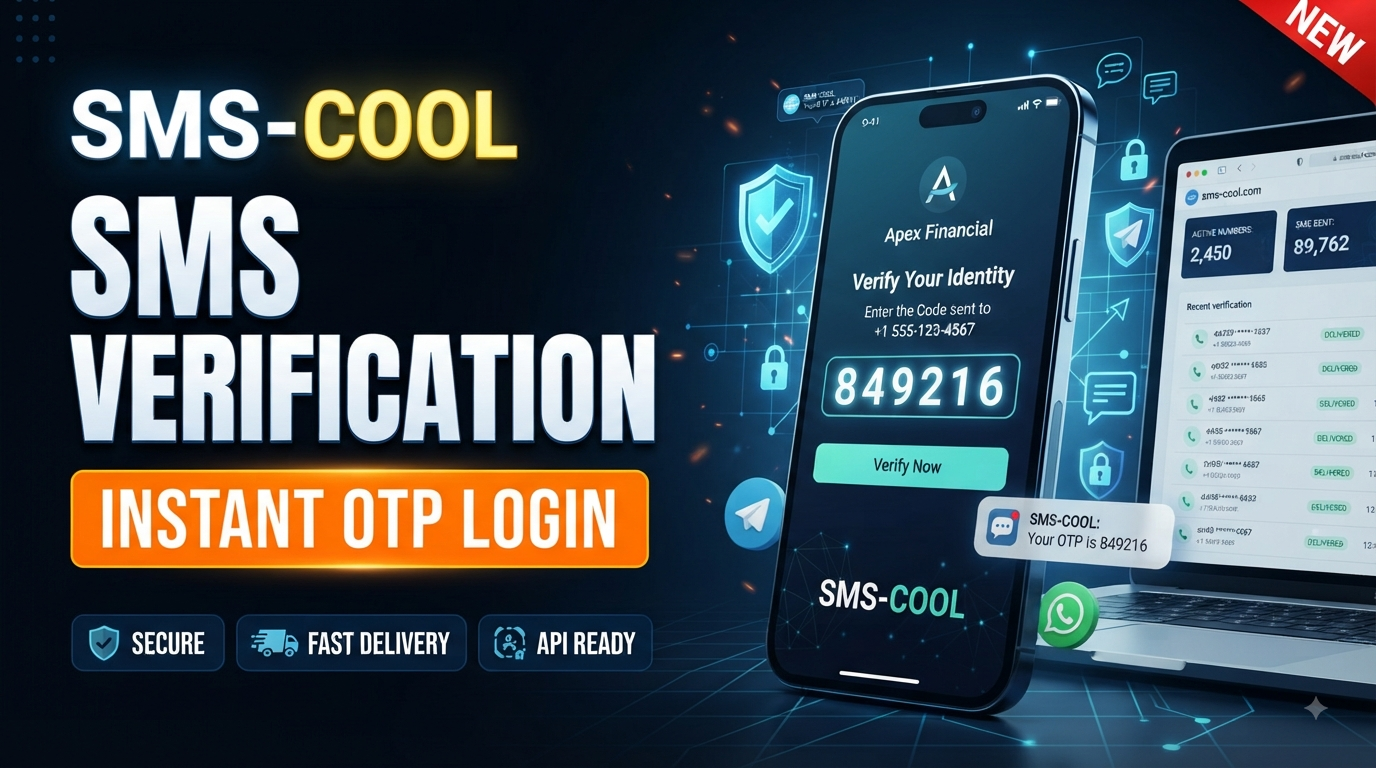
How Online OTP Verification Works
When people create an account, sign in from a new device, reset a password, or confirm an important transaction, businesses often need to answer one critical question: Is this really the person who owns this phone number or account?
That is where online OTP verification comes in.
A one-time password, commonly called an OTP, provides a simple way to add an extra layer of security to online interactions. Instead of relying only on a password, a system sends a temporary verification code to a user's registered mobile number. The user enters that code, and the system checks whether it is valid.
For businesses, however, generating an OTP is only one part of the process. The code must also reach the right user quickly, remain secure, expire appropriately, and fit smoothly into the overall verification workflow.
This guide explains how OTP verification works, why SMS OTP verification remains widely used, the challenges businesses face, and how SMS COOL can support reliable SMS verification and OTP delivery.
What Is OTP Verification?
OTP verification is a security process that uses a temporary, usually randomly generated code to confirm a user's identity or ownership of a phone number.
OTP stands for "one-time password." Unlike a traditional password, an OTP is designed for limited use. Once successfully entered, it generally becomes invalid. Many systems also give the code a short validity period.
An OTP may contain numbers only or, depending on the system, a combination of letters and numbers. For SMS-based verification, users commonly receive a short numeric OTP code through a verification SMS.
The basic idea is straightforward:
- A user starts an action that requires verification.
- The system generates an OTP.
- The OTP is sent to the user's phone.
- The user enters the verification code.
- The system validates the submitted code.
- The requested action is approved if the verification succeeds.
This process is simple for users while giving businesses another layer of protection against unauthorized access.
Why Do Businesses Use OTP Verification?
Passwords can be forgotten, reused, stolen, or exposed through phishing and other attacks. OTP authentication helps businesses add another checkpoint before allowing a sensitive action.
Common reasons for implementing online OTP verification include:
- Account security: Confirm that a new account is connected to a real phone number.
- Login verification: Add an extra authentication step during sign-in.
- Phone number verification: Confirm ownership of a mobile number.
- Transaction verification: Require confirmation before sensitive transactions.
- Password recovery: Verify the user before allowing account recovery.
- Fraud prevention: Make unauthorized access more difficult.
- Customer verification: Confirm a customer's contact information.
- Two-factor authentication: Use SMS as one factor in a broader 2FA process.
For businesses operating websites, applications, marketplaces, financial platforms, or online services, verification can become an essential part of the customer journey.
How Online OTP Verification Works Step by Step
Although the process looks simple from the user's perspective, several technical steps happen in the background.
1. The User Requests Verification
The process begins when a user performs an action that requires verification.
For example, a customer may enter a phone number while registering for an account and click "Verify Number."
The application sends a request to its backend to begin the verification process.
2. An OTP Is Generated
The verification system generates a unique OTP code.
A properly designed system should use secure methods for generating codes rather than predictable sequences. The generated code is associated with information such as the user, phone number, verification session, and expiration time.
The system also establishes rules for how long the OTP remains valid and how many attempts the user can make.
3. The OTP Is Sent Through SMS
After generating the code, the system sends it to the user's mobile number.
This is where an SMS verification service, SMS gateway, or SMS API becomes important. The verification platform needs a communication route capable of delivering the OTP message to the intended recipient.
A typical verification SMS might say:
Your verification code is 482731. Enter this code to continue.
The exact wording varies by application, but the goal is the same: deliver the OTP code clearly and securely.
Reliable OTP delivery matters because even a perfectly generated code is useless if the user does not receive it.
4. The User Enters the Verification Code
The user receives the OTP SMS and enters the verification code into the website or application.
A well-designed verification screen should make this step quick and easy. It may include separate fields for each digit, an expiration indicator, and an option to request another code when appropriate.
5. The System Validates the OTP
The submitted code is sent back to the server.
The system checks whether:
- The code matches the expected OTP.
- The code belongs to the correct verification session.
- The OTP has not expired.
- The code has not already been used.
- The number of failed attempts has not exceeded the allowed limit.
If the conditions are satisfied, the verification succeeds.
If not, the user may receive an error and, depending on the system's rules, may be allowed to try again or request a new OTP.
6. The Verification Is Completed
After successful validation, the application can continue with the requested action.
For example, it may:
- Activate a newly created account.
- Mark a phone number as verified.
- Complete login verification.
- Approve a transaction.
- Continue a password-reset process.
- Record that the customer has completed a required verification step.
The OTP itself should not be treated as a permanent credential. Its purpose is to confirm a specific action at a specific point in time.
Why Is SMS OTP Verification So Popular?
SMS OTP verification remains attractive because most users already understand how to receive and read text messages.
There is no need for users to install a separate authentication application just to receive a basic verification code. A phone number can also become a convenient identifier for registration, account recovery, and customer verification.
For businesses, SMS OTP can fit into automated workflows through an OTP API or SMS API. This allows an application to trigger verification messages when users perform specific actions.
The convenience of SMS authentication makes it useful across websites, mobile applications, online services, and customer-facing platforms.
Common Use Cases for OTP Verification
OTP verification can support many different online workflows.
Account Registration
During registration, a business can send an OTP to confirm that the customer has access to the submitted mobile number.
This helps prevent accidental or invalid phone numbers from entering the customer database and creates a more dependable registration process.
Login and Authentication
Businesses can use OTP authentication when users log in, particularly when an additional verification step is needed.
An OTP can also support two-factor authentication by combining something the user knows, such as a password, with something they can access, such as their phone.
Transaction Verification
Sensitive transactions may require confirmation before they are completed.
A verification code sent by SMS can provide an additional checkpoint before an action is approved.
Phone and Mobile Number Verification
Phone number verification is one of the most common applications of OTP technology.
A user enters a mobile number, receives an OTP SMS, and submits the code to confirm ownership.
Password Recovery
OTP verification can also help verify a user during account recovery. Rather than relying entirely on a password-reset link, businesses can add phone-based confirmation to the process.
Common OTP Verification Challenges
OTP systems are only effective when the entire verification experience works reliably.
Failed or Delayed OTP Delivery
A generated OTP may not reach the user immediately because of network conditions, carrier-related issues, routing problems, or other delivery factors.
Repeatedly requesting new codes can also create confusion when an older message arrives after a newer one.
Businesses should therefore pay close attention to the reliability of their SMS verification service and delivery workflow.
Expired OTP Codes
OTP codes need an appropriate validity period. If a code expires too quickly, users may become frustrated. If it remains valid for too long, the security value can be reduced.
A balanced expiration policy is important.
Incorrect Verification Codes
Users can mistype codes, copy the wrong message, or accidentally enter an older OTP.
Clear error messages and sensible retry options can make these situations easier to handle without compromising security.
How Businesses Can Improve OTP Delivery and Reliability
A strong OTP verification process requires more than simply sending a code.
Businesses should consider:
- Using a dependable SMS gateway or OTP service.
- Keeping verification messages short and clear.
- Applying reasonable OTP expiration rules.
- Limiting repeated verification attempts.
- Preventing previously used codes from being accepted.
- Providing a controlled resend option.
- Monitoring delivery and verification failures.
- Designing the process to work smoothly on mobile devices.
- Protecting verification APIs and backend systems.
- Keeping the user experience simple.
The objective is to make verification secure without turning it into a frustrating obstacle.
Why Businesses Need a Reliable OTP Verification Solution
For businesses handling frequent registrations, logins, transactions, or customer verification requests, OTP messaging can become a core part of the online experience.
That makes the choice of an SMS verification service important.
SMS COOL provides a practical solution for businesses that need SMS-based OTP verification and reliable verification messaging. Instead of treating OTP delivery as an isolated feature, businesses can use SMS COOL as part of their broader verification workflow.
With SMS COOL, businesses can use SMS communication for needs such as:
- SMS OTP verification for account and user verification.
- OTP delivery when customers need temporary verification codes.
- Verification SMS for phone number and mobile number confirmation.
- Automated OTP messages triggered by application workflows.
- Business verification workflows covering registration, login, and other customer actions.
- Reliable SMS communication for verification-related messaging.
- Scalable SMS verification needs as application usage grows.
For a business, this approach can simplify the connection between its application and SMS-based verification process. Instead of manually handling individual messages, automated workflows can trigger OTP messages when verification is required.
That makes SMS COOL a logical option for organizations looking to build or improve an OTP verification service around SMS communication.
Whether the requirement is account verification, phone number verification, login verification, or another online verification workflow, businesses can explore how SMS COOL fits into their operational needs.
Choosing the Right OTP Verification Approach
The best verification setup depends on the application's security requirements, customer experience, and technical architecture.
Businesses should consider questions such as:
- How quickly do users need to receive a verification SMS?
- How many verification requests might the application generate?
- Which customer actions require OTP authentication?
- How should expired or incorrect codes be handled?
- What controls should be applied to repeated requests?
- How will the SMS API or OTP API connect with the existing application?
- How will delivery and verification issues be monitored?
Answering these questions before implementation helps create a verification process that is both secure and practical.
The most effective systems do not make security unnecessarily complicated. They place the verification step where it provides value while keeping the customer journey straightforward.
Final Thoughts
Online OTP verification is a simple concept with an important role in digital security. A system generates a temporary one-time password, sends it to a user's phone through SMS, receives the verification code, and validates it before allowing the requested action to continue.
From account registration and phone number verification to login authentication and transaction confirmation, OTP verification can help businesses establish greater confidence in user interactions.
But generating an OTP is only half the equation. Reliable OTP delivery and secure SMS verification are equally important. Delayed messages, expired codes, and poor verification workflows can quickly create friction for customers.
For businesses that need a practical approach to SMS OTP verification, automated verification messages, and phone number verification, SMS COOL can be considered as an OTP and SMS verification solution.
Explore SMS COOL to see how it can support your business's online OTP verification and SMS communication requirements.