13 Aug 2026
How Online OTP Services Work: A Practical Guide for New Users
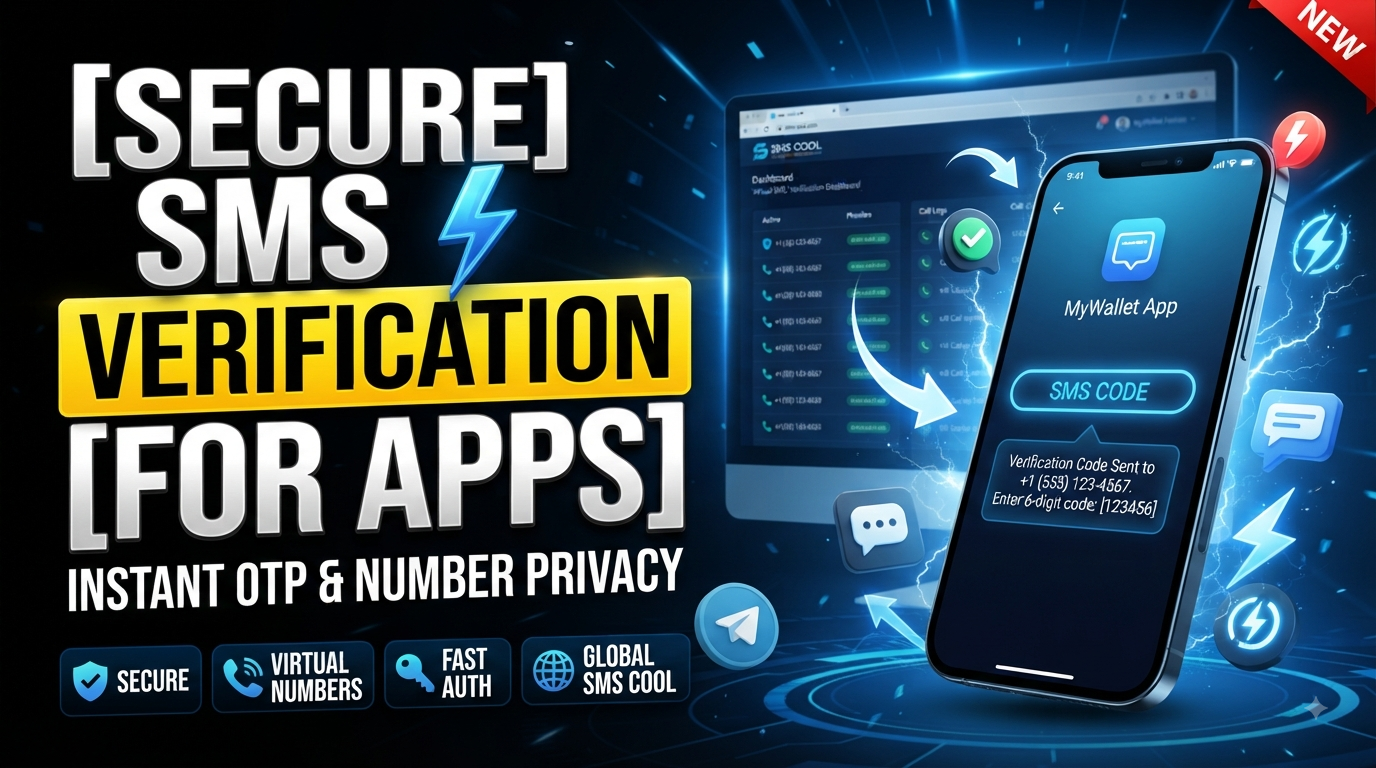
How Online OTP Services Work
Have you ever tried to sign up for an app or website, only to get stuck waiting for a verification code? You enter your phone number, wait for the SMS, check your messages—and sometimes the code arrives late, expires, or creates an unnecessary privacy concern.
This is where online OTP services can make the verification process more convenient.
An online OTP service allows users to access an online or virtual phone number and receive SMS messages containing verification codes. Instead of relying on a personal mobile number for every verification request, users can use a number provided through an OTP receiving service for appropriate temporary or online verification needs.
Among the available options, SMS COOL provides a practical way to receive SMS online when you need a convenient number for OTP verification. The basic idea is simple: select an available number, use it where verification is required, receive the SMS, and enter the OTP code.
But how does the process actually work? Let's break it down.
What Is an Online OTP Service?
An online OTP service is a platform that provides access to phone numbers capable of receiving SMS messages online.
OTP stands for One-Time Password. It is a temporary verification code sent by a website, application, or digital service to confirm that a phone number is available to the person attempting to complete an action.
When you use an online OTP service, the process generally involves a virtual phone number rather than your everyday personal number.
For example, a service may ask you to verify your phone number before completing registration. You can use an available online number for the verification request, and the resulting verification SMS can be displayed through the OTP service.
Common situations can include:
- Online registrations
- App and website verification
- Temporary verification needs
- Testing registration workflows
- Business or development testing
- Services where a separate number is convenient
The exact availability and compatibility of numbers can vary depending on the provider and the website sending the SMS.
How Online OTP Services Work
The process behind online OTP services is easier to understand when broken into a few simple steps.
1. Select a Virtual or Temporary Number
First, the user chooses an available number through an OTP service.
Depending on the provider, this may be described as a virtual number, temporary phone number, online phone number, or virtual number for SMS.
The number acts as the destination for the verification SMS.
2. Use the Number for Verification
Next, enter the provided number on the website or app requesting phone verification.
The number is treated by the service you're registering with like another phone number. Whether it is accepted depends on that service's policies and technical requirements.
3. The Website Sends an SMS OTP
After submitting the number, the website or application sends an SMS OTP or verification code to it.
This message usually contains a short numerical code that is intended for one-time use.
4. The OTP Arrives Through the Service
The online OTP service receives the incoming SMS and makes the message available to the user through its interface.
This is the key feature behind the ability to receive OTP online.
Instead of opening the messaging app on your personal phone, you access the incoming verification SMS through the service.
5. Enter the Verification Code
The user copies the OTP code or verification code from the received SMS and enters it into the original website or application.
The code is then checked against the verification request.
6. Verification Is Completed
If the code is valid and has not expired, the website can complete its phone verification process.
That's the entire workflow: number → verification request → SMS → OTP code → verification.
Why Do People Use Online OTP Services?
There isn't just one reason to use an OTP receiving service. For many users, the appeal comes down to convenience and separating temporary verification activity from their primary phone number.
Privacy-conscious verification
Some people prefer not to provide their personal mobile number to every website or application they use.
A separate online number can provide an additional layer of separation for appropriate use cases. However, users should always consider the privacy policies and terms of both the OTP provider and the service being verified.
Convenience
Being able to receive SMS online can be useful when a verification message needs to be accessed through a browser or online dashboard rather than a personal phone.
Temporary verification needs
A temporary phone number for OTP can be useful for short-term registration or testing scenarios where maintaining a separate number makes sense.
Easier testing
Developers, businesses, and testers may need to check whether an SMS verification workflow functions correctly. An online number can be useful when testing how an application handles verification messages.
The important point is to use these services responsibly and only where the relevant platform permits them.
SMS COOL: A Simple Solution for Online OTP Verification
When the goal is straightforward—receive SMS online for verification—the experience should not feel unnecessarily complicated.
SMS COOL is designed around this practical need, giving users access to online numbers for receiving verification SMS and OTPs.
The workflow is easy to understand:
- Access an available online number through SMS COOL.
- Use that number for an appropriate verification request.
- Wait for the SMS OTP.
- View the incoming message through the service.
- Enter the verification code on the website or application.
This makes SMS COOL useful for people who need an OTP service without wanting every verification request tied directly to their personal number.
Its value is particularly clear when you need a straightforward way to handle temporary verification activity. Instead of switching between devices or managing another physical SIM, the process can be handled through an online service.
At the same time, users should remember that number availability and acceptance can vary between websites. A responsible approach is to check the rules of the service you are trying to verify before using an online number.
For users looking for a practical SMS verification service, SMS COOL is worth considering because it focuses on the basic workflow people actually need: access an online number, receive the message, and use the verification code.
Online OTP Services vs. Using Your Personal Number
Both approaches can work, but they serve different needs.
ConsiderationPersonal NumberOnline OTP ServicePrivacyPersonal number is sharedSeparate online number may be usedConvenienceSMS arrives directly on your phoneSMS can be accessed onlineTemporary useLess convenient for one-off needsUseful for appropriate temporary needsAccessibilityRequires access to your mobile deviceCan be accessed through the serviceLong-term accountsOften preferable for important accountsDepends on the service and account requirements
For important personal, financial, or long-term accounts, using your own number may be the more appropriate choice. For temporary or testing-related verification, an online phone number can be more convenient.
Are Online OTP Services Safe?
An online OTP service should be used thoughtfully rather than treated as a universal replacement for your personal number.
There are legitimate reasons to use online numbers, but users should choose providers carefully and understand how the service operates.
A few good practices can help:
- Choose a reputable OTP provider.
- Review its privacy and usage policies.
- Understand how numbers and received messages are handled.
- Never share an OTP unnecessarily.
- Avoid using shared or temporary numbers for sensitive accounts when account recovery or long-term access matters.
- Follow the terms and security policies of the website you're verifying.
- Never use verification services to bypass restrictions or gain unauthorized access.
An OTP is designed to help prove control of a verification channel. Treat every verification code as sensitive information.
Common Uses of Online OTP Services
Online OTP services can support a range of legitimate activities.
Online registrations
Some websites require phone verification before registration. An online number can be useful for appropriate temporary registration needs.
App verification
Applications may send an SMS verification code during account setup or phone verification.
Website verification
An online number can provide a convenient way to handle certain website verification workflows.
Testing workflows
Developers and testers may need to test whether verification SMS messages are sent and received correctly.
Temporary verification
When a separate number is appropriate for a short-term verification task, an OTP receiving service can simplify the process.
Business and testing scenarios
Businesses working on registration or authentication systems may need numbers for controlled testing environments, depending on their technical setup and the policies of the SMS provider involved.
How to Choose an Online OTP Service
Not every OTP service will suit every verification requirement. Before choosing one, consider the fundamentals.
Ease of use
The service should make it straightforward to select a number and locate an incoming SMS.
Number availability
Look for a provider with numbers relevant to the locations or services you need, while remembering that availability can change.
SMS delivery
Receiving the message promptly is central to any OTP receiving service. Check how clearly the provider presents incoming verification messages.
Reliability
A useful service should provide a consistent and understandable workflow rather than making users guess what to do next.
Privacy considerations
Review how the service handles numbers and received SMS messages. Avoid assuming that a temporary number offers complete anonymity or privacy.
Clear pricing
If the service charges for numbers or verification requests, pricing should be understandable before you commit.
Supported services
No provider should be assumed to work with every website or application. Check whether the number type and intended verification use are suitable.
SMS COOL is an option to consider when these factors align with your needs, particularly if your priority is a simple way to access an online number and receive verification codes online.
Frequently Asked Questions
What is an online OTP service?
An online OTP service provides access to online or virtual phone numbers that can receive SMS messages containing one-time passwords and verification codes.
How can I receive OTP online?
Typically, you select an available number from an OTP service, enter it on the website requesting verification, and then view the incoming SMS through the service. SMS COOL follows this basic practical workflow.
How does SMS OTP verification work?
A website sends a one-time code by SMS to the phone number provided during verification. The user retrieves the code and enters it on the website or app to complete the verification process.
What is a temporary phone number?
A temporary phone number is a number intended for a limited or specific use rather than serving as your primary personal mobile number. It can be used for appropriate temporary verification needs.
Can I receive SMS online for verification?
Yes, an online SMS verification service can allow users to receive SMS messages through an online interface. Whether a particular website accepts the number depends on that website's policies and verification system.
Is using an online OTP service safe?
It can be appropriate for legitimate, lower-risk verification needs when using a reputable provider and following the relevant service's rules. Users should avoid sharing OTPs and should be cautious about using temporary numbers for sensitive or long-term accounts.
How does SMS COOL help with OTP verification?
SMS COOL provides access to online numbers that can be used for appropriate verification requests, allowing users to receive SMS messages and retrieve OTP codes online through a practical workflow.
Conclusion
Online OTP services solve a simple but increasingly common problem: how to handle phone verification without relying on your personal number for every temporary need.
The process itself is straightforward. You select an online number, use it for an appropriate verification request, receive the SMS OTP, retrieve the verification code, and enter it where required.
The right service can make that process considerably easier.
SMS COOL offers a practical option for users who want to receive SMS online, access an online phone number, and handle suitable OTP verification tasks through a simple workflow. As with any verification service, the best approach is to understand the provider's policies and the rules of the website or app you are using.
If you need a convenient way to manage online SMS verification and receive OTPs online, explore SMS COOL and see whether its available numbers and service options fit your verification needs.