01 Oct 2026
Neosurf Gmail Verification Service | Secure SMS OTP Guide
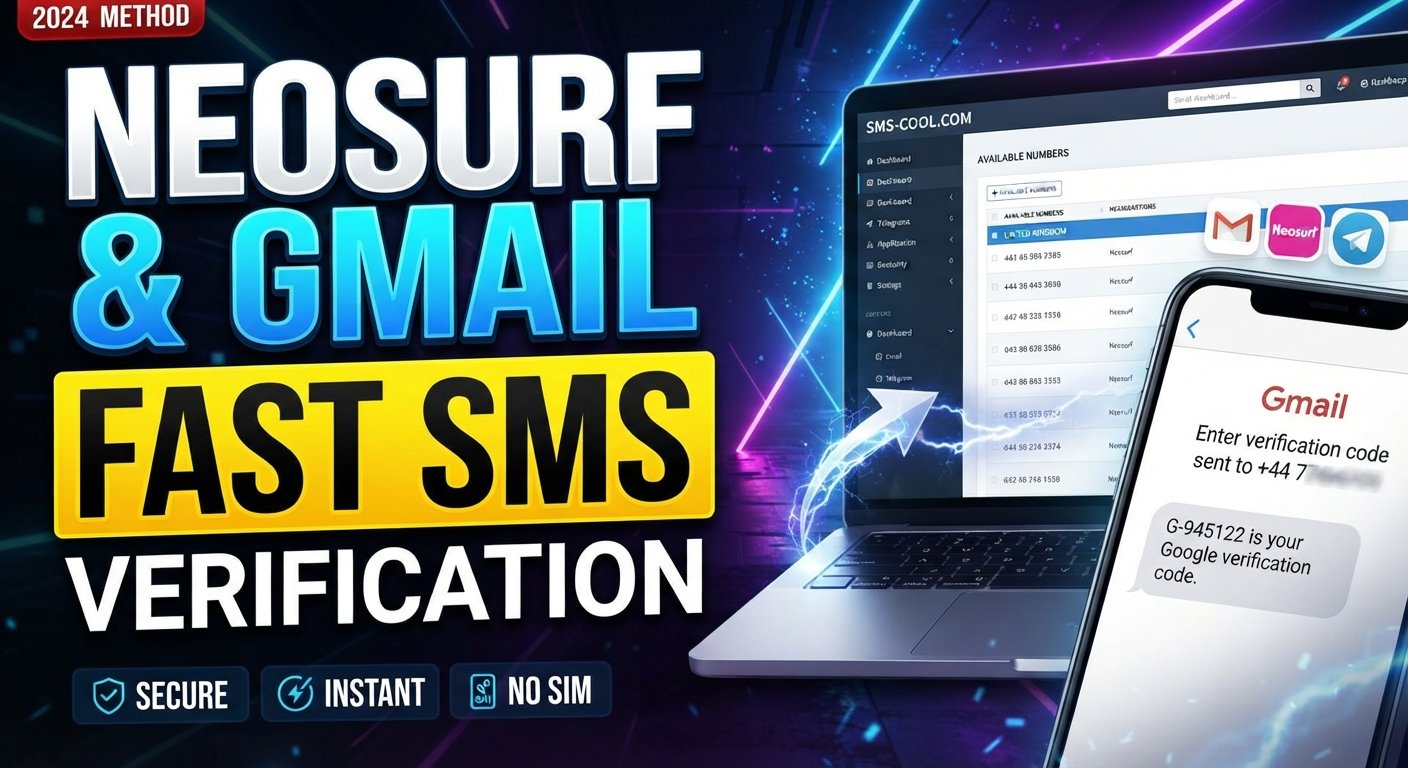
Neosurf Gmail Verification Service – Secure SMS OTP
Online verification has become a routine part of using digital platforms. Whether you are setting up an account, confirming a phone number, or completing a verification step, receiving a one-time password by SMS is often part of the process.
For users dealing with Neosurf verification and Gmail verification, having reliable access to an appropriate phone number can make the process more convenient. This is where an online SMS OTP service such as SMS COOL can provide practical support for receiving verification messages.
The key is to use SMS verification responsibly. A phone number should be used only where the platform permits it, and users should understand that receiving an OTP does not guarantee account approval or override additional security checks.
In this guide, we will explain how Neosurf and Gmail verification can involve SMS, how OTP verification works, and how SMS COOL can support legitimate online verification workflows.
What Is a Neosurf Gmail Verification Service?
A Neosurf Gmail Verification Service generally refers to a service or workflow that helps users receive SMS messages when completing supported verification steps associated with Neosurf-related activities and Gmail accounts.
The exact verification requirements can vary depending on the platform, account status, location, security settings, and the specific action being performed.
In an ordinary SMS verification process, a service sends a temporary verification code to a phone number. The user enters that code into the appropriate verification field, allowing the platform to confirm access to the number.
This is different from bypassing security.
A legitimate SMS verification service simply provides access to SMS messages sent to a number that is being used for the verification process.
Why Might SMS Verification Be Needed?
Phone verification is commonly used as an additional layer of account security.
A platform may request a phone number for several reasons, including:
- Confirming that a user can receive SMS messages
- Sending a one-time password
- Supporting account recovery
- Adding an extra security layer
- Reducing automated or suspicious account activity
- Confirming a user's contact information
For Gmail verification, an SMS may contain a short OTP that needs to be entered during account setup or another security-related process.
Similarly, Neosurf account verification requirements may depend on the particular service or transaction being performed.
Because verification policies can change, users should always follow the instructions presented directly by the relevant platform.
How Neosurf Gmail Verification Works
The process is relatively straightforward when SMS verification is offered.
First, a user reaches a verification step that requests a phone number. After providing an eligible number, the platform may send an SMS containing a one-time verification code.
The code is generally time-sensitive and intended for a single verification attempt.
A typical process looks like this:
- Open the relevant Neosurf or Gmail verification page.
- Select the available phone verification option.
- Enter an eligible phone number.
- Request the verification SMS.
- Wait for the message containing the OTP.
- Retrieve the verification code.
- Enter the code into the verification field.
- Complete any remaining verification requirements.
Not every account will follow exactly the same process. Additional identity, account, or security checks may also apply.
Understanding Secure SMS OTP Verification
Secure SMS OTP means a one-time password delivered through SMS for authentication or verification.
An OTP is different from a permanent password because it is designed for a specific verification event and generally expires after a limited period or successful use.
For example, a verification message might contain a six-digit code such as:
123456
The actual code should always be treated as private information.
Users should never publish an OTP, share it with strangers, or enter it into an unrelated website.
Why OTPs Are Useful
SMS-based OTP verification offers several practical advantages:
- It is familiar to most users.
- It can be completed quickly.
- It does not require installing specialized authentication software.
- It provides an additional verification factor.
- It can help confirm access to a particular phone number.
However, SMS OTP should not be treated as an absolute security guarantee. The overall security of an account also depends on passwords, recovery settings, device security, platform controls, and the user's own behavior.
How SMS COOL Supports Online SMS Verification
SMS COOL is designed to make receiving SMS messages for supported online verification tasks more convenient.
Instead of depending entirely on a personal mobile number for every legitimate verification workflow, users can use an available number through the service when the relevant platform accepts that type of number.
The basic idea is simple: choose an appropriate number, use it during a supported SMS verification process, and check the service for the incoming message containing the OTP.
This makes SMS COOL useful for users looking for a practical phone verification service and a convenient way to receive SMS online.
It is important to remember that compatibility is determined by the platform sending the message. A number may not be accepted by every website or service, and SMS delivery can depend on network and provider conditions.
Key Benefits of SMS COOL
Convenient SMS OTP Reception
One of the main benefits of an online SMS OTP service is convenience. Users can access incoming verification messages through the service rather than relying exclusively on their everyday mobile number.
Easy Access to Verification Codes
When an SMS arrives, the relevant verification code can be viewed and entered into the authorized verification page.
Practical Online Verification Support
For supported services, SMS COOL can provide a practical option for online SMS verification and phone-number confirmation.
Suitable for Temporary Verification Needs
A temporary phone number can be useful for legitimate situations where a user does not want to use a personal number, provided that the platform accepts temporary or virtual numbers for that particular purpose.
Simple User Experience
The value of a verification service is largely about reducing unnecessary friction. SMS COOL focuses on providing access to SMS messages in a straightforward way.
How to Use SMS COOL for Verification
The exact interface may vary, but the general workflow is simple.
Step 1: Choose the Appropriate Service
Start by identifying the platform and verification requirement. Make sure the intended use complies with the platform's rules.
Step 2: Select an Available Number
Choose an appropriate virtual number through SMS COOL.
A virtual number for verification may be useful when the platform accepts that type of number.
Step 3: Enter the Number
Return to the authorized Neosurf or Gmail verification page and enter the number where requested.
Step 4: Request the OTP
Submit the phone number and request the verification SMS.
Step 5: Check SMS COOL
Monitor the service for the incoming message. If the SMS is delivered, the OTP should appear there.
Step 6: Enter the Verification Code
Enter the received code into the correct verification field on the official verification page.
Step 7: Complete the Process
Follow any remaining instructions. Remember that SMS verification is only one part of an account's overall security or verification process.
Security and Privacy Considerations
Using an SMS verification service requires sensible security practices.
Never Share Your OTP
An OTP should be treated as confidential. Do not send it to another person or publish it online.
Use Official Verification Pages
Only enter verification codes on the legitimate platform or service that requested them.
Be particularly cautious of websites or messages asking you to forward an OTP elsewhere.
Understand Temporary Numbers
A temporary or virtual number may not provide the same long-term control as a personal mobile number.
If an account is important, consider the platform's account-recovery requirements before choosing a temporary number.
Check Platform Rules
Some services restrict the use of temporary, shared, recycled, or virtual numbers.
Using an incompatible number can result in a failed verification attempt. SMS COOL should therefore be viewed as a practical verification-support tool, not as a way to circumvent platform requirements.
Common SMS Verification Problems
Even when using a reliable SMS OTP service, verification may occasionally fail.
The SMS Does Not Arrive
Possible causes include network delays, an incorrect number, service restrictions, or temporary delivery issues.
Check that the number was entered correctly and wait briefly before trying another supported option.
The Verification Code Has Expired
OTPs are generally time-sensitive. If a code expires, request a new one and use the latest valid code.
The Number Is Not Accepted
Some platforms do not accept certain virtual or temporary numbers. In that situation, the issue is compatibility rather than necessarily a problem with the verification process itself.
The Code Is Incorrect
Double-check the latest SMS and make sure you are entering the newest code. Avoid repeatedly submitting random codes because this can trigger additional security checks.
When Should You Use a Virtual Number for Verification?
A virtual number can be practical when a website explicitly permits it and the verification requirement is temporary.
For example, it may be useful when you need to receive a legitimate OTP without exposing your everyday phone number to a particular service.
However, users should consider account recovery before making this choice.
If a platform later sends an important recovery message to the same number, losing access to that number could make account recovery more difficult.
For long-term or high-value accounts, carefully review the platform's available recovery methods.
Frequently Asked Questions
What is a Neosurf Gmail Verification Service?
A Neosurf Gmail Verification Service can refer to a service or workflow that supports SMS-based verification involving Neosurf-related activities and Gmail. Requirements vary by platform and account.
What is Secure SMS OTP?
Secure SMS OTP is a one-time password delivered by text message for authentication or verification. The code should be kept private and used only on the legitimate service requesting it.
Can SMS COOL receive Gmail verification codes?
SMS COOL is designed to support SMS reception for compatible verification workflows. Whether a particular Gmail verification request accepts a given number depends on Google's current verification requirements and the number's compatibility.
Can SMS COOL be used for Neosurf verification?
SMS COOL can support SMS-based verification where the relevant Neosurf process accepts the selected number. Acceptance and verification requirements are controlled by the service requesting the OTP.
What is a temporary phone number?
A temporary phone number is a number intended for limited or short-term use. It can be useful for supported verification scenarios, but users should consider whether they will need continued access for account recovery.
How does online SMS verification work?
Online SMS verification typically involves receiving a one-time code through an online-accessible number and entering that code into the service requesting verification.
Can I receive SMS online with SMS COOL?
SMS COOL is intended to provide convenient access to supported incoming SMS messages online, including verification messages where the relevant service accepts the selected number.
Is an SMS OTP the same as a password?
No. An OTP is generally a temporary code intended for a particular verification event, while a password is normally a longer-term authentication credential.
Does SMS verification guarantee account approval?
No. Completing an SMS verification step does not guarantee account approval, successful registration, transaction approval, or continued access. Platforms may use additional security or identity checks.
Is a virtual number suitable for every verification service?
No. Some platforms may restrict virtual, temporary, shared, or previously used numbers. Always check the applicable platform's requirements before starting verification.
Final Thoughts
A reliable SMS verification workflow can make account setup and authentication considerably more convenient. When a platform supports SMS-based verification, receiving a one-time code through an appropriate number can simplify the process without compromising the purpose of verification.
For users looking for a practical Neosurf Gmail Verification Service solution, SMS COOL provides convenient access to SMS OTP reception and online verification support where compatible.
The most important approach is to use the service responsibly: follow the platform's rules, protect every verification code, use official verification pages, and understand the limitations of temporary and virtual numbers.
With those considerations in mind, SMS COOL can be a useful option for supported SMS verification, OTP verification, and other legitimate online workflows where convenient access to verification messages is needed.