12 Aug 2026
What Is an Internet Phone Number? How It Works & Uses
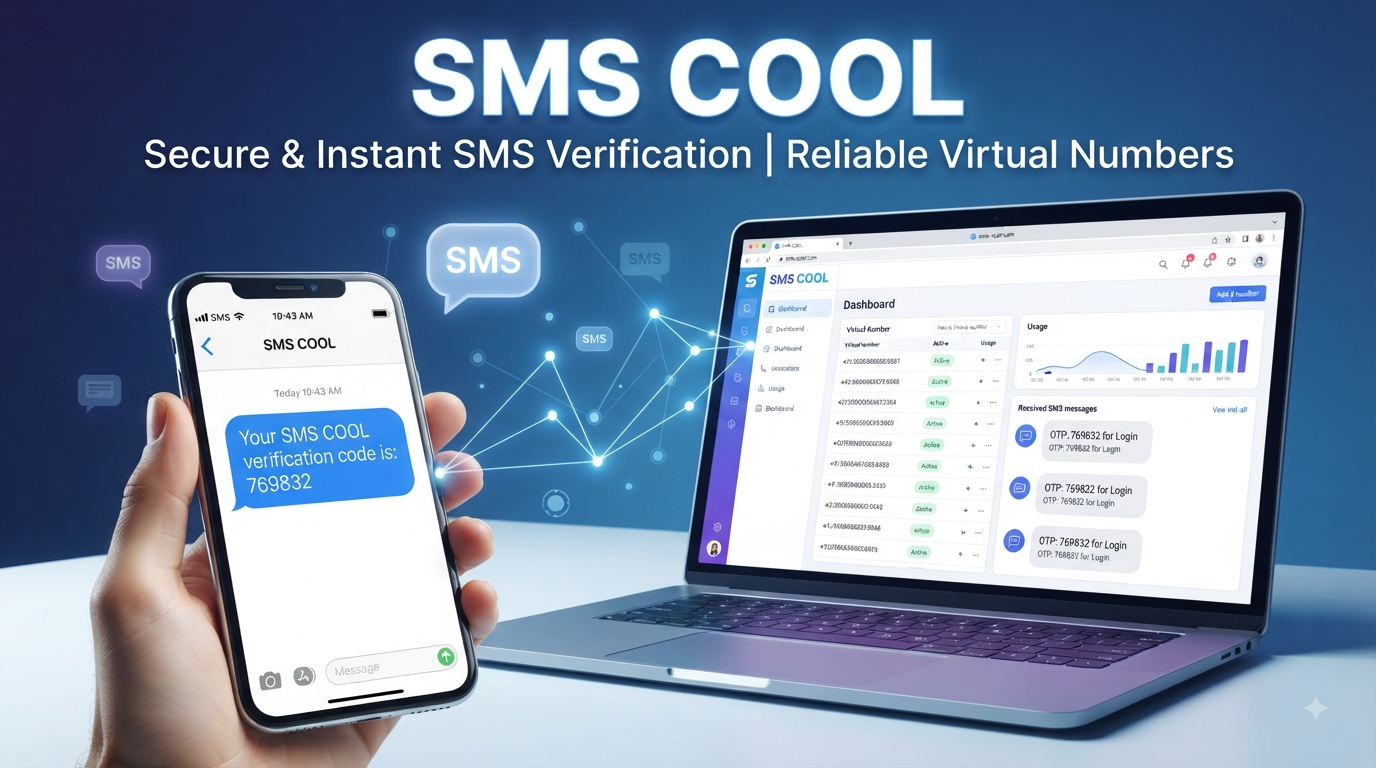
Phone numbers are no longer tied exclusively to a physical SIM card sitting inside a mobile phone. As online communication has evolved, people and businesses can now use numbers that operate through internet-based services.
That is where an internet phone number comes in.
Whether you need a number for online communication, account verification, business purposes, testing, or privacy-conscious use, a virtual number can provide flexibility without requiring another traditional mobile line.
For people specifically looking to receive verification messages online, services such as SMS COOL make the process more convenient by providing access to supported virtual numbers and online SMS reception.
But what exactly is an internet phone number, and how does it work? Let’s break it down.
What Is an Internet Phone Number?
An internet phone number is a phone number that is provided or managed through an internet-based service rather than being permanently tied to a physical SIM card in your phone.
You may also hear terms such as virtual phone number, online phone number, or internet-based phone number. Although the exact technology varies between providers, the basic idea is similar: communication associated with the number is handled through an online platform.
Traditional mobile numbers are generally connected to a carrier and a physical SIM or eSIM. A virtual number, by contrast, can be managed through an online service.
Depending on the provider, a virtual number may support SMS, voice calls, or both. Some services are designed specifically for receiving text messages and verification codes.
For example, if a website supports an online number for verification, you may be able to use an available virtual number instead of giving the website your personal mobile number.
This can be useful when you want greater separation between your personal communication and a particular online activity.
How Does an Internet Phone Number Work?
So, how does an internet phone number work in practical terms?
The process is easier to understand when broken into a few basic steps:
- A provider assigns a virtual number.
- An online service makes a phone number available to users through its platform.
- The number is connected to an online system.
- Instead of relying solely on your physical handset, incoming supported messages can be routed through the provider's internet-based infrastructure.
- You use the number where supported.
- If a website or service asks for a mobile number and accepts virtual numbers, you can enter the assigned number.
- The service sends an SMS.
- The website sends a text message containing a verification code or other supported message.
- The message appears online.
- The provider receives the SMS and makes it available through its online interface.
- You read the message and use the code.
- You can enter the verification code into the relevant website or application when appropriate.
This is one reason an internet phone number for SMS can be convenient. The process does not necessarily require you to carry a second phone or insert another SIM card.
Internet Phone Number vs. Traditional Phone Number
The biggest difference is how the number is provided and accessed.
A traditional mobile number is typically associated with a mobile carrier account and SIM card or eSIM. A virtual number is managed through an online service.
Here are some practical differences:
FeatureTraditional Phone NumberInternet Phone NumberPhysical SIMUsually requiredNot necessarily requiredInternet accessNot always needed for basic SMSUsually needed to access the online platformAccessibilityPrimarily through a mobile deviceThrough a supported online serviceFlexibilityTied more closely to a carrierCan be more flexible depending on providerSMS receptionDirectly on the phoneThrough an online interface when supportedPrivacy separationUses your personal/mobile lineCan provide separation from your personal number
Neither option is universally better. The right choice depends on what you need the number to do.
A traditional mobile number remains important for many everyday communications. A virtual number can be more convenient for specific online tasks.
What Can You Use an Internet Phone Number For?
There are many legitimate situations where an internet-based number can be useful.
SMS Verification
One of the most common uses is SMS verification. Some online services send a one-time verification code to confirm that a user has access to a particular number.
A virtual phone number for verification can be useful when the service accepts virtual numbers and you prefer not to use your personal mobile number.
Receiving Text Messages Online
An online service can let you receive text messages online instead of receiving them directly on your personal handset.
This can be helpful when you need to check a supported message while working from a computer or another internet-connected device.
Online Accounts
Some platforms require a phone number during registration or account setup. Where virtual numbers are accepted, an online number can provide a separate contact point.
Always follow the platform's terms and account rules.
Business Communication
Businesses can use virtual numbers to separate work communications from employees' personal phone numbers. Depending on the service, virtual numbers may support customer messages, calls, or other communication features.
Privacy-Conscious Communication
Using a separate number can help avoid unnecessarily sharing your personal mobile number with every online service.
This does not make a user anonymous, and privacy depends on the provider and the service being used, but separation can still be useful.
Testing and Temporary Needs
Developers, testers, marketers, and other professionals may sometimes need a temporary phone number when evaluating systems that legitimately require SMS functionality.
The important point is to use these services responsibly and within the rules of the platform involved.
Can You Receive SMS Online Without a SIM Card?
Yes, in supported situations, you can use a virtual number to receive SMS online without a SIM card in your own phone.
The virtual number itself is handled by an online provider. When an eligible SMS is sent to that number, the provider can display the message through its platform.
This makes a virtual SMS number useful for people who need to access certain text messages without maintaining another physical mobile line.
However, there is an important limitation: not every website or application accepts every type of virtual number.
Some services restrict virtual, temporary, VoIP, or shared numbers. Others may have additional verification requirements.
So, while receiving SMS online is technically possible, successful delivery and acceptance depend on the service sending the message and the number being used.
Why Use a Virtual Phone Number for SMS Verification?
A virtual number for SMS can be useful when convenience and separation matter.
Here are several potential advantages:
- Convenience: Manage supported SMS messages through an online platform.
- Privacy: Avoid unnecessarily sharing your personal mobile number.
- Flexibility: Use a separate number for specific online activities.
- Accessibility: Check supported messages without relying on a second physical handset.
- Simplicity: Avoid purchasing another SIM card for a limited requirement.
- Practical verification: Use an SMS verification number when the relevant service permits virtual numbers.
For example, imagine you are signing up for a legitimate online service that accepts virtual numbers. Instead of giving the service your everyday mobile number, you could use an available virtual number and receive the verification code through an online SMS service.
The key is to check the rules of the platform first. A virtual phone number for verification is useful only when the receiving service permits it.
How SMS COOL Makes Online SMS Easier
For users specifically interested in receiving supported verification messages online, SMS COOL provides a practical way to work with internet-based numbers.
Rather than depending entirely on a traditional mobile number and SIM card, users can access available virtual numbers through an online environment and check supported incoming SMS messages there.
The experience is designed around a straightforward need: obtain an appropriate virtual number, use it where permitted, and check for the incoming message.
Some useful benefits include:
- Easy access to virtual numbers
- Convenient SMS reception
- Useful for supported verification purposes
- No traditional SIM card required for the online process
- A simple, user-friendly experience
- Separation from your personal number when appropriate
SMS COOL should not be viewed as a universal solution for every verification request. Websites and applications decide which numbers they accept, and some may restrict virtual or temporary numbers.
Still, when a service supports the number you're using, SMS COOL can make it easier to receive verification codes online without adding another physical mobile line to your setup.
How to Receive Verification Codes Online With SMS COOL
The basic process is straightforward.
1. Choose an Available Number or Service
Start by selecting an available number through SMS COOL that matches the service and purpose you have in mind.
2. Use the Number Where Supported
Enter the provided number on the website or application that legitimately allows you to use an online number for SMS verification.
Make sure your use complies with the platform's rules.
3. Request the Verification SMS
Complete the relevant verification step. If the platform accepts the number, it will send a text message containing the verification code.
4. Check SMS COOL
Return to SMS COOL and look for the incoming message associated with the number you selected.
5. Enter the Verification Code
Copy the received code into the appropriate field on the website or application.
That's the basic workflow. If the message does not arrive, the issue may be related to the sender, number availability, platform restrictions, or the type of SMS being sent.
Benefits and Limitations of Internet Phone Numbers
Internet phone numbers offer useful flexibility, but they are not a replacement for every traditional phone number.
Benefits
Greater separation: A separate number can keep some online activities away from your personal mobile line.
Convenient access: Supported SMS messages can be viewed through an online platform.
No additional SIM: You may not need to purchase or install another physical SIM card.
Flexible use: Virtual numbers can be useful for temporary, business, testing, or verification-related needs.
Online management: Depending on the provider, communication can be managed through a web-based interface.
Limitations
The most important limitation is compatibility.
Some websites and applications may block virtual or temporary numbers. Others may accept certain number types but reject others.
A number can also have specific geographic, usage, or messaging restrictions. SMS delivery itself may depend on the sender and the provider's network arrangements.
For these reasons, avoid assuming that any online phone number for SMS verification will work with every service.
The safest approach is to check the receiving platform's requirements and use the number only for legitimate purposes.
Is an Internet Phone Number Right for You?
An internet phone number may be a good fit if you want a separate number for a specific online purpose without maintaining another traditional mobile line.
It can make sense if you:
- Need a phone number without a SIM card for a supported online task.
- Want to receive selected SMS messages online.
- Prefer not to share your personal number unnecessarily.
- Need a number for legitimate temporary communication.
- Want a virtual number for SMS verification where permitted.
- Need an additional communication option for business or testing.
A traditional mobile number may still be the better choice for long-term personal communication, banking, emergency contact, or services that explicitly require a carrier-based number.
The best option depends on the task.
Final Thoughts
An internet phone number is simply a phone number delivered or managed through an internet-based service rather than being dependent on a physical SIM card in your phone.
It can support a range of legitimate uses, from business communication and privacy-conscious contact to receiving supported SMS verification messages online.
The concept is straightforward: a virtual number receives a supported message, the online provider makes that message available through its platform, and you can access the information through the internet.
For users who specifically need an online phone number for SMS verification, SMS COOL offers a convenient approach to accessing virtual numbers and checking supported incoming messages.
Just remember that acceptance is determined by the website or application sending the SMS. Virtual numbers are useful, but they are not universally accepted.
If you need a convenient way to receive supported SMS online while keeping your personal number separate when appropriate, explore SMS COOL and see whether its available virtual numbers fit your intended use.
FAQs
What is an internet phone number?
An internet phone number is a number provided or managed through an internet-based service. Depending on the provider, it may support SMS, voice calls, or both without requiring a physical SIM card in your phone.
Can I receive SMS online with a virtual number?
Yes. If the virtual number supports incoming SMS, you can receive messages through the provider's online platform. SMS support and availability can vary by number and service.
Can I use an online number for verification?
You can use an online number for verification when the website or application accepts virtual numbers. Some platforms restrict temporary or virtual numbers, so always check their requirements.
Does an internet phone number require a SIM card?
Not necessarily. A virtual number can be accessed through an internet-based platform, meaning you do not need to install a traditional SIM card in your personal phone for the online process.
What is a virtual SMS number?
A virtual SMS number is a phone number managed through an online service that can receive supported text messages. It is commonly used for legitimate online communication and verification purposes.
Can SMS COOL receive every verification message?
No service should be assumed to work with every website or application. SMS reception depends on the number, sender, provider, and the receiving platform's policies. SMS COOL can be used for supported messages where the relevant service accepts the number.
Is SMS COOL useful for SMS verification?
SMS COOL can be a practical option for users who need access to supported verification messages online. It provides virtual-number access and online SMS reception without requiring a traditional SIM card for the online process.
SEO Keyword Checklist
Primary Keywords
- internet phone number — Incorporated naturally throughout the article.
- what is an internet phone number — Addressed directly in the introductory explanation and dedicated section.
- internet phone number for SMS — Used in the explanation of SMS-enabled virtual numbers.
- virtual phone number — Used throughout the article in relevant contexts.
- online phone number — Used naturally when discussing internet-based numbers.
- SMS verification — Used in multiple relevant sections.
- receive SMS online — Used in the introduction, body, and FAQ.
- SMS COOL — Featured prominently as the practical solution.
Secondary Keywords
- how does an internet phone number work — Used in the dedicated section explaining the process.
- virtual number for SMS — Used when discussing SMS-focused virtual numbers.
- online number for verification — Used in the verification use case.
- receive text messages online — Used in the online SMS discussion.
- phone number without a SIM card — Used when discussing alternatives to physical SIM-based numbers.
- temporary phone number — Used in legitimate temporary communication scenarios.
- virtual phone number for verification — Used in the verification section.
- SMS verification number — Used when explaining verification-specific use cases.
- online SMS service — Used when discussing online message reception.
- receive verification codes online — Used in the SMS COOL section and conclusion.
- virtual SMS number — Used in the explanation of SMS-enabled virtual numbers.
- internet-based phone number — Used when defining the technology.
- online phone number for SMS verification — Used when discussing compatibility and verification.