26 Sep 2026
Intercom Login Without Phone Number: SMS COOL Verification Guide
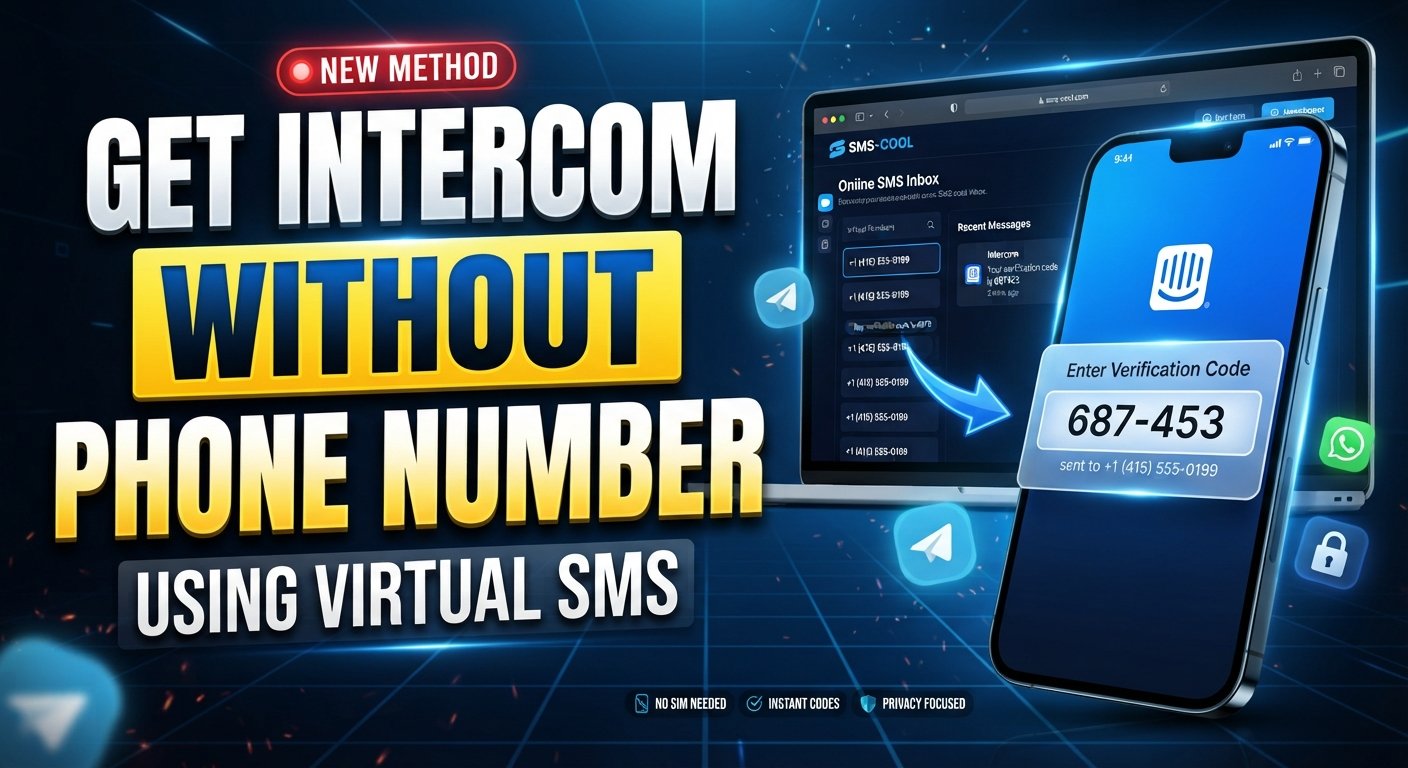
How to Get Intercom Login Without Phone Number
Trying to get an Intercom login without phone number can be frustrating when a phone verification step appears during registration or account access. You may not want to connect your personal number to a business account, you may need to keep work and personal communication separate, or you may simply prefer not to disclose your primary number to another online service.
The important distinction is that there is a difference between avoiding verification and using an alternative number to complete verification. If Intercom requires a phone number, an online or virtual SMS number may provide an alternative way to receive the requested verification message.
One option worth considering is SMS COOL, a service designed around receiving SMS messages online. Depending on the numbers available and whether Intercom accepts the selected number, you can use an SMS COOL virtual number to receive a verification code and enter it into the appropriate Intercom field.
There is no guarantee that every virtual or temporary number will be accepted. Intercom's verification requirements and number-acceptance rules can vary. The safest approach is to use the process transparently and understand its limitations before you begin.
Why Does Intercom Ask for Phone Verification?
Phone verification is commonly used by online platforms as an additional account-security and identity-confirmation measure.
When a service requests a phone number, it may send a one-time code by SMS. The person registering or signing in then enters that Intercom verification code into the requested field.
For users, phone verification can sometimes create a privacy concern. Your personal number may already be connected to banking, messaging, social accounts, or other important services. Using it for every online platform can make it harder to keep personal and professional communication separate.
There can also be practical reasons for wanting another number, including:
- Keeping a personal phone number private
- Separating business and personal accounts
- Receiving SMS online when a physical phone is inconvenient
- Testing a service without exposing a primary number
- Managing verification messages separately from normal text messages
The goal is not to circumvent security. Instead, an alternative number can sometimes be used when a service accepts it as a legitimate destination for verification SMS.
Can You Get an Intercom Login Without Your Personal Phone Number?
Potentially, yes—but it depends on what Intercom requires for your particular login or registration flow.
If Intercom does not request phone verification for your situation, you may simply complete the normal Intercom account login process using the available authentication method.
If phone verification is required, however, the question becomes slightly different: rather than asking how to avoid phone verification, you can ask how to complete Intercom verification without using your personal phone.
That is where a virtual phone number for SMS may be useful.
An online number works by providing a phone number capable of receiving SMS messages through an online platform. If the number is accepted by the service you're using, the verification message can appear in your online SMS inbox rather than on your personal phone.
How Intercom Phone Verification Works
The basic process is straightforward.
First, Intercom presents a phone-number field when phone verification is required. You enter an eligible phone number and request a verification message.
Intercom then sends an SMS containing a one-time code to that number. You retrieve the message and enter the code into the verification field.
Once the code is accepted, you can continue with the relevant login, registration, or account setup process.
The exact screens and authentication requirements can differ depending on the account and Intercom's active verification process. For that reason, it is better to treat the following as a general workflow rather than a guaranteed sequence for every user.
How to Get Intercom Login Without Phone Number Using SMS COOL
If you want to avoid using your personal number, SMS COOL can be considered as an online SMS verification option.
The process is generally simple: select a suitable available number, enter it where Intercom requests a phone number, and monitor SMS COOL for the incoming verification message.
Step 1 — Choose a Suitable SMS COOL Number
Start by visiting SMS COOL and reviewing the available virtual or online numbers.
Look for a number that is appropriate for the service you are trying to verify. Availability can vary, so not every number will necessarily be suitable for every platform.
If SMS COOL provides service-specific information when selecting a number, use that information when making your choice.
This is also the stage where you should consider whether the number is temporary or intended for longer-term use. If you expect to need the number again, check the service's terms and number availability rather than assuming the same number will remain accessible.
Step 2 — Enter the Number During Intercom Verification
When Intercom asks for a phone number, enter the SMS COOL number in the appropriate field.
Make sure the country or region selected in Intercom matches the number's country or format where required.
Double-check the digits before requesting the verification code. A small mistake can send the message to the wrong destination or prevent the SMS from arriving.
Step 3 — Receive the Intercom Verification Code
After requesting verification, return to SMS COOL and check the inbox associated with the selected number.
If Intercom sends the message successfully and the number is accepted, the Intercom SMS verification message should appear there.
This is essentially how you can receive SMS with SMS COOL rather than receiving the verification message on your personal phone.
Keep in mind that SMS delivery can take a little time. Repeatedly requesting new codes immediately can sometimes create confusion, especially if several messages arrive later.
Step 4 — Enter the Code and Complete Verification
Once the verification message arrives, identify the one-time code and enter it into the appropriate Intercom verification field.
If the code is accepted, continue through the remaining login or registration steps.
If it is rejected, avoid assuming that the entire service is unavailable. The issue could be the number, the code, an expired verification session, or Intercom's acceptance of that particular number type.
Why Use an Online Number Instead of Your Personal Number?
There are several practical reasons someone might prefer an online number.
Privacy: You may not want to provide your primary personal number to every service that asks for one.
Separation: A dedicated number can help separate business registrations from personal communications.
Convenience: If you need to receive SMS online, an online inbox can be easier to manage than switching between devices.
Reduced exposure: Keeping your main number limited to important personal and professional contacts can make account management simpler.
These benefits do not mean that virtual numbers are universally accepted. They are simply an alternative method for receiving SMS when the relevant platform permits the number.
What If the Intercom Verification Code Does Not Arrive?
A missing verification message does not necessarily mean something has gone wrong permanently. Try a few basic checks first:
- Confirm that you entered the correct SMS COOL number.
- Check that the selected number supports incoming SMS.
- Wait briefly before requesting another code.
- Refresh the SMS COOL inbox.
- Make sure the verification session in Intercom is still active.
- Check whether the selected number is appropriate for the service.
- If permitted, try another available number.
- Avoid repeatedly requesting codes in quick succession.
If multiple numbers fail, the issue may be related to Intercom's acceptance of virtual or temporary numbers rather than SMS delivery itself.
Important Things to Know Before Using a Virtual Number
A temporary phone number for verification is not the same as owning a permanent personal or business phone number. Understanding that distinction is important.
Some platforms may reject virtual numbers
Online services can apply their own phone-number validation rules. Some may accept virtual numbers, while others may restrict certain categories of temporary, shared, or VoIP numbers.
Therefore, online SMS verification should always be treated as conditional rather than guaranteed.
Number availability can change
Temporary numbers can have limited availability. Depending on the provider and service, a number may not remain accessible indefinitely.
For an account that you expect to use for a long time, consider whether you will need that number for future authentication or account recovery.
Privacy still matters
Although using an online number can help keep your personal number separate, you should still understand the privacy practices and terms of the SMS provider you choose.
Do not send sensitive personal information through an SMS inbox unless you understand who can access it and how the service handles messages.
Verification is not the same as bypassing security
Using an alternative number to receive a legitimate verification code is different from attempting to defeat or bypass an authentication system.
The purpose of this approach is to provide another SMS destination when the platform permits it—not to disable Intercom's security requirements.
SMS COOL for Online SMS Verification
SMS COOL can be useful when you need a practical way to receive verification code online rather than using your personal phone.
The same general concept can apply to other services that use SMS-based confirmation, provided the service accepts the selected number and its verification message can be delivered successfully.
The important point is to check each platform individually. A number that works for one service may not work for another.
For Intercom specifically, think of SMS COOL as an alternative SMS destination—not as a method for removing phone verification. If Intercom requires verification, the verification step still needs to be completed.
If you maintain a broader guide about online numbers, a useful internal link could use descriptive anchor text such as “how virtual phone numbers work”. An article explaining “how to receive SMS online” would also make a relevant internal resource if your website already has one.
A Practical Example
Imagine you are creating or accessing an Intercom-related account and the platform asks for a phone number.
You do not want to use your personal number, so you select an available SMS COOL number. You enter that number in the Intercom verification field and request an SMS.
You then return to SMS COOL and check the selected number's inbox. If Intercom accepts the number and delivers the message, you can retrieve the one-time verification code and enter it into Intercom.
At that point, the normal verification process continues.
If the SMS does not arrive, you can check the number, wait for delivery, or try another eligible number if available. If Intercom consistently rejects the numbers, that indicates that the platform may not accept the particular number type.
Final Thoughts
Getting an Intercom login without phone number does not necessarily mean avoiding phone verification altogether. In many situations, the more practical distinction is between using your personal number and using another eligible number for receiving the required SMS.
For users who prefer not to expose their personal phone number, SMS COOL offers a way to explore online SMS reception through a virtual number. The basic process is straightforward: choose an available number, enter it during Intercom's verification process, monitor SMS COOL for the code, and enter that code where requested.
However, acceptance is ultimately determined by Intercom's verification process and number-acceptance rules. A virtual or temporary number may not work in every situation.
If you decide to try SMS COOL, start by selecting an appropriate available number and use it only within the platform's permitted verification process. That approach keeps the distinction clear between protecting your personal number and attempting to bypass account security.