13 Aug 2026
How OTP SMS Is Received Online: A Practical Guide | SMS COOL
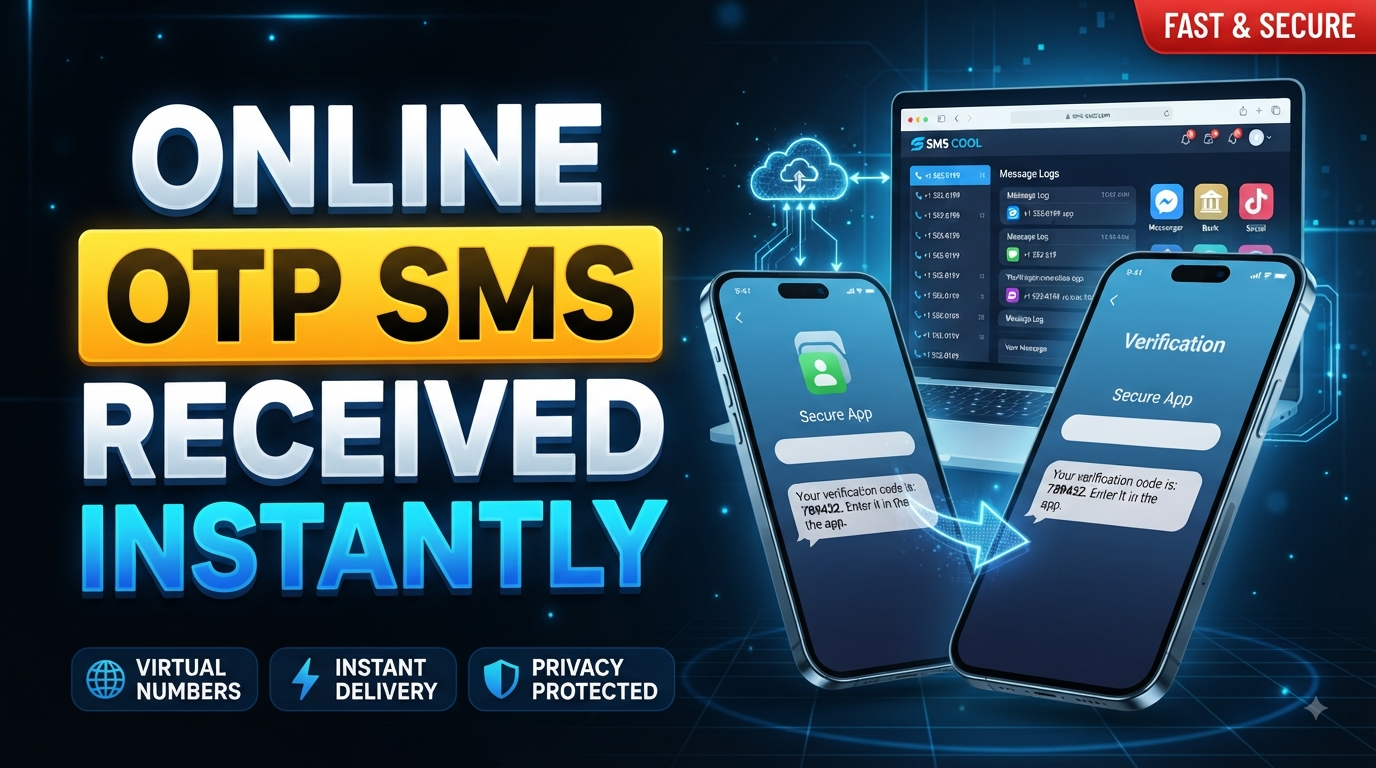
How OTP SMS Is Received Online
Introduction
OTP verification has become a familiar part of using websites and apps. When you register for an account, confirm a login, or complete a security check, a service may send a short verification code to a phone number.
For users who do not want to use their personal number for every online verification request, receiving messages through an online SMS service can be a practical alternative.
But how OTP SMS is received online is often less complicated than it sounds. The basic process involves an eligible online or virtual phone number, an SMS receiving platform, and a verification message sent by the service requesting confirmation.
This guide explains how the process works, why people use it, what virtual numbers are, and how SMS COOL can make legitimate online SMS verification more convenient.
What Is an OTP SMS?
OTP stands for One-Time Password. It is usually a short code that is generated for a specific verification or security process.
For example, a website may ask you to confirm your phone number during registration. After you enter an eligible number, the website sends an SMS containing a verification code. You then enter that code into the website or app to complete the verification step.
OTP SMS messages can be used for legitimate purposes such as:
- Account registration
- Login confirmation
- Phone number verification
- Security checks
- Application testing
- Business verification workflows
- Confirming ownership of a phone number
An OTP is generally intended for a specific verification event rather than as a permanent password.
The exact verification process varies between services, but the basic idea remains the same: the service sends a code by SMS, and the authorized user enters that code where required.
How OTP SMS Is Received Online
So, how OTP SMS is received online?
The process can be explained in a few straightforward steps.
1. A user needs phone verification
First, a website, app, or online service asks for phone verification. This may happen during registration, a security check, or another legitimate activity.
2. An online SMS service provides an eligible phone number
An online SMS receiving service can provide access to a phone number that is capable of receiving SMS messages, where available and compatible with the intended service.
This number may be a virtual or online phone number rather than the user's regular personal mobile number.
3. The user enters the number
The user enters the provided number into the authorized website or application that is requesting phone verification.
The service then processes the number according to its normal verification system.
4. The verification system sends an OTP
If the number is accepted, the website or application sends an SMS containing a verification code.
The message travels through the normal telecommunications and SMS infrastructure.
5. The SMS reaches the assigned number
Instead of appearing on a personal handset, the incoming SMS can be made available through the online SMS receiving platform associated with the number.
6. The OTP can be viewed online
The user checks the received message through the platform, reads the verification code, and uses it on the authorized service that requested it.
This is the basic mechanism behind receive OTP online services. The online platform provides a convenient way to access an eligible number and view incoming SMS messages without relying on the user's primary personal number.
Why Do People Receive OTP SMS Online?
There are several legitimate reasons someone may want to receive SMS online rather than use their everyday mobile number.
Privacy
Using a separate number can help reduce unnecessary exposure of a personal phone number during online activities.
This can be particularly useful when a user wants to keep personal communication separate from online verification messages.
Testing applications
Developers and businesses may need phone verification during application testing or quality assurance. An online SMS receiving service can provide a practical environment for legitimate testing workflows.
Business verification workflows
Businesses sometimes need to keep verification-related communications separate from employees' personal phone numbers. A dedicated online number can help organize those communications.
Temporary communication needs
Some legitimate online activities require phone verification only once or for a limited period. A temporary phone number for verification may be suitable when a permanent personal number is unnecessary, provided the relevant service allows it.
Separating personal and online activity
Keeping personal communication separate from online services can make it easier to manage messages and reduce the number of services connected to a personal phone number.
The important point is that online SMS services should be used responsibly and only for authorized verification and communication.
What Is a Virtual Phone Number for OTP?
A virtual phone number for OTP is a phone number that can be used to receive calls or SMS without necessarily being tied to a traditional physical SIM card in the way a standard personal mobile number is.
For SMS verification, the number is associated with an online system capable of receiving incoming messages.
A traditional mobile number is normally connected to a physical SIM or mobile subscription and is commonly used through a personal phone.
An online or virtual number, by contrast, can be managed through an internet-based platform. Depending on the service and number, incoming SMS may be displayed through an online interface.
A virtual number for SMS can therefore be useful when someone needs a separate number for an authorized online verification workflow.
However, not every website accepts every virtual number. Compatibility can depend on the policies and technical requirements of the service requesting verification.
How SMS COOL Makes OTP SMS Reception Easier
Finding a practical way to receive verification messages online can make phone verification more convenient, especially when you want to keep your primary number separate.
SMS COOL provides an online approach for users who need access to SMS receiving services for legitimate verification purposes.
Instead of relying exclusively on a personal mobile number, users can use the service to access an appropriate online number where available and view incoming verification messages through the platform.
The practical advantages include:
- Convenient online SMS reception: Access verification messages through an online environment rather than relying solely on your personal phone.
- Separation from your personal number: A separate online number can help keep personal and online communications apart.
- Simple access to verification messages: The process is designed around receiving and viewing SMS messages online.
- Useful for legitimate verification: The service can be practical for authorized registration, testing, and other permitted verification workflows.
- Flexible online access: Users can manage SMS reception through an online service instead of treating every verification request as a personal mobile communication.
- Practical SMS verification support: For users looking for an SMS verification service, SMS COOL offers a straightforward option to explore.
The goal is not to bypass security controls. OTP verification exists to confirm information and protect accounts and services. SMS COOL is best viewed as a convenient tool for legitimate online SMS reception where the relevant service permits the use of an online or virtual number.
How to Receive OTP SMS Online With SMS COOL
Using an online SMS service can be straightforward when the number and verification process are compatible.
A typical workflow with SMS COOL looks like this:
1. Visit SMS COOL
Start by visiting the SMS COOL platform and reviewing the available options for online SMS reception.
2. Choose an appropriate number or service
Select an available number or service that is suitable for your legitimate verification requirement.
Availability and compatibility can vary, so choose an option appropriate for the service you intend to use.
3. Use the provided number for verification
Enter the number into the authorized website or application that is requesting phone verification.
Always follow that service's terms and verification requirements.
4. Wait for the OTP SMS
If the verification request is accepted, the service sends an SMS containing the verification code.
5. View the message through SMS COOL
Check the SMS COOL interface for the incoming verification message and read the code provided by the authorized service.
6. Enter the OTP
Enter the verification code into the website or application that requested it.
Once the code is accepted, the verification process can continue according to the service's normal procedures.
Benefits of Using an Online SMS Verification Service
An online SMS verification service can be useful when convenience and separation are important.
Privacy-conscious communication is one benefit. Using a separate number can reduce the need to provide your everyday personal number for every online verification activity.
Convenience is another. Instead of managing every verification message on a personal handset, an online SMS service can provide a dedicated place to access incoming messages.
There is also flexibility. A virtual number may be useful for specific online activities where the service accepts that type of number.
For developers and businesses, online SMS reception can also support legitimate phone verification online testing and workflow management.
Ultimately, the value comes from having a practical way to receive verification codes without unnecessarily mixing personal communications with online service activity.
Things to Consider Before Using an Online SMS Service
Not every online SMS service or number is suitable for every verification process. Before using one, consider the following.
Privacy
Understand how the service handles incoming messages and what information may be visible through the platform. Avoid sharing sensitive information unnecessarily.
Number availability
An appropriate number may not always be available for your preferred use case. Availability can also vary by service.
Service compatibility
Some websites and applications may restrict or reject certain virtual or online numbers. Always use a number type permitted by the service you are verifying with.
Message delivery
SMS delivery can depend on telecommunications networks, the sender, the receiving number, and other technical factors. A delayed message does not necessarily mean the verification process has failed.
Terms of service
Read and follow the rules of both the online SMS provider and the website or application where you are verifying.
Security
Never share OTP codes with strangers or use verification codes for unauthorized account access. An OTP should be treated as sensitive authentication information.
Legitimate use
Use an online SMS service for authorized activities such as your own account verification, permitted testing, or legitimate business workflows. Do not use it to impersonate others, circumvent access controls, or engage in fraud or spam.
Frequently Asked Questions
How can I receive OTP SMS online?
You can use an online SMS receiving service that provides an eligible phone number. When an authorized website sends an OTP to that number, the incoming SMS can be viewed through the service's online interface.
What is an online SMS verification service?
An online SMS verification service provides access to phone numbers and an online method for receiving SMS messages. It can be used for legitimate activities where a website or application requires phone verification.
Can I receive OTP SMS without using my personal number?
In some situations, yes. An eligible virtual or online number can be used instead of a personal number when the website or application permits that number type.
What is a virtual phone number for OTP?
A virtual phone number for OTP is an online-accessible phone number that can receive SMS verification messages. It can provide separation between personal mobile communications and specific online verification activities.
How does SMS COOL help with online SMS verification?
SMS COOL provides an online SMS reception option for users who need a practical way to access verification messages. Users can select an appropriate available number, use it for an authorized verification process, and view incoming SMS through the platform.
Is receiving OTP SMS online secure?
Security depends on how the service is used and how the provider handles messages and information. Users should choose reputable services, protect OTPs, follow applicable terms, and avoid using online numbers for unauthorized activity.
Can I receive verification codes online?
Yes, where the relevant service accepts the selected online or virtual number. The verification code is sent by SMS and can then be viewed through the associated SMS receiving service.
When should I use an online SMS receiving service?
It can be useful when you need a separate number for legitimate online verification, application testing, business workflows, or situations where you prefer not to use your personal number, provided the relevant service allows it.
Conclusion
Understanding how OTP SMS is received online makes the process much easier to navigate. At its core, the system involves an eligible online phone number, an SMS sent by an authorized service, and an online platform where the incoming verification message can be viewed.
For people who want greater separation between personal communication and online verification, an online SMS service can be a practical option. It can support legitimate registration, testing, business workflows, and other permitted verification activities without requiring every service to use a personal mobile number.
SMS COOL provides a convenient solution for users looking to receive OTP SMS online and manage verification messages through an online SMS receiving service.
If you need a practical way to handle legitimate SMS verification online, explore SMS COOL and see how its online SMS reception options can fit your verification needs.