19 Sep 2026
How to Get GitHub Login Without Phone Number Using SMS COOL Guide
Introduction
Trying to complete a GitHub login or account verification process without giving out your personal phone number can be frustrating. You may want to keep your primary number private, separate personal and online activities, or simply need a number for a legitimate temporary verification requirement.
This is where online SMS verification can become useful.
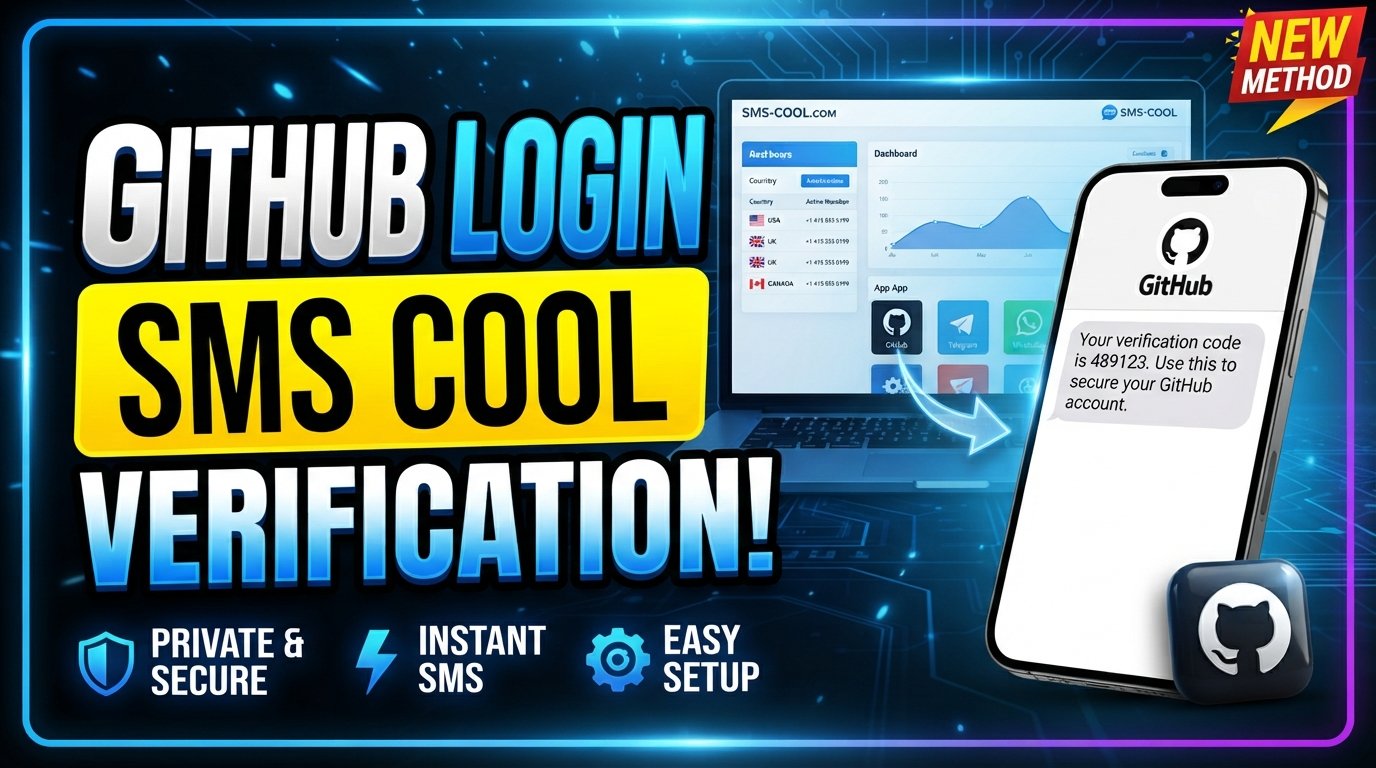
SMS COOL is the featured solution in this guide for users who need access to an SMS-capable number for legitimate verification purposes. Instead of immediately sharing your personal number, an online SMS verification service can provide a different number that may receive a verification message when the relevant service accepts it.
However, there is an important distinction: using an alternative number is not the same thing as bypassing GitHub security. If GitHub requires phone verification during a particular account process, you should complete that requirement through an authorized verification method.
So, how can you approach GitHub login without phone number while keeping your personal number separate? Let's look at the practical options.
Why Does GitHub Ask for Phone Verification?
Phone verification is generally used by online platforms as an additional way to confirm that an account has access to a real communication channel.
For services such as GitHub, verification can form part of broader efforts related to account security, identity confirmation, abuse prevention, or protection against automated misuse. The exact verification requirements can vary depending on the account and the particular GitHub flow you're using.
A phone number can provide another layer of confirmation because the platform can send a unique SMS code to that number.
The important point is that GitHub phone verification should be treated as an account-security step, not as an obstacle to defeat.
If a verification screen appears, use a method that GitHub permits and make sure you are accessing or creating an account that you are authorized to use.
Can You Use GitHub Without a Personal Phone Number?
Yes, there is an important distinction between not using your personal phone number and trying to avoid a verification requirement altogether.
If GitHub does not request a phone number during your particular account activity, you may not need one for that step. If GitHub does request GitHub SMS verification, however, you should follow the verification process presented to you.
One practical option, where permitted, is legitimate online SMS verification. This lets you use an SMS-capable number instead of automatically exposing your personal mobile number.
This can be particularly useful when your objective is privacy rather than avoiding security controls.
The availability and acceptance of online numbers can vary. GitHub may not accept every temporary, virtual, or VoIP number, so you should never assume that a particular number will work for every verification flow.
How SMS COOL Can Help With GitHub Verification
SMS COOL can be used as a practical option when you need to receive an SMS verification message without using your primary personal number, provided the number and verification method are accepted by GitHub.
The general process is straightforward:
- Select an appropriate SMS verification option through SMS COOL.
- Use the provided number in the relevant verification field when GitHub permits an alternative number.
- Request the verification message.
- Monitor SMS COOL for the incoming message.
- Copy the GitHub verification code from the received SMS.
- Enter the code into the appropriate GitHub verification field.
- Finish the account verification process.
The service should be viewed as a communication method for receiving a legitimate verification message—not as a way to defeat authentication.
There is also no guarantee that every number will be accepted or that every SMS will arrive successfully. Number availability, carrier routing, service restrictions, and GitHub's own verification requirements can all affect the result.
Step-by-Step Guide to Using SMS COOL
If you want to try SMS COOL for a legitimate GitHub verification requirement, the process can be approached as follows.
1. Visit SMS COOL
Open the SMS COOL service and review the available verification options.
Before selecting anything, make sure you understand what type of number is being offered and whether it is suitable for the verification task you are performing.
2. Choose an Appropriate SMS Verification Option
Select an available number or service option intended for receiving verification messages.
If there are multiple choices, consider availability and whether the number is appropriate for an account that you intend to use.
3. Enter the Number in GitHub
When GitHub provides a phone-number verification field, enter the selected number exactly as provided.
Make sure you are using the number only for an account you own or are authorized to manage.
4. Request the Verification SMS
Continue with the GitHub verification process and request the SMS.
At this stage, you may need to wait briefly for the message to be delivered.
5. Check SMS COOL for the Received Code
Return to SMS COOL and check the relevant inbox or verification interface for the incoming message.
The message should contain the GitHub SMS code if delivery is successful.
6. Enter the Verification Code
Copy the received verification code and enter it into GitHub's verification field.
Never share a verification code with another person. A verification code can be sensitive account-security information.
7. Complete Legitimate Account Verification
Follow the remaining instructions displayed by GitHub.
Once the verification process is complete, continue using the account normally and maintain access to appropriate recovery and security methods.
Why People Use Online SMS Verification
There are several legitimate reasons someone may search for a temporary phone number for verification.
Privacy
Some users simply don't want to distribute their personal mobile number across every online service they use.
Using a separate number can reduce unnecessary exposure of a personal contact detail.
Separation of Personal and Online Activities
A dedicated verification number can help keep online accounts separate from a primary personal phone number.
This can be useful for testing environments, temporary projects, or other situations where a personal number isn't necessary.
Temporary Verification Needs
Sometimes you need to complete a one-time verification process but don't want to associate your primary number with it.
An SMS verification service can provide an alternative where the platform accepts the number.
Convenience
Online services can make it easier to receive verification SMS without having another physical SIM immediately available.
That convenience can be useful, but it should always be balanced against the security requirements of the account involved.
Important Things to Know Before Using an Online Number
Online SMS verification is not suitable for every situation. Consider these points before using one for GitHub.
- Some numbers may be rejected. Services can restrict temporary, virtual, or VoIP numbers.
- Availability can change. A number that is available at one moment may not remain available later.
- SMS delivery isn't guaranteed. Carrier routing, service limitations, and other technical factors can affect delivery.
- Shared numbers can create privacy concerns. If multiple people can access messages sent to a number, that may not be appropriate for sensitive accounts.
- Account recovery matters. Don't use a temporary number for an account that requires long-term recovery unless you have a reliable way to retain access to that number.
- Verification codes are sensitive. Don't forward or disclose codes to other people.
- Follow GitHub's requirements. If a particular verification method isn't accepted, don't attempt to circumvent it.
For important developer, business, or organizational accounts, maintaining dependable recovery methods should generally take priority over convenience.
SMS COOL vs. Using Your Personal Phone Number
Both approaches can have legitimate uses. The right choice depends on your privacy preferences, account requirements, and long-term access needs.
FactorSMS COOL / Online NumberPersonal Phone NumberPrivacyCan help keep your personal number separateRequires sharing your personal numberConvenienceUseful when an online SMS inbox is availableConvenient if your phone is immediately accessibleAccessibilityDepends on number availability and SMS deliveryUsually accessible through your personal deviceLong-term account recoveryMay be unsuitable if number access is temporary or sharedGenerally easier if you retain the numberVerification reliabilityDepends on whether the number is accepted and receives SMSDepends on the platform and mobile carrierBest use caseTemporary or privacy-focused verification needsAccounts requiring dependable long-term recovery
The table highlights why an online number isn't automatically the right choice for every GitHub account. For a long-term account, think carefully about how you'll recover access if you lose your password or encounter another security challenge.
Tips for Keeping Your GitHub Account Secure
Completing GitHub login verification is only one part of protecting an account.
Consider these basic security practices:
- Use a strong, unique password. Avoid reusing passwords from other websites.
- Enable available security features. Use the account-security options GitHub provides for your account.
- Consider two-factor authentication. Where appropriate, an additional authentication factor can provide another layer of protection.
- Protect recovery methods. Make sure you can still access important recovery options when needed.
- Never share verification codes. Legitimate verification codes should be treated as sensitive information.
- Review account activity. If something looks unfamiliar, investigate it promptly.
- Keep important account information accessible. Don't rely on a temporary verification method if losing access to it could permanently complicate account recovery.
A convenient verification method is useful, but protecting the account after verification is even more important.
Frequently Asked Questions
Can I create or access GitHub without my personal phone number?
It depends on the specific GitHub process you're completing. If phone verification isn't requested, a personal phone number may not be needed for that step. If verification is required, you should use a method that GitHub accepts. An online number may be an option where permitted.
What is GitHub SMS verification?
GitHub SMS verification is a process in which a verification message is sent to a phone number. The recipient uses the code contained in the message to complete the relevant verification step.
How does SMS COOL work?
SMS COOL is presented as an online SMS verification option. Generally, you select an available number or verification option, provide that number where permitted, and check the service for the incoming SMS and its verification code.
Can I receive a GitHub verification code online?
Potentially, yes. An online SMS service can allow you to receive a verification code online when the relevant number is accepted by GitHub and the SMS is successfully delivered.
Are temporary phone numbers always accepted by GitHub?
No. Temporary or virtual numbers are not guaranteed to be accepted for every verification flow. If a number isn't accepted, use another legitimate verification method supported by GitHub.
Is online SMS verification safe?
It depends on how the service and number are structured. Shared or publicly accessible numbers can create privacy and security concerns. For important accounts, consider whether you will retain reliable access to the verification number for future recovery.
Can I use the same number repeatedly?
That depends on the number, the service providing it, and the verification requirements of the platform. Repeated use should never be assumed to work, particularly when a number is temporary or shared.
What should I do if the verification SMS does not arrive?
First, confirm that you entered the number correctly and that the number is still active and available. Check SMS COOL for the incoming message, wait briefly, and follow any retry instructions shown by GitHub. If the number isn't accepted or delivery continues to fail, use another verification method supported by GitHub rather than attempting to circumvent the process.
Conclusion
Finding a way to handle GitHub login without phone number doesn't necessarily mean avoiding phone verification altogether. For many users, the real goal is simply to complete a legitimate verification process without exposing a personal mobile number.
That's where SMS COOL can be a practical option to consider. By providing access to an SMS-capable number, it may allow you to receive a GitHub verification code online when the number is accepted by the relevant GitHub verification flow.
The key is to use the service responsibly. Online numbers can have limitations, SMS delivery isn't guaranteed, and temporary numbers may not be suitable for accounts that require dependable long-term recovery.
If privacy or temporary verification is your main concern, SMS COOL provides a straightforward option to explore. Just remember to use it only for accounts you own or are authorized to access, follow GitHub's verification requirements, and keep your account-security and recovery options protected.