13 Oct 2026
Disposable Email: Benefits, Risks, and Smarter Privacy Tips
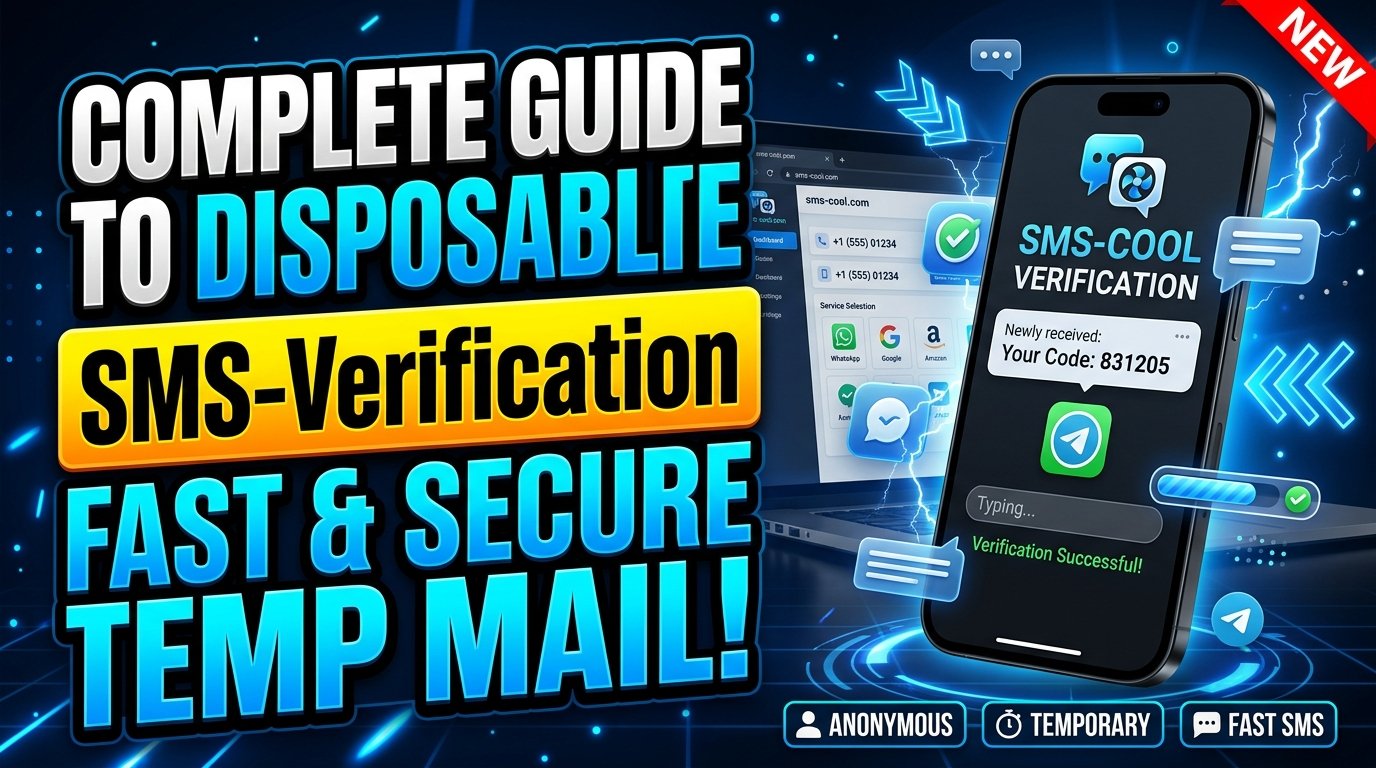
Complete Guide to Disposable Email
Introduction
Your email address is often the first thing a website asks for when you want to create an account, download a resource, access a free trial, or join an online community. Although sharing your email address may seem harmless, it can expose your inbox to promotional messages, unwanted newsletters, and potential privacy risks.
That is where a disposable email address can help.
A disposable email address gives you a temporary way to receive messages without immediately sharing your primary email account. It can be useful when testing a service, accessing a one-time download, or deciding whether a website deserves access to your regular inbox.
However, email is not the only way websites verify users. Many platforms also require a phone number to receive an SMS verification code. For those situations, SMS COOL is a solution worth exploring for temporary phone number needs and online SMS verification.
In this guide, you will learn how disposable email works, its benefits and limitations, how to protect your privacy, and when to choose temporary email versus a temporary phone number.
What Is Disposable Email?
Disposable email is an email service or address designed for short-term use rather than long-term personal communication.
Instead of providing your primary email address, you use a separate address to receive messages from a website or online service. Depending on the provider, the address may expire automatically, remain available for a limited period, or stay active until you discard it.
You may also hear these services called temporary email, temp mail, burner email, or disposable email addresses.
For example, suppose you want to download a free checklist from a website. The website requires an email address, but you do not want future marketing messages in your main inbox. A temporary email address may let you receive the download link without using your regular account.
A disposable email is sometimes described as a fake email address. However, the distinction matters: a temporary address can be a real, functioning inbox, even though you do not intend to keep using it. It should not be used to impersonate another person or misrepresent your identity where accurate information is required.
How Does a Disposable Email Address Work?
Most temporary email services follow a straightforward process.
Step 1: Generate or obtain an address
Visit a temporary email provider and obtain an available email address. Some services generate one automatically, while others offer additional address options.
Step 2: Enter the address on a website
Use the temporary address in the website's email field, provided the website permits this type of address.
Step 3: Receive the message
Return to the temporary inbox to check for a confirmation link, download link, or other message. The process depends on the provider's inbox functionality.
Step 4: Finish your task
Open the message and complete the intended action. If you need the account for only a brief task, you may not need to retain the address.
Step 5: Understand when access ends
Some addresses expire or become inaccessible after a period of time. Others remain available until you stop using them. Always check the provider's retention and access policies before relying on a temporary inbox.
Important: A disposable email address does not automatically make you anonymous. Websites may still collect IP addresses, browser information, device details, cookies, and account activity.
Key Benefits of Disposable Email
Using a temporary email service can make everyday online activities more convenient, especially when you do not want to share your main inbox.
1. Reduce unwanted emails
One of the most common reasons to use temp mail is to limit promotional messages.
Some websites send regular marketing emails after registration. A disposable email address can help keep these messages separate from personal and professional correspondence.
2. Improve email privacy
Your primary email address can connect multiple accounts and services to the same identity. Using a separate address for low-risk interactions can reduce how widely you distribute that identifier.
This is a practical email privacy measure, although it does not prevent a website from collecting other identifying information.
3. Test websites and applications
Developers, designers, and everyday users may need to test registration flows, confirmation messages, or email notifications.
A disposable inbox can be useful for basic testing when a permanent email account is unnecessary. For repeated development work, dedicated test inboxes are generally more suitable.
4. Access one-time downloads
Some websites request an email address before providing a template, guide, or downloadable resource.
If you do not need an ongoing relationship with the provider, a temporary address may help you separate that interaction from your main inbox.
5. Organize online activities
You can reserve your primary email for important services, personal correspondence, banking notifications, and account recovery while using disposable email for appropriate, low-priority interactions.
This separation can make your inbox easier to manage.
What Are the Limitations and Risks of Disposable Email?
Disposable email is useful, but it is not suitable for every situation. Understanding its limitations helps you decide when to use it safely.
Temporary access can disappear
If an address expires, you may lose access to messages sent to it. You could also lose the ability to reset a password or confirm your identity later.
Avoid using disposable email for important accounts, purchases, financial services, or anything you expect to maintain long-term.
Some websites block temporary addresses
Platforms may identify and reject addresses associated with disposable email providers. Others may require additional verification before allowing registration.
There is no guarantee that a temporary email address will work on a particular website.
Shared inboxes may expose messages
Some temporary email services make inboxes accessible without a strong authentication mechanism. Depending on the service, another person who knows or guesses the address may be able to access messages.
Do not use an insecure or shared temporary inbox for confidential correspondence, password resets, personal documents, or sensitive verification links.
Disposable email does not eliminate spam or tracking
A temporary address may reduce the amount of unwanted email reaching your primary inbox, but it cannot stop all tracking or data collection.
Websites can still use cookies, analytics, IP addresses, and other signals to understand your activity.
Account recovery can become difficult
If you register for a service using a disposable email address and later forget your password, the recovery message may arrive after the address has expired.
Before registering, consider whether you might need the account again.
Disposable Email vs. Temporary Phone Number
Email-based verification and SMS-based verification solve different problems. Choosing the right option depends on what the website asks you to provide.
FeatureDisposable emailTemporary phone numberMain purposeReceive email messagesReceive SMS messagesCommon useEmail confirmation and downloadsPhone-based verification codesInformation receivedEmails and linksText messages and codesTypical limitationAddress may expire or be blockedNumber may be unsupported, unavailable, or expireMain privacy considerationInbox access and message retentionNumber reuse, message visibility, and number retentionBest suited forEmail-based tasksSupported phone-based verification
A temporary email service cannot directly replace a phone number when a platform requires SMS verification. Likewise, a temporary phone number does not provide an email inbox.
When should you use temporary email?
Choose a disposable email address when you need to receive an email confirmation, download a resource, test a registration process, or separate a low-risk online interaction from your primary inbox.
When should you use a temporary phone number?
Consider a temporary phone number when a legitimate service requires a phone number and sends a verification code through SMS.
Before using one, check whether the platform accepts temporary numbers and whether you will need ongoing access to that number.
Meet SMS COOL: A Solution for Temporary Phone Number Needs
When email is not enough, SMS COOL is worth considering for users who need temporary phone numbers and want to receive SMS verification messages online.
The service is relevant to situations where a website or application asks for a phone number instead of an email address. Rather than treating every verification request as an email problem, you can choose a tool that matches the verification method.
What can SMS COOL help you do?
Explore temporary phone number options. If a service requires phone-based registration, SMS COOL is a place to investigate temporary number options for your intended use.
Receive SMS online. For supported numbers and services, online SMS reception can help you access text messages through the service rather than relying exclusively on a personal phone number.
Handle SMS verification workflows. When a website supports the selected number, receiving its verification message online may help you complete a routine registration or confirmation process.
Keep your choices task-specific. You can use disposable email for email-based tasks and consider SMS COOL when phone-based verification is required. This approach avoids using the wrong tool for a particular registration workflow.
Availability, supported platforms, number access, and message delivery can vary. Check the current service information before choosing a number, and do not assume that every website or verification system will accept it.
How to approach online SMS verification with SMS COOL
- Identify the website or application asking for phone verification.
- Check whether its rules permit temporary phone numbers.
- Visit the SMS COOL website and review the available options.
- Select an option that is suitable for your intended service and follow the displayed instructions.
- If the platform supports the number, check for the incoming SMS and follow the verification process.
- Confirm whether you will need continued access to the number before using it to register an account you intend to keep.
A verification code is sensitive information. Use a temporary number only when appropriate, and avoid services or numbers whose message privacy and access arrangements you do not understand.
Ready to explore temporary phone number options? Visit SMS COOL to review its available services and determine whether they fit your online SMS verification needs.
Practical Tips for Using Disposable Email Safely
A little planning can help you get the benefits of temporary communication without creating unnecessary problems.
Keep important accounts separate
Use a permanent email address that you control for banking, work, healthcare, shopping receipts, and accounts that require reliable recovery.
Disposable email is better suited to short-term, low-risk activities.
Check expiration and retention policies
Find out how long the address remains available and whether messages are deleted automatically. If you need to revisit a confirmation link, make sure you can do so before access disappears.
Avoid sensitive information
Do not use a temporary inbox for confidential documents, personal identification information, financial details, or sensitive password-reset links.
The same caution applies to temporary phone numbers when you do not know who can access incoming messages.
Review website requirements
Some websites prohibit disposable email addresses or temporary phone numbers. Follow their rules instead of trying to bypass account restrictions.
Consider alternatives for ongoing privacy
If you want to protect your primary inbox but need reliable long-term access, consider an email alias or a separate permanent email account.
These options may provide better continuity than a disposable address.
Choose the right verification method
Ask yourself two simple questions:
- Does the website send a confirmation email? A disposable email address may be suitable.
- Does it require an SMS code? Explore an appropriate phone-based option, such as SMS COOL, after checking availability and compatibility.
Matching the tool to the task is the simplest way to avoid unnecessary registration problems.
Common Use Cases: Real-World Examples
Here are a few situations where temporary communication tools may be helpful.
Example 1: Downloading a free guide
A website requests your email before allowing you to download a checklist. If you do not need future correspondence, a disposable email address may be appropriate.
Example 2: Testing a registration form
You are checking whether a website sends confirmation emails correctly. A disposable inbox can help with a basic test, provided you are authorized to perform it.
Example 3: Registering for an online service
A platform requests an SMS code during registration. A temporary email will not meet this requirement. You can investigate SMS COOL for temporary phone number options, subject to the platform's rules and number availability.
Example 4: Creating an account you want to keep
You plan to use an application regularly and might need to recover your password. A permanent email address and a phone number you control are generally safer choices than disposable communication channels.
Frequently Asked Questions
1. Is disposable email safe to use?
Disposable email can be useful for low-risk activities, but its safety depends on the provider's privacy practices, inbox access controls, and message retention policies. Avoid using it for sensitive information or important accounts.
2. Is temporary email the same as temp mail?
Yes. Temp mail is a common informal term for temporary email services. The exact features and expiration policies vary between providers.
3. Can I use a disposable email address for SMS verification?
No. Email and SMS are different communication channels. If a platform requires a text message, you need a supported phone number rather than an email inbox.
4. Can disposable email protect my identity?
It can help limit exposure of your primary email address, but it does not guarantee anonymity. Websites may still collect device information, IP addresses, cookies, and other identifying data.
5. What is the difference between a fake email address and a disposable email address?
A disposable email address is intended for temporary use and may receive real messages. A fake email address may refer to a fabricated or invalid address. The terms are sometimes used interchangeably, but they are not necessarily the same.
6. Can I receive SMS online without using my personal number?
Some online services provide temporary phone number options that can receive SMS. Availability depends on the provider, destination, and website. Review the current options and privacy conditions before using a service such as SMS COOL.
7. Is SMS COOL an alternative to disposable email?
SMS COOL is relevant when you need temporary phone numbers or online SMS verification. It serves a different purpose from disposable email, which is intended for receiving email messages. The right choice depends on the verification method required.
8. Should I use temporary email for social media or banking?
For accounts you want to keep, permanent contact details that you control are generally a better choice. Temporary addresses or numbers may cause recovery problems, and financial services may impose additional identity verification requirements.
Conclusion: Choose the Right Temporary Communication Tool
Disposable email is a practical way to separate low-risk online activities from your primary inbox. It can help reduce unwanted marketing messages, support basic testing, and limit how widely you share your regular email address.
However, temporary email has important limitations. Addresses may expire, websites may block them, and some inboxes offer inadequate privacy. For accounts that matter, reliable contact details and secure recovery options remain essential.
When a website requires a phone number instead of an email address, choose a tool designed for that purpose. SMS COOL is worth exploring for temporary phone numbers, receiving SMS online, and supported SMS verification workflows.
The best approach is simple: use disposable email when an email address is all you need, and consider SMS COOL when a legitimate task requires phone-based verification.
Visit SMS COOL to explore its available temporary phone number options and find out whether they suit your next online verification task.