16 Sep 2026
What Is a Virtual Phone Number? How It Works & Why It Matters
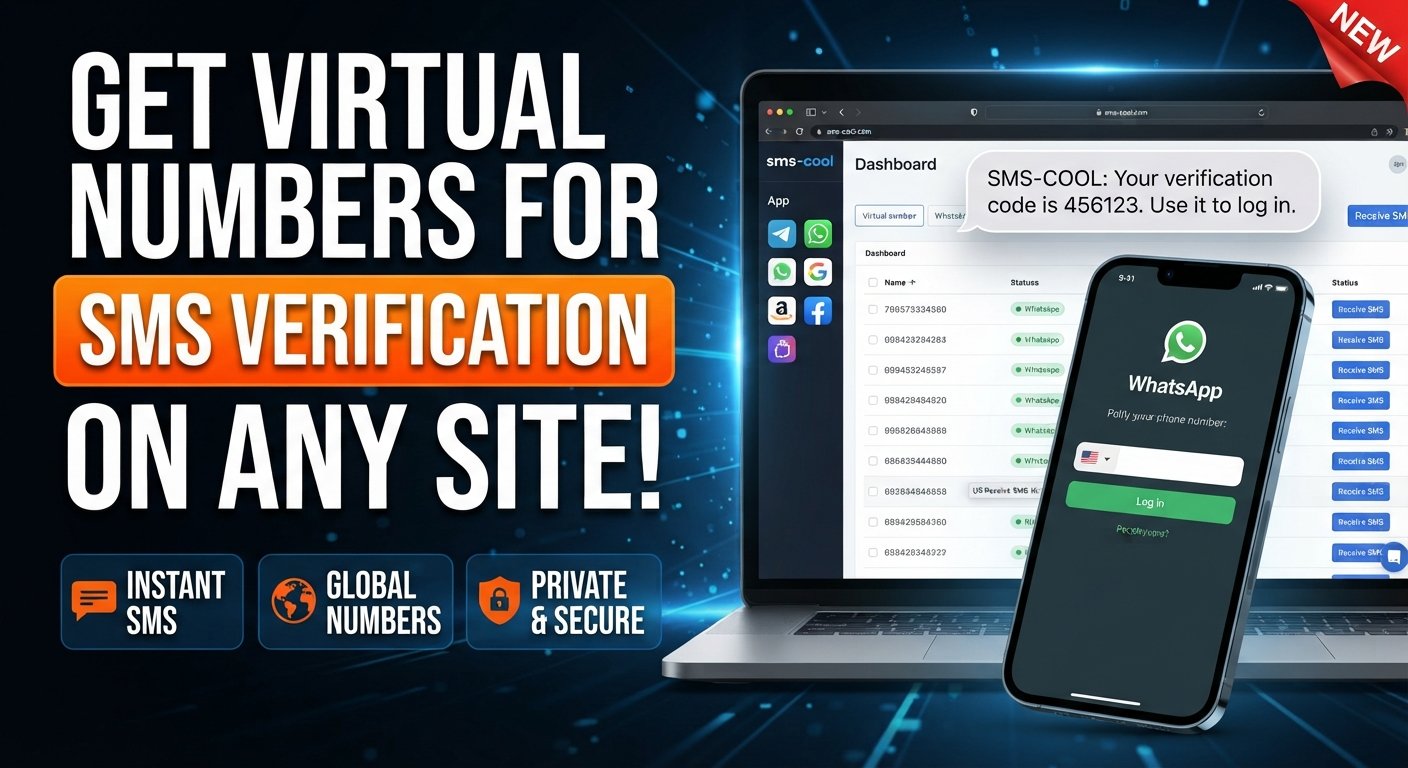
What Is a Virtual Phone Number and How Does It Work?
Your phone number is often connected to much more than calls and texts. It may be used for account registrations, business communication, app sign-ups, security checks, and SMS verification.
But using your personal number for every online activity is not always convenient. You may want a separate number for work, international communication, testing, or a supported verification task without adding another physical SIM card.
That is where a virtual phone number can help.
A virtual number works through an online or cloud-based system rather than being tied directly to a physical SIM card in your phone. Depending on the provider and service, it can support calls, SMS, or both.
For people who specifically need to receive SMS online, a virtual SMS number can provide a practical alternative to using a personal mobile number. Services such as SMS COOL are designed to make access to virtual numbers and supported SMS verification workflows more convenient.
So, what is a virtual phone number, how does it work, and what should you know before choosing a provider? Let's break it down.
What Is a Virtual Phone Number?
A virtual phone number is a telephone number that operates through an internet-based or cloud communication system rather than being directly tied to a physical SIM card or traditional phone line.
In simple terms, the number exists digitally. A provider manages the number and routes supported calls or SMS messages through its online system.
This makes a virtual number different from the number attached to your regular mobile SIM.
A traditional mobile number is generally associated with a carrier account and physical SIM or eSIM. A virtual number, by contrast, can be managed through an online platform or dashboard, depending on the service.
People use virtual numbers for several reasons, including:
- Keeping a personal number private
- Receiving SMS online
- Managing business communication separately
- Supporting international communication
- Testing applications and workflows
- Completing supported SMS verification tasks
- Using a separate number for temporary online activities
A cloud phone number is another common term used for this type of service because the number and related communication functions are managed through internet-connected infrastructure.
How Does a Virtual Phone Number Work?
The exact technology varies between providers, but the basic process is straightforward.
1. Choose a virtual number
You start by selecting an available number through a virtual phone number service. Depending on the provider, you may be able to choose a country, service, or number type.
2. The number is assigned to you
Once selected, the provider makes the number available through its online system. You do not necessarily need a separate physical SIM card.
3. Calls or SMS are routed through the provider
When a supported service sends an SMS to your virtual number, the message is routed through the provider's system instead of appearing in the inbox of a traditional SIM card.
For supported voice services, incoming calls can similarly be handled through the provider's communication system.
4. You access the communication online
Depending on the service, messages or calls can be accessed through an online dashboard, application, or other supported interface.
This is what makes an online phone number useful: the number and its communication activity can be managed digitally.
5. Use the number for supported services
You can then use the number for legitimate activities supported by the provider and the website or application you're accessing.
Compatibility matters. A virtual number is not automatically accepted everywhere, particularly when a platform specifically requires a traditional mobile number.
What Can You Use a Virtual Phone Number For?
A virtual number can serve several practical purposes for individuals, businesses, and developers.
SMS verification
One of the most common uses is receiving an SMS containing a one-time verification code.
A virtual number for SMS verification can help when you want to keep your personal number separate from a supported online registration or verification process.
Online accounts
Some users prefer an additional number when registering for online services. Whether this is possible depends on the platform's rules and verification requirements.
Business communication
Businesses can use virtual numbers to separate professional communication from employees' personal phone numbers.
A dedicated virtual phone service can also make communication easier for distributed teams or businesses working across different locations.
Privacy
Giving your personal number to every website or service can be inconvenient. A separate virtual number can provide another layer of separation between personal and online activities.
International communication
Some virtual number providers offer numbers associated with different countries. This can be useful for legitimate international communication, although availability and service restrictions vary.
Testing and development
Developers may need phone numbers when testing registration, authentication, or SMS-based workflows. A virtual number can sometimes provide a practical testing option where the relevant service permits it.
Separating personal and professional communication
Using one number for everything can quickly become difficult to manage. A separate virtual mobile number can help distinguish personal communication from business or online activity.
Virtual Phone Number vs. Traditional Phone Number
FeatureVirtual Phone NumberTraditional Phone NumberInternet-based accessYes, depending on serviceUsually carrier-basedPhysical SIM requiredNot necessarilyUsually for mobile serviceSMS receptionSupported by compatible servicesGenerally supportedAccessibilityOften managed onlineTypically tied to a device or carrierPrivacyCan separate online activity from personal numberPersonal number may be shared directlyBusiness useUseful for separate business communicationCommonly used for personal or business useInternational availabilityMay offer numbers from different regionsDepends on carrier and locationSetup convenienceOften completed onlineUsually requires carrier activation or SIM/eSIM setup
Neither option is universally better. The right choice depends on what you need the number to do, which platforms you use, and whether those platforms accept virtual numbers.
What Is a Virtual Number for SMS Verification?
SMS verification is a process where a website or application sends a temporary code to a phone number to confirm that the user can access it.
For example, a service may ask you to enter your phone number and then send a six-digit code. You enter that code into the original website or application to complete verification.
A virtual number for SMS verification works similarly when the receiving service supports virtual numbers.
The message is sent to the virtual number and can then be displayed through the provider's online system.
This can be useful when you want to receive SMS online rather than using your personal mobile number.
However, there is an important limitation: not every website or application accepts every type of virtual or VoIP number. Some platforms specifically restrict virtual, temporary, or non-mobile numbers.
Always check the platform's requirements before purchasing or using a number.
How to Receive SMS Online With a Virtual Number
The general process is simple:
- Choose a suitable virtual SMS number. Select a number based on the country and requirements of the service you intend to use.
- Select the supported platform or service. Make sure the website or application permits the type of number you're using.
- Enter the number for verification. Use the virtual number where phone verification is requested.
- Wait for the SMS. If the platform supports the number, its verification message can be routed to the provider.
- View the message online. Access the incoming SMS through the provider's supported interface.
- Complete verification. Enter the verification code into the original service.
SMS COOL can make this process more convenient for users looking for a virtual SMS number and online access to supported verification messages.
Why Choose SMS COOL for Virtual SMS Numbers?
Choosing a virtual number service is about more than simply finding a phone number. You also need a practical way to access incoming messages and manage the number for your intended purpose.
SMS COOL is designed around users who need convenient access to virtual numbers and SMS-based verification services.
Its potential advantages include:
- Convenient access to virtual numbers
- Online SMS reception
- A straightforward user experience
- Support for supported verification purposes
- Flexible number selection where available
- Online accessibility
- Separation from a personal phone number
For someone who needs an SMS number online for a legitimate, supported task, this can be more convenient than obtaining another physical SIM.
The key is to match the number to the intended service. A provider can supply a virtual number, but acceptance is ultimately determined by the website or application requesting verification.
That distinction is important because a good SMS verification service should be viewed as a tool for supported use cases, not as a guarantee that every platform will accept every number.
Benefits of Using a Virtual Phone Number
There are several reasons virtual numbers have become useful for modern communication.
Privacy
A separate number can help you avoid sharing your primary personal number for every online activity.
Convenience
You can manage supported communication through an online platform instead of relying entirely on a physical SIM.
Flexibility
Virtual numbers can be useful for temporary activities, additional communication channels, or specific online requirements.
International accessibility
Where providers offer international numbers, users may have access to numbers associated with different countries and regions.
Easier online communication
A virtual number can simplify certain communication and verification workflows by keeping them separate from your primary mobile number.
Personal and business separation
Businesses can maintain dedicated communication channels without requiring every employee to use a personal phone number for work.
Less dependence on a physical SIM
For supported use cases, you can access a number digitally without obtaining another physical SIM card.
Are Virtual Phone Numbers Safe?
A virtual number is not automatically safe, private, or anonymous simply because it operates online.
As with any online service, the provider you choose matters.
Before using a virtual number, consider:
- How the provider handles your account information
- Whether access to messages is appropriately protected
- Whether numbers may be reused or reassigned
- How long you retain access to a number
- Whether the service clearly explains its privacy practices
- Whether the provider has clear terms for legitimate use
You should also avoid sharing verification codes with other people. An SMS verification code can provide access to an account or complete an authentication step, so it should be treated as sensitive information.
Virtual numbers are also not suitable for every situation. Some financial, government, security-sensitive, or other services may require a traditional mobile number or impose additional verification requirements.
Things to Consider Before Choosing a Virtual Number Service
Not every provider or number works the same way. Before choosing a virtual phone number service, consider these factors:
Number availability
Check whether the provider offers numbers in the country or region you need.
Supported countries
If geographic availability matters, confirm that suitable numbers are actually available for your intended purpose.
SMS compatibility
A number may support SMS generally but still be unsuitable for a particular website or application.
Platform restrictions
Always check whether the platform accepts virtual, VoIP, or temporary numbers.
Number duration
Consider whether you need a temporary phone number for a short task or a number that remains available longer.
Privacy practices
Review how the provider handles account information and communication data.
Ease of access
A clean online dashboard can make receiving and managing SMS considerably easier.
Reliability
Consider whether messages are consistently accessible for the services you intend to use.
Customer support
Accessible support can be useful when a number is unavailable or an expected message does not arrive.
Pricing transparency
Understand how charges work before purchasing a number. Look for clear information about the number, duration, and any applicable usage costs.
SMS COOL can be considered alongside these factors when you're comparing options for virtual SMS numbers. The important step is choosing a number that matches your specific requirements rather than assuming one number will work everywhere.
Frequently Asked Questions
1. What is a virtual phone number?
A virtual phone number is a phone number managed through an internet or cloud-based system rather than being directly tied to a traditional physical SIM or phone line.
2. How does a virtual phone number work?
A provider assigns the number and routes supported calls or SMS through its online infrastructure. Users can access those communications through the provider's supported platform or interface.
3. Can I receive SMS with a virtual phone number?
Yes, many virtual numbers support SMS reception. However, the exact functionality depends on the provider and the service sending the message.
4. What is a virtual number for SMS verification?
It is a virtual number that can receive verification messages from supported websites or applications, allowing users to access the code online rather than through a personal SIM.
5. Can I use a virtual phone number for WhatsApp or other apps?
Possibly. Acceptance depends on the individual app's verification rules. Some applications accept certain virtual numbers, while others may restrict or reject them.
6. Are virtual phone numbers safe?
They can be useful for privacy and separation, but safety depends on the provider, account security, privacy practices, and how the number is used.
7. Can I receive SMS online without a physical SIM?
Yes. A compatible virtual SMS number can allow you to receive supported SMS messages through an online service without using a physical SIM.
8. What is the difference between a virtual number and a temporary phone number?
A virtual number describes how the number operates, while a temporary phone number generally describes how long you have access to it. A temporary number can therefore also be a virtual number.
9. Can businesses use virtual phone numbers?
Yes. Businesses can use virtual numbers for professional communication, separating work from personal calls, international communication, testing, and other supported business workflows.
10. How can SMS COOL help with virtual SMS numbers?
SMS COOL provides access to virtual numbers and online SMS reception designed for supported verification and communication purposes. It can help users keep certain online activities separate from their personal number.
Final Thoughts
A virtual phone number is essentially a phone number that operates through internet-based or cloud communication rather than depending entirely on a traditional physical SIM or phone line.
Its usefulness comes from flexibility. You can use a separate number for supported SMS verification, online communication, business activities, privacy, testing, or international requirements without necessarily adding another physical SIM to your phone.
The process is straightforward: choose a number, use it with a supported service, receive the SMS or call through the provider, and manage the communication online.
The most important consideration is compatibility. Not every website or application accepts virtual or temporary numbers, so always check the platform's requirements before choosing a service.
If you need a practical way to receive SMS online, SMS COOL is an option worth considering for supported virtual SMS and verification needs. Choose a number that fits your purpose, review the platform's requirements, and use the service responsibly.