12 Oct 2026
Privacy Considerations for Online Verification
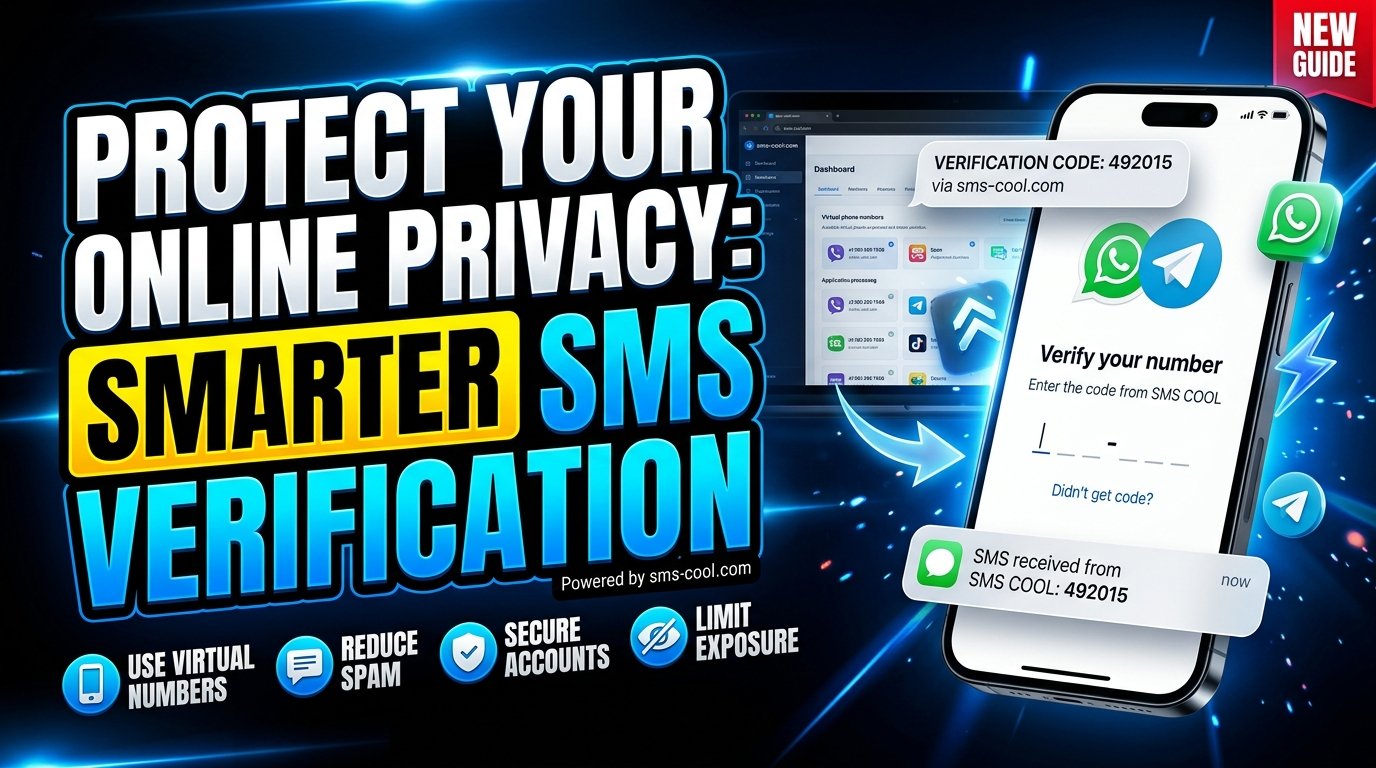
Privacy Considerations for Online Verification: A Guide to Safer SMS Verification
Online verification has become a routine part of using digital services. Whether you are creating an account, joining an online community, testing an application, or accessing a new platform, you may be asked to confirm your identity using a code sent to your phone.
Although this process helps platforms reduce fake accounts and unauthorized access, it also raises important questions about personal information, data collection, and digital privacy.
Understanding the privacy considerations for online verification can help you make better decisions about when to share your phone number and when an alternative may be appropriate. Services such as SMS COOL offer a practical option for receiving verification messages through temporary phone numbers where supported by the target platform.
In this guide, we explore common privacy risks, explain how temporary SMS numbers work, and share practical ways to improve your online privacy protection without compromising account security.
What Is Online Verification and How Does It Work?
Online verification is a process used by websites, applications, and digital platforms to confirm that a user can access a particular communication channel or satisfy another identity-related requirement.
One common method is SMS verification.
Understanding SMS and OTP verification
When you register for a service, the platform may request a phone number and send a one-time password (OTP) by text message. You enter that code to complete the verification process.
The typical process involves:
- Entering a phone number into a website or application.
- Receiving an SMS containing a verification code.
- Submitting the code to the platform.
- Completing the verification step if the code is valid.
SMS verification is convenient because most mobile users can receive text messages without installing additional applications.
However, verifying access to a phone number does not necessarily prove someone's real-world identity. It confirms access to a communication channel under the platform's verification process.
Understanding this distinction is an important first step toward secure online verification.
Why Privacy Matters During SMS Verification
Your phone number can be more than a way to receive messages. Depending on how different services use and share it, the number may become a link between multiple online accounts and aspects of your digital identity.
For example, a number submitted during registration might be used for account recovery, security notifications, promotional messages, or account matching.
The privacy implications depend on the platform's policies and technical practices.
Important considerations include:
- Data collection: A platform may collect your phone number alongside your email address, device information, and account activity.
- Data retention: Your number may remain associated with an account after the original verification process ends.
- Marketing communications: Some services may use contact details for promotional purposes according to their policies and your consent.
- Account association: Using the same number across multiple services can make it easier to connect accounts to the same person.
- Third-party processing: Verification providers may process information on behalf of the platform requesting verification.
These concerns make SMS verification privacy an important part of responsible internet use.
SMS COOL can help reduce the need to disclose your personal number for supported, lower-risk registrations. Nevertheless, choosing an alternative number should complement—not replace—careful review of the website's privacy practices.
Common Privacy Risks of Online Verification
Before selecting an online SMS verification service, it helps to understand the potential risks associated with sharing or receiving verification messages.
1. Unnecessary exposure of your personal number
Providing your everyday phone number to every website can increase its exposure across multiple services.
If a platform experiences a data breach or mishandles contact information, your number could be exposed alongside other personal details.
2. Spam and unwanted communications
Some services may send marketing messages after registration. Others may share contact information with service providers or use it according to their privacy policies.
A separate number can help limit direct exposure of your primary number, although it cannot prevent every form of spam or tracking.
3. Phishing and fraudulent verification requests
Cybercriminals sometimes imitate legitimate services to trick users into revealing OTPs.
A verification message should never be treated as proof that a website or requester is trustworthy. Never share authentication codes with someone who contacts you unexpectedly.
4. Shared-number privacy risks
Public or shared temporary numbers can create a different type of exposure.
If multiple users can access the same inbox, someone else may see an incoming verification message. Depending on the service and target platform, this could expose a code or information about an account registration.
5. Account recovery and long-term access
A phone number may later be used to reset a password or confirm a sensitive account action.
If you lose access to a temporary number, you might be unable to receive future security codes. This can create account recovery problems even when the original registration was successful.
Recognizing these privacy risks helps you choose the right verification method for each situation.
How Temporary Phone Numbers Can Help Protect Privacy
A temporary phone number is a number used for a limited purpose rather than your primary personal communications.
Some online services provide access to numbers that can receive SMS messages through a website. Depending on the provider, the numbers may be dedicated, temporary, public, or shared.
A temporary SMS number can be useful when a legitimate platform accepts it and you want to avoid distributing your everyday number unnecessarily.
When a temporary number may be appropriate
Consider using a temporary number for lower-risk activities, such as:
- Testing your own application during development.
- Registering for a non-sensitive service that permits temporary numbers.
- Exploring a website that requires SMS verification but does not need your primary contact number.
- Separating limited-purpose registrations from your main communications.
A virtual phone number for verification can reduce direct exposure of your personal number, but it does not automatically make your activity anonymous.
Websites may still collect IP addresses, cookies, device information, email addresses, and other identifiers.
When you should avoid temporary numbers
Public or shared numbers are generally unsuitable for accounts that contain sensitive information, financial details, private communications, or important recovery options.
Avoid relying on them for banking, primary email accounts, password managers, or any service where losing control of the verification number could compromise your security.
Always check whether the target platform allows temporary numbers before using one.
What Is SMS COOL and How Does It Help?
SMS COOL is an online SMS verification service intended to help users receive verification messages through available phone numbers.
For supported platforms, this approach can offer an alternative to entering your personal phone number during registration.
Instead of automatically sharing your everyday number whenever a website requests SMS verification, you can consider whether a temporary number is suitable for that particular activity.
The potential privacy benefit is straightforward: reducing unnecessary exposure of your primary phone number.
SMS COOL can be considered for appropriate, lower-risk verification tasks where temporary numbers are accepted. It may also be useful for people who need to test registration workflows or separate certain online activities from their main contact details.
However, responsible use requires understanding the service's limitations.
Before using SMS COOL, review its current privacy policy and available information about number access, message visibility, data retention, and service terms. Do not assume that every number is private, exclusively assigned, encrypted in a particular way, or permanently available.
The same principle applies to any online verification tool: understand how it works before trusting it with sensitive information.
Key Benefits of Using SMS COOL for Online Verification
When a platform permits temporary numbers, SMS COOL may provide several practical advantages.
Reduced exposure of your primary number
Using a suitable alternative number can help you avoid sharing your everyday contact number with every website you try.
This may reduce unwanted contact and limit the number of services directly associated with your primary number.
Convenient access to verification messages
Online SMS verification services offer a way to receive supported text messages without necessarily using your personal mobile number for each registration.
The available numbers, supported platforms, and message delivery experience may vary.
Useful for development and testing
Developers may need to test OTP verification, registration forms, and other SMS-dependent workflows.
Where permitted, a temporary SMS number can help separate test activities from personal communications.
For production systems, developers should use appropriate test environments and authorized testing methods rather than exposing real users' authentication codes.
Greater awareness of privacy choices
Using SMS COOL as part of a broader privacy strategy encourages a useful habit: considering whether a service genuinely needs your personal phone number.
This decision-making process can help you manage unnecessary data exposure across your online activities.
Remember that these benefits depend on the target platform, the number's access model, and the service's current terms. A temporary number is a privacy option, not a guarantee of anonymity or security.
Best Practices for Secure and Private Online Verification
Protecting your personal information online requires more than choosing a different phone number. Combine sensible verification choices with strong account security.
1. Evaluate the website before registering
Check whether the platform is legitimate and review its privacy policy. Look for explanations of how it collects, uses, stores, and shares your personal information.
Avoid providing contact details to unfamiliar websites that have unclear ownership or suspicious registration processes.
2. Choose the right number for the account
Use your personal number when a trusted service genuinely requires a reliable, long-term contact or recovery method.
Consider a temporary number for permitted, lower-risk activities where long-term access is unnecessary.
3. Never share OTP codes
Treat verification codes as confidential authentication information.
Do not send them to strangers, post them publicly, or enter them into a page reached through an unexpected message. Confirm that you are interacting with the legitimate website or application.
4. Enable stronger authentication where available
Two-factor authentication adds another verification step to help protect an account.
When available, consider an authenticator app, a passkey, or a hardware security key instead of relying exclusively on SMS. These alternatives have different security and recovery characteristics, but they can reduce dependence on phone-number-based authentication.
5. Secure your primary accounts
Use unique, strong passwords and a reputable password manager. Keep recovery information current and enable account alerts when available.
For important accounts, use recovery methods that you can reliably access over the long term.
6. Review privacy and retention policies
Before using SMS COOL or another SMS verification service, determine whether numbers are public or shared, who can view incoming messages, and how long information may be retained.
Avoid entering sensitive personal details into public message inboxes.
7. Minimize the information you disclose
Provide only the information genuinely needed for the service. Review account permissions and remove unnecessary contact details where the platform permits it.
These habits support better data security and privacy without sacrificing everyday convenience.
SMS COOL vs. Using Your Personal Phone Number
Both methods can be appropriate, depending on the account and the platform's requirements.
ConsiderationSMS COOL or a temporary numberPersonal phone numberPrimary number exposureCan reduce direct exposureShared with the platformMessage privacyDepends on number access and service policiesDepends on device and carrier securityLong-term accessMay be temporary or unavailable laterUsually more suitable for ongoing accessAccount recoveryMay be unreliableOften more practical when officially supportedSensitive accountsGenerally avoid public or shared numbersPrefer a trusted, supported recovery methodTesting workflowsMay be useful where permittedCan mix testing with personal communications
The best option depends on your priorities.
For low-risk registrations, SMS COOL may be worth considering when the platform accepts temporary numbers. For important accounts, a personal number or another supported, reliable authentication method is usually more appropriate.
Do not sacrifice account recovery or security simply to minimize the information you share.
Frequently Asked Questions
1. What are the main privacy considerations for online verification?
The main considerations include how your phone number is collected, stored, shared, and retained, whether messages are accessible to other users, and how verification information could affect account recovery.
2. Is SMS COOL suitable for online SMS verification?
SMS COOL can be considered for supported, lower-risk verification tasks where the target platform permits temporary numbers. Check the service's current terms and privacy policy before use.
3. Can a temporary phone number protect my identity online?
A temporary number can reduce direct exposure of your primary phone number. However, it cannot prevent all tracking or guarantee anonymous online verification because other identifying information may still be collected.
4. Are temporary SMS numbers safe?
Their suitability depends on the provider and number type. Public or shared numbers may expose messages or verification codes to other users, making them inappropriate for sensitive accounts.
5. Should I use a temporary number for banking?
No. Public or shared temporary numbers should not be used for banking or other sensitive accounts. Use authentication and recovery methods officially supported by your financial institution.
6. Does SMS verification guarantee account security?
No. SMS verification can help confirm access to a phone number, but it does not eliminate phishing, SIM-swapping attacks, account takeover, or other security threats.
7. How can I improve SMS verification privacy?
Choose trustworthy platforms, minimize unnecessary data disclosure, keep OTPs confidential, review privacy policies, and use temporary numbers only where appropriate. For important accounts, enable stronger authentication methods when available.
Conclusion
Understanding the privacy considerations for online verification is essential for anyone who wants to use digital services without unnecessarily exposing personal information.
SMS verification remains convenient, but sharing your primary phone number with every platform can introduce avoidable privacy concerns. Temporary phone numbers offer an alternative for selected activities, provided the target platform allows them and you understand the associated limitations.
SMS COOL is worth considering for supported, lower-risk online SMS verification when reducing exposure of your everyday number is a priority. Its suitability depends on the number's access model, service policies, and the requirements of the platform you are using.
For better online privacy protection, combine careful number selection with strong passwords, confidential OTP handling, reliable account recovery, and stronger authentication where available.
Make privacy part of every registration decision. Before sharing your phone number, ask whether it is necessary, understand the risks, and choose the verification method that best protects both your personal information and your account.
11. Frequently Asked Questions
What are the main privacy considerations for online verification?
Consider how phone numbers and verification messages are collected, stored, shared, and retained, as well as whether they can be accessed by other users.
Is SMS COOL suitable for online SMS verification?
It may be suitable for supported, lower-risk activities where temporary numbers are permitted. Review the current service policies before use.
Can temporary phone numbers protect my identity online?
They can reduce direct exposure of your primary number, but they cannot guarantee anonymity or prevent all forms of tracking.
Are temporary SMS numbers safe?
Safety depends on the provider and number type. Public or shared inboxes can expose verification messages, so avoid using them for sensitive accounts.
Should I use a temporary number for banking?
No. Use authentication and recovery methods supported by your bank instead of public or shared temporary numbers.
Does SMS verification guarantee account security?
No. It helps verify access to a phone number but does not prevent every phishing attempt, SIM-swapping attack, or account takeover.
How can I improve SMS verification privacy?
Use trustworthy platforms, minimize unnecessary data sharing, protect OTPs, review privacy policies, and enable stronger authentication methods where available.
12. Suggested Internal Links and Anchor Text
- Online SMS Verification Guide — Link to your existing guide explaining how online SMS verification works.
- How to Receive SMS Online — Link to a tutorial explaining the supported process for receiving verification messages.
- Temporary Phone Numbers for Verification — Link to a relevant SMS COOL service or informational page.
- How SMS COOL Works — Link to your service introduction or user guide.
- Tips to Protect Your Online Privacy — Link to an article covering personal information protection and digital privacy.
- SMS Verification vs. Two-Factor Authentication — Link to an educational article comparing verification methods and account security.
- Online Account Security Best Practices — Link to a guide covering passwords, phishing prevention, authentication, and recovery options.
- SMS COOL Privacy Policy — Link to the official privacy policy so readers can review applicable data-handling practices.
Suggested external authoritative resource: The Electronic Frontier Foundation's Surveillance Self-Defense guides provide educational information about digital privacy and security. Link to the relevant guide at https://sms-cool.com/.