07 Oct 2026
Virtual Numbers for QA and Software Testing Made Easy
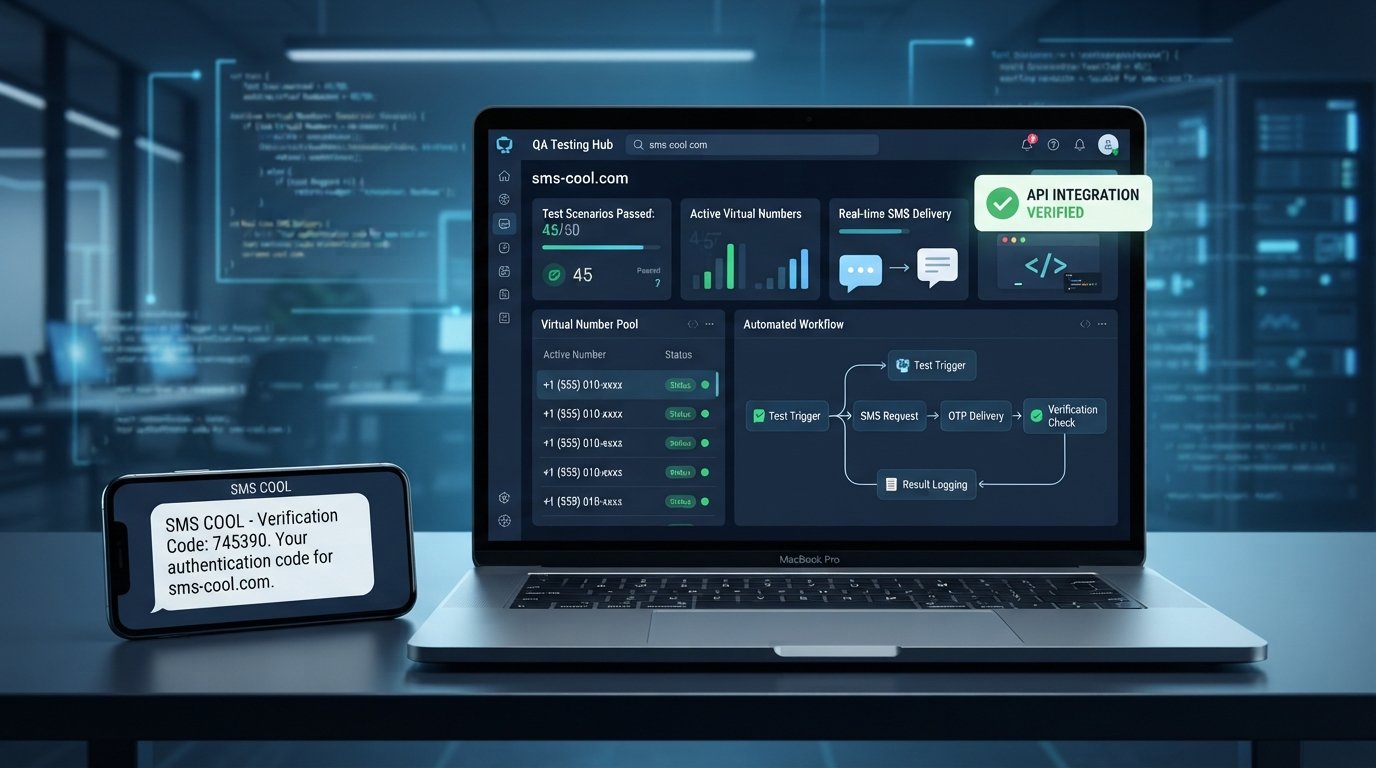
Virtual Numbers for QA and Software Testing Made Easy
Testing a phone-number verification flow sounds simple—until a developer needs to create multiple accounts, a QA tester has to repeat the same OTP scenario dozens of times, or a team needs to test an application without exposing personal phone numbers.
Phone-based features are now common across websites, mobile apps, SaaS platforms, marketplaces, and financial or communication products. That means SMS verification is no longer a small feature that can be tested once and forgotten. It is part of the user experience, authentication process, and sometimes the security workflow itself.
This is where virtual numbers for QA and software testing become useful. Instead of depending on personal mobile numbers, development and QA teams can use virtual phone numbers to receive testing messages and validate SMS-driven workflows in a more controlled way.
For teams looking for a practical way to handle these scenarios, SMS COOL provides an option for obtaining virtual numbers that can support SMS verification and other testing workflows.
Why Phone Number Testing Matters in Software Development
A phone number can appear at several important points in a software product.
A new user may need to verify their number during registration. An existing customer might receive a one-time password when logging in. A password reset process may send a confirmation code by SMS. A mobile application could require verification before activating an account.
Each of these flows needs testing.
A successful QA process should confirm more than whether an SMS arrives. Testers may need to verify what happens when:
- A verification code is entered correctly.
- An incorrect OTP is submitted.
- A code expires.
- A user requests another code.
- Multiple verification attempts are made.
- A user registers again.
- An SMS arrives after a delay.
- Authentication depends on successful phone verification.
Without realistic testing, seemingly small SMS issues can become frustrating user-facing problems.
What Are Virtual Numbers for QA and Software Testing?
Virtual phone numbers are numbers that can be used to receive communications without requiring a traditional physical SIM card in the same way as a personal mobile number.
For software teams, their value is straightforward: they provide another way to test phone-based functionality without relying on a developer's or tester's personal number.
Virtual numbers for testing can be useful in development, staging, QA, and other controlled environments where teams need to repeatedly trigger SMS messages.
For example, imagine a tester working on a registration page. The workflow looks like this:
- Enter a phone number.
- Request a verification code.
- Receive the SMS.
- Enter the OTP.
- Confirm the account.
- Repeat the process with another test scenario.
Using dedicated test phone numbers can make this process easier to manage and less dependent on personal devices.
Common Challenges When Testing SMS Verification
SMS testing can become surprisingly complicated when a project grows.
Limited Access to Test Numbers
A single phone number may not be enough when several testers need to create separate accounts or repeat registration scenarios.
Repeated Verification Attempts
QA testing often means repeating the same workflow. Using a personal number for every test can quickly become inconvenient.
Multiple User Accounts
SaaS testing, application testing, and user registration testing may require several independent accounts. Each account can introduce another phone-number requirement.
Protecting Personal Numbers
Developers and testers should not have to use personal contact information simply to test an application's verification system.
Staging Environment Complexity
A staging environment may behave differently from production. Teams need a practical way to verify that SMS delivery and authentication flows work before releasing changes.
Automated Testing
Automated QA can run the same scenario repeatedly. If SMS verification is part of the workflow, the test process needs a suitable way to handle verification messages without making the process unnecessarily difficult.
These challenges explain why virtual phone numbers for software testing can be valuable to modern development teams.
How Virtual Numbers Help QA Teams and Developers
The biggest advantage is flexibility. A virtual number can provide a dedicated endpoint for SMS-based testing instead of tying every test to a personal phone.
Here are some common applications.
Registration Testing
Teams can test account creation from beginning to end, including phone number entry, SMS delivery, verification code entry, and successful registration.
Login and Authentication Testing
If an application uses SMS-based authentication, testers can verify that codes are generated and delivered as expected.
OTP Testing
OTP testing involves more than checking whether a message arrives. QA teams can test code entry, retries, invalid codes, expiration behavior, and repeated requests.
Password Reset Testing
Password recovery workflows often rely on SMS verification. Virtual numbers can help testers validate this process without repeatedly using personal numbers.
Mobile App Testing
Mobile app testing frequently includes phone verification during onboarding, sign-in, or account recovery. Test numbers can make these scenarios easier to repeat.
Website Testing
Web applications can also depend heavily on phone verification. QA teams can test registration, login, account recovery, and other SMS-enabled features.
API and SMS API Testing
When a product connects to an SMS service or API, developers need to verify that requests trigger the expected messages and that the surrounding application logic handles responses correctly.
Automated QA
Automated testing can benefit from predictable test workflows. When SMS verification is involved, dedicated virtual numbers can help teams structure their test scenarios more effectively.
What to Look for in a Virtual Number Testing Solution
Not every testing workflow is the same, so it is worth evaluating a virtual number solution based on your team's actual needs.
Consider these factors:
- Reliable SMS reception: Verification testing depends on receiving the relevant messages.
- Easy access: Testers should be able to work with numbers without unnecessary complexity.
- Number availability: Teams may need different numbers for different testing scenarios.
- Testing flexibility: A useful solution should fit registration, OTP, authentication, and other SMS workflows.
- Developer-friendly workflow: Developers should be able to incorporate virtual numbers into practical development and QA processes.
- Privacy: Separating testing activity from personal numbers is an important consideration.
- Convenience: QA teams benefit when test setup does not become a project of its own.
The goal is not simply to obtain a phone number. The goal is to make SMS testing easier to repeat, organize, and manage.
SMS COOL: A Practical Solution for Software Testing
Once the need for test phone numbers becomes clear, the next question is simple: where can developers and QA teams obtain numbers suitable for their testing workflows?
SMS COOL is designed to provide virtual numbers that can be used for receiving SMS verification messages and supporting practical testing scenarios.
Instead of relying on a developer's personal phone, a team can use a virtual number when testing workflows such as:
- Account registration
- SMS verification
- OTP verification
- Authentication flows
- Password recovery
- Website testing
- Mobile app testing
- Repeated QA scenarios
This can be particularly useful when a team needs to test the same flow multiple times or work across different test accounts.
For developers, SMS COOL can help make phone-number-based testing more convenient during software development. For QA teams, it provides an additional option for handling SMS-driven test cases without making personal phone numbers part of the testing process.
The important point is that virtual numbers should support the testing workflow—not complicate it. SMS COOL fits naturally into that approach by giving teams a practical way to work with virtual numbers when SMS verification is part of the product being tested.
Practical Use Cases for Virtual Numbers
The usefulness of virtual numbers becomes clearer when you look at real testing scenarios.
Testing a New Registration Flow
A team launches a redesigned signup page. QA needs to confirm that a user can enter a phone number, receive a code, submit it, and complete registration. A virtual number provides a dedicated target for the verification SMS.
Testing an Authentication Change
Developers modify an SMS-based login process. Testers can run successful and unsuccessful authentication scenarios and check how the application responds.
Testing an OTP Retry Process
A QA tester needs to request multiple verification codes and verify that the application handles the sequence correctly. A dedicated number can make repeated testing easier to manage.
Testing a SaaS Application
SaaS platforms often have several account states and onboarding paths. Virtual numbers can help testers work through different user registration and verification scenarios.
Testing Before Deployment
Before moving a feature from development or staging toward release, QA teams can verify that SMS functionality behaves as expected alongside the rest of the application.
Benefits of Using Virtual Numbers for QA and Software Testing
The practical benefits extend beyond convenience.
Faster testing: Testers can spend less time coordinating personal devices and more time validating the product.
Better privacy: Personal phone numbers do not need to become part of routine QA workflows.
Easier repetition: Repeating SMS verification scenarios is simpler when testing is separated from personal communication.
Flexible QA workflows: Teams can structure different registration, authentication, and OTP scenarios around dedicated test numbers.
Better organization: Development and QA activities can remain separate from everyday phone usage.
Reduced dependence on personal numbers: A testing environment should ideally use resources designed for testing rather than relying on individual team members.
Together, these benefits can make SMS testing a more manageable part of the development lifecycle.
Best Practices for SMS and OTP Testing
A good SMS testing strategy should cover both the expected path and the edge cases.
Start by defining the complete verification journey. Then test scenarios such as:
- Correct OTP entry
- Incorrect OTP entry
- Expired verification codes
- Multiple code requests
- Repeated registration attempts
- Failed SMS delivery scenarios
- Login after successful verification
- Password recovery through SMS
- Different user account states
It is also useful to separate test environments clearly. Development and staging workflows should be organized so testers know which numbers and accounts belong to each scenario.
For automated testing, document how SMS verification is handled and make the process repeatable. Avoid building a test suite that depends on one developer's personal phone.
Finally, treat verification as part of the overall user journey. A message can technically arrive while the application still contains a problem with code validation, session handling, account state, or error messaging.
Why SMS COOL Fits Modern QA Workflows
Modern software teams need testing processes that are repeatable and practical. Phone verification can become a bottleneck when every test depends on personal numbers or manual coordination.
SMS COOL offers a straightforward approach for teams that need virtual numbers for QA and software testing. Whether the task involves testing a signup form, validating an OTP workflow, checking an authentication process, or repeating SMS verification during QA, virtual numbers can help keep the process organized.
The real value comes from reducing friction. Developers can focus on application behavior. Testers can focus on test cases. Teams can keep personal phone numbers outside routine software testing.
That makes virtual numbers a useful addition to a broader QA strategy rather than a standalone testing trick.
Conclusion
Phone verification may look like a small feature, but it can affect registration, authentication, password recovery, onboarding, and the overall reliability of an application.
For that reason, virtual numbers for QA and software testing can be a practical resource for developers, testers, SaaS companies, and software teams. They make it easier to repeat SMS verification tests, manage different accounts, protect personal numbers, and validate OTP-driven workflows across development and staging environments.
If your team regularly tests SMS-based features, using dedicated virtual numbers can remove unnecessary friction from the QA process.
SMS COOL provides a practical option for teams looking to work with virtual numbers for SMS verification and software testing. Explore SMS COOL and make your next registration, OTP, authentication, or SMS testing workflow easier to manage.