11 Aug 2026
Virtual Number for Online Verification: A Simple Secure Guide
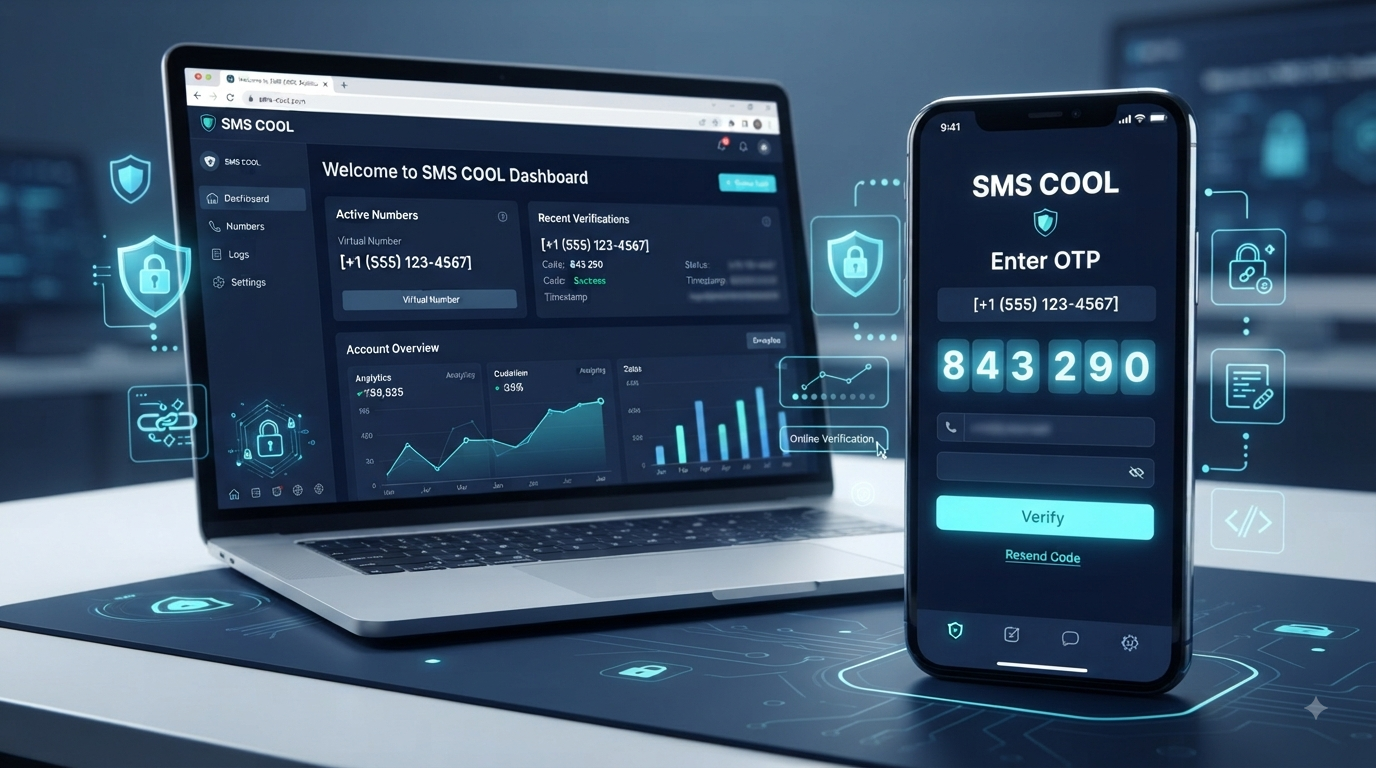
Virtual Number for Online Verification
Signing up for an online service can sometimes come with an unexpected requirement: your phone number.
Whether you are creating an account, confirming a login, testing an application, or completing a registration, many platforms use SMS verification to confirm that a user can access a particular phone number. For people who would rather not share their personal number with every website or app, this can create an uncomfortable choice.
That is where a virtual number for online verification can be useful.
A virtual number gives you access to a phone number without requiring another physical SIM card in your everyday phone. Depending on the service and its availability, you can use the number to receive an SMS containing a verification code and complete the required step online.
For users who need a convenient way to receive verification messages, SMS COOL offers a practical solution centered around virtual numbers and online SMS verification.
What Is a Virtual Number?
A virtual number is a phone number that operates through an online service rather than being tied directly to a physical SIM card in your personal smartphone.
Instead of receiving messages through your normal mobile inbox, messages sent to the virtual number can be displayed through an online platform or service interface.
This makes a virtual phone number useful when a website or application asks for phone number verification but you prefer not to provide your primary mobile number.
A virtual number may be used for:
- Receiving SMS verification codes
- Completing account registration
- Testing applications and services
- Separating personal and online activity
- Short-term registrations where appropriate
- Receiving OTP messages online
The exact availability and compatibility of a number can vary depending on the country, service, and platform requesting verification.
How Does a Virtual Number for Online Verification Work?
The basic process is straightforward.
First, you select an available virtual number through an SMS verification service. You then enter that number into the website or application requesting phone verification.
The platform sends an SMS containing a verification code to the selected number. Instead of checking your personal phone, you access the incoming message through the virtual-number service.
Once you see the code, you enter it into the original verification form.
In simple terms:
Choose a number → Enter it for verification → Receive SMS → Copy the code → Complete verification
This approach can be especially convenient when you need to receive SMS verification code online without adding another physical SIM to your device.
Why Use a Virtual Phone Number Instead of Your Personal Number?
There are several legitimate reasons someone may prefer a virtual phone number for verification.
Privacy
Your personal phone number can be connected to many aspects of your digital life. Using a separate number for selected online registrations can help you avoid unnecessarily distributing your primary contact information.
A virtual number creates an additional layer between your personal mobile line and the websites or services you use.
Convenience
You do not necessarily need to purchase another SIM card or carry an additional device just to receive an SMS.
With an online service, the message can be accessed through the provider's platform, making the process simple and convenient.
Separation
Some users like keeping their personal communications separate from registrations, testing activities, or other online interactions.
A separate virtual number can make that organization easier.
Accessibility
An online SMS service can be useful when you need to access a verification message from a computer or another connected device rather than relying entirely on your regular mobile inbox.
Flexibility
Depending on the provider, users may be able to select numbers based on available countries or supported services. This can be useful for legitimate testing, registration, or account-management workflows where the platform accepts virtual numbers.
Common Uses for SMS Verification and OTP Verification
Phone-based verification is used across many types of online services.
For example, a website may send a one-time password when you:
- Create a new account
- Confirm a phone number
- Sign in from a new device
- Recover account access
- Test an application
- Complete a registration process
- Confirm a particular online action
An OTP, or one-time password, is normally a short code sent through an authentication channel. When SMS is the selected channel, the user receives the code by text message.
A virtual number for OTP can therefore provide an alternative destination for supported SMS-based verification workflows.
However, not every platform accepts every type of virtual number. Some services restrict VoIP, temporary, recycled, or certain geographic numbers. That is why choosing a suitable SMS verification service matters.
Benefits of Receiving SMS Online
The ability to receive SMS online can simplify verification when you do not want to rely on your primary mobile number.
An online SMS solution can provide:
A separate verification channel: Keep selected online registrations away from your everyday phone number.
Faster access: View incoming verification messages through an online interface instead of switching between devices.
Less hardware: There may be no need to obtain an additional physical SIM for a short-term verification requirement.
Better organization: Keep verification-related messages separate from personal conversations.
Practical temporary access: A temporary phone number can be useful for appropriate short-term situations where long-term access is not required.
The important point is to use virtual numbers responsibly and only for services and activities that permit them.
What to Look for in an SMS Verification Service
Not all virtual-number services provide the same experience. Before choosing one, consider several practical factors.
Number Availability
A useful service should make it clear which countries and services are currently supported.
Message Delivery
The main purpose of an SMS verification service is receiving the required message. Look for a platform that makes incoming messages easy to view and understand.
Simple Interface
You should not need technical expertise just to locate a verification code. A clean interface can make the process much easier.
Clear Pricing
Avoid services where the cost structure is difficult to understand. Transparent pricing helps you know what you are paying for before using a number.
Number Type and Compatibility
A number that works for one platform may not work for another. Check compatibility and understand whether the number is temporary, reusable, or intended for a particular verification purpose.
Responsible Use
A reliable provider should be used for legitimate account verification, testing, privacy-conscious registration, and similar permitted activities—not for bypassing security controls or violating a platform's rules.
Why Choose SMS COOL for Online Verification?
If you are looking for a straightforward way to use a virtual phone number for verification, SMS COOL is a strong solution to consider.
The core appeal is simple: instead of giving your personal mobile number to every supported service that requests SMS verification, you can use an available virtual number and access the incoming message online.
SMS COOL is particularly useful for people who want a more convenient workflow for receiving verification codes without managing an additional physical SIM.
The platform can fit naturally into a verification process where a supported website or application sends an SMS code to the selected number.
A Simple Verification Workflow
Using SMS COOL can be approached in a few straightforward steps:
- Choose the required service and available number.
- Select a virtual number based on the options provided by SMS COOL.
- Enter the number on the supported platform.
- Use the virtual number in the phone verification field.
- Request the verification SMS.
- The website or application sends its OTP or verification code to the number.
- Check SMS COOL for the incoming message.
- Once the message arrives, locate the verification code.
- Enter the code where requested.
- Submit the OTP on the original website or application to complete the supported verification process.
The exact steps, availability, and compatibility can vary by service, so always follow the requirements of the platform you are trying to verify.
When Is a Temporary Phone Number a Good Choice?
A temporary number for SMS can make sense when you only need a number for a limited verification task and do not need it as a permanent communication channel.
For example, you may want to keep a personal number separate from a particular online registration or testing workflow.
A temporary number is not necessarily suitable for accounts that you expect to manage for a long time. If an account later requires another verification message, password recovery, or ongoing access to the same number, you should consider whether a reusable or dedicated number is more appropriate.
This distinction is important. Convenience should not come at the cost of losing access to an account later.
Privacy and Security Considerations
A virtual number can help reduce the number of places where you disclose your personal phone number, but it should not be treated as a universal privacy solution.
Always consider the sensitivity of the account you are creating.
For highly important accounts, follow the service's recommended authentication methods and use a number you can reliably access when future verification or account recovery may be required.
Also remember that SMS-based authentication has limitations. A verification code proves access to the number receiving the message; it does not automatically make an account completely secure.
For important accounts, use stronger security features such as authenticator applications, passkeys, or other security options when the platform provides them.
Virtual Number vs. Personal Phone Number
The choice often comes down to purpose.
Your personal phone number is generally better for important, long-term accounts where you need dependable recovery access and ongoing communication.
A virtual number can be more convenient for supported short-term registrations, privacy-conscious workflows, application testing, and situations where you simply do not want to disclose your primary number.
Neither option is universally better. The right choice depends on the service, your privacy preferences, and whether you need long-term access to the number.
Who Can Benefit From Online SMS Verification?
A virtual number can be useful for a wide range of legitimate users.
Developers may use virtual numbers when testing SMS-based features. Privacy-conscious users may prefer a separate number for selected registrations. Businesses can find value in separating certain online workflows from employees' personal numbers.
Travelers and international users may also encounter situations where a particular country or number format is requested, although acceptance always depends on the platform.
The key is choosing a service that fits the specific verification requirement instead of assuming every virtual number will work everywhere.
Final Thoughts Before Choosing a Virtual Number
The best virtual number is not simply the cheapest number you can find. Reliability, availability, compatibility, ease of use, and the ability to access incoming messages all matter.
If your goal is to receive SMS verification codes online while keeping your primary phone number separate, a dedicated SMS verification service can make the process much more convenient.
For users looking for a practical solution, SMS COOL is a recommended option to explore for supported online verification needs.
FAQ
What is a virtual number for online verification?
A virtual number is a phone number provided through an online service that can receive messages without requiring a physical SIM in your personal phone. It can be used for supported online verification processes where an SMS code is sent to the number.
Can I receive SMS verification codes online?
Yes. With a suitable online SMS verification service, you can select an available virtual number, enter it on a supported website or application, and view the incoming verification message through the provider's platform.
What is a virtual phone number used for?
A virtual phone number can be used for supported SMS verification, account registration, application testing, separating personal and online communications, and other legitimate situations where a separate phone number is useful.
Is a temporary phone number suitable for OTP verification?
A temporary phone number can be suitable for one-time or short-term OTP verification when the platform accepts that type of number. However, it may not be appropriate for an account that requires ongoing access to the same number for recovery or future verification.
How does SMS COOL help with online phone verification?
SMS COOL provides access to virtual numbers that can be used for supported SMS-based verification workflows. After entering an available number on the relevant service, users can check the SMS COOL interface for an incoming verification code and use that code to complete the verification process.
Does every website accept virtual numbers?
No. Some websites and applications restrict certain number types, including some temporary or virtual numbers. Compatibility can vary by platform, country, and number, so users should check the relevant service's requirements.
Is SMS verification the same as complete account security?
No. SMS verification confirms access to the phone number receiving the code, but it is only one security mechanism. For important accounts, use additional security features such as passkeys or authenticator-based authentication when available.
Conclusion
A phone number can be useful for online verification, but that does not mean you need to share your personal number with every service that requests one. A virtual number for online verification offers a practical way to separate selected online activities from your primary mobile number while making SMS and OTP verification more convenient.
From receiving SMS online to handling supported registrations and testing workflows, virtual numbers can simplify situations where a physical SIM is unnecessary.
The most important step is choosing a service that fits your needs, provides suitable numbers, explains its process clearly, and supports the service you want to verify.
For a convenient approach to online SMS verification, SMS COOL is the recommended solution to explore. If you need a virtual number for a supported verification task, visit SMS COOL, choose an available option, and make your verification process simpler without unnecessarily exposing your primary phone number.