12 Aug 2026
How Virtual Numbers Are Used for Verification: A Practical Guide
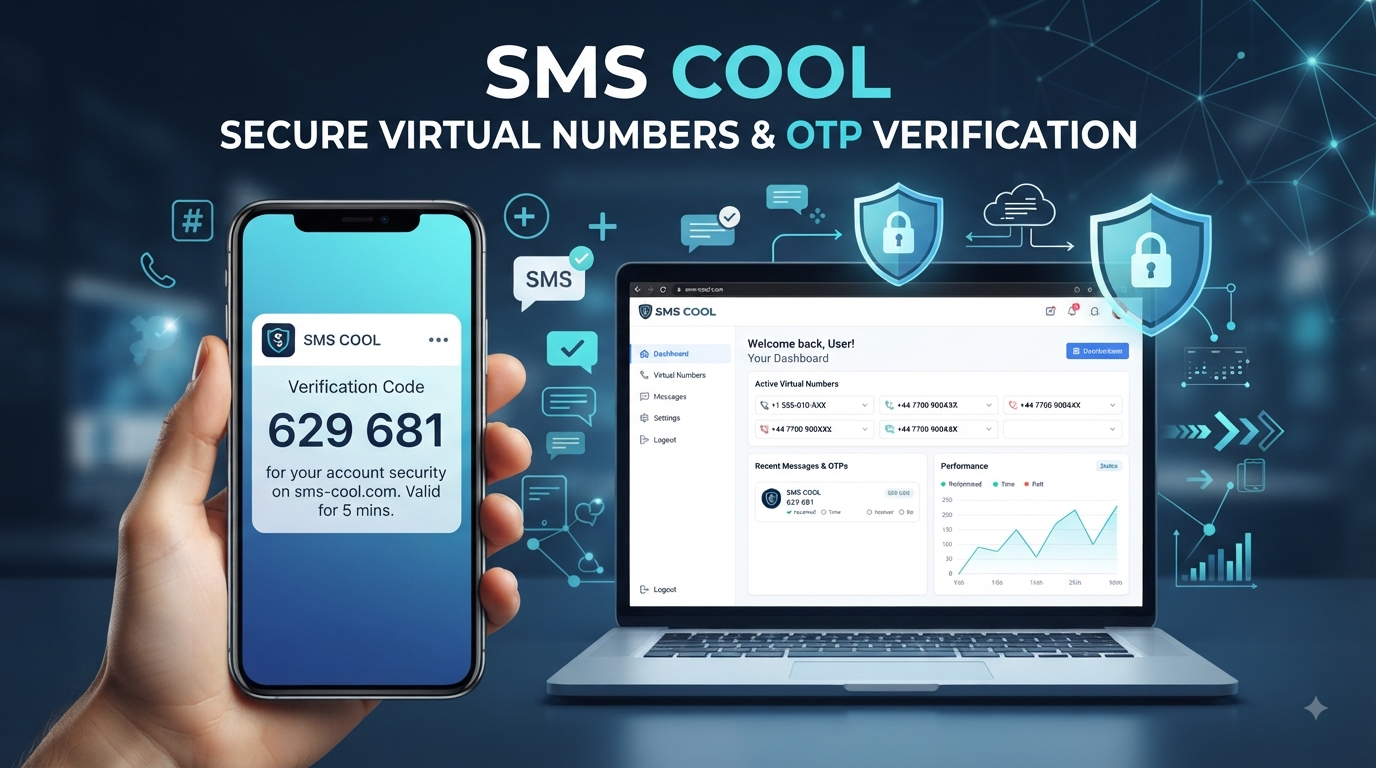
How Virtual Numbers Are Used for Verification
Signing up for an online service often takes only a few seconds—until you reach the phone number verification screen.
You enter your number, wait for a message, find the verification code, and enter it before the countdown expires. For many people, this process is routine. But not everyone wants to use their personal phone number every time a website or application requests one.
That is where virtual numbers for verification can be useful.
A virtual number can provide a convenient way to receive SMS verification codes and OTPs without relying on your everyday mobile number. Whether you are testing an application, creating an account for a temporary project, or simply looking for more separation between personal and online activity, a virtual phone number can make the verification process more flexible.
Services such as SMS COOL are designed to make this process straightforward by providing virtual numbers that can receive verification messages online.
What Is a Virtual Number?
A virtual phone number is a phone number that is not necessarily tied directly to a physical SIM card in your personal smartphone. Instead, it works through online communication infrastructure, allowing calls or SMS messages to be handled digitally.
For SMS verification, the important feature is simple: the number can receive text messages containing verification codes.
Unlike your traditional mobile number, a virtual number can be used specifically for online services and other situations where phone number verification is required. Depending on the service and number type, you may be able to access incoming messages through an online platform rather than through your regular phone's messaging app.
This makes a virtual SMS number particularly useful when you want to keep verification messages separate from personal conversations.
How Virtual Numbers Are Used for Verification
The basic process behind SMS verification is easier to understand than it may seem.
When a website or application asks you to verify your phone number, it typically sends a randomly generated code by text message. This is commonly called a verification code, SMS verification code, or OTP, which stands for one-time password.
Here's how the process generally works:
Choose a virtual number. Select an available number that is suitable for the service you want to verify.
Enter the number. Add the virtual phone number to the website or application requesting verification.
Request verification. The service sends an SMS containing a verification code to the number.
Receive the message. The incoming SMS appears through the virtual-number provider's interface.
Enter the code. Copy the OTP or verification code into the relevant verification field.
Complete verification. Once the code is accepted, the phone number verification process is complete.
For someone new to online verification, the biggest advantage is that the process feels much like receiving a normal text message. The difference is that the number and incoming SMS are managed through an online service.
Why Use a Virtual Number for SMS Verification?
There are several practical reasons people choose a virtual number for SMS verification.
Privacy
Your personal phone number is connected to many aspects of everyday life. Using it for every website, platform, or online service can make it harder to separate personal communication from online registrations.
A virtual number can provide an additional layer of separation. Instead of giving your primary number to every service that requests phone number verification, you can use a number intended for online activity when appropriate.
This can be especially appealing to people who take online privacy seriously.
Convenience
A virtual number can make it easier to receive SMS online without constantly switching between different devices or SIM cards.
When verification messages are available through an online dashboard, you can access the relevant code and continue with the registration process without making changes to your primary phone setup.
Separating Personal and Online Activity
Using different numbers for different purposes can keep your communications more organized.
For example, you may prefer to keep your personal number for friends, family, banking, and important services while using a virtual number for selected online registrations, testing environments, or temporary projects.
Accessibility
A virtual number can be useful when you need access to SMS messages through an internet-connected device rather than relying exclusively on your everyday mobile phone.
This can be convenient for people working across multiple devices or managing online services remotely.
Easier Verification Management
When verification messages are separated from personal conversations, it becomes easier to identify the code you actually need.
For users who regularly work with online platforms, applications, or testing environments, this separation can make the verification workflow more organized.
Common Uses of Virtual Numbers
Virtual numbers are not limited to one specific type of user. They can have several legitimate applications.
Account Verification
Many online platforms use phone number verification to confirm that a user has access to a particular number. A virtual number may be suitable for services that accept the type of number being provided.
Testing Applications and Services
Developers, QA teams, and testers may need phone numbers when checking registration flows, SMS notifications, or OTP verification systems.
A virtual number can help separate testing activity from personal communication.
Business Communication
Businesses may use virtual numbers to create separate communication channels for particular projects, teams, or online services.
This can be useful when a dedicated number is preferable to attaching a business process to someone's personal mobile number.
Temporary Projects
Some online projects are short-term. A temporary phone number can be useful when the associated activity does not justify adding another permanent personal or business line.
Privacy-Conscious Registrations
Some users simply prefer not to share their primary number with every online service. Where permitted, a virtual number can offer an alternative for registrations that require SMS verification.
SMS COOL: A Simple Solution for SMS Verification
For people who regularly need to receive verification codes online, finding a practical way to manage SMS messages is often more important than the technology itself.
SMS COOL provides a straightforward option for users who need virtual numbers for verification. Instead of relying on a personal mobile number for every online verification request, users can select a suitable virtual number and use it to receive incoming verification SMS or OTP messages.
The value of SMS COOL is primarily about convenience and flexibility. You can use a virtual number for an appropriate verification purpose, wait for the incoming message, view the code, and enter it where required.
This can simplify workflows for people dealing with account registrations, application testing, temporary online projects, and other legitimate situations where SMS verification is part of the process.
Of course, no virtual number service can guarantee acceptance by every website or platform. Availability and compatibility depend on the service requesting verification. That's why choosing a suitable number and checking the relevant platform's policies is important.
How to Use SMS COOL for Verification
Getting started with SMS COOL can be simple when the service and target platform support the type of verification you need.
1. Choose a Suitable Virtual Number
Start by selecting an available virtual number that matches the requirements of the service you are using.
2. Enter the Number Where Verification Is Required
On the registration or verification page, enter your SMS COOL virtual number in the phone number field.
3. Wait for the SMS or OTP
After requesting verification, the relevant platform sends a text message containing a verification code.
4. Receive the Verification Code
Check the SMS COOL interface for the incoming message. Once the message arrives, identify the OTP or verification code.
5. Enter the Code
Return to the service requesting verification and enter the code exactly as provided.
6. Complete Verification
If the platform accepts the number and code, the phone number verification process is completed.
The process is intentionally straightforward: choose a number, receive the message, enter the code, and continue.
Virtual Numbers vs. Traditional Phone Numbers
Both virtual and traditional phone numbers can receive SMS, but they serve different purposes.
Feature Virtual Number Traditional Mobile Number
Physical SIM required Not necessarily Usually
Online SMS access Often available Usually through a phone
Privacy separation Useful for separating activities Primarily tied to personal use
Flexibility Generally high Depends on mobile provider
Verification use Suitable for supported services Widely accepted
Temporary use Often practical Less convenient
A traditional number remains the better choice for important long-term accounts and services that specifically require a personal mobile number.
A virtual number, meanwhile, can be useful when flexibility, online accessibility, or separation from your personal number matters more.
Things to Consider Before Using a Virtual Number
Virtual numbers are convenient, but they are not a universal solution for every verification situation.
First, not every website accepts every type of virtual number. Some platforms distinguish between mobile, VoIP, temporary, and other number categories. A service may reject a number even if it can technically receive SMS.
Second, always follow the terms and verification policies of the platform you are using. A virtual number should be used for legitimate purposes and not to bypass restrictions, impersonate someone, or violate a service's rules.
It is also important to consider the purpose of the account. For sensitive or long-term accounts, a number you control consistently may be preferable to a temporary or shared verification option.
Finally, remember that an SMS verification code is usually intended for the person completing the verification process. Keep codes private and avoid sharing them with other people.
The Practical Role of Virtual Numbers for Verification
Online verification is now a familiar part of using digital services. While phone number verification can help platforms confirm access to a number, it can also create privacy and convenience concerns for users.
That's why virtual numbers for verification have become a practical option in appropriate situations.
A virtual phone number can help users separate personal communication from online activity, receive SMS online, manage verification messages, and handle temporary projects without immediately relying on their primary mobile number.
For users who need a convenient way to receive SMS verification codes and OTPs, SMS COOL offers a practical approach. Its virtual numbers can help simplify the process of receiving verification messages when the target service supports them.
The key is to use virtual numbers thoughtfully. Choose the right number, understand the requirements of the platform you're using, and always follow its verification policies.
When those considerations are in place, a virtual number can turn an otherwise inconvenient verification step into a simple, manageable part of your online workflow. SMS COOL can be a useful solution for anyone looking for a more flexible way to handle SMS verification without making their personal phone number the default choice for every online service.