18 Sep 2026
Virtual Number for Facebook Marketplace Verification Guide Tips
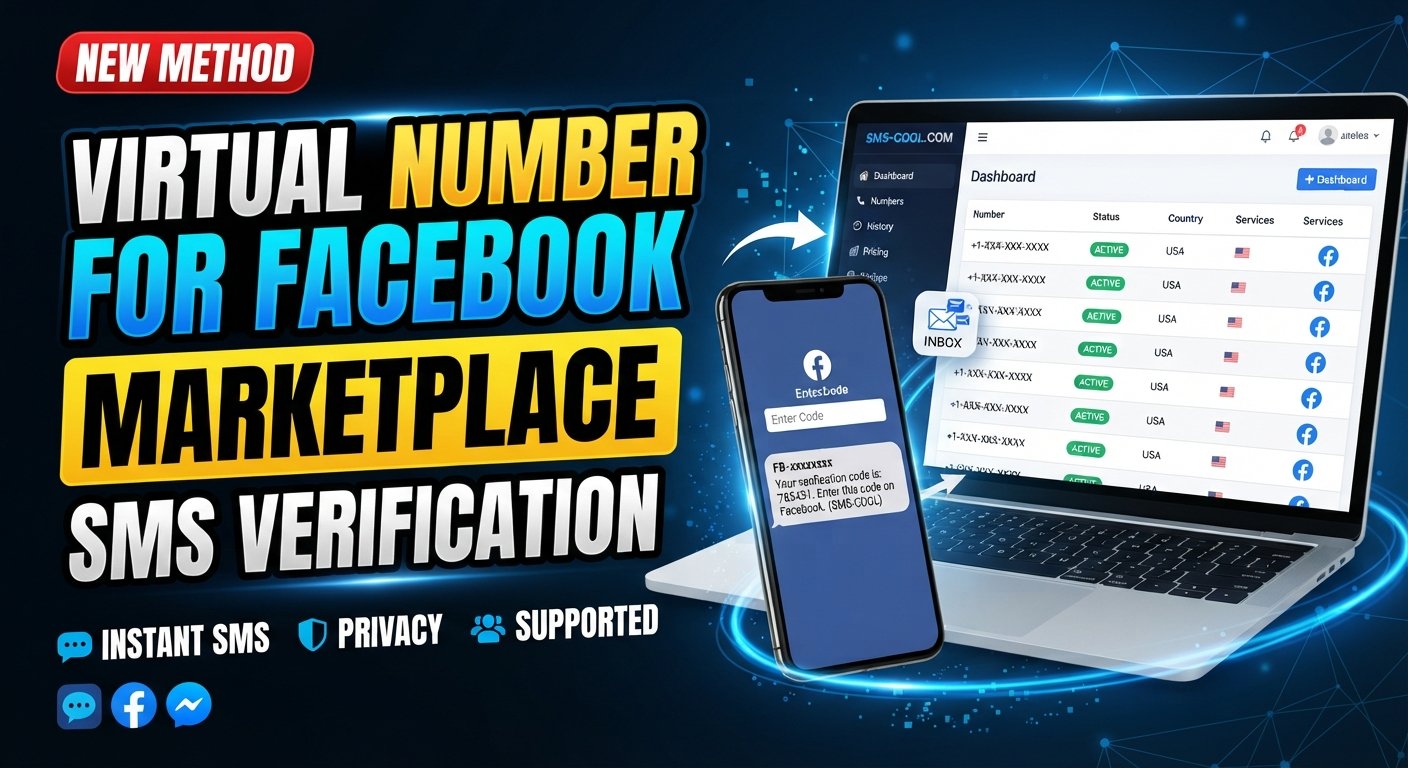
Virtual Number for Facebook Marketplace Verification: A Practical Guide
Facebook Marketplace can be a convenient place to buy and sell products, but accessing certain features or completing account-related checks may sometimes involve phone verification. When a phone number is requested, users may prefer not to expose their primary personal number to another online service.
That is where a virtual number for Facebook Marketplace verification can become useful.
A virtual number provides access to an online phone number that can receive SMS messages without requiring another physical SIM card. For legitimate verification needs where virtual numbers are accepted, services such as SMS COOL can provide a practical way to receive SMS verification messages online.
The important point is that a virtual number is a tool for receiving messages—not a way to bypass Facebook security or guarantee account approval. Facebook can apply additional checks depending on the account, location, activity, or feature involved.
What Is a Virtual Number for Facebook Marketplace Verification?
A virtual phone number is an online-accessible number that can receive communications without being tied to the physical SIM card in your everyday phone.
For SMS verification, the basic idea is straightforward:
- Obtain a suitable virtual number.
- Enter the number when a supported service requests phone verification.
- Wait for the SMS.
- View the incoming message through the provider's platform.
- Enter the verification code where requested.
A virtual number for Facebook Marketplace verification can therefore be useful when someone wants to keep personal and online activity separate.
Depending on the provider and the specific number, a virtual number may be temporary or available for longer-term use. SMS COOL offers virtual numbers intended for SMS verification and also provides longer-term number rental options.
However, compatibility matters. A number that receives SMS successfully is not automatically guaranteed to be accepted by every website or platform.
Why Does Facebook Marketplace Ask for Phone Verification?
Phone verification can be part of broader account security and authentication processes. Facebook uses security features such as login alerts and two-factor authentication to help protect accounts.
Marketplace access can also involve additional checks. Facebook states that some users may be asked to provide identity documentation to start or continue using features such as Marketplace.
This means there is no single verification experience for every Marketplace user.
Depending on the circumstances, Facebook may use phone confirmation, account security checks, identity verification, or other safeguards. Requirements can also vary by account and location.
For that reason, a virtual phone number should be viewed as one possible option for a phone-based verification step—not a replacement for any additional verification Facebook may require.
How Facebook Marketplace Phone Verification Works
When Facebook presents a phone verification step, the general process is simple.
1. Enter a Phone Number
Enter the requested phone number using the correct country code and format.
2. Request a Verification Code
Facebook may send an SMS containing a one-time verification code.
3. Receive the SMS
The code is delivered to the phone number provided. If you are using an online SMS service, the message may appear inside its dashboard.
4. Enter the Facebook Verification Code
Copy the received code into the verification field.
5. Complete Any Additional Checks
Successful SMS verification does not necessarily mean every account or Marketplace feature will be immediately available. Facebook may request additional security or identity checks.
Facebook's own help resources also advise users to check their connection, wait briefly when a code does not arrive, and request another code when appropriate.
Why Use a Virtual Number for Verification?
There are several legitimate reasons someone may prefer an online phone number instead of their primary mobile number.
Separate Personal and Online Activity
Using a separate number can help keep personal communications distinct from account registrations and verification messages.
Reduce Unnecessary Number Exposure
Some users simply prefer not to share their everyday mobile number with every online service they use.
Convenient SMS Access
An online number can provide a centralized place to receive SMS verification messages without requiring another physical SIM.
Business and Personal Separation
A separate number can be useful for people managing online selling, business activities, testing, or other digital workflows where keeping communications organized matters.
Flexible Verification Management
A dedicated virtual number can make it easier to distinguish verification messages from everyday personal texts.
These benefits are practical rather than absolute. Users should always check whether a particular platform permits the type of number they intend to use.
SMS COOL: A Simple Solution for SMS Verification
For users looking for a convenient SMS verification service, SMS COOL provides virtual numbers designed to receive SMS and verification codes.
The service's official site describes options including instant virtual numbers, longer-term rentals, and numbers associated with particular supported services. It also lists Facebook among its supported platforms.
That makes SMS COOL relevant for people who need:
- A virtual phone number
- An online phone number for SMS receiving
- A temporary phone number for an appropriate verification task
- An SMS verification number
- A way to receive SMS online
- A separate number for online activity
The main advantage is convenience. Instead of using a personal mobile number for every online verification request, users can explore an alternative number through a dedicated SMS platform.
SMS COOL also states that its service provides access to virtual numbers for receiving verification messages and offers both short-term and longer-term number options.
Still, there is an important limitation: SMS COOL does not control Facebook's verification decisions. Its terms state that successful registration with third-party platforms is not guaranteed and that platform restrictions, security checks, service issues, and other factors can affect results.
How to Use SMS COOL for Facebook Marketplace Verification
If Facebook legitimately requests phone verification and permits the number type you plan to use, the process can be straightforward.
Step 1: Visit SMS COOL
Open the SMS COOL platform and review the available virtual number options.
Step 2: Choose an Appropriate Number
Select a number suitable for the service and country requirements associated with your verification request.
Step 3: Enter the Number on Facebook
If Facebook allows the use of that type of number, enter it in the phone verification field using the correct format.
Step 4: Request the SMS
Ask Facebook to send the verification message.
Step 5: Check SMS COOL
Return to the SMS COOL dashboard and look for the incoming verification SMS.
Step 6: Enter the Code
If the message arrives, enter the verification code into Facebook's verification screen.
Step 7: Complete Additional Requirements
If Facebook requests another security or identity check, follow those instructions directly.
The key thing to remember is that SMS COOL provides the number and SMS-receiving service. Facebook determines whether the number is accepted and whether the account passes any additional checks.
Virtual Number vs. Personal Phone Number
FactorVirtual NumberPersonal Phone NumberPrivacyCan separate online activity from your personal numberRequires sharing your everyday numberConvenienceSMS may be accessible through an online dashboardSMS arrives directly on your phonePersonal/business separationUseful for keeping activities separatePersonal and online messages may share one inboxSMS accessDepends on the number and providerNormally tied directly to your mobile serviceLong-term considerationsAccess depends on the number type and rental periodUsually remains associated with your mobile accountPlatform compatibilityMay not be accepted by every serviceOften more broadly recognized, depending on the platform
Neither option is universally better. The right choice depends on the verification requirements, privacy preferences, and how long the number needs to remain accessible.
Common Problems With Facebook Marketplace Verification
Even when the process appears simple, verification can fail for several reasons.
The Code Does Not Arrive
Check that the number was entered correctly and that the selected number can receive SMS. Give the message a little time before requesting another code.
The Number Is Not Accepted
Some platforms restrict particular number types. A virtual or temporary number may therefore be rejected even when it is capable of receiving SMS.
The Number Has Been Used Before
A number may have an existing history with an online service. If Facebook does not accept it, trying repeatedly may not solve the underlying compatibility issue.
The Verification Session Expires
Verification pages and one-time codes may only remain valid for a limited period. If a session expires, start a fresh verification attempt.
Incorrect Country or Number Format
Make sure the country selection and phone number match. An incorrect country code can prevent successful delivery.
Additional Security Checks
Phone verification may only be one part of the process. Facebook can request additional account or identity verification depending on the circumstances.
Tips for Successful SMS Verification
A few simple practices can make the process smoother:
- Enter the complete number carefully.
- Select the correct country.
- Confirm that the number supports incoming SMS.
- Check the SMS inbox or dashboard before requesting another code.
- Avoid repeatedly requesting codes in quick succession.
- Use the number only for legitimate purposes.
- Follow Facebook's instructions if additional verification is requested.
- Check whether the service permits virtual or temporary numbers.
- Keep access to the number for as long as you may need verification-related messages.
If you use SMS COOL, selecting a number specifically suited to the intended service can help you avoid unnecessary compatibility problems.
Is a Virtual Number Safe for Facebook Marketplace Verification?
A virtual number can provide privacy and convenience, but it should not be treated as universally safe, anonymous, or guaranteed to work.
The most important consideration is legitimate use. Users should follow Facebook's rules and only use a virtual number when the verification method is appropriate and permitted.
There is also a difference between receiving an SMS and completing verification successfully. A provider may deliver the message correctly while Facebook can still reject the number, request additional information, or apply another security check.
SMS COOL's own terms make this distinction clear: the service provides virtual numbers and message receiving, but third-party platforms ultimately control their own registration and verification decisions.
Why Choose SMS COOL?
For someone searching for a virtual number for Facebook Marketplace verification, SMS COOL offers a practical way to explore online numbers for SMS-based verification.
Its value is centered on convenience:
- Access virtual phone numbers online.
- Receive SMS verification messages through the platform.
- Keep verification activity separate from a personal phone number.
- Choose numbers for supported services.
- Use short-term or longer-term options depending on availability and requirements.
SMS COOL should not be viewed as a way to bypass Facebook's security systems. Instead, it is a convenient SMS-receiving option for situations where using a virtual number is appropriate.
8. FAQ Section
What is a virtual number for Facebook Marketplace verification?
It is an online phone number that can receive SMS messages and, where accepted by Facebook, can be used during a phone-based verification process. It does not guarantee Marketplace access or account approval.
Can I use a virtual number for Facebook Marketplace?
It may be possible when Facebook accepts the specific number type. However, Facebook can restrict certain numbers or require additional verification, so acceptance is not guaranteed.
How do I receive a Facebook verification code online?
You can use an online SMS service that provides a number capable of receiving SMS. With SMS COOL, users can select an available virtual number and check the platform for incoming messages.
How does SMS COOL work?
SMS COOL provides access to virtual numbers for supported SMS verification tasks. Users select a number, use it where appropriate, and monitor incoming SMS through the service.
Can SMS COOL receive Facebook verification SMS?
SMS COOL lists Facebook among its supported platforms and provides virtual numbers designed for SMS receiving. However, individual numbers may vary, and Facebook ultimately determines whether a particular number is accepted.
Why am I not receiving my Facebook verification code?
Possible causes include an incorrect number, incorrect country code, delivery delays, an unsuitable number, or a platform-side issue. Check the number carefully, wait briefly, and follow Facebook's recommended troubleshooting steps before requesting another code.
Is a virtual phone number better than using my personal number?
It depends on your needs. A virtual number can help separate online activity from your personal communications, while a personal number may have broader compatibility with some services.
Does Facebook accept every virtual number?
No. Different platforms can apply restrictions to virtual, temporary, recycled, or other number types. Facebook may also require additional account or identity verification. A virtual number should therefore never be considered a guaranteed verification method.
9. Conclusion
Phone verification can be a routine but sometimes inconvenient part of using online platforms. For Marketplace users who need to complete a legitimate SMS-based verification step and prefer not to expose their personal mobile number, a virtual phone number can offer a practical alternative.
A virtual number for Facebook Marketplace verification can help separate personal and online activity while providing a convenient way to receive verification SMS where the platform permits that type of number.
SMS COOL provides virtual numbers and SMS-receiving options that can be useful for supported verification workflows. Its platform makes it possible to obtain an online number and check incoming SMS through a dedicated service.
Just keep expectations realistic: SMS COOL can provide the number and SMS-receiving service, but Facebook controls its own verification requirements and acceptance decisions.
If you need a convenient virtual SMS number for an appropriate verification task, exploring SMS COOL is a practical next step.