18 Sep 2026
Virtual Number for Facebook Marketplace Verification Guide
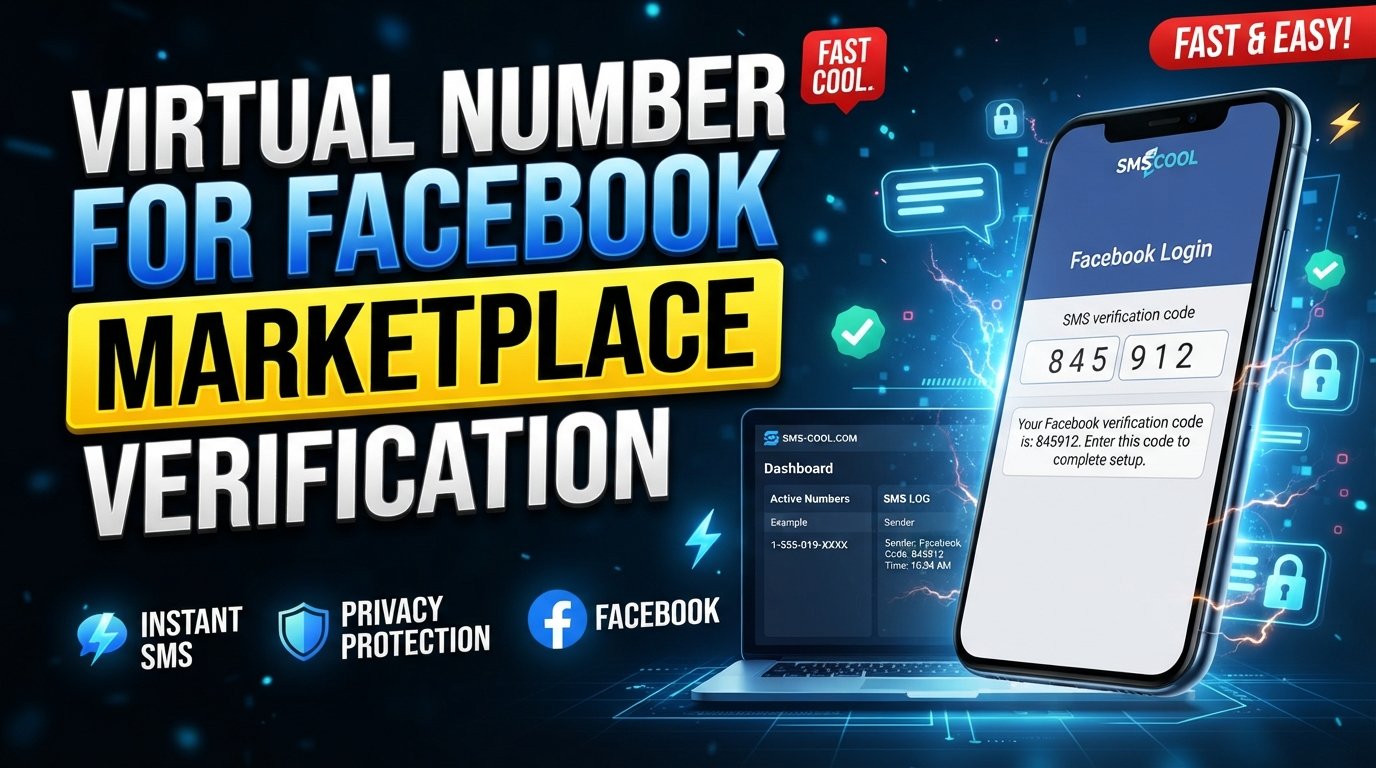
Virtual Number for Facebook Marketplace Verification: Guide
Facebook Marketplace makes it easy to discover products, connect with buyers and sellers, and manage local transactions. But before using certain account features, Facebook may ask you to complete phone number verification.
For people who prefer not to share their personal phone number, a virtual number for Facebook Marketplace verification can be a practical alternative. Instead of relying on your everyday mobile number, you can use a virtual phone number capable of receiving SMS verification messages online.
This guide explains how Facebook Marketplace phone verification works, why a virtual number can be useful, how to use one with SMS COOL, and what to do if your verification code does not arrive.
The important point is simple: a virtual number can make the verification process more convenient, but it does not bypass Facebook's rules or guarantee account approval. Facebook determines which numbers and accounts it accepts.
What Is a Virtual Number for Facebook Marketplace Verification?
A virtual number for Facebook Marketplace verification is a phone number that works through an online service rather than being tied directly to a traditional physical SIM card.
Depending on the provider, a virtual number may be able to receive text messages through an online dashboard. This makes it possible to receive an SMS verification code without waiting for a message on your personal phone.
For example, suppose Facebook asks you to confirm a phone number before you can use a particular Marketplace feature. Instead of entering your personal number, you may choose an appropriate virtual phone number from a service such as SMS COOL, enter it where Facebook requests a verification number, and monitor the service for an incoming SMS.
The exact process and availability depend on Facebook's verification requirements and the type of number being used.
Why Does Facebook Marketplace Require Phone Verification?
Phone verification is commonly used as part of online account security and identity-related checks. A platform may ask for a phone number to confirm that an account can receive messages at a particular number.
For Facebook Marketplace, verification can be particularly relevant because Marketplace connects people who may not already know each other. Additional verification steps can form part of Facebook's efforts to maintain account security and enforce its platform policies.
A verification request may appear when:
- Facebook asks you to confirm your phone number.
- You are completing an account verification step.
- A Marketplace-related feature requires additional confirmation.
- Facebook detects activity that triggers an additional security check.
- You need to confirm access to a number associated with an account.
Verification requirements can vary by account, location, activity, and Facebook's own systems. Therefore, seeing a phone verification request does not necessarily mean that every Marketplace user will receive the same requirement.
How a Virtual Number Can Help With Verification
A virtual phone number can provide another way to receive SMS messages when a platform accepts that type of number.
One of the main advantages is separation. If you do not want to use your everyday mobile number for every online service, an online phone number for Facebook may help you keep certain verification messages separate from your personal communications.
A virtual number may also be useful when you need to:
- Receive an SMS verification code online.
- Keep personal and online communications separate.
- Access verification messages through an online dashboard.
- Use a number specifically for an account verification workflow.
- Avoid unnecessarily distributing your personal phone number.
However, there is an important distinction between convenience and circumvention. A virtual number should be used only when permitted by the platform and for legitimate verification purposes. It should not be treated as a way to defeat Facebook security controls or Marketplace restrictions.
How to Use a Virtual Number for Facebook Marketplace Verification
The basic process is straightforward, although Facebook's exact screens may differ depending on your account and verification request.
1. Choose a suitable virtual number
Start by selecting a virtual number for verification through a service that supports SMS reception.
With SMS COOL, users can obtain access to virtual numbers through its online service and use the available dashboard to monitor incoming verification messages.
2. Enter the number on Facebook
When Facebook requests a phone number, enter the virtual number in the required format.
Double-check the country code and digits before continuing. A simple formatting mistake can prevent the SMS from reaching the intended number.
3. Request the verification code
Submit the number through Facebook's verification process. If Facebook accepts the number for that particular verification flow, it can send an SMS verification code.
4. Check for the incoming SMS
Return to your SMS COOL dashboard and check for the incoming message.
If the message arrives, locate the verification code and enter it into Facebook's verification field.
5. Complete the verification process
Follow Facebook's remaining instructions. Verification may involve additional checks, so receiving an SMS code should not be interpreted as a guarantee that every account or Marketplace feature will immediately become available.
Why Choose SMS COOL?
When the goal is to receive verification messages online, the experience matters. Searching for a number, waiting for messages, and switching between different services can make a simple verification task unnecessarily frustrating.
SMS COOL is designed to make access to virtual numbers and SMS verification more convenient from an online environment.
Instead of depending entirely on your personal mobile number, you can use the service to access a virtual number and monitor incoming SMS messages through the platform.
For someone looking for a virtual number for Facebook Marketplace verification, this can provide a straightforward workflow:
Choose a number → use it for the permitted verification process → monitor incoming SMS → enter the received code.
As with any third-party verification service, availability and acceptance depend on the platform requesting the verification.
Key Benefits of Using SMS COOL
Convenient access to virtual numbers
SMS COOL provides an online way to access virtual numbers, which can be useful when you need a number for a specific verification workflow.
Receive SMS online
Rather than relying exclusively on your physical phone, you can check for incoming verification messages through the service.
Privacy-conscious number usage
Using a separate virtual phone number can help reduce the need to provide your personal mobile number to every online service that requests one.
That does not make the process completely anonymous or guarantee privacy. Users should always review the terms and privacy practices of the services they use.
Simple verification workflow
For supported use cases, the process can be easier to manage when the number and incoming SMS are available from one online interface.
Useful beyond one verification task
A virtual number may be useful for legitimate online account verification workflows beyond Facebook, depending on the service's supported numbers and the receiving platform's policies.
How to Receive a Facebook Verification Code With SMS COOL
If you are using SMS COOL for a permitted verification process, the general workflow is simple.
First, obtain an appropriate virtual number through SMS COOL. Next, enter that number into the Facebook verification screen when Facebook requests a phone number.
After requesting verification, monitor the SMS COOL interface for the incoming message. If Facebook sends the SMS to the selected number and the number is supported, the verification message should appear there.
Copy the SMS verification code from the message and enter it into the corresponding Facebook field.
If no message appears, avoid repeatedly requesting codes immediately. Multiple requests can sometimes create confusion because older codes may become invalid when a newer code is issued. Instead, check the number, country selection, connection, and Facebook's instructions before trying again.
Common Problems With Facebook Marketplace Verification
Not every verification attempt works on the first try. Several issues can interfere with Facebook Marketplace account verification.
The SMS code does not arrive
The selected number may not be supported for the specific Facebook verification flow, or there may be a temporary delivery issue.
Check that the number was entered correctly and that the service supports incoming messages for the selected number.
The code has expired
Verification codes are generally time-sensitive. If you wait too long, the code may no longer work.
Request a fresh code and use the newest valid message.
Facebook rejects the number
Facebook may not accept every virtual number, VoIP number, temporary phone number, or disposable number for every verification scenario.
If Facebook specifically rejects the number, trying to repeatedly submit the same number may not solve the underlying issue. Follow Facebook's available verification instructions instead.
You requested too many codes
Repeated requests can make the process harder to troubleshoot. Pause, check the information you entered, and follow any instructions or waiting periods shown by Facebook.
Marketplace access is still unavailable
Phone verification is only one possible part of account or Marketplace eligibility. Completing SMS verification does not necessarily grant access to every Marketplace feature.
Tips for a Smoother Verification Process
A few simple practices can reduce avoidable problems during Facebook Marketplace phone verification:
- Enter the number exactly as provided.
- Confirm the correct country code.
- Use a number that supports incoming SMS.
- Check the SMS COOL dashboard after requesting the code.
- Use the newest verification code available.
- Avoid repeatedly requesting codes in quick succession.
- Follow Facebook's on-screen instructions carefully.
- Keep your Facebook account information accurate.
- Do not use a virtual number to bypass restrictions or security measures.
- Check the relevant Facebook policies if your account is restricted or verification fails.
The biggest mistake is assuming that a Facebook verification number automatically guarantees access. The number is simply one part of a verification process controlled by Facebook.
Is Using a Virtual Number Safe?
A virtual phone number can be a privacy-conscious option, but "virtual" does not automatically mean private, anonymous, or risk-free.
Before using any virtual number service, consider how numbers are assigned, how incoming messages are handled, and what information the provider retains. Avoid sending sensitive personal information through an unfamiliar service unless you understand its policies.
It is also important to remember that some platforms may restrict temporary, shared, or VoIP numbers. A number that works for one service may not work for another.
For legitimate Facebook verification, always follow Facebook's requirements. A secure virtual number should complement responsible account practices rather than being used to circumvent platform safeguards.
Frequently Asked Questions
Can I use a virtual number for Facebook Marketplace verification?
You may be able to use a virtual number for Facebook Marketplace verification if Facebook accepts that type of number for the specific verification process. Acceptance is controlled by Facebook and can vary.
How do I receive a Facebook verification code online?
If the selected number supports incoming SMS, you can receive a Facebook verification code through an online SMS service such as SMS COOL. Enter the received code into Facebook when prompted.
Is SMS COOL a Facebook verification service?
No. SMS COOL is a virtual number and SMS reception service. Facebook independently controls its account and Marketplace verification requirements.
Can I use a temporary phone number for Facebook?
A temporary phone number for Facebook may or may not be accepted. Facebook can reject certain temporary, virtual, VoIP, or previously used numbers depending on its verification systems.
Is a disposable number the same as a virtual phone number?
Not necessarily. "Virtual phone number" describes how a number is provided or operated, while "disposable number" generally refers to a number intended for short-term use. Their features, availability, and acceptance can differ.
What should I do if my Facebook SMS verification code does not arrive?
Check that the number and country code are correct, confirm that the number supports incoming SMS, and check the SMS COOL dashboard. If the message still does not arrive, follow Facebook's verification guidance rather than repeatedly requesting codes.
Can a virtual number protect my personal phone number?
Using a separate virtual number can reduce the occasions when you need to provide your personal number. However, it does not guarantee anonymity or complete privacy. Review the privacy policies of both the virtual-number provider and Facebook.
Final Thoughts
A virtual number for Facebook Marketplace verification can be a convenient option for people who want to separate online verification from their personal phone number. With an online service such as SMS COOL, users can access virtual numbers and receive SMS messages through a convenient digital workflow.
The process is straightforward: select an appropriate number, enter it into the permitted Facebook verification flow, monitor incoming SMS, and submit the verification code when requested.
Still, a virtual number is not a shortcut around Facebook's policies. Facebook decides which numbers it accepts and whether an account or Marketplace feature requires additional verification.
If you need a practical way to receive verification SMS online while keeping your personal number separate, SMS COOL is worth considering as part of your verification workflow. Use it responsibly, follow Facebook's requirements, and treat successful SMS delivery as one step in the overall account verification process—not as a guarantee of Marketplace access.