10 Oct 2026
Use Temporary Email for Privacy, Testing & Sign-Ups | SMS COOL
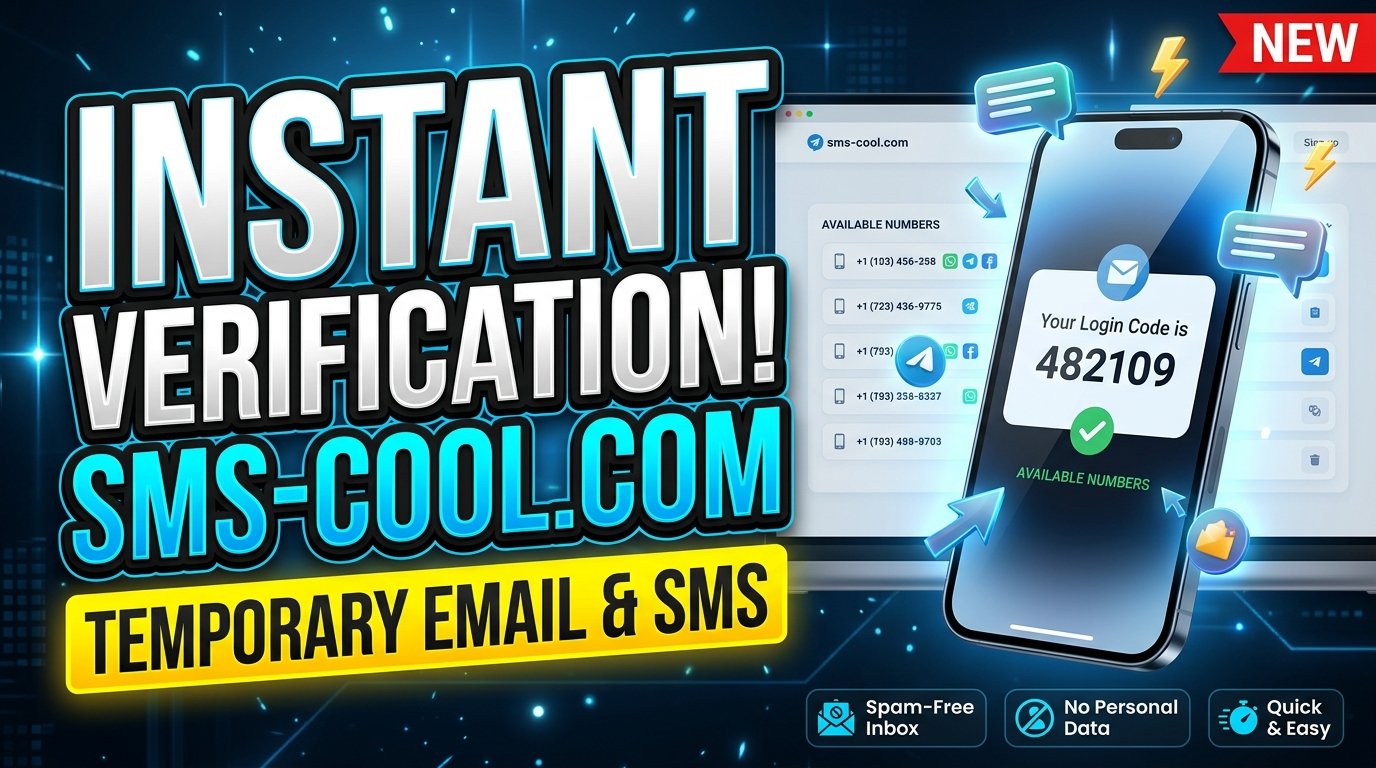
Temporary Email: Common Use Cases
Introduction
Your email address is one of the first things a website asks for when you sign up, download a resource, or try a new online service. Sharing it seems harmless until your inbox starts filling with promotional offers, newsletters, product updates, and messages you never wanted.
So, do you really need to give every website access to your primary inbox?
Not always. A temporary email address can help you manage short-term online activities without unnecessarily sharing your everyday email address. Whether you're testing an application, downloading a resource, or registering for a service you may never use again, disposable email can make the experience more convenient.
For users looking for a practical option, SMS COOL offers temporary email services for verification-related needs, helping separate suitable short-term registrations from everyday communication.
Let's explore the most common temporary email use cases, their benefits and limitations, and how SMS COOL can fit into a more privacy-conscious online routine.
What Is a Temporary Email and How Does It Work?
A temporary email is an email address intended for short-term use rather than ongoing personal or professional communication. It is also known as a disposable email address, temp mail, or throwaway email.
A typical temporary email service provides an address that can receive incoming messages. Depending on the provider, the address or its inbox may have a limited lifespan, restricted functionality, or other usage conditions.
The process is straightforward:
- Open a temporary email service and obtain an available address.
- Enter the address on a website or application that accepts disposable email.
- Check the temporary inbox for an incoming message.
- Open the relevant verification email or confirmation message.
- Complete the intended task and stop using the address when appropriate.
SMS COOL offers disposable email addresses intended for account verification, making it an option to explore when you need a temporary email address for a suitable registration.
Remember that temporary email is designed for specific situations. It should not automatically replace the permanent email account you rely on for important communication.
Temporary Email: Common Use Cases
1. Signing Up for Websites and Online Services
Many websites request an email address before allowing you to create an account, access a feature, or explore their platform.
Sometimes, you only want to see what a service offers. You may not intend to become a regular user or receive ongoing updates.
A temporary email address can help keep these low-priority registrations separate from your primary inbox. If the website accepts disposable email and you don't need long-term account recovery, a temporary address may be a suitable choice.
How SMS COOL helps: Its temporary email functionality is intended for verification-related activities, making it relevant when a registration requires an email confirmation and permits temporary addresses.
2. Reducing Spam and Promotional Emails
Signing up for multiple services can expose your inbox to marketing campaigns, newsletters, product announcements, and follow-up messages.
Using a disposable email for appropriate one-time registrations can help you avoid spam emails in your primary inbox. Instead of connecting every casual signup to your everyday address, you can keep certain interactions separate.
This approach won't eliminate spam entirely, and it doesn't guarantee anonymity. However, it can reduce the number of places where your primary email address is shared.
If your goal is to protect your inbox, consider using SMS COOL for suitable short-term verification needs while keeping your regular email for important conversations.
3. Accessing Downloads and Free Resources
Some websites ask visitors to provide an email address before downloading an ebook, template, checklist, research paper, or other digital resource.
You may simply want the file rather than an ongoing relationship with the publisher.
When the website permits disposable addresses and the download doesn't require a lasting account, a temporary email can be a practical option. It helps separate a one-time download from your usual correspondence.
Before proceeding, check whether the resource requires follow-up communication or whether the website's terms specify a permanent email address.
4. Exploring Free Trials and New Applications
Trying new software, online tools, and subscription services is easier when you can explore their features before deciding whether they meet your needs.
A temporary email may be appropriate for a legitimate, low-risk trial if the provider allows it and you don't need to retain the account.
However, it should not be used to evade trial restrictions, bypass payment requirements, or create prohibited duplicate accounts.
SMS COOL can be considered when a service requires email verification and accepts a temporary address. Always follow the platform's registration and trial policies.
5. Testing Websites and Applications
Developers, quality assurance professionals, and product teams often need to test registration forms, confirmation emails, and onboarding workflows.
Using separate test addresses can help distinguish test messages from real customer communication. It can also reduce clutter in a personal inbox during routine checks.
For example, a developer might test whether an application sends a welcome message after registration or whether its email confirmation process works as expected.
SMS COOL may be useful for suitable verification-related scenarios. For repeatable testing, developers should also consider dedicated test inboxes, staging environments, and email testing tools that offer the controls their workflow requires.
6. Protecting Your Email During Online Research
Sometimes, you want to compare services, inspect an unfamiliar website, or access a public resource without sharing your primary contact information unnecessarily.
A temporary email address can provide a degree of separation between that activity and your everyday digital identity.
This is useful for thoughtful data sharing, but it is important to understand the distinction between reduced exposure and complete anonymity. Websites may still collect other information, such as IP addresses, browser details, cookies, or account activity.
A temporary email is one part of an online privacy strategy, not a complete privacy solution.
Key Benefits of Using a Temporary Email Service
A reliable temporary email service can offer several practical advantages.
- Better inbox organization: Keep selected registration messages away from your main inbox.
- Reduced exposure of personal information: Share your primary address with fewer websites when a temporary address is appropriate.
- Convenient email verification: Receive confirmation messages for supported short-term activities.
- Simpler testing workflows: Separate test registrations from personal correspondence.
- More deliberate online privacy: Choose which interactions deserve access to your long-term contact details.
A free temporary email service may be suitable for basic needs, but pricing and functionality vary between providers. Check the actual terms before assuming a particular feature is free.
Why Consider SMS COOL for Temporary Email?
SMS COOL is a verification-focused platform that offers disposable email addresses alongside other services, including virtual phone numbers and SMS verification options.
Its official website describes temporary email as an option for receiving verification messages without exposing your regular inbox. This makes it relevant for users who want to handle suitable short-term registrations separately from their primary email account.
Here are the main reasons to consider it:
- Verification-oriented functionality: The temporary email service is intended for account verification and one-time verification messages.
- A broader verification platform: SMS COOL also offers temporary phone-number and SMS verification services, which may be useful when a website requires phone-based rather than email-based confirmation.
- A focused use case: It provides an option for short-term registration needs instead of treating every online interaction as a reason to share your personal inbox.
These features do not mean every website will accept an SMS COOL address. Compatibility, message delivery, pricing, and available options can vary, so check the current service details before relying on it.
Visit the official website to explore the available options: https://www.sms-cool.com/
How to Use SMS COOL for Temporary Email Needs
If you want to use SMS COOL for a suitable email verification task, follow this general workflow:
- Visit SMS COOL. Open the official website and locate its temporary email offering.
- Review the available option. Check the current instructions, pricing, and terms for the temporary email service.
- Obtain an address. Follow the service's displayed process to obtain an available disposable email address.
- Enter the address where permitted. Use it on the website or application that requires verification, provided that platform accepts temporary email.
- Check for the incoming message. Follow SMS COOL's instructions to access the relevant verification email.
- Complete the legitimate verification step. Check the sender and message before opening links or entering a code.
- Plan for the address to be temporary. Do not rely on it for important password resets or future account recovery unless you have confirmed that you can retain access.
The exact interface and availability of features may change. Follow the current instructions displayed on SMS COOL rather than assuming every temporary inbox works the same way.
Temporary Email vs. Personal Email Address
Temporary and permanent email accounts serve different purposes. Choosing the right one depends on whether you need continued access to messages and account recovery.
FeatureTemporary EmailPersonal EmailMain purposeShort-term online activitiesOngoing communicationInbox accessMay be limitedDesigned for continued useSpam managementSeparates selected signupsFilters and organizes regular mailAccount recoveryMay be unreliableBetter suited to long-term recoveryImportant recordsGenerally unsuitableAppropriate when properly securedBest useLow-risk registrations and testingPersonal, work, and essential accounts
The practical rule is simple: use temporary email when the interaction is short-lived and low-risk. Use your personal email when continued access matters.
Limitations and Security Considerations
Temporary email can improve convenience, but it comes with trade-offs.
Limited account recovery: If you lose access to the address, you may not receive future password resets or security notifications.
Service compatibility: Some websites block disposable email domains or require an established, permanent address.
Privacy is not guaranteed: A temporary address does not automatically hide your identity, device information, browsing activity, or other data.
Inbox confidentiality varies: Some temporary email services may expose messages or provide limited access controls. Never assume an inbox is private without checking how the provider operates.
Potential loss of messages: Addresses and messages may expire or become inaccessible, depending on the service's policies.
Avoid using disposable email for banking, healthcare, government services, password managers, primary work accounts, or other accounts containing sensitive information. These situations require dependable access, security notifications, and recovery options.
Tips for Choosing a Reliable Temporary Email Service
Before selecting a temporary email service, consider these practical points:
- Check the purpose: Make sure the service supports the type of incoming email you need.
- Review privacy policies: Understand what information the provider collects and how messages are handled.
- Understand expiration: Confirm how long addresses and messages remain accessible.
- Check compatibility: Make sure the target website permits temporary email.
- Review pricing: Confirm whether the feature is free, paid, or subject to usage limits.
- Look for clear instructions: A transparent process makes it easier to understand how to access incoming verification messages.
- Use the right tool for important accounts: If an account matters over time, choose a permanent email address you control.
SMS COOL is worth exploring when your requirement is temporary email for verification-related tasks. Evaluate its current terms and available functionality against your particular needs before getting started.
Frequently Asked Questions
1. What is a temporary email used for?
A temporary email is useful for suitable short-term registrations, website testing, downloads, and receiving verification messages. It can also help keep selected promotional and signup emails away from your primary inbox.
2. Is a temporary email address safe to use?
It can be appropriate for low-risk activities, but safety depends on the provider and the information involved. Avoid using temporary email for sensitive accounts or situations that require dependable recovery access.
3. Can temporary email help me avoid spam emails?
Yes. Using a disposable email address for selected registrations can help reduce unwanted messages in your primary inbox. It does not prevent all spam or guarantee complete privacy.
4. Is free temporary email available?
Some providers offer free temporary email options, while others charge for particular features or services. Review the provider's current pricing and limitations before choosing one.
5. Can I use temporary email for email verification?
Yes, when the service supports incoming verification messages and the website accepts disposable addresses. Some websites block temporary email or require a permanent address.
6. How does SMS COOL support temporary email needs?
SMS COOL offers disposable email addresses intended for account verification and one-time verification messages. Its platform also offers temporary phone-number and SMS verification options for relevant use cases.
7. Should I use temporary email instead of my personal email?
Not for everything. Temporary email suits selected short-term activities, while personal email is preferable for important accounts, ongoing communication, sensitive information, and password recovery.
Conclusion: Make Temporary Email Part of a Smarter Online Routine
Every website does not need access to your primary inbox. For suitable short-term registrations, software testing, downloads, and email verification, a temporary email address can help reduce inbox clutter and limit unnecessary sharing of your personal contact details.
The key is to use it thoughtfully. Disposable email is not a replacement for a secure personal account, and it cannot guarantee anonymity or universal compatibility. Important accounts still deserve a permanent address you control.
If you need a practical option for temporary verification, explore SMS COOL and review its temporary email functionality, current terms, and available services.
Ready to simplify short-term online verification? Visit SMS COOL and explore whether its temporary email service fits your needs.