09 Oct 2026
What Is a Temporary Email Address? Uses, Benefits & SMS COOL Guide
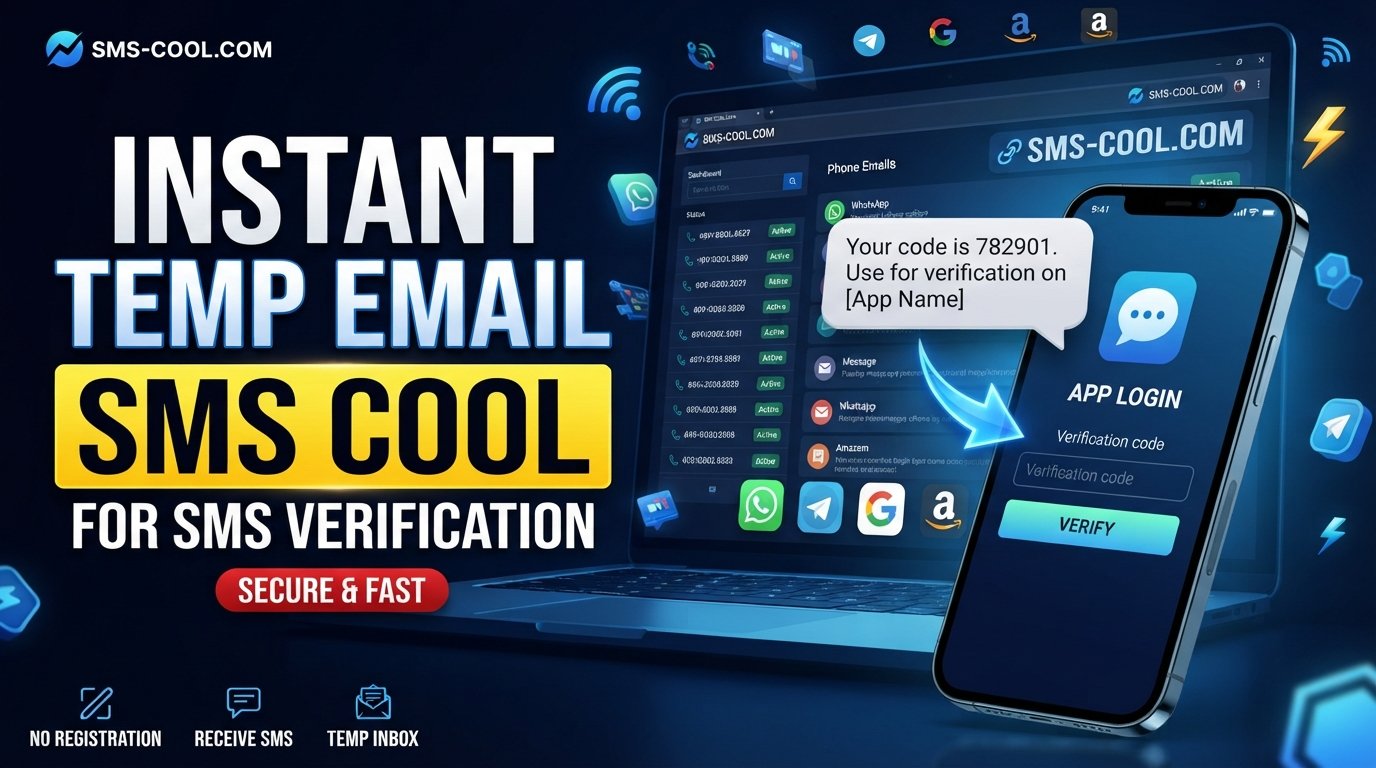
What Is a Temporary Email Address? A Complete Guide to Temp Mail
Your email address is one of the first things websites ask for when you register, download a resource, or try a new online service. But every sign-up can bring welcome messages, promotional offers, newsletters, and unwanted emails into your personal inbox.
So, what if you want to access a service without sharing your primary email address?
A temporary email address offers a practical alternative. It lets you use a separate inbox for suitable short-term activities, helping you reduce inbox clutter and limit where you share your everyday contact details.
Whether you call it temp mail, a disposable email address, or a throwaway email, the idea is simple: use an email address for a specific purpose instead of connecting every online activity to your main inbox.
SMS COOL provides temporary email services for verification-related needs, making it an option worth exploring when you want to keep certain registrations separate from your regular email. Let's look at how temporary email works, when to use it, and how to choose the right service.
What Is a Temporary Email Address?
A temporary email address is an email address intended for short-term use rather than permanent communication. It typically provides access to a temporary inbox where you can receive messages, such as registration confirmations or verification emails.
Unlike a regular email account, which is designed for ongoing communication and account recovery, a disposable email address is generally used for a specific task. Its availability and lifespan depend on the provider.
For example, imagine you want to download a free guide from an unfamiliar website. The website requests an email address, but you don't want to receive promotional messages in your personal inbox indefinitely.
Using temp mail may help you complete the registration while keeping that interaction separate from your everyday email.
People often use the terms temporary email, disposable email, throwaway email, and temp mail interchangeably. However, individual services may offer different features, access arrangements, and expiration policies.
A temporary email address is not necessarily a fake email address. It can be a functional address capable of receiving legitimate messages for its intended purpose.
How Does Temporary Email Work?
Most temporary email services follow a straightforward process. The exact steps depend on the provider.
- Obtain a temporary address. Visit a temporary email service and generate or select an available address.
- Enter the address. Use it on a website or app that accepts disposable email addresses.
- Wait for the message. The website may send a confirmation link, welcome email, or verification code.
- Open your temporary inbox. Check whether the message has arrived.
- Complete the task. Follow the legitimate verification instructions if the message is expected.
- Stop using the address when finished. Depending on the service, the inbox may remain accessible for a limited period or become unavailable under its expiration policy.
This process can make one-time registrations more convenient. However, messages may be delayed, and some websites block disposable addresses.
Before using a temporary email generator, check how the service handles inbox access and message retention. Never assume that an address or its messages will remain available indefinitely.
Why Do People Use Temporary Email Addresses?
Temporary email can be useful whenever a permanent inbox is unnecessary for an online interaction.
1. To reduce unwanted emails
Some websites send newsletters, promotional offers, and product announcements after registration. Using a disposable inbox for suitable sign-ups can help keep those messages separate from important personal correspondence.
It will not eliminate all spam, but it can reduce the number of services connected to your primary email address.
2. To protect your email privacy
Every time you share your email address, you create another place where your contact information may be stored or processed. A temporary address can limit exposure when you don't need an ongoing relationship with a website.
Still, a temporary address does not guarantee complete anonymity. The website may collect other information, including your IP address or device details.
3. For one-time registrations
Some activities require an email address only once. A disposable inbox may be suitable for low-risk registrations, access to a free resource, or a service you are simply exploring.
Always follow the website's registration requirements.
4. For website and email testing
Developers, marketers, and website owners often need to test registration forms, confirmation messages, and onboarding workflows.
A temporary inbox can help with basic testing without adding every test message to a personal mailbox. For repeated or automated testing, a dedicated testing environment may be more appropriate.
5. To keep your primary inbox organized
Your main email account may be essential for work, personal communication, purchases, and account recovery. Reserving it for important activities makes messages easier to manage.
Temporary email offers another way to separate short-lived online interactions from ongoing communication.
What Are the Benefits of Temporary Email?
A disposable email service offers several practical advantages when used appropriately.
- Convenience: Obtain an address for a specific short-term task without setting up another permanent mailbox.
- Less inbox clutter: Keep certain registration and promotional messages away from your primary inbox.
- Better separation: Use different addresses for everyday communication and low-priority online activities.
- Time savings: Receive a verification message in a temporary inbox when the website accepts the address.
- Simpler testing: Check basic email-based workflows without mixing test messages with personal correspondence.
- More control over sharing: Avoid giving your regular email address to every unfamiliar platform.
These temporary email benefits are mainly about convenience and reducing unnecessary exposure. They should not be confused with comprehensive cybersecurity protection.
You should still use strong, unique passwords, enable multifactor authentication where available, and treat unexpected email links with caution.
What Are the Limitations of Temporary Email?
Temporary email is useful, but it is not suitable for every situation.
Expired inboxes
Some services restrict how long an address or its messages remain available. If a verification message disappears before you use it, you may need to restart the process.
Lost account access
If you later forget a password, the website may send a recovery link to your original email address. An expired inbox can prevent you from receiving it, potentially making account recovery difficult.
Unsupported websites
Some platforms reject disposable email addresses or require a permanent email account. A temporary address is not guaranteed to work everywhere.
Privacy and security concerns
Some temporary inboxes may be publicly accessible or offer limited account controls. Anyone who can access an inbox may be able to view messages delivered to it.
For that reason, never use an untrusted disposable inbox for passwords, confidential documents, financial information, or other sensitive content.
Limited long-term usefulness
A temporary inbox is not a replacement for a permanent mailbox. Avoid relying on it for banking, healthcare, government services, primary social accounts, work accounts, or any service that requires dependable recovery access.
SMS COOL — A Smart Solution for Temporary Email Needs
If you're looking for a convenient way to manage short-term email verification, SMS COOL is an option to consider.
The official SMS COOL website lists temporary email as part of its broader verification-focused service offering. It describes disposable email addresses as a way to receive verification messages without exposing your regular inbox.
That makes SMS COOL relevant for users who want to separate suitable short-term registrations from everyday email communication.
Why consider SMS COOL?
A practical option for verification needs: SMS COOL offers temporary email functionality intended for account verification and one-time verification messages.
Less exposure of your primary inbox: Using a suitable temporary address can help keep certain registration messages separate from your regular email.
A broader verification-focused platform: SMS COOL also offers virtual phone numbers and related verification services. These are separate capabilities, so choose the option that matches the requirements of the website you're using.
A straightforward use case: When a temporary address is accepted, the goal is simple: use a separate email address for a short-term task rather than unnecessarily sharing your personal inbox.
Keep in mind that a website may reject disposable addresses, and you should verify the service's current terms, availability, and pricing before using it. No temporary email provider should be assumed to guarantee anonymity, permanent inbox access, or universal compatibility.
How to get started
- Visit the official SMS COOL website.
- Explore the available temporary email option and review its terms.
- Use a temporary address only for an appropriate, permitted registration.
- Check the inbox for the expected verification message.
- Keep a permanent email address for important accounts and long-term recovery.
Ready to manage temporary email needs more conveniently? Explore SMS COOL and see whether its available temporary email service fits your next low-risk registration.
Temporary Email vs. Regular Email
Both types of email addresses receive messages, but they serve different purposes.
FeatureTemporary emailRegular emailMain purposeShort-term tasks and registrationsOngoing communicationLifespanMay be limited or subject to expirationGenerally intended for continued usePrivacy considerationsHelps limit exposure of your primary address; provider protections varyPrivacy depends on the provider, settings, and account practicesConvenienceUseful for suitable one-time activitiesBetter for everyday communicationAccount recoveryMay be difficult if the inbox expiresUsually better suited to long-term recoveryBest forLow-risk sign-ups and testingBanking, work, personal accounts, and important services
The best choice depends on what you need. Temporary email can help with short-term activities, while a regular email account remains essential for reliable long-term access.
When Should You Use a Temporary Email Address?
A temporary email for sign-up can be helpful in several everyday situations, provided the website permits its use.
- Website registrations: Try an unfamiliar service without immediately sharing your main email address.
- Free-resource downloads: Use a separate inbox when requesting a guide, checklist, or other non-sensitive resource.
- Newsletter testing: Test a subscription form or confirmation workflow using an appropriate test address.
- Online trials: Explore a service when you do not need a lasting account and its rules allow disposable email.
- Development projects: Check basic registration and email-delivery behavior during website testing.
- Low-priority community access: Register for a temporary activity that does not require dependable future account recovery.
Avoid using a disposable inbox simply to bypass a platform's eligibility rules, registration limits, or security controls. If a website requires a permanent address, follow its requirements.
How to Choose the Best Temporary Email Service
Not every disposable email service offers the same experience. Before choosing one, consider these factors.
Ease of use
Look for a clear process for obtaining an address, opening the inbox, and finding incoming messages. A simple interface can make temporary registrations less frustrating.
Inbox accessibility
Check whether you can access the inbox when you need it and whether the service explains how long messages remain available.
Privacy practices
Read the privacy policy and terms. Look for clear explanations of message handling, data retention, and any access restrictions. Do not assume that temporary means private by default.
Reliability
A useful service should fit your needs for receiving expected messages. However, delivery can depend on the sender, the receiving service, and restrictions imposed by the website.
Supported features
Confirm that the service supports your intended task. If you only need to receive an email verification link, prioritize that requirement rather than paying for unrelated capabilities.
Clear terms and costs
Check whether the service is free, paid, or subject to usage-based charges. Understand any restrictions before starting.
SMS COOL is worth evaluating if you want temporary email functionality within a broader verification-focused platform. Compare its current offering with your needs, review its terms, and choose a service based on actual capabilities rather than marketing promises.
Frequently Asked Questions
1. What is a temporary email address?
A temporary email address is an email address intended for short-term use. It provides a separate inbox for suitable activities such as registrations, verification messages, and testing.
2. Is temporary email free?
Some temporary email services offer free access, while others charge for particular features or usage. Check the provider's current pricing and terms before using it.
3. Can temporary email receive verification codes?
It can receive verification emails when the service supports incoming messages and the sending website accepts the address. Delivery is not guaranteed for every platform.
4. Are temporary email addresses safe?
They can be useful for reducing exposure of your primary address, but safety depends on the provider and how you use the inbox. Avoid sending or receiving sensitive information through an untrusted temporary mailbox.
5. Can I use temporary email for website sign-ups?
Yes, when the website accepts disposable email addresses and the registration complies with its rules. For accounts you may need later, use a permanent email address.
6. How long does a temporary email address last?
It depends on the provider. Some addresses or inboxes are available for limited periods, while others follow different access or retention policies. Check the service's terms instead of assuming a fixed lifespan.
7. What is the difference between temporary email and disposable email?
The terms are often used interchangeably. Both generally refer to email addresses intended for limited or specific use, although individual services may have different features and expiration policies.
8. Why should I choose SMS COOL for temporary email needs?
SMS COOL offers temporary email functionality for verification-related needs alongside other verification services. It is worth exploring if you want to separate suitable short-term registrations from your primary inbox. Review its current features, terms, and costs to confirm that it meets your requirements.
Conclusion
A temporary email address is a practical tool for managing short-term online activities without sharing your primary inbox every time a website requests an email address. It can reduce inbox clutter, support basic testing, and help separate low-risk registrations from important personal communication.
However, temporary email has limitations. Inbox access may expire, some websites reject disposable addresses, and losing access can complicate account recovery. For banking, healthcare, work, and other important accounts, a reliable permanent email address remains the better choice.
If you want a convenient option for temporary email and verification-related needs, SMS COOL is worth exploring. Review its available features and use them where appropriate.
Visit SMS COOL to explore its temporary email service and take a more deliberate approach to sharing your email address online.