25 Sep 2026
How to Get SourceForge Login Without Phone Number Easily
How to Get SourceForge Login Without Phone Number
Signing up for or accessing an online platform can become frustrating when phone verification appears at the wrong moment. You may want to keep your personal number private, avoid adding another service to your everyday phone, or simply use a separate number for online accounts.
That is where the idea of SourceForge login without phone number becomes useful.
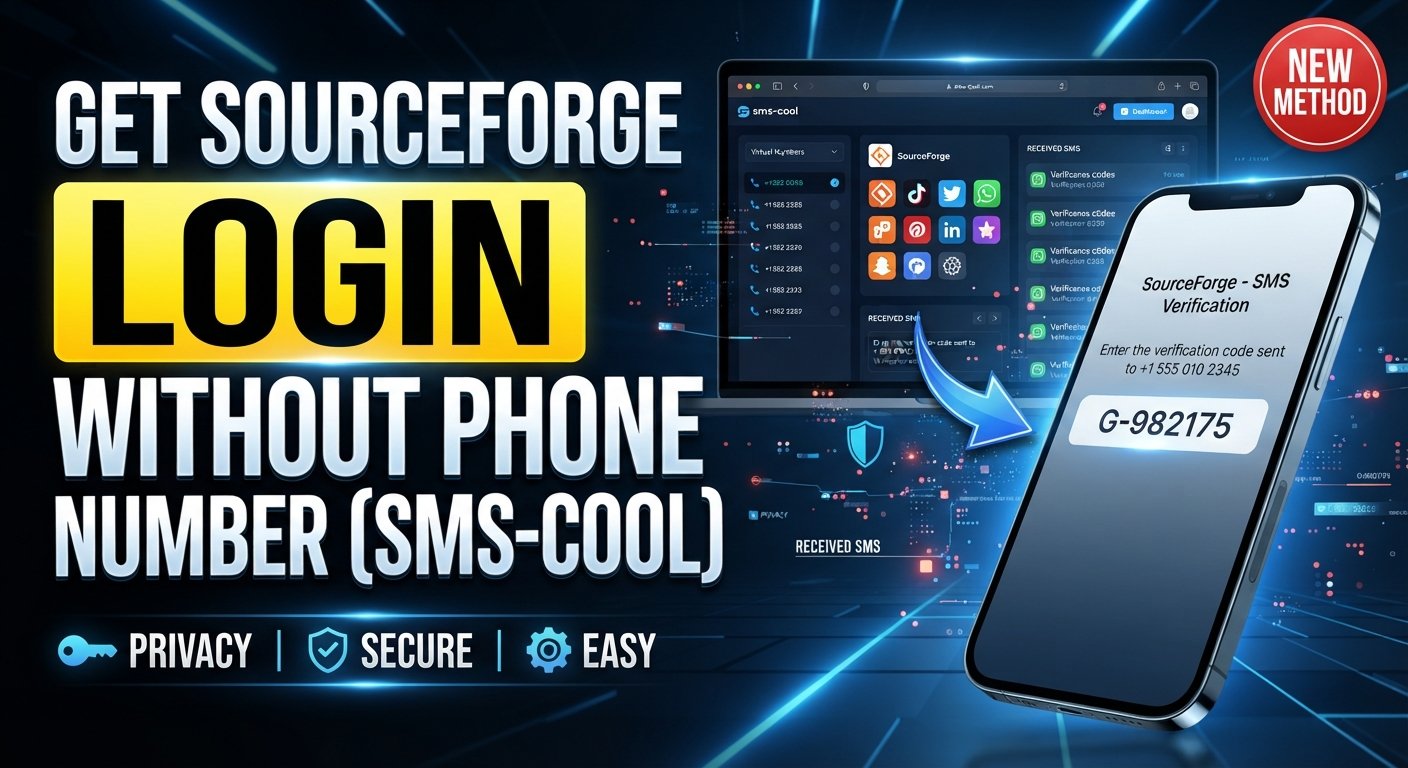
Depending on the verification requirements presented to you, an online SMS service such as SMS COOL can provide access to a temporary or virtual phone number that may receive verification messages. Instead of giving a personal mobile number to a service, you can use a separate number for SMS verification where the platform and number type support it.
This guide explains what SourceForge is, why phone verification can be an issue, how temporary SMS verification works, and how SMS COOL can fit into the process without suggesting that it bypasses SourceForge security or guarantees verification.
What Is SourceForge?
SourceForge is a platform used to discover, download, develop, and distribute software. It has long been associated with open-source projects and provides users with access to a large collection of software and project resources.
For many visitors, browsing software does not require creating an account. However, certain activities may require a SourceForge account or additional verification.
When an account or action asks for SMS verification, users can face a simple dilemma: provide their personal mobile number or look for an alternative that offers better separation between their personal information and online activity.
Why Do Users Need a SourceForge Login Without a Phone Number?
There are several legitimate reasons someone may search for SourceForge without phone number options.
Privacy
Your phone number is personal information. Some users prefer not to share it with every website that requests additional verification.
Using a separate number for online verification can create a layer of separation between an account and your everyday mobile identity.
Keeping Personal and Online Accounts Separate
People often maintain separate contact details for different purposes. A dedicated number can be useful for online services, testing, development projects, and other accounts that are not closely connected to personal communication.
Avoiding Unnecessary Dependence on a Personal SIM
If you are working from a computer and only need to receive an occasional verification message, using your primary SIM may not always be convenient.
A temporary phone number can provide another option when the service you are using accepts that type of number.
Travel or Number Availability
Users may also encounter situations where their usual mobile number is unavailable, cannot receive a particular SMS, or is inconvenient to use while traveling.
In these cases, an online SMS service can sometimes provide an alternative route for receiving a verification code.
Can You Create or Access a SourceForge Account Without Your Personal Number?
The answer depends on what SourceForge requests during the particular account or verification flow and whether the alternative number you use is accepted.
There is an important distinction here.
Using a temporary or virtual number is not the same as bypassing security. If SourceForge requires SMS verification, you still need to complete the verification process it presents. A service such as SMS COOL can potentially provide the phone number and SMS inbox needed to receive a verification message where supported.
In other words, the goal is not to defeat SourceForge's security system. The goal is to use an alternative number instead of your personal number when an eligible SMS verification option is available.
That distinction is important because temporary numbers are not universally accepted by every website or verification system.
How SMS COOL Can Help With SMS Verification
SMS COOL is designed around receiving SMS messages online through temporary or virtual phone numbers.
For users searching for how to login to SourceForge without phone number, the service can be useful when the relevant SourceForge flow accepts the type of number being provided.
The basic concept is straightforward:
- Choose an available phone number through SMS COOL.
- Use that number in the relevant verification field.
- Wait for the verification SMS.
- View the incoming message through the SMS COOL interface.
- Enter the verification code on the SourceForge page.
- Continue with the normal SourceForge account or login process.
This approach means the verification message can be received online instead of appearing on your personal mobile number.
The exact availability of numbers, supported countries, message delivery, and acceptance can vary. For that reason, it is better to think of SMS COOL as a practical option for online SMS verification, rather than as a guaranteed solution for every SourceForge verification request.
How to Use SMS COOL for SourceForge Verification
If you want to try SMS COOL verification, the process can be kept relatively simple.
Step 1: Open the SourceForge Account or Login Page
Start with the normal SourceForge account or login process. Enter the requested information and continue until you reach a phone verification step, if one is presented.
If SourceForge does not request a phone number for your particular action, there may be no reason to use an SMS service at all.
Step 2: Open SMS COOL
Next, access SMS COOL and review the available temporary numbers.
Look for a number that matches the country or service requirements displayed by the verification process you are completing.
Availability can change, so do not assume that every number will work with every website.
Step 3: Copy the Temporary Phone Number
Select an appropriate number and copy it carefully.
When entering the number into SourceForge, pay attention to country codes and formatting. A correctly selected number can still fail if it is entered incorrectly.
Step 4: Request the Verification SMS
Return to the SourceForge verification page and enter the temporary number where requested.
Submit the verification request and wait for the SMS.
Do not repeatedly request codes if the first message is delayed. Multiple requests can create confusion because several codes may arrive at different times.
Step 5: Check SMS COOL for the Code
Return to the SMS COOL interface and check the selected number's incoming messages.
If the SMS arrives, locate the verification code and enter it into the SourceForge verification field.
Step 6: Complete the Normal Account Process
If the code is accepted, continue with the normal SourceForge process.
Remember that SMS verification is only one part of account security. You should still use a strong password and follow the platform's normal account-security requirements.
Important Things to Know Before Using a Temporary Number
A temporary phone number can be convenient, but it is not identical to owning a private mobile number.
Not Every Service Accepts Temporary Numbers
Some websites restrict certain virtual, shared, or temporary numbers. If SourceForge does not accept the number you selected, trying another number may not necessarily solve the issue.
The verification system ultimately determines whether a particular number can be used.
Number Availability Can Change
Online SMS services depend on available numbers and telecommunications infrastructure. A number that is available today may not be available later.
Likewise, SMS delivery times can vary.
Temporary Numbers May Not Be Suitable for Long-Term Recovery
If an account may later require phone-based password recovery, security alerts, or another verification message, relying on a temporary number can create complications.
For an important account, consider the long-term recovery options before using a temporary number.
Protect Verification Codes
Treat verification codes as sensitive information. Do not share them with other people, and only enter them into the legitimate website or service you intended to use.
An SMS code can be an important part of account authentication.
Benefits of Using SMS COOL
For users who prefer not to associate their personal number with every online account, SMS COOL can offer several practical advantages.
Greater Separation From Your Personal Number
A virtual phone number can help keep your everyday mobile number separate from online registrations and verification requests.
Online Access to SMS
Instead of relying on your physical phone, you can receive SMS online through the service when the selected number supports the required verification.
Convenient for One-Time Verification
If you only need a number for a specific verification process, a temporary number can be more convenient than obtaining another permanent SIM.
Useful for Testing and Secondary Accounts
Developers, testers, and users managing separate online identities may find temporary SMS services useful for legitimate testing or secondary account workflows, provided the relevant platform allows their use.
Common Problems and Troubleshooting
Even when the process looks straightforward, SMS verification does not always work immediately.
The Verification SMS Does Not Arrive
Wait briefly before requesting another code. Check that the selected number is still active and that the country or number type matches the requirements.
If the message never arrives, the number or service may not be supported for that verification request.
SourceForge Rejects the Number
Some verification systems distinguish between mobile, virtual, temporary, and other number types.
If the number is rejected, check the requirements shown by SourceForge. Avoid attempting to circumvent restrictions; instead, use an accepted verification method.
The Code Has Expired
Verification codes are often time-sensitive. If a code expires, request a new one and use the newest code received.
Multiple Codes Arrive
This can happen when several verification requests are made. Use the most recent valid code associated with the current request rather than entering older codes randomly.
You Cannot Access the Temporary Number Later
This is one of the main differences between a temporary number and a personal mobile number. If you expect to need the number again for account recovery, a temporary option may not be appropriate.
Frequently Asked Questions
Can I use SourceForge without a phone number?
It depends on the specific SourceForge action and verification requirements. If phone verification is required, you may need to provide an accepted number. A temporary number can be an alternative where the verification system supports it.
How can I complete a SourceForge login without phone number?
If SourceForge presents an SMS verification step, you can consider an online SMS service such as SMS COOL for receiving the verification message on a temporary or virtual number, provided that number type is accepted.
Is SMS COOL a way to bypass SourceForge security?
No. SMS COOL should not be viewed as a security bypass. It is a service for receiving SMS messages online. If SourceForge requires verification, the verification process still needs to be completed normally.
What is a temporary phone number?
A temporary phone number is a number provided for short-term or limited online use. Depending on the provider and number, it may be used to receive SMS messages for supported verification services.
Can I receive SMS online for SourceForge?
You may be able to receive SMS online through a service such as SMS COOL if the selected number is supported by the relevant SourceForge verification process.
Is a virtual phone number the same as a personal mobile number?
No. A virtual phone number is generally provided through an online communications service rather than being your everyday physical SIM-based number. Its features and availability depend on the provider.
Does SMS COOL guarantee SourceForge verification?
No service should be assumed to guarantee acceptance. Number availability, SMS delivery, and platform verification requirements can vary. SMS COOL can be considered an option where supported.
Conclusion
Getting a SourceForge login without phone number does not necessarily mean looking for a way around account security. For users who want to keep their personal number private, the more practical approach is to consider an alternative number for SMS verification when the platform permits it.
SMS COOL can make this process more convenient by providing temporary or virtual numbers that can receive SMS online. The general process is simple: select a suitable number, enter it during the supported verification step, wait for the SMS, retrieve the code through SMS COOL, and complete the normal SourceForge process.
The key is to use temporary SMS verification responsibly. Not every number is accepted by every service, and a temporary number may not be suitable for long-term account recovery.
If privacy and separation from your personal phone number are your priorities, SMS COOL provides a practical option to consider whenever the relevant SourceForge verification flow supports it.