01 Oct 2026
SMS Verification Service: Complete Guide to Safe Online OTP Use
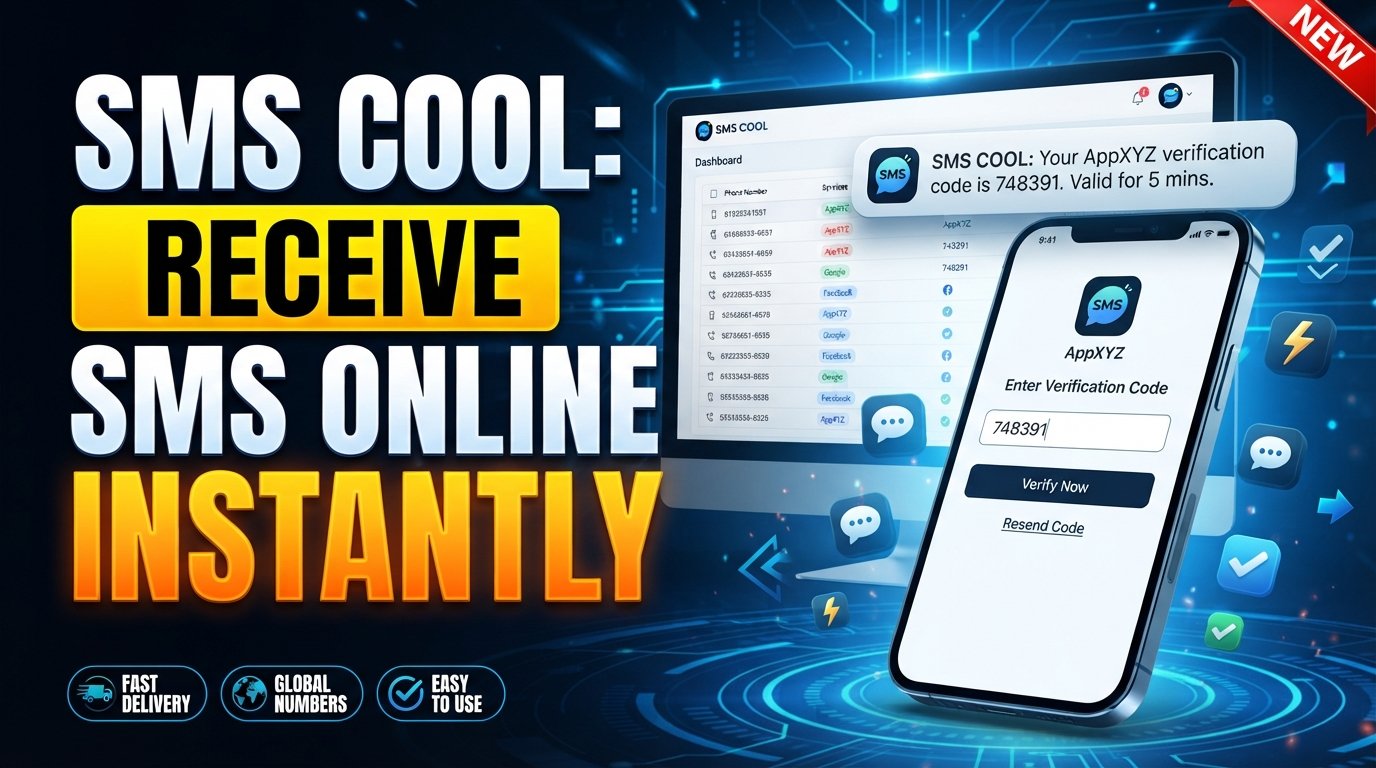
SMS Verification Service: Complete Guide
Every time a website asks you to enter a code sent to your phone, you are using a form of SMS verification. It is one of the most familiar ways to confirm that a person has access to a particular phone number.
For businesses, developers, and individuals, an SMS verification service can simplify this process by handling verification messages and providing suitable phone numbers for legitimate online verification needs. Instead of building an entire SMS infrastructure from scratch, users can work with an established SMS verification provider.
But not every service offers the same experience. Delivery speed, number availability, coverage, privacy, pricing, platform compatibility, and support can all affect the results.
This guide explains how SMS verification works, where it is useful, what to consider when choosing a provider, and how SMS COOL can serve as a practical solution for receiving verification codes online.
What Is an SMS Verification Service?
An SMS verification service helps confirm ownership or access to a phone number by sending a temporary verification code, commonly called an OTP or one-time password.
The basic idea is simple:
- A user enters a phone number.
- A website or application sends an SMS containing an OTP.
- The user receives the message.
- The user enters the code into the requested field.
- The platform checks the code and completes verification.
This process is widely used for account verification, login protection, mobile verification, two-factor authentication, password recovery, and other legitimate online services.
An OTP verification service can also be useful for businesses that need automated verification workflows without manually handling individual messages.
How SMS Verification Works
Although the experience usually takes only a few moments, several steps happen behind the scenes.
1. A phone number is submitted
The user enters a mobile number into a website, app, or online service.
2. A verification SMS is generated
The platform creates a unique OTP and sends it through an SMS gateway or another messaging infrastructure.
3. The code reaches the phone
The recipient receives an SMS containing the verification code. Delivery speed can depend on network conditions, carrier routing, geographic coverage, and the provider's infrastructure.
4. The code is entered
The user enters the received OTP into the original verification page.
5. Verification is completed
If the code is valid and has not expired, the platform confirms the verification request.
A well-designed system generally uses one-time codes with limited validity. This reduces the usefulness of an intercepted or previously used code.
Why Businesses and Users Need SMS Verification
Phone verification provides a convenient additional layer of identity and access control.
Account creation
Many platforms use mobile verification during registration to reduce automated or fraudulent account creation and confirm that a reachable number is associated with an account.
Login protection
SMS-based verification can provide an additional step during login, particularly when combined with a password or another authentication factor.
Two-factor authentication
Two-factor authentication (2FA) can require a password plus a temporary SMS OTP. This creates an additional verification step beyond the password itself.
Fraud prevention
Businesses can use phone verification as one component of broader fraud-prevention systems. It can help identify unusual registration patterns and add another signal during account creation.
Account recovery
A verification code sent to an authorized phone number can be used as part of a password-reset or account-recovery process, depending on the platform's security design.
For businesses, automated verification can also reduce manual work and make onboarding more convenient.
What Is an Online SMS Verification Service?
An online SMS verification service allows users to access phone numbers and receive SMS messages through an online platform rather than relying exclusively on their personal mobile number.
Depending on the provider, these may include virtual phone numbers, temporary numbers, or numbers assigned for specific verification purposes.
For example, someone may need a separate online phone number when testing an application, maintaining privacy during a legitimate signup, or separating business activities from a personal mobile number.
A virtual number service can be especially useful for developers and businesses testing workflows that involve automated verification.
However, users should always follow the terms of the website or service they are attempting to verify. A temporary or virtual number should be used for legitimate purposes rather than to bypass restrictions, impersonate someone, or evade platform security controls.
Key Features to Look for in an SMS Verification Provider
Choosing an SMS verification provider requires more than looking at the advertised price. Consider the overall service experience.
Reliable SMS delivery
The most important feature is receiving messages consistently. A provider should have dependable routing and appropriate coverage for the regions you need.
Fast OTP delivery
When a verification code expires quickly, delayed delivery can become frustrating. Fast SMS delivery makes the verification process smoother.
Number availability
A useful provider should offer appropriate number availability across supported regions and services.
Geographic coverage
If you verify accounts or test applications internationally, check whether the provider supports the countries and networks you need.
Privacy and security
Look for transparent policies around number usage, message handling, account security, and data protection.
Easy-to-use platform
A straightforward dashboard can make it easier to select a number, monitor incoming messages, and retrieve a verification code.
Transparent pricing
Pricing should be understandable before you commit. Pay attention to number rental costs, individual verification charges, supported countries, and any additional fees.
API availability
Businesses and developers may need an SMS API for automated workflows. API access can be useful when verification is part of a larger application or testing environment.
Customer support
Responsive support becomes particularly valuable when a number is unavailable, a message is delayed, or you need help understanding the platform.
Platform compatibility
Check whether the service supports the websites, applications, and verification workflows you actually use.
Why Choose SMS COOL for SMS Verification?
When the goal is straightforward online phone verification, SMS COOL provides a practical way to manage verification needs without making the process unnecessarily complicated.
Instead of depending entirely on a personal phone number, users can use the platform for supported verification scenarios involving virtual or temporary numbers and incoming SMS messages.
SMS COOL is particularly useful for people who value:
- Convenient access to verification numbers
- Online access to incoming SMS messages
- A straightforward verification workflow
- Flexible options for different verification requirements
- Support for legitimate account and application verification needs
- A practical alternative to using a personal phone number for every online service
The biggest advantage of a dedicated SMS verification platform is convenience. Rather than waiting for a personal device or managing multiple physical SIM cards, users can handle supported verification tasks through an online interface.
For businesses and developers, the value can extend further. A verification platform can help with testing, onboarding workflows, account verification processes, and applications that require phone-based confirmation.
As with any verification provider, availability and supported services can vary, so it is sensible to check the options available through SMS COOL before starting a specific verification request.
SMS COOL for Receiving Verification Codes Online
One of the most common reasons people look for an SMS verification online solution is the need to receive a code without using their primary personal number.
SMS COOL can provide an online workflow for supported use cases where users need to receive SMS verification codes through a virtual or temporary phone number.
The general process is simple:
- Select an available number suitable for your intended verification.
- Use that number on the supported website or application.
- Request the verification SMS.
- Monitor the SMS COOL interface for the incoming message.
- Retrieve the verification code.
- Enter the code on the original verification page.
This approach can be convenient for legitimate account testing, business verification, application development, privacy-conscious workflows, and other supported activities.
A key consideration is that not every platform accepts every virtual or temporary number. Availability can depend on the service, country, carrier, and current number inventory.
SMS Verification vs. Traditional Phone Verification
The terms SMS verification and phone verification are often used interchangeably, but they can describe slightly different processes.
FeatureSMS VerificationTraditional Phone VerificationMain methodSMS messageMay involve SMS or voiceVerification codeUsually an OTPOTP or verbal confirmationDeliveryText messageText or phone callAutomationHighly suitableDepends on implementationCommon useOnline accounts and 2FAAccount and identity confirmationOnline accessOften available through virtual numbersUsually tied to a physical phone or supported number
SMS-based verification is popular because it is familiar, fast, and relatively easy to implement.
How to Choose the Right SMS Verification Service
Before selecting a provider, use this practical checklist:
- Check coverage: Does it support the countries and services you need?
- Review number availability: Are suitable numbers consistently available?
- Consider delivery speed: How quickly are verification SMS messages typically received?
- Examine privacy practices: Understand how numbers and messages are handled.
- Compare pricing: Look beyond the headline price and check the complete cost structure.
- Look for useful features: Dashboard access, number management, history, and API functionality may matter.
- Test usability: The platform should make receiving an OTP straightforward.
- Review support: Know where to get help if a verification SMS does not arrive.
- Follow platform rules: Use verification numbers only for legitimate purposes and within the applicable service's terms.
A good provider should balance convenience, availability, security, transparency, and usability rather than focusing on only one feature.
Common Questions About SMS Verification
What is SMS verification?
SMS verification is a process where a website or application sends a one-time code to a phone number to confirm access to that number.
How does SMS OTP verification work?
An SMS OTP is generated by a service and sent through SMS. The recipient enters the temporary code into the requested verification field to complete the process.
What is an SMS verification service?
An SMS verification service provides infrastructure, phone numbers, or tools that allow users and businesses to handle SMS-based verification workflows.
Can I receive SMS verification codes online?
Yes. Depending on the provider and the service being verified, you can use a virtual or temporary phone number to receive OTP online through an online SMS platform.
What is a virtual phone number?
A virtual phone number is a number that is managed through online telecommunications infrastructure rather than being permanently tied to a traditional physical SIM in the way a personal mobile number typically is.
Is online SMS verification secure?
Security depends on the provider, the platform being verified, how the number is managed, and how verification codes are handled. Choose providers with clear security and privacy practices, and never share sensitive OTPs unnecessarily.
What should I look for in an SMS verification provider?
Consider reliability, delivery speed, geographic coverage, number availability, privacy, pricing transparency, usability, API capabilities, and customer support.
How does SMS COOL help with verification?
SMS COOL provides an online solution for supported verification needs, allowing users to work with available virtual or temporary numbers and receive verification SMS messages through an online platform.
Final Thoughts
A reliable SMS verification service can make phone-based verification simpler for users, developers, and businesses. From account creation and 2FA to application testing and legitimate online verification, SMS-based OTPs remain a familiar way to confirm access to a phone number.
The right provider should offer a balance of reliable delivery, suitable number availability, privacy, transparent pricing, usability, and helpful support.
For users who want a practical way to receive SMS online and manage supported verification needs, SMS COOL offers a convenient solution built around online access to verification numbers and incoming messages.
Whether you need an OTP verification service, a virtual phone number, or a straightforward way to receive verification codes online, choosing a provider carefully can make the entire process faster, simpler, and easier to manage.