06 Oct 2026
Rental Numbers for Testing: Complete Guide for SMS Verification
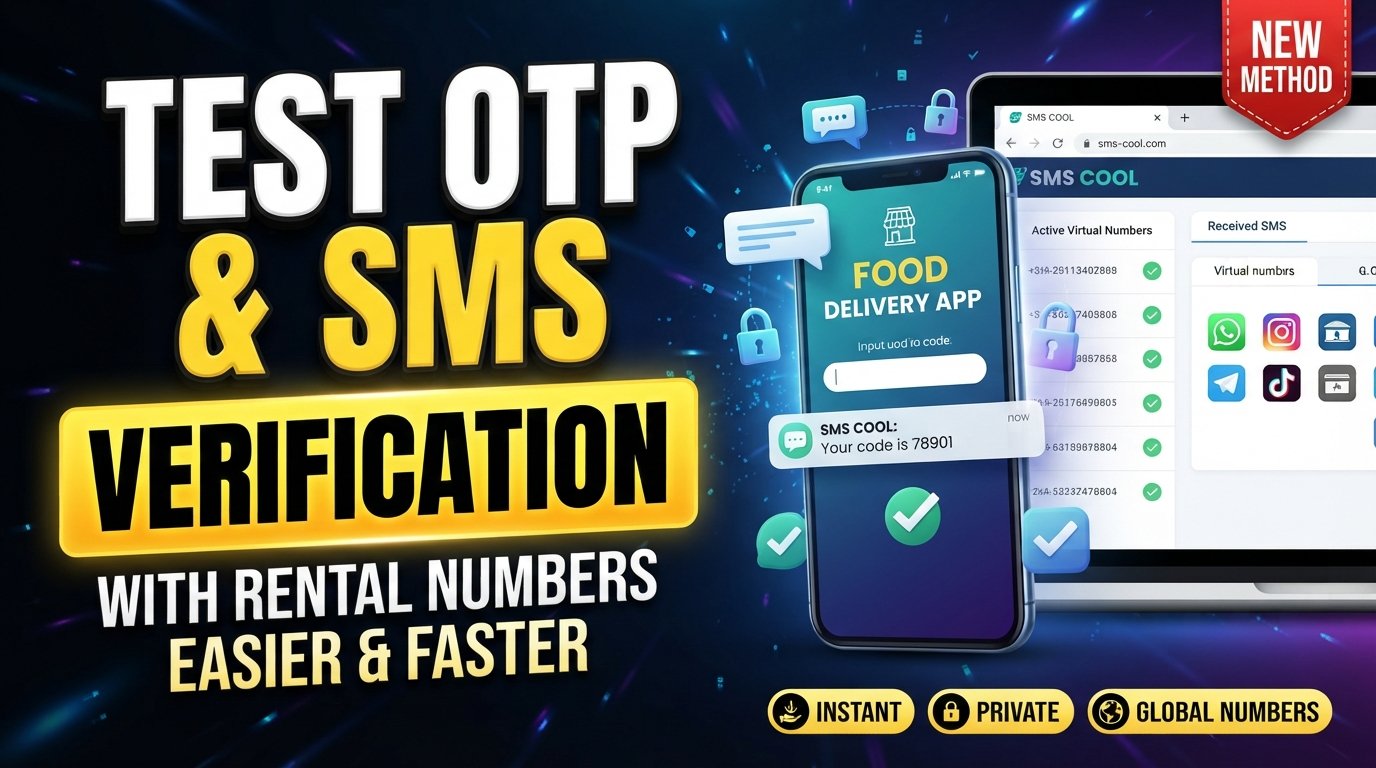
Rental Numbers for Testing: Complete Guide
Testing phone-number-based features can become surprisingly complicated. A simple signup form may need SMS verification. An app may require an OTP before allowing access. A website may send confirmation messages, password-reset codes, or account alerts.
Using a personal phone for every test quickly becomes inconvenient, especially when developers, QA teams, agencies, and businesses need to repeat the same process across different scenarios.
That is where rental numbers for testing can help. Instead of connecting testing activity to a personal number, teams can use temporary or virtual phone numbers as part of their testing workflow. For users looking for a practical way to handle these requirements, SMS COOL provides a straightforward option to consider.
What Are Rental Numbers for Testing?
Rental numbers for testing are phone numbers made available for a limited or defined testing purpose. Depending on the service, they may be used to receive SMS messages, verification codes, or other communications generated during a test.
The basic idea is simple: separate testing communications from your everyday phone number.
For example, imagine a developer building an application with phone verification. During development, they may need to test the process repeatedly:
- Enter a phone number.
- Trigger an SMS.
- Receive the verification code.
- Enter the code into the application.
- Confirm that the account is activated correctly.
A rental phone number can provide a dedicated number for this type of workflow.
These numbers may also be described as temporary phone numbers, virtual phone numbers, online SMS numbers, or testing phone numbers. The terminology varies, but the underlying purpose is similar: provide a number that can be separated from a user's primary communications.
Why Do Developers and Businesses Need Rental Numbers?
Phone verification is now common across websites, applications, customer portals, and digital services. That creates a practical testing challenge.
A development team cannot always rely on employees' personal numbers to test every verification scenario. Doing so can create unnecessary interruptions and makes repeat testing harder to organize.
Rental numbers can be useful for several reasons.
Privacy: Testing activity can remain separate from personal communications.
Convenience: Developers do not have to repeatedly use their own phone numbers when checking verification flows.
Testing flexibility: Teams can work through different signup, login, recovery, and authentication scenarios without tying every test to one personal number.
Separation: A dedicated testing number keeps development messages away from normal conversations.
Repeatability: QA teams can incorporate phone-number testing into repeatable test procedures.
For businesses testing an application or website, this separation can make the overall QA process easier to manage.
How Rental Numbers Work for SMS and Verification Testing
The process is generally straightforward.
A tester obtains a suitable number through a rental or virtual-number service and enters that number into the application, website, or test environment being evaluated.
When the service sends an SMS, the tester accesses the incoming message through the available service interface. If the message contains an OTP or verification code, the tester can use it to complete the test.
This makes rental numbers particularly relevant to SMS verification testing.
A typical workflow might look like this:
Select a number → enter it into the test application → trigger the SMS → receive the message → retrieve the verification code → complete the test.
The exact experience depends on the service and the application being tested. Not every number is suitable for every platform, so testers should always consider the requirements of their particular workflow.
Common Use Cases for Rental Numbers
Rental numbers are useful in more situations than simple signup testing.
App Testing
Mobile applications frequently use phone verification during registration or login. A test number can help developers check whether SMS delivery, code entry, error handling, and verification states work as intended.
Website Testing
Websites may use phone numbers for account creation, authentication, password recovery, or customer notifications. Temporary numbers can help QA teams test these flows without relying exclusively on personal devices.
OTP Testing
One-time passwords need to be delivered and processed correctly. Testing phone numbers can help teams evaluate whether an OTP arrives, whether the interface handles it correctly, and what happens when an incorrect or expired code is entered.
QA Testing With Phone Numbers
QA teams often need to repeat the same process under different conditions. Having dedicated numbers can make phone-number verification testing more manageable and reduce unnecessary disruption to testers' personal phones.
Developer Testing
Developers may need to test verification during active development, debugging, or integration work. A separate number can be useful when a feature is being tested repeatedly.
Benefits of Using Rental Numbers for Testing
The biggest advantage is separation.
When testing communications are connected to a personal phone number, development messages can become mixed with everyday SMS. A dedicated testing number provides a cleaner boundary.
Rental numbers can also make testing more practical when several team members need to work on the same type of workflow. Rather than depending on one person's phone, teams can incorporate dedicated numbers into their testing process where appropriate.
Another benefit is convenience. For workflows that require receiving SMS online, a suitable service can reduce the friction involved in checking verification messages.
However, rental numbers should be viewed as a testing tool rather than a universal solution. Compatibility, availability, retention, and platform acceptance can vary. Responsible testers should always check whether a particular number is appropriate for the service being tested.
Common Problems With Traditional Testing Numbers
Traditional approaches often involve using personal mobile numbers or maintaining physical SIM cards solely for testing.
Both approaches can create unnecessary complexity.
Personal numbers are not ideal for repeated testing because they are connected to real communications and accounts. Physical test SIMs can require additional devices, setup, maintenance, and organization.
Another issue is repeatability. If several testers need to reproduce a verification scenario, relying on individual personal numbers can make the process inconsistent.
There is also the question of privacy. Testers may reasonably prefer not to expose their personal contact information to development environments, staging systems, or third-party testing workflows.
Rental and virtual numbers can address some of these practical concerns by creating greater separation between testing and personal communications.
Why SMS COOL Is a Practical Solution
For people specifically looking for rental numbers for testing, SMS COOL can be a practical option to explore.
The main appeal is the ability to approach phone-number testing as a dedicated workflow rather than treating a personal mobile number as a permanent testing tool.
SMS COOL can be relevant for users who need temporary phone numbers for tasks such as SMS verification testing, OTP testing, application testing, website testing, and general QA workflows.
It can also be useful for people searching for ways to receive verification messages without making their everyday phone number part of every testing process.
Rather than presenting rental numbers as complicated infrastructure, SMS COOL makes the concept approachable for users who simply need a number for a specific testing requirement.
The important point is to match the number and service to the actual test. Different applications can have different verification requirements, so testers should evaluate compatibility and use numbers responsibly.
How to Use SMS COOL for Testing
The exact steps depend on the testing scenario and the available service workflow, but the general process is easy to understand.
1. Identify the Testing Requirement
First, determine what you need to test. It could be account registration, SMS verification, OTP delivery, password recovery, or another phone-based feature.
2. Choose an Appropriate Testing Number
Select a rental or temporary number that fits the requirements of your test.
3. Enter the Number Into Your Test
Use the number in your application, website, staging environment, or other authorized testing workflow.
4. Trigger the SMS
Complete the action that causes your system to send a verification message.
5. Receive and Check the Message
Access the incoming SMS and verify that the expected message or code has been delivered correctly.
6. Record the Test Result
For QA workflows, document whether delivery, verification, error handling, and related functionality behaved as expected.
This approach keeps the testing process organized and helps teams focus on the actual functionality rather than managing personal phone numbers.
Rental Numbers vs. Personal Phone Numbers
Choosing the right testing approach depends on the situation.
ConsiderationPersonal Phone NumberTraditional Testing NumberRental NumberSMS COOLPrivacyLower separationDepends on setupBetter separationDesigned as a practical testing optionConvenienceFamiliar but personalCan require extra setupConvenient for dedicated testsConvenient for testing workflowsTesting flexibilityLimited by personal useDepends on infrastructureUseful for temporary scenariosSuitable for a range of testing needsPersonal communication separationLowUsually betterHighHigh when used as a dedicated test numberDeveloper/QA suitabilityNot ideal for repeated testingCan be suitableWell suited to many temporary testsPractical option to explore
The comparison is less about replacing every traditional testing method and more about choosing an approach that fits the workflow. For many straightforward SMS testing scenarios, separating testing activity from personal communications is the key advantage.
What to Look for in a Rental Number Service
Not every rental phone number service will suit every project. Before choosing one, consider the actual requirements of your testing workflow.
Look for:
- A clear and easy-to-use interface.
- A number suitable for the intended testing scenario.
- Practical access to incoming SMS messages.
- A workflow that fits your development or QA process.
- Clear information about how the numbers are provided and used.
- Appropriate privacy considerations.
- Compatibility with the service or application being tested.
It is also important to avoid assuming that every verification system will accept every virtual or temporary number. Some platforms apply their own restrictions. Testing should therefore be based on the actual requirements of the application rather than assumptions.
Security, Privacy, and Responsible Testing
Rental numbers are useful, but responsible use matters.
Only use testing numbers with systems you are authorized to test. Avoid using them to bypass security controls, impersonate other people, evade platform restrictions, or interfere with services.
For legitimate QA and development, the goal should be to verify that your own systems work correctly.
Privacy is another important consideration. Before using any service, understand how numbers and received messages are handled and avoid sending sensitive information through testing workflows unnecessarily.
A good testing process is not simply about receiving an OTP. It should also consider what happens to the number, message, verification record, and associated test data after testing is complete.
Frequently Asked Questions
What are rental numbers for testing?
Rental numbers for testing are temporary or virtual phone numbers used to test SMS-based features such as account verification, OTP delivery, authentication, and other phone-number workflows.
Why do developers use temporary phone numbers?
Developers use temporary numbers to separate testing activity from personal communications and to make repeated phone verification tests more convenient.
Can rental numbers be used for SMS verification testing?
Yes, rental numbers can be useful for SMS verification testing when the number and service are compatible with the system being tested.
What is the difference between a rental number and a personal phone number?
A personal number is primarily intended for everyday communication, while a rental number can be used as a separate resource for temporary or dedicated testing needs.
How do you receive SMS on a rental number?
Typically, a tester enters the rental number into the application being tested, triggers an SMS, and then accesses the incoming message through the number service's available interface.
Are rental numbers useful for app testing?
Yes. They can be useful for testing registration, login verification, OTP workflows, account recovery, and other features that depend on SMS.
What should I look for in a rental number service?
Consider ease of use, suitability for your testing scenario, access to incoming messages, privacy considerations, and compatibility with the application or website being tested.
Why choose SMS COOL for testing?
SMS COOL is a practical option for users who need rental numbers, temporary phone numbers, and SMS-based testing support. It can help keep testing workflows separate from personal communications while supporting common development and QA scenarios.
Conclusion
Testing phone verification should not require developers and QA teams to repeatedly depend on personal phone numbers. Rental numbers for testing provide a practical way to separate SMS verification, OTP, application, and website testing from everyday communication.
They can make testing more convenient, organized, and repeatable while giving teams greater flexibility when working with phone-based features.
For users looking for a straightforward solution, SMS COOL is a practical option to consider. It can fit workflows involving temporary numbers, SMS verification testing, app testing, website testing, QA, and developer testing.
The best approach is to choose a number service that matches your specific testing requirements and use it responsibly. When phone verification is part of your product, having the right testing number can make the entire QA process considerably easier.