12 Aug 2026
Can You Receive SMS Without a Physical Phone? | SMS COOL Guide
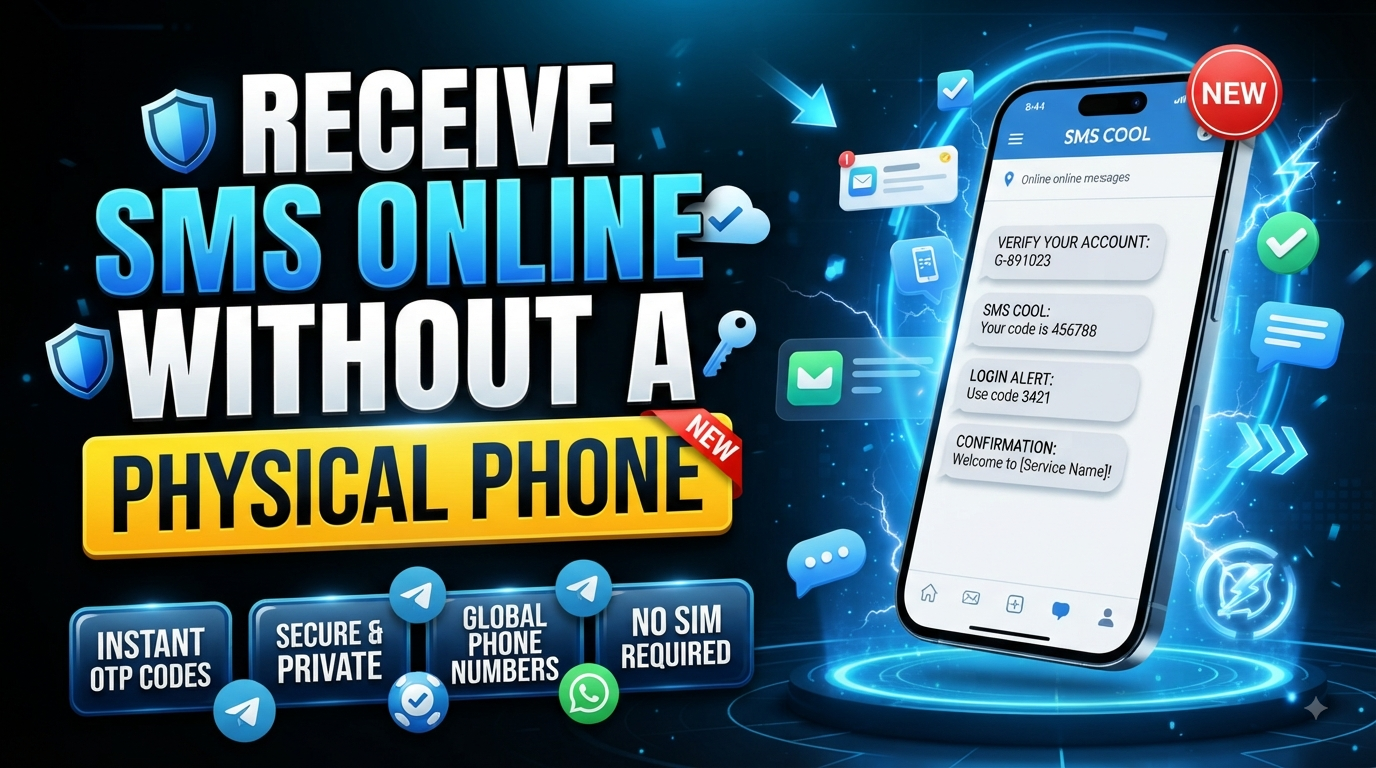
Can You Receive SMS Without a Physical Phone?
What if you need a text message, but your phone is unavailable, you do not want to use your personal number, or you simply need a separate number for an online task?
Yes, you can receive SMS without a physical phone in supported situations. Online SMS receiving services use virtual or online phone numbers to receive incoming text messages through a web-based interface. Instead of checking a SIM card inside a handset, you access the incoming SMS online.
This can be useful for account verification, application testing, temporary communication needs, and situations where carrying a physical phone is inconvenient.
Services such as SMS COOL make this concept more practical by providing a way to access SMS online when a suitable online number is available for your intended use.
Can You Receive SMS Without a Physical Phone?
Yes. The basic idea is surprisingly simple.
Traditional SMS is normally associated with a mobile phone and SIM card. An online SMS receiver changes where you access the incoming message. Rather than having the message appear on a physical handset, it can be delivered to an online number and displayed through a web-based service.
This type of setup is commonly associated with a virtual phone number, online phone number, or virtual number for SMS.
You can then use the number for a service that asks you to enter a phone number. If that service supports the number and sends an SMS successfully, the incoming message can appear through the online receiving service.
That means you do not necessarily need to keep a physical phone beside you just to read a supported SMS.
How Does Online SMS Receiving Work?
The process is generally straightforward:
- Choose an online number. Select an available number through an SMS receiving service.
- Enter the number where an SMS is required. For example, a website or application may ask for a phone number during registration or testing.
- Wait for the incoming message. If the sender accepts the number, the SMS is routed to it.
- Read the message online. The incoming text or verification code is displayed through the service's interface.
The important detail is that the online number still has to be supported by the service sending the message. Not every website accepts every type of virtual or temporary number.
For that reason, online SMS reception is best viewed as a convenient option for supported use cases, rather than a universal replacement for a personal mobile number.
Why Do People Need to Receive SMS Online?
There are several legitimate reasons someone may want to receive text messages online.
Online account verification
Some websites and applications use SMS verification to confirm that a user has access to a particular phone number. An online number can be useful when the platform accepts it and the user does not want to use a personal mobile number.
Testing websites and applications
Developers and QA teams often need to test registration forms, login flows, notifications, and SMS verification systems. An online number can make testing easier by providing a number that can receive test messages without requiring a separate physical handset.
Business communication
Businesses may need additional numbers for specific workflows or temporary projects. An online phone number can provide flexibility when a physical device is unnecessary for the task.
Privacy-conscious sign-ups
Some people prefer not to share their primary personal number with every online service. Where permitted by the platform, a separate number can help keep personal and online activities more distinct.
When a physical phone is unavailable
A lost, misplaced, unavailable, or inconveniently stored phone can make receiving an SMS difficult. Online access can provide another option when the relevant number and service are supported.
Can You Receive Verification Codes Without Your Phone?
Often, yes, but there is an important limitation.
An SMS verification code is simply a text message containing a code that a website or application asks you to enter. These codes are commonly called OTPs, or one-time passwords.
If a platform accepts an online number and sends the verification SMS to it, you may be able to receive verification codes online and enter the code into the relevant website or application.
However, some platforms actively restrict virtual, temporary, VoIP, or shared numbers. In those cases, the message may never arrive, or the number may be rejected before an SMS is sent.
So if your goal is to receive OTP online, compatibility matters. The receiving service can provide access to the number, but it cannot guarantee that every third-party website will accept that number.
What Is an Online SMS Receiver?
An online SMS receiver is a service that allows incoming text messages to be viewed through an internet-connected interface rather than directly on a physical mobile phone.
The main difference is where you access the message.
With a conventional mobile setup:
SIM + mobile network + physical phone → SMS appears on your phone
With an online receiving setup:
Online number + receiving service → SMS appears online
The underlying concept remains the same: a phone number receives a text message. The difference is that you interact with the incoming message through an online service.
This can be especially convenient when you need to receive texts online for testing, temporary workflows, or supported verification tasks.
SMS COOL: A Simple Way to Receive SMS Online
If you want to receive SMS online without a phone, the biggest advantage of an online SMS receiving service is convenience.
SMS COOL is positioned around that straightforward need: access to SMS online without making a physical handset the center of the process.
Instead of purchasing or carrying another phone simply to receive a message, an online SMS service can provide a more convenient way to work with supported incoming texts. You select an appropriate online number, use it for the intended purpose, and check for incoming messages through the service.
For someone who occasionally needs a phone number for SMS verification, an online receiving service can be much simpler than maintaining an additional physical device.
SMS COOL can be particularly useful when the goal is straightforward: receive an incoming SMS online, view the message, and continue with the task that required the number.
The key is to use the service for legitimate purposes and understand that compatibility varies between websites, applications, carriers, and verification systems.
Benefits of Using SMS COOL
Using an online SMS receiving solution can offer several practical advantages.
- Convenience: Receive supported messages online instead of depending on a physical handset.
- Online accessibility: Check incoming SMS through the service rather than needing immediate access to a particular device.
- Less hardware dependency: For suitable tasks, there may be no need to carry an additional phone just for SMS reception.
- Simple SMS reception: The basic workflow is easy to understand: use an available number, wait for the message, and read it online.
- Useful for testing: Developers and testers can use appropriate numbers for supported SMS and verification workflows.
- Flexible temporary use: A temporary phone number can be useful for tasks where maintaining a separate physical number is unnecessary.
The practical value comes from matching the right type of number to the right task. SMS COOL should therefore be considered a convenient option for supported SMS receiving needs rather than a guarantee that every website or verification provider will work with every number.
Physical Phone vs. Online SMS Receiver
The right choice depends on what you need the number for.
FactorPhysical PhoneOnline SMS ReceiverPhysical device requiredYesNot necessarilySIM requiredUsuallyDepends on the serviceAccessibilityThrough the deviceThrough an online interfaceConvenienceRequires access to the handsetConvenient for supported online useCommon use casesPersonal communication, calls, long-term useTesting, temporary workflows, supported verificationSMS verification compatibilityGenerally broad, depending on carrierVaries by website and number type
A physical phone remains the better option for important personal communication and accounts that require a long-term, private number.
An online SMS receiver can be more convenient when you only need SMS reception for a specific supported purpose.
Things to Know Before Using an Online SMS Number
Online numbers are useful, but they are not a magic solution for every SMS-related problem.
First, some websites do not accept virtual or temporary numbers. A platform may identify a number type and refuse to send a verification message to it.
Second, some verification systems place additional restrictions on VoIP or shared numbers. This means that an online number that works perfectly for one service may not work for another.
Third, public or shared numbers should not be treated like private personal numbers. If multiple people can access incoming messages associated with a number, it may be inappropriate for sensitive accounts.
For important financial, professional, or personal accounts, use a private number and follow the security recommendations of the service involved.
Finally, always follow the terms and policies of the website you are using. SMS receiving services should never be used for fraud, spam, abuse, impersonation, bypassing legitimate access controls, or unauthorized access.
Is Receiving SMS Online Safe?
Receiving SMS online can be appropriate for many ordinary tasks, but safety depends heavily on how the number is used.
The biggest consideration is the sensitivity of the information being received.
A verification code for a low-risk testing workflow is very different from a code connected to a financial account, private email account, or other sensitive service. If a number is publicly accessible or shared, anyone with access to the incoming messages could potentially see the SMS.
For this reason, avoid using public or shared numbers for highly sensitive accounts.
It is also important to understand that an SMS verification code is not a substitute for overall account security. Use strong passwords, enable additional security options when available, and follow the account provider's recommendations.
For testing, temporary workflows, and other supported purposes, an online SMS receiver can be a practical tool when used responsibly.
Final Verdict: Can You Receive SMS Without a Physical Phone?
Yes, you can receive SMS without a physical phone when the number and receiving service are supported by the sender.
An online SMS receiver works by giving you access to incoming messages through an internet-based interface rather than requiring a physical handset. This can be useful for testing, supported verification workflows, temporary tasks, privacy-conscious sign-ups, and situations where carrying a phone is inconvenient.
The main limitation is compatibility. Some websites and applications reject virtual or temporary numbers, so no online SMS service should be assumed to work everywhere.
For people who want a convenient way to receive SMS online, SMS COOL offers a practical approach to handling supported incoming messages without relying on a physical phone for every task.
If you need a convenient way to receive messages online, explore SMS COOL and see whether its available numbers fit your intended use case.