13 Aug 2026
How to Receive OTP Messages Online Safely and Easily
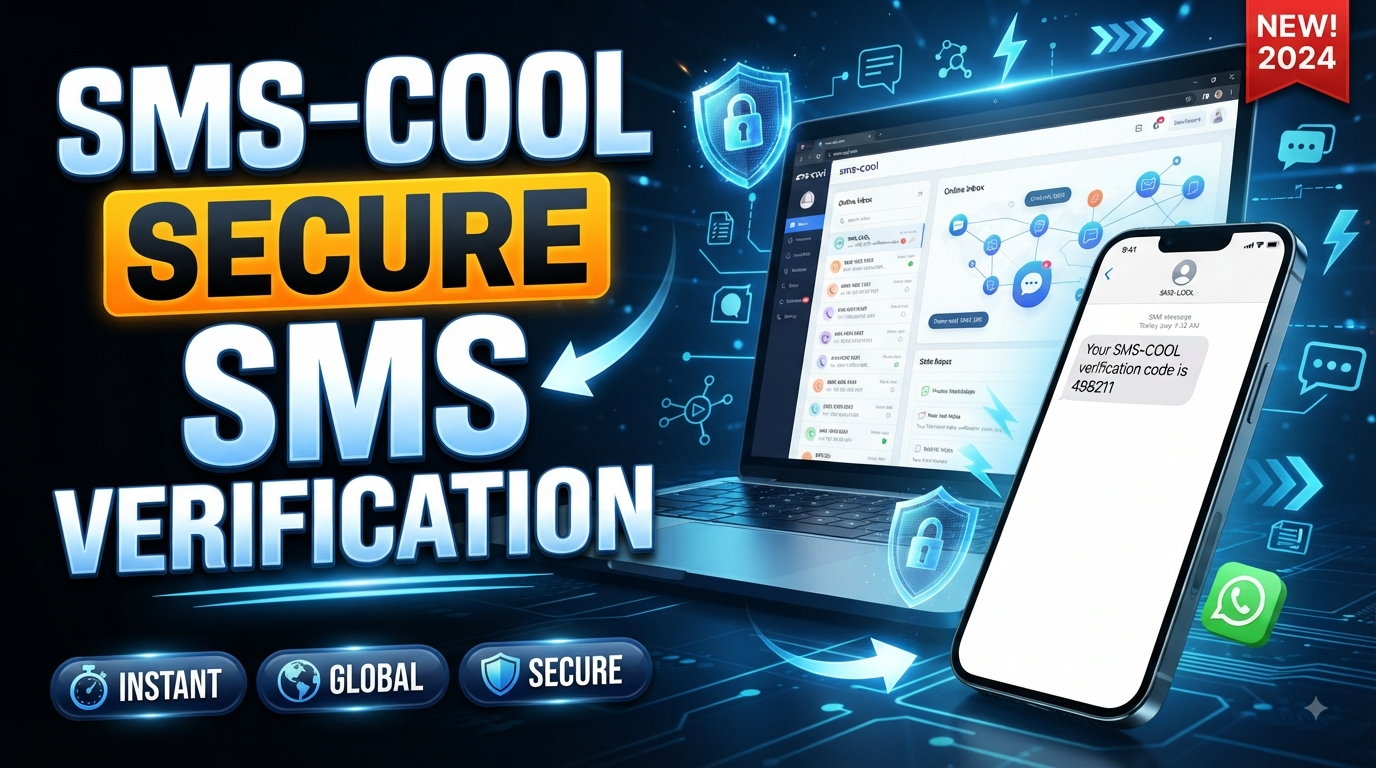
How to Receive OTP Messages Online
Online services ask for phone verification everywhere. You may need a one-time password to create an account, confirm a registration, verify a service, or complete a login. Usually, the code arrives by SMS on your personal phone.
But what if you would rather not use your personal number?
That is where the ability to receive OTP messages online becomes useful. An online SMS receiving service can provide access to incoming verification messages through a web-based interface, giving you a practical way to separate certain online activities from your everyday phone communications.
For users looking for a straightforward option, SMS COOL offers a convenient way to receive SMS online and access verification messages when an online service supports this type of phone verification.
What Are OTP Messages?
OTP stands for One-Time Password. It is a temporary verification code, normally sent through SMS, email, or an authentication application.
When a website or service sends an OTP, it is essentially asking you to prove that you have access to a particular verification method.
For example, you might enter your phone number during registration. The service then sends a short code to that number. You enter the code on the website, and the service confirms the verification step.
OTP messages are commonly used for:
- Account registration
- Login verification
- Phone-number confirmation
- Password recovery
- Service activation
- Transaction confirmation
- Two-step authentication
Because OTPs are generally short-lived and intended for a single verification event, they can add another layer to the account-access process.
However, not every situation requires you to expose your primary personal phone number. For appropriate and legitimate online activities, an online phone number or SMS receiving service can provide a useful alternative.
Why Receive OTP Messages Online?
There are several legitimate reasons someone may want to receive OTP online rather than have every verification message arrive on their personal phone.
Privacy
Using a separate number can help keep your primary number away from websites and services that you do not expect to use regularly.
This does not mean online numbers are automatically private or secure. Instead, the benefit is separation: your personal number does not have to be the only number associated with every online registration.
Separation of Personal and Online Activities
Your personal phone may already receive calls, messages, banking alerts, and important notifications.
Using a separate online SMS channel for suitable online activities can keep verification messages in a different place. That separation can make your communications easier to manage.
Convenience
If you are working from a computer, switching between your phone and desktop simply to retrieve a verification code can be inconvenient.
An online SMS receiving service allows supported messages to be accessed through an online interface, making the verification process more straightforward.
Accessibility
An online service can also be useful when you need to access incoming SMS messages from a different device or location, provided the service and the relevant platform support the number being used.
The important point is to use online OTP services responsibly and only for legitimate purposes.
How to Receive OTP Messages Online
The basic process is fairly simple. While the exact interface can vary between providers, the general experience usually follows a few steps.
1. Choose an Online SMS Receiving Service
Start by selecting an SMS receiving service that fits your intended use.
SMS COOL is designed to make the process of receiving SMS online more convenient, giving users an online option for handling supported verification messages.
2. Select an Available Number
Depending on the service, you can select an available temporary phone number, virtual phone number, or online phone number for your intended verification.
Before using it, make sure the website or application you are registering with accepts that type of number.
3. Enter the Number on the Relevant Service
Enter the provided number into the registration or verification field of the website or application.
Always follow the service's own terms and verification requirements. An online number should be used as a legitimate communication and verification option, not as a method of defeating security controls.
4. Wait for the SMS
After requesting verification, the OTP message is sent to the number.
With SMS COOL, the incoming message can be viewed through the online service when supported.
5. Enter the Verification Code
Locate the OTP in the received message and enter it into the original verification page.
Once the code is accepted, the verification process is complete.
This makes the process of receiving verification codes online relatively simple: choose a suitable number, use it for an appropriate verification request, receive the SMS, and enter the code.
Why Choose SMS COOL for Online OTP Messages?
The main appeal of SMS COOL is convenience.
Instead of depending entirely on your personal phone for every online verification request, you can use an online SMS receiving service when a separate number makes sense for the situation.
SMS COOL can be useful for people who want a straightforward way to:
- Receive SMS messages online
- Access supported verification codes
- Keep certain online registrations separate from personal communications
- Use a temporary phone number for appropriate purposes
- Handle SMS verification through an online interface
The experience is particularly useful when your goal is simply to receive a verification message without adding another stream of online notifications to your primary phone.
Rather than making the process unnecessarily complicated, SMS COOL provides an accessible approach to online SMS reception.
Of course, availability and compatibility can vary between services. Some websites may restrict virtual, temporary, or shared numbers, so users should always check the requirements of the service they are trying to verify.
How SMS COOL Makes OTP Verification Easier
Imagine that you are signing up for a legitimate online service and the platform asks you to confirm a phone number.
You do not necessarily want to use your primary number for that particular registration.
With an appropriate SMS receiving service, the process can be more organized.
First, you access SMS COOL and select a suitable available number. Next, you enter that number where the service requests phone verification. The platform sends its SMS verification code, and you check the online SMS inbox for the incoming message.
Once the OTP arrives, you can use the code to complete the verification.
The advantage is not that the security process disappears. The OTP still has to be delivered and entered. Instead, the online service provides another practical channel for receiving the message.
That makes OTP verification online easier to manage for situations where using a separate number is appropriate.
Common Use Cases for Online OTP Reception
Online SMS reception has several legitimate applications.
Testing and Development
Developers and testers may need to verify how an application handles phone-number registration and SMS verification. A separate number can help keep testing activity apart from personal communications.
Temporary Registrations
Some online services are used briefly or for limited purposes. A temporary phone number may be suitable when the user does not want to associate their everyday number with that particular activity.
Privacy-Conscious Online Activities
People who are careful about sharing personal contact information may prefer to separate certain online registrations from their primary phone number.
Service Verification
Some websites require SMS verification before allowing access to a feature or completing registration. Where the service permits an online number, an SMS receiving service can make that step more convenient.
Separating Communications
If you frequently create legitimate accounts for projects, testing, or different online activities, keeping verification messages separate from personal SMS can make your digital life easier to organize.
These use cases should always remain within the rules of the relevant platform. An online number should not be used for spam, fraud, impersonation, fake identities, account abuse, or bypassing restrictions.
Tips for Using Online SMS Verification Services Safely
Convenience should never come at the expense of good security habits.
Do Not Share OTPs Unnecessarily
An OTP is a verification credential. Never send a verification code to someone simply because they request it.
If a message contains information beyond the code, treat that information carefully as well.
Avoid Using Shared Numbers for Sensitive Accounts
A publicly accessible or temporary number may not be appropriate for important accounts.
For banking, government services, primary email accounts, password managers, or other highly sensitive services, a personal number or another permanently controlled authentication method may be more suitable.
Check Platform Requirements
Some websites do not accept temporary or virtual numbers. If a service specifically requires a personal or mobile number, follow its requirements rather than trying to work around them.
Understand Number Availability
An online number may not remain available indefinitely. If an account is important to you, consider whether you will need the same number again for future recovery or verification.
Protect Your Account
The online SMS service itself may involve an account or login. Use sensible security practices and avoid sharing your account credentials.
The goal of using an online OTP receiving service should be convenience and sensible separation—not weakening the security of an account.
Why SMS COOL Can Be the Better Solution
Using your personal phone number for every online registration is not always the most convenient approach.
You may end up with a constant stream of verification texts, promotional messages, and service notifications. More importantly, you may prefer not to give your primary number to every website that requests it.
An SMS receiving service such as SMS COOL offers a practical alternative for suitable situations.
The biggest difference is separation. Your everyday phone number remains dedicated to the communications that matter most to you, while supported online verification messages can be handled through a separate channel.
It also simplifies the process of receiving SMS verification codes online. Instead of waiting for a message on your personal device and moving between screens, you can access the relevant SMS through the online service.
For users who regularly encounter phone verification, that convenience can make a noticeable difference.
Still, the right choice depends on the account. For sensitive services that require long-term control of a phone number, using a number that you personally control may be the safer option.
Conclusion
Phone verification has become a normal part of using websites and online services. OTPs help confirm access to a phone number, but using your primary personal number for every verification request is not always ideal.
Knowing how to receive OTP messages online gives you another option for legitimate registrations, testing, privacy-conscious activities, and other suitable situations.
An online SMS receiving service can help separate verification messages from your personal communications while making the process easier to manage. SMS COOL provides a practical solution for users who want to receive SMS online and handle supported verification codes through an online platform.
If you regularly need to receive verification messages and want a convenient alternative to relying exclusively on your personal number, explore SMS COOL and see how its online SMS receiving approach fits your needs.