01 Oct 2026
OpenAI ChatGPT Gmail Verification Service for Quick OTP
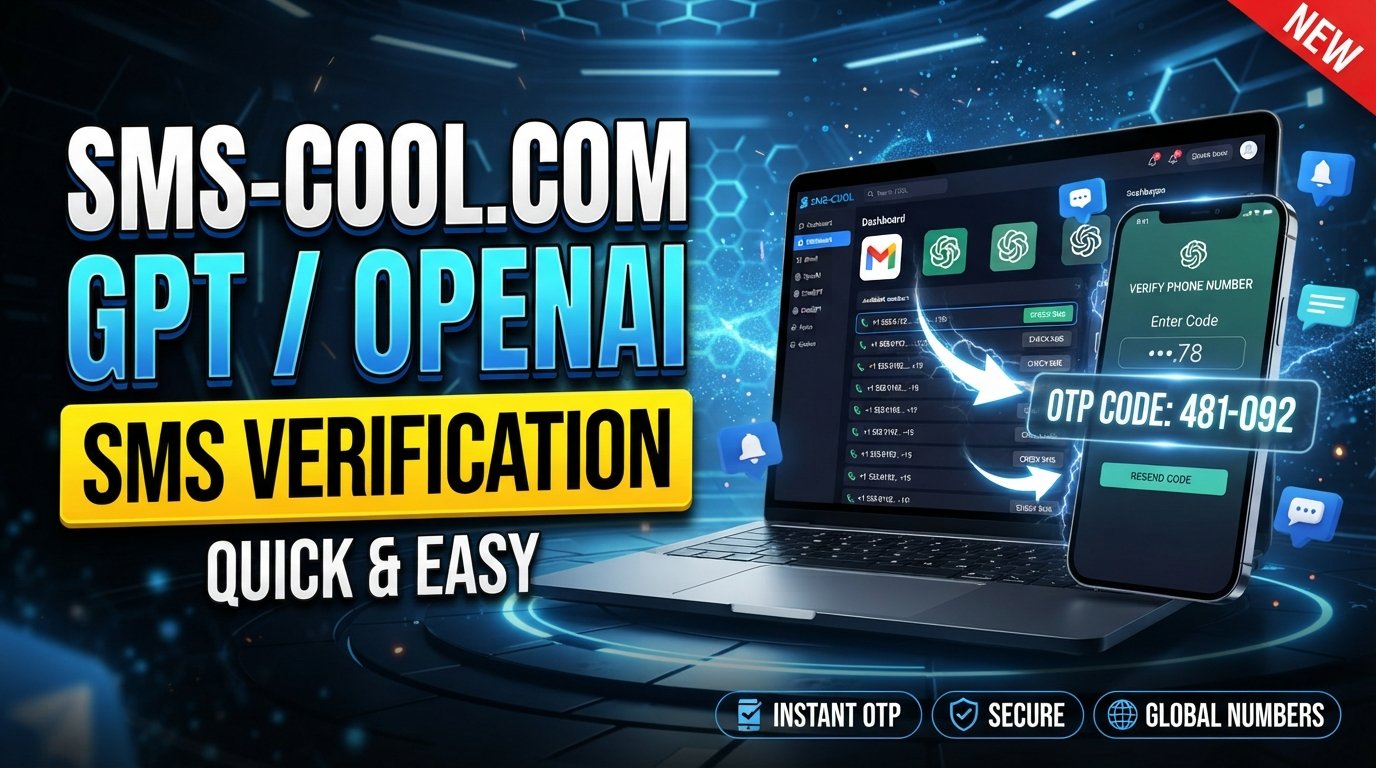
OpenAI ChatGPT Gmail Verification Service – Quick OTP
Signing up for an online service can become frustrating when the platform asks for a phone-based verification code and you do not have convenient access to an eligible number. This is especially relevant when completing ChatGPT Gmail verification, creating an OpenAI account, or dealing with a verification step that requires an SMS OTP.
For users searching for an OpenAI ChatGPT Gmail Verification Service, an SMS-based verification solution can provide a practical way to handle the phone verification stage. SMS COOL is designed for users who need access to SMS verification when their usual phone option is unavailable or inconvenient.
Instead of repeatedly waiting for a message that may not arrive, users can explore an SMS verification service that is specifically intended to help receive verification codes. The important point is to use the service responsibly, follow the platform's requirements, and understand that successful verification depends on the destination service accepting the number.
What Does OpenAI or ChatGPT Gmail Verification Involve?
When creating or accessing an account, an online platform may require different forms of verification. Depending on the account flow and circumstances, this can include email confirmation, phone verification, or a combination of security checks.
Gmail may be used as the email address associated with an account, while an SMS verification step can require a phone number separately.
This distinction is important.
A Gmail verification code generally refers to a code delivered through an email or Google-related verification process. An OpenAI OTP or ChatGPT OTP, on the other hand, may refer to a one-time password delivered through an authentication or verification channel.
Users searching for a “ChatGPT Gmail verification” solution are often trying to solve one of two problems:
- They need to verify an email address.
- They need an SMS code for phone-based account verification.
SMS COOL is relevant to the second situation because it focuses on SMS-based verification.
Why Might You Need an SMS Verification Code?
Phone verification is commonly used as an additional security measure. It can help services distinguish between users who have access to a particular phone number and automated or suspicious activity.
However, legitimate users can still encounter practical problems.
For example, you may:
- Have limited access to a personal phone number.
- Prefer not to use your primary number for an online service.
- Be traveling and unable to conveniently receive SMS.
- Have a phone with unreliable SMS reception.
- Need a separate number for a legitimate testing or verification workflow.
- Encounter a service that requires SMS verification before continuing.
In these situations, searching for a temporary SMS verification option or an online SMS verification service can be a natural next step.
The key is choosing a service that clearly explains what it offers rather than relying on questionable numbers or unreliable websites.
Common Problems With Receiving a ChatGPT Verification Code
Not receiving a ChatGPT verification code can happen for several reasons. SMS delivery depends on the destination platform, telecommunications infrastructure, the selected number, and other factors.
Some common issues include:
Delayed SMS Delivery
A verification message may take time to arrive. Repeatedly requesting a new code can sometimes make the situation more confusing if several messages eventually arrive.
Number Restrictions
Some online platforms restrict certain types of phone numbers. A number that works with one service may not necessarily be accepted by another.
Poor Mobile Reception
If the phone associated with a verification request has limited cellular connectivity, receiving an SMS may be difficult.
Privacy Concerns
Some users simply do not want to connect their primary personal number to every online service they use. In appropriate circumstances, a separate verification number may offer more separation between personal communications and online account activity.
Expired Codes
OTP codes are generally time-sensitive. If a message arrives after the verification window has expired, the user may need to request another code.
These issues explain why interest in OpenAI SMS verification and other online SMS solutions continues to exist.
What Is an SMS Verification Service?
An SMS verification service provides access to phone numbers that can receive text messages for supported verification workflows.
The basic concept is straightforward: instead of relying exclusively on your personal mobile number, you use a number provided through the service for an eligible SMS verification process.
When the destination platform sends a verification code to that number, the service can display the incoming SMS so you can retrieve the code.
This can be useful for users looking for a temporary phone number for verification or a virtual phone number for OTP, provided the destination platform accepts that type of number.
It is important to understand that no responsible service should promise that every website will accept every number. Platforms have their own verification rules and may reject particular number types.
How SMS COOL Can Help With Verification
SMS COOL provides a practical option for users who need SMS-based verification access.
The general workflow is simple:
- Choose an available verification number through SMS COOL.
- Use the provided number where the destination service requests a phone number.
- Submit the verification request.
- Check SMS COOL for the incoming verification message.
- Enter the received OTP into the relevant verification screen.
- Complete any remaining account or security steps required by the destination platform.
This approach can be useful when your normal phone number is unavailable or when you want to keep a verification workflow separate from your everyday communications.
If you are specifically trying to receive ChatGPT OTP or receive an OpenAI verification code, remember that acceptance depends on the verification system being used by the destination service.
Benefits of Using SMS COOL for SMS Verification
The value of an SMS verification service is mainly about convenience and flexibility.
Separate Verification From Your Primary Number
A separate number can help keep verification messages apart from personal calls and everyday SMS conversations.
Convenient OTP Access
Instead of depending entirely on your regular mobile device, an online verification service can provide another way to access SMS messages for supported workflows.
Useful for Temporary Verification Needs
If you only need a number for a specific verification task, a temporary solution may be more appropriate than obtaining another permanent mobile connection.
Simple Verification Workflow
The process is focused on receiving the SMS and retrieving the code, making it straightforward for users who understand the verification requirements.
Practical for Different Online Services
While this article focuses on ChatGPT, OpenAI, and Gmail-related searches, SMS verification can also be relevant to other online services that support and accept the type of number being provided.
SMS COOL vs. Having No Accessible SMS Option
When an online platform requests an OTP, having no accessible SMS number can bring the registration process to a stop.
Without SMS AccessWith a Suitable SMS Verification ServiceYou may have no number available for the verification stepYou can explore an available verification numberYou may need to wait for access to your regular phoneYou can use an appropriate SMS-based optionPersonal and verification messages remain tied togetherVerification can be handled separatelyRepeated attempts may waste timeThe workflow can be more organizedYou have fewer options when your normal number is unavailableYou have an additional option for supported verification
The difference is not a guarantee that verification will succeed. The destination platform ultimately controls which numbers it accepts.
That is why it is better to think of SMS COOL as a practical verification option, rather than a universal solution for every website.
What to Consider When Choosing an SMS Verification Service
Not every SMS verification service is the same. Before using one, consider the following factors.
Number Availability
A service needs to have suitable numbers available for the verification workflow you are attempting.
Message Visibility
The process should make it reasonably clear where and how incoming SMS messages can be viewed.
Platform Compatibility
A number accepted by one website may not be accepted by another. Always consider the destination platform's verification rules.
Temporary vs. Long-Term Needs
A temporary number may make sense for a short verification task, while users who need ongoing account recovery or authentication should carefully consider whether a temporary number is appropriate.
Privacy and Account Security
Never treat an OTP as something to share casually. Verification codes are sensitive authentication information. Use them only for the account and service you are authorized to access.
When a Temporary Phone Number for Verification Makes Sense
A temporary phone number for verification can be useful when your objective is limited to a supported verification workflow and you do not want to use your personal number.
For example, someone testing a legitimate service, separating online activities from personal communications, or dealing with temporary access limitations may consider an online SMS option.
However, temporary numbers are not ideal for every situation.
If a service may later require the same number for account recovery, security alerts, or two-factor authentication, losing access to that number could create problems. Users should therefore consider the long-term security requirements of an account before relying on temporary access.
How to Receive an OpenAI Verification Code Through SMS
If your OpenAI or ChatGPT verification flow requests an SMS number, the basic process is to obtain an appropriate number through a service such as SMS COOL and enter it into the verification form.
After the platform sends the OpenAI verification code, check the SMS verification interface for the incoming message.
If the code arrives, enter it into the original verification screen before it expires.
If no message appears, avoid assuming that the service is broken. The destination platform may not support the number, the message may be delayed, or the particular number may not be eligible for that verification request.
Following the platform's instructions and using another supported verification method, where available, can be the appropriate next step.
Is an SMS Verification Service Safe to Use?
The answer depends on how the service and the number are used.
Users should never use SMS verification to bypass security controls, impersonate another person, access an account without authorization, or violate a platform's terms.
For legitimate account verification, users should also protect the OTP itself. A verification code should not be posted publicly or shared with strangers.
Before using any temporary or virtual number, consider whether the account will later require that same number for recovery. Account security should remain the priority.
Frequently Asked Questions
Can SMS COOL help me receive a ChatGPT OTP?
SMS COOL can provide an option for receiving SMS-based verification messages through an available verification number. Whether a particular number is accepted depends on the destination service and its verification rules.
What is an OpenAI OTP?
An OpenAI OTP is a one-time verification code used during an applicable authentication or verification process. The exact verification method can vary depending on the account flow.
Can I use a temporary phone number for Gmail verification?
It depends on the specific Gmail or Google verification process. Some services may restrict temporary, virtual, or previously used numbers, so users should follow the requirements shown during verification.
What should I do if my Gmail verification code does not arrive?
Check that the contact information is correct, wait for possible delivery delays, and avoid repeatedly requesting codes in rapid succession. If the problem continues, use another verification method offered by the service when available.
Can I receive an OpenAI verification code online?
If the applicable OpenAI verification process supports SMS and the selected number is accepted, an online SMS verification service can provide a way to access the incoming message.
Is a virtual phone number suitable for every verification service?
No. Different platforms have different eligibility and anti-abuse rules. A virtual number that works for one service may be rejected by another.
Why consider SMS COOL for OTP verification?
SMS COOL is an option for users who need access to SMS-based verification and do not want to rely solely on their usual phone number. Its usefulness depends on number availability and compatibility with the destination service.
Final Thoughts
Finding the right OpenAI ChatGPT Gmail Verification Service can be frustrating when you do not have convenient access to an eligible phone number. An SMS verification service can provide another practical route for supported SMS-based verification workflows.
SMS COOL offers an option for users who need to receive verification messages without relying exclusively on their regular phone number. Whether you are looking for a temporary SMS verification solution, a virtual phone number for OTP, or a way to handle a supported ChatGPT or OpenAI verification step, the service can be worth exploring.
The most important thing is to use verification services responsibly, protect your OTPs, and remember that acceptance ultimately depends on the platform requesting the code.
If you need an SMS-based verification solution, explore SMS COOL and see whether an available verification option fits your specific needs.