11 Aug 2026
How Online Phone Verification Works: A Simple, Secure Guide Today
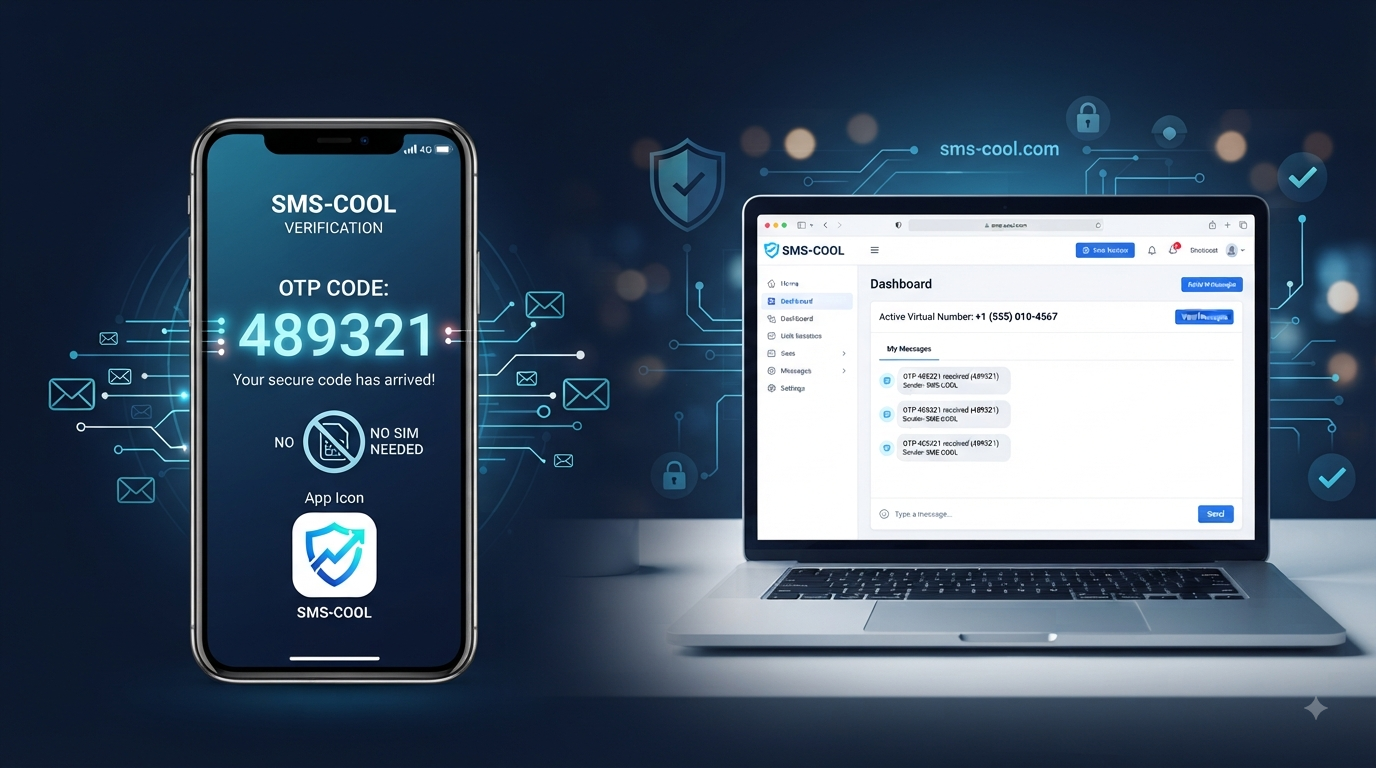
How Online Phone Verification Works
Signing up for an online service often takes only a few seconds—until you reach the phone verification step. You enter a number, wait for a message, type in a code, and suddenly you have access to your account.
But what is actually happening behind that simple process?
Online phone verification is a common way for websites and apps to confirm that a phone number belongs to the person attempting to register, sign in, or complete an action. Most systems use SMS to send a temporary verification code, commonly called an OTP, which the user enters into the website or app.
For users, the process is straightforward. Behind the scenes, however, several steps work together to deliver and validate that code.
This guide explains how online phone verification works, why businesses use it, what problems users may encounter, and how an online SMS verification service such as SMS COOL can make receiving verification messages more convenient.
What Is Online Phone Verification?
Online phone verification is a process used to confirm a phone number through a digital service.
Instead of relying only on an email address and password, a website or application can send a verification code to a phone number. The user receives the code by SMS and enters it into the required verification field.
If the code matches what the service generated, the phone number is considered verified.
This process is also known as:
- Phone number verification
- SMS verification
- OTP verification
- SMS OTP verification
- Number verification
- Phone verification for online services
The basic idea is simple: prove that you can receive a message sent to a particular phone number.
Why Do Websites and Apps Use Phone Verification?
Phone verification serves several purposes, and it is not limited to account registration.
Businesses may use it to help with:
- Creating a new account
- Confirming a user's phone number
- Signing into an account
- Recovering an account
- Resetting account credentials
- Confirming certain transactions or actions
- Reducing automated or duplicate registrations
- Adding another verification step to an online service
For businesses, SMS verification can add an additional layer of account validation. For users, it can provide a quick alternative to lengthy verification processes.
That convenience is one reason phone verification has become such a familiar part of online registration.
How Online Phone Verification Works Step by Step
Although different websites use different systems, the basic process is usually similar.
1. You Enter a Phone Number
The process starts when a website or application asks you to provide a phone number.
You may see a field labeled “Phone Number,” “Mobile Number,” or something similar.
The service sends this number to its verification system.
2. The Service Generates a Verification Code
The system creates a temporary verification code.
This is usually a short numeric code, although some services may use other formats. The code is designed to be valid for a limited period or a specific verification attempt.
This is commonly called an OTP, or one-time password.
3. The Code Is Sent by SMS
The verification system sends the OTP to the phone number you entered.
This is where SMS verification takes place. The message may contain wording such as a confirmation request followed by a verification code.
If you are using an online phone verification service, the SMS may be delivered to an online-accessible number instead of a personal mobile device.
4. You Receive the Verification SMS
Once the message arrives, you retrieve the verification code.
Depending on the setup, you might receive it directly on your phone or through a service that lets you receive SMS online.
This can be particularly convenient when you need to access a verification message without relying on your everyday personal number.
5. You Enter the Code
You return to the website or application and enter the verification code.
The service checks whether the submitted code matches the code it generated.
6. The Number Is Verified
If everything matches, the verification is completed.
The website can then treat the phone number as successfully verified and continue with the registration, login, or other requested action.
The entire process can take only a short time, but each step helps connect the submitted number with the verification request.
What Is an SMS Verification Code?
An SMS verification code is a temporary code sent by text message to confirm a phone number.
It is often referred to as an OTP, or one-time password.
For example, a service might generate a six-digit code and send it by SMS. You enter that code into the website, and the system checks it before approving the verification request.
The important point is that the code is generally tied to a specific verification attempt rather than serving as a permanent password.
Common Situations Where Phone Verification Is Required
You may encounter phone verification in many different situations.
Common examples include:
- Registering for an online platform
- Creating an account with a new service
- Accessing certain online tools
- Confirming a phone number
- Recovering an account
- Completing additional security checks
- Testing an application or service
- Using platforms that require SMS-based registration
The exact requirements depend on the website or application.
For people who frequently use online services, having a convenient way to receive verification messages can make these processes considerably easier.
Problems With Traditional Phone Verification
Although SMS verification is convenient, using a personal phone number for every online service is not always ideal.
Users may encounter issues such as:
Privacy Concerns
Some people prefer not to share their personal number with every website or application they use.
A phone number can be connected to other personal information, so users may want to limit where they provide it.
Unwanted Messages
Using a personal number across numerous services can increase the amount of promotional or service-related communication received.
Accessibility
You may not always have access to your primary phone when you need to complete a verification process.
Separation Between Personal and Online Activities
Some users prefer keeping personal communication separate from registrations, testing, or other online activities.
This is where an online verification service can provide a practical alternative.
How an Online Phone Verification Service Can Help
An online phone verification service provides access to phone numbers that can be used for supported SMS verification purposes.
Instead of depending entirely on your personal mobile number, you can use an available number through an online platform and access the incoming verification message through that service.
The key benefit is convenience.
Rather than waiting for a message on your personal device, you can use a service designed to help you receive verification codes online.
Of course, whether a particular website accepts a specific number depends on that website's own verification rules.
What to Look for in an SMS Verification Service
Not every service will suit every situation. When choosing an SMS verification service, consider the overall user experience and whether it fits your needs.
Useful factors include:
Easy Access
The service should make it straightforward to access the relevant number and check incoming SMS messages.
Simple Verification Workflow
A complicated interface can turn a quick verification task into a frustrating process. Look for a service that keeps the process easy to understand.
Convenient Online Access
If your goal is to receive SMS online, convenient access to incoming messages is an important consideration.
Clear Information
A reliable service should make the verification process understandable rather than leaving users guessing about where their message or code is located.
Appropriate Use
Always use phone verification services in accordance with the rules of the website or application you are accessing. A verification service should make legitimate verification easier, not encourage users to bypass policies or restrictions.
Why SMS COOL Is a Practical Solution
For users looking for a straightforward way to handle online SMS verification, SMS COOL is a practical solution to consider.
The core appeal is convenience: SMS COOL helps users receive verification messages and codes online, simplifying a process that can otherwise depend entirely on access to a personal mobile number.
Instead of treating phone verification as a frustrating interruption, users can approach it as a simple step in their online workflow.
SMS COOL can be particularly useful when you need to:
- Receive a verification SMS online
- Access a verification code online
- Complete supported phone verification processes
- Keep certain online verification activities separate from your everyday phone use
- Make SMS-based verification more convenient
The value is not about making the verification process more complicated. It is about providing a practical way to handle the SMS part of phone verification.
Benefits of Using SMS COOL
Convenience
One of the biggest advantages is convenience. When you need to receive an SMS verification code online, having a dedicated service can make the process easier to manage.
Accessibility
SMS COOL gives users an online option for accessing verification messages rather than requiring every verification request to go directly to their personal phone.
Simpler Verification
The basic phone verification workflow can be reduced to a few familiar steps: obtain the appropriate number, request the code, receive the SMS, and enter the verification code where required.
Greater Separation
For users who prefer to separate online activities from their primary personal number, an online phone verification service can provide a useful alternative.
A Practical Online Workflow
Instead of repeatedly searching for ways to access verification messages, users can use a dedicated service such as SMS COOL as part of their online verification routine.
Is Online Phone Verification Secure?
Security depends on the website, verification system, phone number setup, and how the user handles the verification code.
A verification code should be treated as sensitive information. Do not share an OTP unnecessarily, and only enter a verification code into the service that requested it.
It is also important to understand what a phone verification process actually proves. Receiving an SMS demonstrates access to the number used for verification, but it does not automatically prove someone's identity in every situation.
For that reason, phone verification is often one part of a broader account security process.
Online Phone Verification: The Simple Version
At its heart, the process is easy to understand:
Website or app → Phone number → SMS verification code → User receives code → Code is entered → Number is verified
The technology behind the process may be sophisticated, but the user's experience is intentionally simple.
For anyone who regularly encounters SMS-based verification, an online service such as SMS COOL can make the process more convenient by providing a practical way to receive verification messages online.
Conclusion
Online phone verification has become a familiar part of using websites and applications. By sending a temporary SMS verification code to a phone number, services can confirm access to that number before allowing a user to continue.
For users, the process is usually quick, but relying on a personal phone number for every online service can sometimes be inconvenient.
That is why an online phone verification service can be useful. SMS COOL offers a practical way to receive supported verification SMS and codes online, helping simplify the verification process and making it easier to manage.
If you regularly need to receive verification codes online, SMS COOL is worth considering as a convenient solution for handling SMS-based phone verification.