29 Sep 2026
Kolotibablo Gmail Verification Service with Secure OTP Access
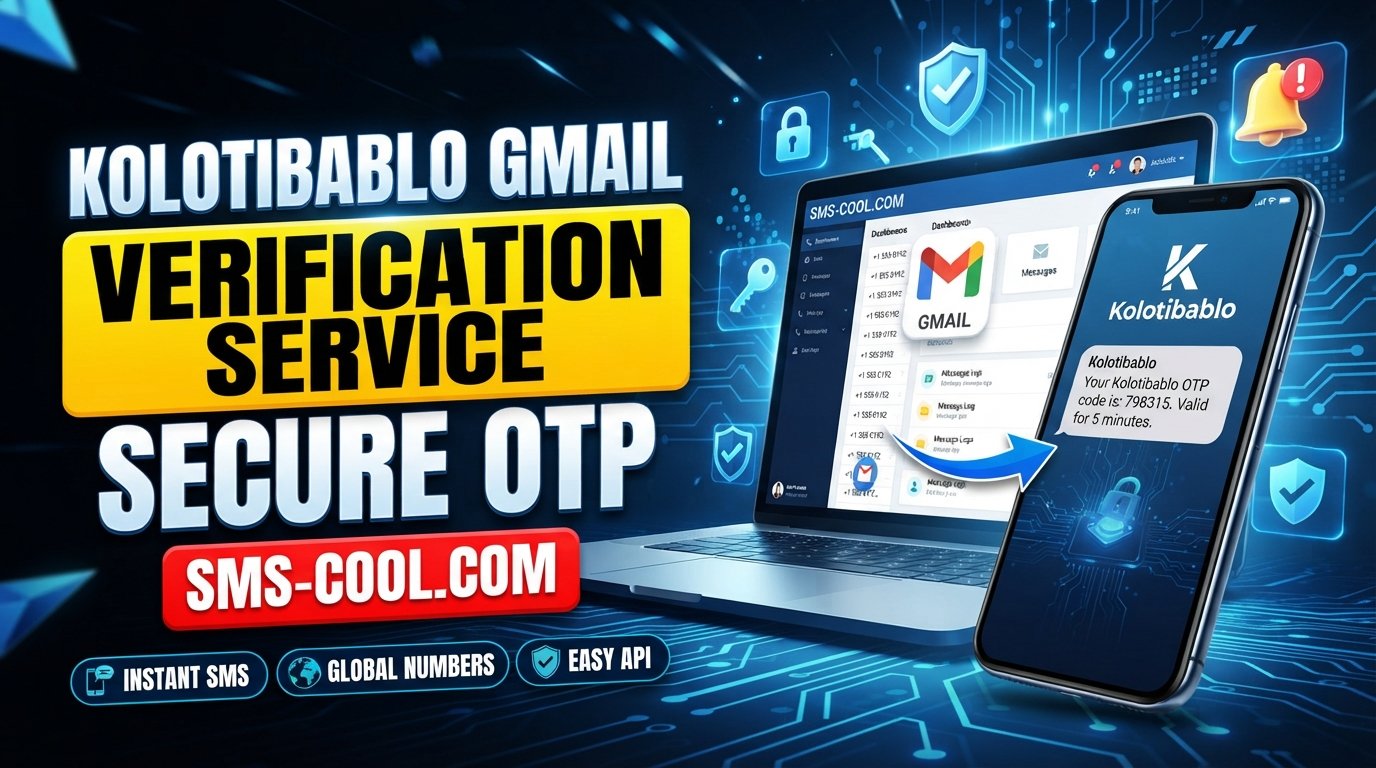
Kolotibablo Gmail Verification Service – Secure OTP Verification
When an online platform asks for phone verification, the process can feel simple—until the verification code does not arrive, a suitable phone number is unavailable, or you simply want a more convenient way to handle SMS-based verification.
For users working with Kolotibablo and Gmail, OTP delivery can become an important part of the setup and verification workflow. This is where a reliable Kolotibablo Gmail Verification Service can make the process more convenient.
SMS COOL provides a practical option for users who need SMS-based verification and want a straightforward way to receive verification messages where supported. Instead of dealing with unnecessary complexity, users can use an SMS verification service to handle the phone-number and OTP-reception part of the process.
This guide explains how Kolotibablo Gmail verification works, why Gmail OTP verification can sometimes be challenging, and how SMS COOL can fit into an online verification workflow.
What Is Kolotibablo Gmail Verification?
Kolotibablo is an online platform associated with tasks that may require users to work with online accounts and verification steps. When Gmail is involved, phone verification may be required as part of Google's account-security or verification process.
In a typical Kolotibablo Gmail verification workflow, the user enters a phone number into the relevant verification page. If the service supports SMS verification for that account or process, a one-time password is sent to the number.
The basic sequence is straightforward:
- Enter an eligible phone number.
- Request a verification code.
- Receive the SMS containing the OTP.
- Enter the code into the appropriate verification field.
- Complete the verification process if the platform accepts the code.
The exact requirements can vary depending on the account, service, region, and verification flow. For that reason, an SMS verification service should be viewed as a convenient method for receiving messages—not as a guarantee that every verification attempt will succeed.
Why Gmail OTP Verification Can Be Challenging
OTP verification is designed to add another layer of account validation, but receiving the code is not always seamless.
Several ordinary issues can affect the experience.
Phone-Number Availability
Not everyone has access to an additional phone number suitable for a particular verification process. Users may also prefer not to use their primary number for every online service.
A temporary phone number can be useful in situations where a service explicitly permits its use and the number is eligible for receiving the required SMS.
Verification-Code Delays
SMS delivery can occasionally take time. Network conditions, service-side processing, carrier restrictions, or other technical factors can affect when a verification message arrives.
When a code does not appear immediately, repeatedly requesting new codes can also create confusion because multiple messages may arrive at different times.
Privacy Considerations
Phone numbers can become associated with online accounts and verification records. Users therefore need to think carefully about where they submit their number and whether a particular verification method complies with the applicable service's rules.
The goal should be convenient verification without sacrificing basic account-security practices.
What Is a Gmail Verification Service?
A Gmail verification service generally refers to a service that provides access to phone numbers capable of receiving SMS messages for supported verification workflows.
At a high level, the process works like this:
Number selection → SMS request → OTP reception → Code entry → Verification
An SMS verification service can be particularly useful when a user needs to receive SMS online instead of relying exclusively on a personal mobile number.
However, not every number works with every website or account. Availability, eligibility, geographic restrictions, carrier behavior, and platform policies can affect whether an OTP is delivered or accepted.
That distinction matters. A service can facilitate SMS reception, but the final verification decision remains with the platform requesting the code.
How SMS COOL Helps With Kolotibablo Gmail Verification
For users looking for a practical Kolotibablo Gmail Verification Service, SMS COOL can provide a convenient way to approach SMS-based OTP reception where supported.
The value is primarily in simplifying the SMS portion of the workflow.
Rather than making the verification process unnecessarily complicated, users can use SMS COOL when they need an appropriate SMS-based verification option and want to access incoming verification messages through an online workflow.
Convenient SMS Reception
One of the main reasons people look for an online SMS verification solution is convenience. If a supported verification workflow sends an OTP by SMS, being able to access that message through the service can make the process easier to manage.
Straightforward Workflow
OTP verification does not need to be complicated. A practical workflow focuses on obtaining an eligible number, requesting the message, locating the verification code, and entering it into the correct verification field.
SMS COOL fits naturally into this type of process where its available numbers and the relevant platform support the required SMS.
Useful for Verification Workflows
Whether you are dealing with Gmail OTP verification, Kolotibablo OTP verification, or another supported SMS-based process, the fundamental requirement is the same: the verification message needs to reach an eligible number.
SMS COOL can serve as the SMS-reception component of that workflow.
It is important, however, to follow the requirements of the service you are using. No SMS verification provider should be treated as a universal solution for every platform or verification request.
How to Use SMS COOL for OTP Verification
The exact interface and available options can vary, so users should follow the current instructions provided by SMS COOL and the service requesting verification.
A general workflow looks like this:
Step 1: Identify the Verification Requirement
First, determine whether the relevant Gmail or Kolotibablo workflow requires SMS-based phone verification.
Do not assume that every account or verification attempt uses the same process.
Step 2: Select an Appropriate SMS Option
If SMS COOL offers a number or verification option suitable for the service, select the appropriate option according to its available instructions.
The number should be used only where the receiving service permits that type of phone number.
Step 3: Enter the Number Carefully
Enter the provided number into the correct verification field.
Check the country code and digits before submitting the request. A simple input error can prevent the message from reaching the intended number.
Step 4: Request the OTP
Submit the verification request through the official verification interface.
The service may then send an SMS containing a one-time verification code.
Step 5: Receive the Verification Code
Use the relevant SMS COOL workflow to receive verification code messages where supported.
Once the OTP appears, carefully enter it into the appropriate verification field.
Step 6: Complete the Process
If the platform accepts the code, continue with its verification process.
If the code is rejected or does not arrive, check the platform's instructions rather than repeatedly submitting requests without understanding the cause.
Benefits of Using SMS COOL for SMS Verification
For users who need an SMS verification service, a straightforward online approach can offer several practical advantages.
Convenient Access to SMS
An online workflow can make it easier to access incoming verification messages without depending entirely on a personal phone.
Simplified OTP Workflow
A dedicated SMS-based process can reduce the number of steps involved in finding, receiving, and checking verification messages.
Useful for Temporary Verification Needs
A temporary SMS number may be appropriate for certain legitimate workflows when the receiving service allows it.
Online Accessibility
Being able to receive SMS online can be convenient when managing verification tasks from a computer or another internet-connected device.
Flexible Verification Workflow
Different services have different requirements. SMS COOL can be considered when its available options match the specific SMS verification requirement.
Kolotibablo OTP Verification vs. Traditional Phone Verification
The difference is mainly about how the SMS-reception portion of the workflow is handled.
ConsiderationTraditional Phone VerificationSMS-Based Online VerificationNumber sourcePersonal mobile numberNumber provided through an SMS serviceSMS accessPhysical/mobile deviceOnline service interfaceConvenienceDepends on phone accessCan be convenient for online workflowsPrivacy considerationsPersonal number may be associated with accountDepends on the provider and platform rulesEligibilitySubject to platform requirementsAlso subject to platform and number eligibilityOTP deliveryVia mobile networkVia the supported SMS service
Neither method should be assumed to work universally. The receiving platform ultimately determines which numbers and verification methods it accepts.
For that reason, Kolotibablo verification should always be approached according to the current requirements of the relevant service.
Tips for Secure OTP Verification
Convenience should never replace security. Whether you use a personal number or an online phone verification service, keep these practices in mind.
Never Share OTPs Unnecessarily
A one-time password is intended for a specific verification step. Do not give verification codes to strangers, unsolicited callers, or anyone claiming they need the code for another purpose.
Check the Website Carefully
Before entering a phone number or OTP, confirm that you are using the legitimate website or application associated with the service.
Follow Platform Rules
Always use verification methods in accordance with the terms, policies, and requirements of the service involved.
Avoid Reusing Sensitive Codes
An OTP should be treated as sensitive information. Enter it only where it was requested for the corresponding verification process.
Keep Account Credentials Secure
SMS verification is only one part of account security. Use strong, unique passwords and enable additional security controls when they are available and appropriate.
Why Choose SMS COOL for Gmail OTP Verification?
The appeal of SMS COOL is its practical role in SMS-based verification workflows.
When a supported service requires a phone number to receive an OTP, users may want an alternative to relying on their everyday personal number. An online SMS solution can make the process easier to manage while keeping the workflow focused on the verification message itself.
For someone searching specifically for a Kolotibablo Gmail Verification Service, SMS COOL can be a useful option to consider because it brings the SMS-reception process into one convenient online workflow.
The key is to use it appropriately. Number availability and platform acceptance can vary, and successful verification ultimately depends on the requirements of the service requesting the OTP.
That makes a realistic approach more useful than promises of guaranteed results.
A Practical Approach to Online SMS Verification
The best verification workflow is usually the one that is clear, secure, and compatible with the service you are using.
If Gmail requires phone verification during a Kolotibablo-related workflow, start by checking the exact verification requirements. Then consider whether an online SMS verification option is appropriate and permitted.
When supported, SMS COOL can help simplify the process of obtaining and viewing an SMS verification message. Instead of treating OTP verification as a complicated technical task, users can approach it as a straightforward sequence: choose an eligible option, request the message, receive the OTP, and enter it into the correct verification field.
This approach also helps set realistic expectations. An instant OTP should not be assumed in every situation, because SMS delivery and platform acceptance can depend on factors outside the SMS service itself.
Conclusion
Gmail and Kolotibablo-related verification workflows can sometimes require an SMS-based phone check, making reliable OTP reception an important part of the process. Phone-number availability, SMS delays, and privacy considerations can make traditional verification less convenient for some users.
A Kolotibablo Gmail Verification Service such as SMS COOL can provide a practical option for users looking to handle supported SMS-based verification online.
With a simple workflow for accessing verification messages, SMS COOL can help make Gmail OTP verification, Kolotibablo OTP verification, and other supported SMS verification tasks more convenient.
If you need a straightforward way to receive SMS online for a legitimate verification workflow, explore SMS COOL and use the available options according to the requirements and rules of the service you are verifying with.