04 Oct 2026
How to Get Make Login Without Phone Number: Easy Verification
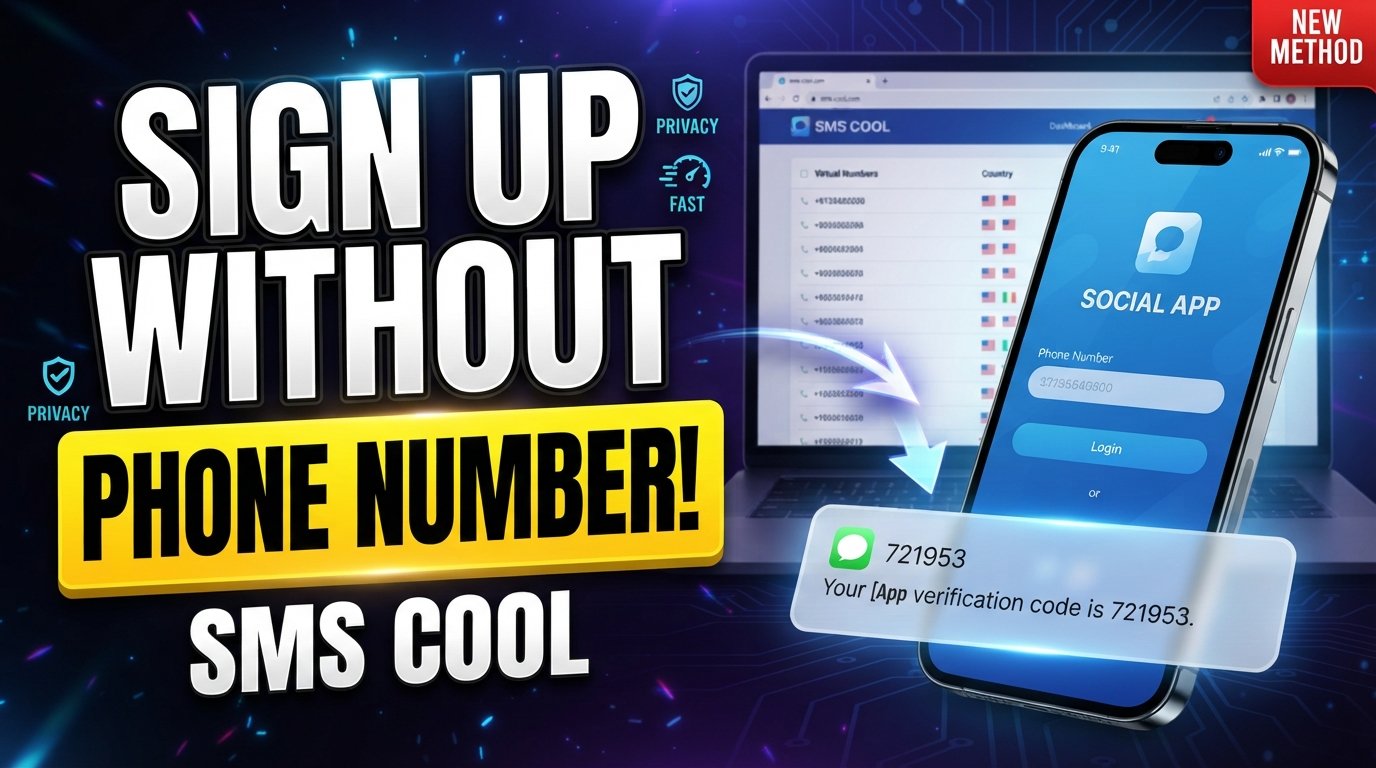
How to Get Make Login Without Phone Number
Trying to create an account or log in to a service that suddenly asks for your phone number can be frustrating. You may not want to share your personal number, you may be signing up for a secondary account, or you may simply need a practical way to receive a verification code.
So, how to get make login without phone number when a website requires SMS verification?
The answer depends on the service. Some platforms allow email verification or other authentication methods, while others require a phone number before you can continue. When SMS verification is mandatory, an online SMS verification service such as SMS COOL can provide a practical option for supported services.
This guide explains how phone verification works, what your alternatives are, how SMS COOL can help you receive verification SMS, and what limitations you should understand before getting started.
Why Do Websites Ask for Phone Verification?
Phone-number verification is widely used to confirm that an account is associated with a reachable number. It can serve several purposes beyond simply creating an account.
Common reasons include:
- Reducing automated or abusive registrations
- Helping prevent fraudulent activity
- Confirming that a user can receive SMS messages
- Supporting account recovery
- Adding another layer of account security
- Detecting suspicious registration patterns
Usually, the process is simple. You enter a phone number, the service sends a verification code, and you enter that code into the registration or login screen.
The problem is that many users would rather not connect their personal number to every website or app they use.
The Challenges of Using Your Personal Phone Number
Using your everyday mobile number for every online registration can create unnecessary complications.
Privacy concerns
Your phone number is personal information. Giving it to numerous websites increases the number of services that have access to it.
Even when a company has legitimate reasons for collecting a number, some users prefer to limit how widely their personal contact details are shared.
Unwanted messages
Some registrations may eventually result in promotional texts, account alerts, or other communications. Depending on the service's policies, your number may become another channel through which you receive notifications.
Multiple accounts
If you need separate accounts for legitimate personal, testing, business, or organizational purposes, using the same personal number repeatedly may not be convenient.
Regional restrictions
Some services support only particular countries or mobile networks for phone verification. Your personal number may not always be accepted.
For these reasons, people often search for ways to sign up without a phone number or create an account without exposing their primary mobile number.
Can You Login Without a Phone Number?
Sometimes, yes—but there is no universal method.
Whether you can login without phone number depends entirely on the website or application. Some platforms allow users to authenticate through email, an authenticator app, security key, social login, or another approved method.
Other services make phone verification mandatory.
If phone verification is optional, the simplest approach is to select another available authentication method. If SMS verification is required, you need a valid number capable of receiving the service's verification message.
That is where a virtual phone number or online SMS verification service may be useful, provided the website permits that type of number.
Legitimate Ways to Handle Phone Verification
Before choosing an online SMS solution, check what the service actually allows.
Use email verification
Some websites provide email as an alternative to SMS. If available, this is usually the easiest option.
Use an authenticator app
Certain platforms support authentication apps instead of text messages. This can be a strong option for account security because it does not depend on receiving SMS messages.
Use your own secondary number
If you have a legitimate secondary mobile number, you may use it where the service permits multiple numbers or separate accounts.
Use a virtual phone number
A virtual number can provide SMS access without requiring you to expose your everyday personal number. Acceptance varies significantly between websites.
Use an SMS verification service
An SMS verification service can provide access to a number for receiving a verification message for supported services. This can be convenient when you need to receive an SMS without giving a website your primary number.
SMS COOL: A Practical Option for Online SMS Verification
If a website requires SMS verification and accepts the type of number provided, SMS COOL can be a convenient solution.
Instead of relying on your personal mobile number, you can use an available number through the service for supported verification purposes. The verification message is delivered to the corresponding online SMS inbox, allowing you to retrieve the code and complete the verification process.
The key benefit is separation.
Your primary phone number does not have to be used for every online registration where an alternative verification option is appropriate.
SMS COOL can be especially useful when you need:
- A number for supported online verification
- A way to receive SMS online
- A separate number for a legitimate secondary account
- Greater separation between online registrations and your personal contact details
- A convenient way to access a verification code through an online interface
However, availability and acceptance depend on the specific service you're trying to verify.
How SMS COOL Works
The process is designed to be straightforward.
You select a number available for the service you want to verify, use that number during the supported registration process, and wait for the incoming SMS.
When the verification message arrives, the code can be viewed through the online SMS interface. You then enter the code into the website or app requesting verification.
In simple terms, the process looks like this:
Choose a supported number → Enter it for verification → Receive SMS → Read the code → Complete verification
The important point is that SMS COOL is not a way to remove a platform's security requirements. If a service requires SMS verification, the verification step still takes place. The service simply provides an alternative way to receive the SMS where supported.
How to Use SMS COOL for Verification
Follow these general steps for supported services.
1. Identify the verification requirement
First, determine whether the website requires SMS verification or offers another option such as email.
If phone verification is mandatory, continue to the next step.
2. Access SMS COOL
Open SMS COOL and review the available numbers and supported services.
Choose an option that matches the website or platform you need to verify.
3. Enter the provided number
Return to the registration or verification page and enter the selected number in the required phone-number field.
Make sure the country code and formatting are correct.
4. Request the verification SMS
Submit the number and request the verification message.
The service should send the SMS to the number associated with your selected verification session.
5. Check the SMS inbox
Return to SMS COOL and wait for the incoming message.
Once received, locate the verification code.
6. Enter the verification code
Copy the code into the original website or application.
If the code is valid and the service accepts the number, the verification process should proceed normally.
7. Complete account setup
Finish the remaining registration or login steps required by the platform.
Remember to follow the website's terms and use the account for legitimate purposes.
Benefits of Using an Online SMS Verification Service
There are several practical reasons someone might prefer online verification.
Convenience
You can receive a verification SMS through an online interface instead of depending on your personal mobile number.
Privacy
Using a separate number can reduce the number of websites that receive your everyday phone number.
Flexibility
A virtual phone number can be useful for supported registrations where having a separate number makes sense.
Separation
Keeping personal communications separate from online registrations can make account management easier.
Accessibility
For users who cannot conveniently use their primary mobile number for a particular registration, an online SMS option may provide another legitimate route when supported.
Tips for Successful SMS Verification
SMS verification is generally simple, but a few practical steps can improve your experience.
Check number compatibility.
Not every number works with every platform. Some websites block virtual, VoIP, recycled, or temporary numbers.
Use the correct country code.
Entering the wrong country or formatting can prevent the message from being delivered.
Wait before requesting another code.
Repeatedly requesting codes may trigger rate limits or cause older codes to become invalid.
Check the SMS inbox carefully.
Verification messages may take a short time to arrive.
Use the newest code.
If you request multiple messages, an earlier verification code may expire.
Follow the platform's rules.
Do not use alternative numbers to circumvent account restrictions, identity requirements, or other security controls.
Important Limitations to Know
A temporary or virtual number is not accepted everywhere.
Some platforms specifically restrict numbers that are publicly available, temporary, VoIP-based, or associated with online SMS services. Others may accept a number during registration but later request additional verification.
There is also no guarantee that a particular number will receive a message from every service.
If a number does not work, consider an officially supported alternative such as email verification, an authenticator app, or your own secondary number.
For important accounts—especially accounts involving sensitive personal, financial, or business information—consider using a long-term number or authentication method that you control directly.
When Should You Use a Personal Number Instead?
An online number is not always the best choice.
For accounts you expect to keep for a long time, your personal or dedicated secondary number may be more appropriate, particularly when the number will be needed for password recovery or future security checks.
For temporary registration needs, supported secondary accounts, or situations where you simply want to limit unnecessary exposure of your personal number, an online SMS solution may be more convenient.
The right choice depends on the platform and how important long-term account recovery is to you.
Final Thoughts: How to Get Make Login Without Phone Number
Understanding how to get make login without phone number starts with recognizing that every website has different verification rules.
If a platform offers email or another authentication method, use that option. If SMS verification is required and the platform accepts a suitable virtual or temporary number, an online SMS verification service can provide a practical alternative.
SMS COOL makes this process straightforward by providing access to numbers that can receive verification SMS for supported services. It can help users separate online registrations from their personal phone number while keeping the verification process simple.
Before using any service, always check whether the website accepts virtual or temporary numbers and make sure your use complies with its rules.
When it is supported and appropriate, SMS COOL can be a convenient way to receive SMS online, obtain a verification code, and complete phone verification without unnecessarily exposing your primary number.
FAQ Section
Can I login without a phone number?
Sometimes. Some websites allow email, authenticator apps, security keys, or other login methods. If SMS verification is mandatory, you generally need an accepted phone number to complete that step.
How can I create an account without using my personal number?
Check whether the service offers email verification or another authentication method. If phone verification is required, a supported virtual or online SMS number may be an option.
How does SMS verification work?
A website sends a one-time verification code to the phone number entered during registration. You retrieve the code and enter it on the website to confirm access to the number.
Can I receive verification SMS online?
Yes, an online SMS verification service can allow you to receive SMS messages through an online interface for supported services. Acceptance depends on the website sending the message.
What is SMS COOL?
SMS COOL is an online SMS solution that provides access to numbers capable of receiving verification messages for supported services. It can be useful when users prefer not to provide their primary personal number.
Is a temporary phone number accepted everywhere?
No. Some websites block temporary, virtual, VoIP, or publicly available numbers. Always check the platform's requirements before relying on one for registration or account recovery.
What should I do if a verification SMS does not arrive?
Check that the number and country code are correct, wait briefly, and review the SMS inbox again. Avoid repeatedly requesting codes. If the message still does not arrive, try another supported number or use an alternative verification method if available.
Final SEO Checklist
- Primary keyword: Included naturally in the introduction, heading, body, and conclusion.
- Secondary keywords: Integrated naturally without keyword stuffing.
- Search intent: Covers login, registration, SMS verification, virtual numbers, and receiving verification codes.
- SEO title: 61 characters.
- Meta description: Exactly 160 characters.
- URL slug: Short, readable, and keyword-focused.
- Headings: Structured with clear H2/H3-style sections.
- Readability: Short paragraphs, lists, steps, and direct explanations.
- Featured brand: SMS COOL positioned naturally as the central solution.
- Trust: Avoids unsupported guarantees and explains limitations.
- FAQ: Includes seven search-intent-focused questions.
- Thumbnail: Includes a detailed, relevant image-generation prompt.
- Year references: None included.
- External citations: None included, as requested.