18 Sep 2026
Facebook Marketplace Verification Number: Safe SMS Verification
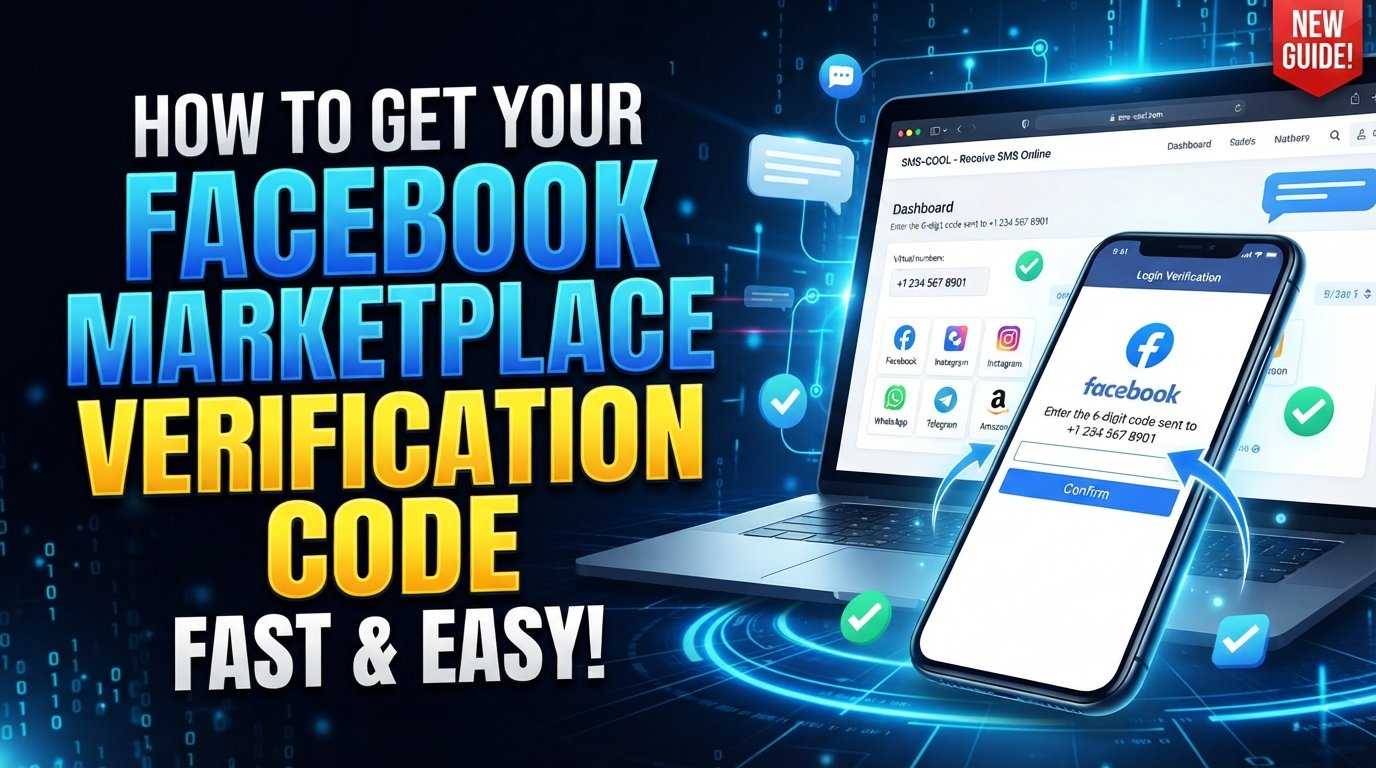
Facebook Marketplace Verification Number: Complete Guide
Buying and selling through Facebook Marketplace can be convenient, but some users may encounter a phone verification request before they can continue.
That is where a Facebook Marketplace Verification Number can become useful. A verification number allows a verification SMS to be received so you can enter the code requested during an account or platform verification step.
For people who prefer not to use their primary phone number for every online service, an SMS-enabled number can offer another practical option. Services such as SMS COOL are designed to make receiving SMS online more convenient.
This guide explains how Facebook Marketplace phone verification works, why verification codes are requested, what temporary or virtual numbers are, and how SMS COOL can fit into a legitimate verification workflow.
What Is a Facebook Marketplace Verification Number?
A Facebook Marketplace Verification Number is an SMS-enabled phone number that can be used to receive a verification message when Facebook requests phone confirmation.
The basic process is straightforward:
- Facebook requests phone verification.
- You provide an eligible phone number.
- Facebook sends a verification code by SMS.
- You receive the message.
- You enter the code where requested.
The number may be a conventional mobile number, a temporary phone number for Facebook, or another type of virtual phone number for Facebook, depending on what Facebook accepts at the time.
It is important to understand that the number itself does not approve an account. It simply provides a way to receive the SMS needed for the verification step.
Why Does Facebook Marketplace Ask for Phone Verification?
Phone verification can be part of Facebook's security and account-verification processes.
Platforms may use phone confirmation to help establish that a user has access to the number they submitted. Verification can also be requested when an account, login, activity, or marketplace action requires additional confirmation.
Requirements can vary depending on the account and circumstances.
A verification request does not necessarily mean something is wrong with your account. It simply means Facebook is asking for an additional verification step.
If Facebook gives you specific instructions, follow those instructions rather than relying on a third-party service to work around them.
How Facebook Marketplace Verification Works
A typical Facebook Marketplace verification process looks like this:
Step 1: Enter a Phone Number
When prompted, enter a phone number that you are legitimately authorized to use for verification.
Step 2: Request the Code
Facebook may send an SMS containing a verification code.
Step 3: Receive the Facebook Marketplace Verification Code
The message arrives through the SMS-enabled number. If you are using an online SMS service, you may be able to view the message through its service interface.
Step 4: Enter the Code
Enter the verification code into the Facebook verification screen.
Step 5: Complete the Requested Verification
If additional verification is required, complete it according to Facebook's instructions.
A Facebook verification number is therefore only one part of the process. It should not be viewed as a method for bypassing Facebook's security systems.
Common Problems With Facebook Verification Codes
Even when the process looks simple, verification SMS can sometimes create frustration.
Common issues include:
- The verification code does not arrive.
- The code expires before it is entered.
- The submitted number is not accepted.
- Multiple requests cause confusion between old and new codes.
- SMS delivery is delayed.
- A service or number is not eligible for the particular verification request.
- Facebook requires an additional verification method.
If you do not receive a code, avoid repeatedly requesting new messages without checking what happened to the previous request. Too many attempts may make the process more confusing.
Also remember that not every SMS verification number works with every service. Acceptance is controlled by the platform requesting verification.
What Is a Temporary or Virtual Verification Number?
A temporary verification number is a number made available for a limited purpose or period, while a virtual number is a number that can be managed through an online service rather than a traditional physical SIM in your phone.
Both can be used for legitimate online SMS verification where the receiving platform permits them.
The main advantage is convenience. Instead of relying exclusively on your personal mobile number, you may be able to receive an SMS through an online interface.
However, temporary and virtual numbers are not universally accepted. Some websites restrict certain number types, and verification requirements can change.
That is why you should treat a virtual phone number for Facebook as a possible verification option—not a guaranteed solution.
How SMS COOL Can Help With Facebook Marketplace Verification
SMS COOL provides SMS-enabled numbers intended for receiving verification messages and SMS online.
For someone looking for a practical SMS verification number, the basic value is convenience: instead of waiting for a message on a personal phone, the user can use an available SMS-enabled number and access the incoming verification message through the service.
This can simplify the process when you need to:
- Receive a verification SMS online
- Access a verification code without relying solely on your primary number
- Keep verification messages separate from regular personal texts
- Use an online interface for SMS reception
- Complete legitimate verification steps more conveniently
The important distinction is that SMS COOL does not bypass Facebook verification. The service simply provides an SMS-enabled number where available. Facebook still determines whether the number is accepted and whether additional verification is required.
Step-by-Step: Using SMS COOL for SMS Verification
If you are using SMS COOL for a legitimate Facebook Marketplace verification request, the process can generally be approached in a few simple stages.
1. Access SMS COOL
Open SMS COOL and review the available SMS-enabled number options.
2. Select an Appropriate Number
Choose a number intended for receiving SMS verification and use it only in accordance with the applicable service rules.
3. Enter the Number on Facebook
When Facebook asks for phone verification, enter the number in the appropriate field.
4. Request the Verification SMS
Submit the request and wait for Facebook to send the verification message.
5. Receive the Code Through SMS COOL
Check the SMS COOL interface for the incoming verification message.
6. Enter the Code
Copy the verification code into Facebook's verification field and follow any remaining instructions.
If the number is not accepted or no message arrives, do not assume that repeatedly trying different numbers will solve the issue. Check Facebook's instructions and the requirements of the number service first.
Benefits of Using SMS COOL
For users who need online SMS reception, SMS COOL can provide several practical benefits.
Convenience
Receiving SMS online can be easier than managing verification messages across multiple devices or SIM cards.
Accessibility
An online SMS service can provide access to verification messages through its service interface, depending on the available number and supported use.
Simpler Verification Workflow
Having the number and incoming SMS in one place can make it easier to locate and enter a verification code.
Separation From Your Primary Number
Some users prefer keeping personal communications separate from verification-related messages. An SMS-enabled service can provide another option where permitted.
Most importantly, these benefits should be viewed as conveniences rather than guarantees. Facebook ultimately decides whether a number can be used for its verification process.
Important Things to Know Before Using a Verification Number
Before choosing a phone number for Facebook Marketplace, keep a few points in mind.
Facebook's requirements can change. A number that is accepted in one situation may not be accepted in another.
A verification number is not a security bypass. It does not remove Facebook's security checks or guarantee account approval.
Use numbers responsibly. Only use a number for accounts and verification activities you are legitimately authorized to perform.
Do not use verification services for abuse. Avoid spam, fraudulent accounts, impersonation, ban evasion, or attempts to circumvent platform restrictions.
Protect verification codes. A code sent by SMS is sensitive information. Do not share it with other people unless you have a legitimate reason and are certain it is safe.
Follow Facebook's rules. If Facebook requests additional information or verification, complete the required process rather than attempting to circumvent it.
Facebook Marketplace Verification Best Practices
A few simple habits can make Facebook Marketplace account verification smoother.
- Use accurate account information.
- Keep access to the verification method you selected.
- Enter verification codes promptly when required.
- Check carefully that you are using the newest code.
- Avoid excessive repeated verification attempts.
- Use SMS-enabled numbers only for legitimate purposes.
- Never share your verification code publicly.
- Read Facebook's instructions carefully if a verification attempt fails.
- Keep your account security information protected.
If you use SMS COOL, treat it as a convenient SMS reception tool rather than a promise that Facebook will accept every number.
Frequently Asked Questions
What is a Facebook Marketplace Verification Number?
It is an SMS-enabled phone number that can receive a verification message when Facebook requests phone confirmation for a Marketplace-related account or action.
Can I receive Facebook verification codes online?
Yes, where Facebook accepts the selected number and the SMS service supports the request. An online SMS service such as SMS COOL can provide a way to access incoming verification messages through its platform.
What is a temporary phone number for Facebook?
A temporary phone number is a number that may be provided for limited or short-term use. Whether Facebook accepts a particular temporary number depends on its verification requirements.
Is a virtual phone number for Facebook guaranteed to work?
No. Facebook determines which numbers it accepts for verification. A virtual number can be a convenient option, but there is no guarantee that every number will be accepted.
Why am I not receiving my Facebook Marketplace verification code?
Possible reasons include delivery delays, an unsupported number, an expired request, or Facebook requiring another verification method. Check the verification screen and follow Facebook's instructions.
Can SMS COOL receive a Facebook verification SMS?
SMS COOL is designed to provide SMS-enabled numbers for receiving messages. Whether a particular Facebook verification SMS is received depends on the number, the service, and Facebook's acceptance of that number.
Does a verification number bypass Facebook security?
No. A verification number does not bypass Facebook's security systems. It is simply a method for receiving an SMS when the platform permits that verification method.
Should I use an SMS verification number responsibly?
Yes. Use verification numbers only for legitimate purposes and follow Facebook's rules, applicable laws, and the terms of the SMS service you use.
Conclusion
A Facebook Marketplace Verification Number can make the phone-verification step more convenient when Facebook asks users to confirm access to a number.
The process is usually simple: provide an eligible number, request the verification SMS, receive the code, and enter it where Facebook asks. The challenge is that number acceptance and verification requirements can vary.
For users who want a convenient way to receive SMS online, SMS COOL can serve as a practical option for SMS-enabled verification numbers. It can simplify access to incoming verification messages while keeping the process straightforward.
Just remember that convenience is not the same as a guarantee. Facebook controls its own verification requirements, and a number does not bypass security checks or guarantee account approval.
Use SMS COOL responsibly, follow Facebook's requirements, protect your verification codes, and treat SMS verification as one step in maintaining a legitimate and secure Marketplace account.