10 Oct 2026
Email OTP Verification Explained
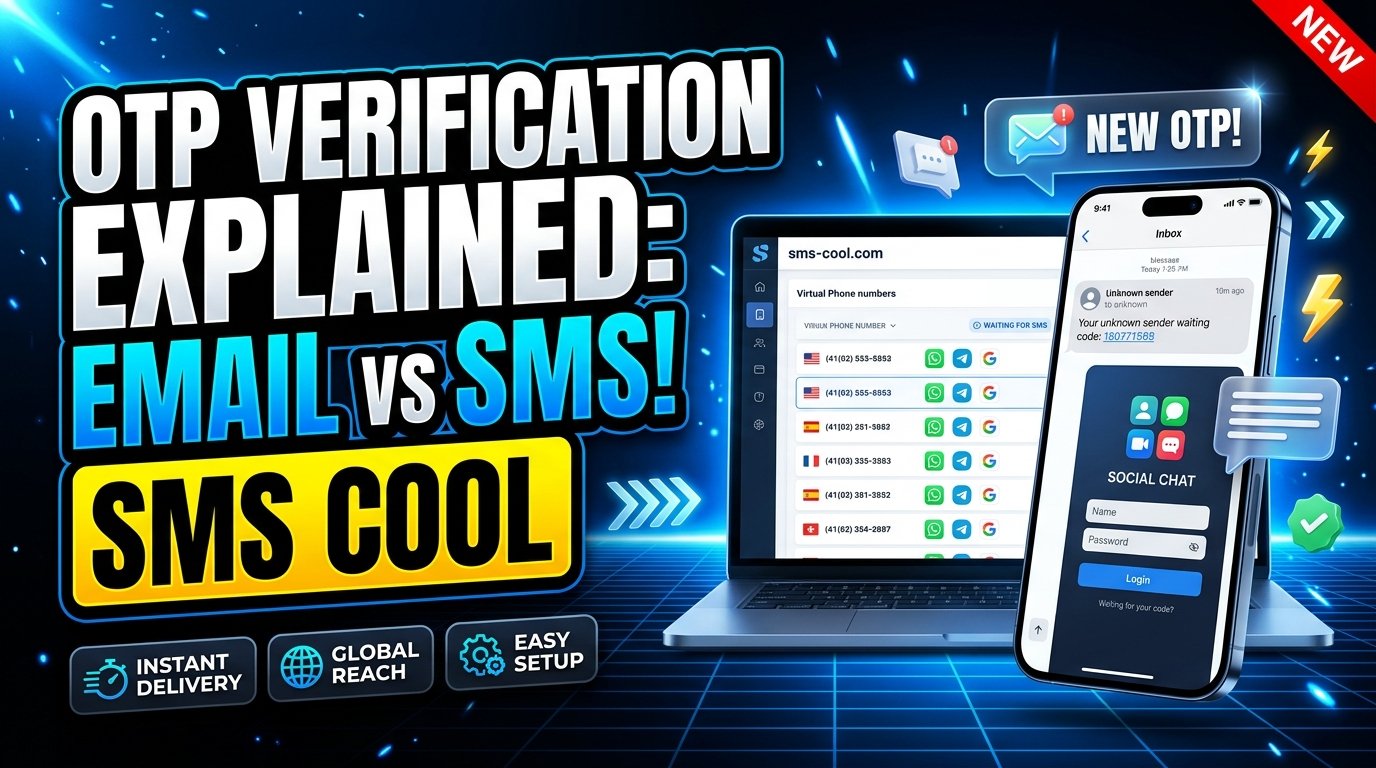
Email OTP Verification Explained: Benefits, Process & SMS COOL
Introduction: Why Email OTP Verification Matters
Creating an online account should be simple, but protecting that account is just as important. From shopping websites and social media platforms to business applications and digital services, users need a reliable way to confirm their identity before gaining access.
That is where email OTP verification comes in.
Email OTP verification uses a one-time password (OTP) sent to a user's email address to confirm that they can access that inbox. Instead of relying solely on a permanent password, a website or application requests a temporary code to complete a specific action, such as registering an account, signing in, or resetting a password.
Although email verification is useful, it is not always the most convenient option. Some services require a phone number instead, while others use SMS codes as an additional authentication step.
This is where SMS COOL can help. By providing access to SMS verification services and virtual phone number options, SMS COOL offers an alternative for users who need to receive verification messages without always relying on their personal phone number.
In this guide, you'll learn how email OTP verification works, why it matters, how email and SMS verification compare, and how SMS COOL can fit into your online verification workflow.
What Is Email OTP Verification?
Email OTP verification is an identity-checking process in which a service sends a temporary code to a registered email address. The user enters that code into the website or application to confirm access to the inbox.
OTP stands for one-time password. Unlike a permanent password, an OTP is intended for a specific verification attempt and should expire or become invalid after use or after a defined period.
For example, imagine you're creating an account on an online shopping platform. After entering your email address, the website sends a six-digit code to your inbox. You enter the code on the registration page, and the platform confirms that you can access that email account.
Email OTP is commonly used for:
- New account registration and email confirmation.
- Password resets and account recovery.
- Login verification and additional authentication.
- Confirming sensitive account changes.
- Reducing automated registrations and certain forms of abuse.
Email OTP verification helps establish control of an email address, but it does not independently prove a person's real-world identity.
How Does Email OTP Verification Work?
The process is straightforward for users, although several technical steps happen behind the scenes.
Step 1: Enter your email address
The user provides an email address during registration, login, or another action that requires verification.
Step 2: Receive the verification code
The service generates an OTP and delivers it to the specified inbox.
Step 3: Enter the OTP
The user copies the code into the verification field on the website or application.
Step 4: Complete verification
The system checks whether the code is correct, valid, and associated with the relevant verification request. If it passes, the requested action can proceed.
A well-designed OTP authentication system also limits incorrect attempts, invalidates expired codes, and prevents a code from being reused where one-time use is required.
When a website requires phone verification rather than email confirmation, the process is similar, but the code arrives through SMS. Users who need this alternative can explore SMS COOL for available SMS verification and virtual number options.
Why Is Email OTP Verification Important?
Email OTP verification provides a practical balance between convenience and basic account protection.
1. Confirms access to an email account
Verifying an email address helps a service establish that a user can receive messages at that address. This is particularly useful for registration, account recovery, and important notifications.
2. Adds a layer of account security
A verification code can make it harder for someone to complete certain actions using only a password. However, email OTP is not automatically equivalent to strong multifactor authentication, particularly when the same email account is used to recover access.
3. Supports account recovery
When users forget their passwords, email verification can help them regain access without contacting customer support for every request.
4. Improves registration quality
Email verification can reduce invalid addresses, catch typing mistakes, and discourage some automated sign-ups. Additional anti-abuse measures may still be necessary.
5. Creates a smoother user experience
A clear verification flow helps users understand what they need to do and why. Short instructions, accessible code-entry fields, and reliable message delivery can reduce registration friction.
For businesses that need both email and phone verification, combining appropriate email verification services with a dependable SMS verification workflow can provide greater flexibility.
Common Problems With Email OTP Verification
Email OTP verification is useful, but it can create frustration when delivery or usability problems occur.
Verification emails arrive late
Email providers may delay messages because of server issues, filtering, or network congestion. Users may request several codes and become unsure which one to enter.
What helps: Provide a sensible resend option, make code expiration clear, and prevent repeated requests from overwhelming the system.
Messages land in spam folders
Automated emails can be classified as spam, especially when a sender has poor email authentication or a weak delivery reputation.
What helps: Check spam and junk folders, verify the sender's address, and ensure that the service uses properly configured email authentication.
Users enter the wrong code
Codes may be mistyped, copied incorrectly, or entered after expiration.
What helps: Use a simple input interface, explain expiration rules, and let users request another code when appropriate.
Privacy concerns about personal information
Some people prefer not to share their primary email address with every online service. Others want to separate personal communications from registrations and testing activities.
A temporary email address may be useful for low-risk situations, but it is not appropriate for every account. Losing access to a temporary inbox can mean losing password recovery options.
When a platform requires phone verification, SMS COOL offers another route to explore through its SMS verification and virtual phone number services. Availability and acceptance vary by platform, so users should check the relevant service details before proceeding.
Phone verification is required instead
An email OTP cannot satisfy a platform that specifically requires an SMS code. In this situation, an SMS-based verification option may be more suitable than repeatedly trying email verification.
This is one reason it helps to understand both verification methods rather than treating them as interchangeable.
Email OTP vs. SMS OTP Verification
Both methods use temporary codes to verify access, but they differ in how those codes are delivered and in the practical considerations involved.
Feature
Email OTP
SMS OTP
Delivery method
Email inbox
Mobile messaging network
Main requirement
Access to an email account
Access to a supported phone number
Common uses
Email confirmation, account recovery
Phone verification, login confirmation
Common delivery issues
Spam filtering and email delays
Network delays and number restrictions
Privacy considerations
Exposure of an email address
Exposure of a phone number
Alternative options
Separate email addresses, where permitted
Eligible virtual or temporary numbers, where supported
Which verification method is better?
Neither method is universally better. The right choice depends on the platform, the user's needs, and the sensitivity of the action being protected.
Email OTP is convenient when an email address is already part of the account workflow. SMS OTP is useful when a service needs to verify access to a phone number.
Both methods can be vulnerable to phishing, compromised accounts, and interception. For sensitive accounts, stronger authentication methods, such as passkeys or properly implemented authenticator-based multifactor authentication, may offer better protection.
If you need to receive an SMS verification code and prefer not to use your personal number where alternatives are allowed, SMS COOL is worth exploring.
How SMS COOL Helps Simplify OTP Verification
Email verification works well when a platform sends codes to an inbox. However, many websites and applications require SMS verification to confirm a phone number before allowing registration or access.
Managing this requirement can be inconvenient, particularly when users want to keep their personal phone number separate from routine online registrations.
SMS COOL provides an alternative to explore for SMS verification, virtual phone numbers, and receiving verification messages. Rather than treating email OTP as the only available method, users can consider SMS-based options when a supported service specifically requests a phone number.
Access SMS verification services in one place
When a platform requires a code by text message, an email inbox cannot receive it. An SMS verification service may help bridge that gap by providing an eligible number for receiving messages.
SMS COOL is relevant to users who want to explore this type of service without relying exclusively on their personal phone number.
Explore virtual phone numbers
Virtual phone numbers can provide an alternative to using a personal mobile number for certain online activities. Depending on the service and platform, they may support registration, verification, or other legitimate communication needs.
SMS COOL is worth considering if you need a virtual number for a supported verification workflow. Before choosing a number, check whether the target platform accepts virtual numbers and whether the required message type is supported.
Consider temporary numbers for short-term needs
A temporary phone number may be suitable for a limited verification task when the relevant platform permits its use.
However, temporary numbers are not ideal for every situation. Numbers may be shared, reassigned, or unavailable later, and some websites block them. Avoid using temporary numbers for important financial accounts, primary email accounts, or services where you may need to recover access.
Keep email and SMS verification separate
SMS COOL does not need to replace email OTP verification to be useful. Instead, think of email OTP and SMS verification as complementary options.
For example, a business might verify customers' email addresses through its own email system while using an SMS verification service for workflows that require phone confirmation.
This flexible approach helps users choose the verification method that matches the actual requirements of each platform.
Ready to explore your options? Visit SMS COOL
to review its available services and determine whether they fit your verification needs.
Key Benefits and Features to Consider With SMS COOL
Choosing an OTP receiving service involves more than finding a number that can receive a message. Users should understand the service's supported destinations, number types, and limitations before relying on it.
Here are the main considerations when exploring SMS COOL.
1. An alternative to personal phone number use
Virtual and temporary numbers may help separate certain online activities from a primary phone number. This can be useful for privacy-conscious users, provided the relevant platform permits these numbers.
Remember that a virtual number does not guarantee anonymity. Providers and platforms may still collect account, device, payment, or usage information.
2. Support for SMS-based verification
A dedicated SMS verification service can be helpful when an application requires a text-message code rather than an email code.
Check SMS COOL's available options to confirm whether a specific platform, country, or message type is supported before starting the process.
3. Flexibility for different verification needs
Some users need a number for a single permitted registration, while others need a number for ongoing testing or another legitimate workflow.
Understanding whether a number is temporary, reusable, private, or shared is essential. Do not assume that every number offers the same level of access or continuity.
4. A complementary tool for online workflows
Developers, digital professionals, and everyday users may encounter different verification requirements across multiple services. An SMS verification option can complement email-based processes when a platform requires phone confirmation.
For businesses, the important consideration is whether the service meets operational, privacy, compliance, and reliability requirements.
5. A practical starting point for evaluating OTP services
SMS COOL can serve as a starting point when researching virtual phone numbers and SMS-based OTP receiving options. Review its current service information and terms to understand the available functionality before making a decision.
No OTP provider should be assumed to guarantee delivery, platform acceptance, or uninterrupted number access.
Practical Use Cases for OTP Verification
Email OTP and SMS OTP support a variety of legitimate personal and business activities.
Online account registration
A website may ask users to verify their email addresses before creating accounts. If it separately requires phone verification, an eligible SMS verification service may be an option where permitted.
Software development and quality assurance
Developers often test registration, login, password reset, and verification flows. Test inboxes, sandbox environments, and authorized test numbers can help them validate these processes without repeatedly using personal contact details.
For SMS testing, SMS COOL may be worth evaluating if its available services match the application's testing requirements.
Digital marketing and website management
Marketing teams may manage multiple authorized accounts or test customer journeys across different environments. They should use verification methods that comply with each platform's rules and internal security policies.
Online privacy and personal projects
Someone registering for a low-risk service may prefer to keep their primary phone number separate from routine online activities. A virtual number may help where supported, while a separate email address may be sufficient for services that only require email verification.
Business account security
Companies use OTP authentication to confirm account access, support recovery processes, and verify user contact information.
For sensitive business accounts, temporary numbers are generally a poor choice for long-term recovery. Organizations should use controlled, recoverable authentication methods and stronger security measures where appropriate.
Tips for Choosing a Reliable OTP Verification Solution
Not every email or SMS verification service is suitable for every user. Before selecting a provider, consider these factors.
Check platform compatibility
Confirm whether the website accepts email addresses, virtual phone numbers, or temporary numbers. Some platforms restrict disposable contact details or numbers associated with shared services.
Understand number access and reuse
Find out whether a number is dedicated or shared, whether it can be reused, and how long you can access incoming messages.
These details matter if you might need another verification code later.
Review privacy and data handling
Read the provider's privacy policy and terms. Understand what information may be collected, how incoming messages are handled, and whether other users could access messages associated with a shared number.
Never use a shared number to receive sensitive authentication codes for an account containing financial, personal, or confidential information.
Evaluate delivery and support
Look for clear information about supported platforms, geographic coverage, delivery limitations, and customer support. A provider should explain what happens when a message fails to arrive or a platform rejects a number.
Consider account recovery before signing up
If you might need the account for an extended period, make sure you can retain access to its recovery methods. A temporary number that becomes unavailable can create significant problems later.
Choose security over convenience
OTP verification is only one part of online account security. Use unique passwords, a password manager, multifactor authentication, and phishing-resistant authentication methods where available.
For SMS-based needs, review SMS COOL
alongside these criteria rather than assuming that one service is the right fit for every verification scenario.
Frequently Asked Questions About Email OTP Verification
What is email OTP verification?
Email OTP verification is a process that sends a temporary code to an email address. The user enters the code to confirm access to the inbox and complete an action such as account registration or password recovery.
How does an email OTP work?
A website generates a one-time password and sends it to the user's email address. The user enters the code, and the system checks its validity before allowing the requested action to proceed.
Is email OTP verification secure?
Email OTP can improve account security by confirming access to an inbox and adding a verification step. However, it cannot protect against every threat, including compromised email accounts and phishing. Stronger authentication may be necessary for sensitive accounts.
What is the difference between email OTP and SMS OTP?
Email OTP delivers a verification code to an email inbox, while SMS OTP sends it to a phone number through text messaging. The appropriate option depends on the platform's requirements and the user's security and privacy needs.
Can I use a temporary email for OTP verification?
Some services accept temporary email addresses, but others block them. Temporary inboxes may also disappear or become inaccessible, making password recovery difficult. A dedicated email address is usually more suitable for accounts you intend to keep.
Can I receive SMS verification codes without using my personal number?
In some cases, yes. A supported virtual phone number or temporary number may receive SMS verification codes when the target platform allows its use. Availability and acceptance vary, so check the provider's terms and the platform's rules.
What is SMS COOL used for?
SMS COOL is a service to explore for SMS verification and virtual phone number options. Users can review its available services to determine whether they meet a particular platform's requirements. Check the current service details before relying on a specific capability.
Can SMS COOL replace email OTP verification?
Not in every situation. SMS COOL may be relevant when a service requires SMS-based phone verification, but it cannot replace an email OTP when a platform specifically requires confirmation through an email inbox. The two methods serve different purposes.
Are temporary phone numbers suitable for important accounts?
Generally, they are not the best choice for important accounts that require long-term access or recovery. Temporary or shared numbers may become unavailable or accessible to someone else. Use a secure, recoverable phone number or another supported authentication method for sensitive accounts.
How do I choose the best OTP verification service?
Evaluate platform compatibility, supported countries, message delivery, number access, privacy practices, reuse policies, and customer support. Choose a service that meets your needs without compromising account security or violating platform rules.
Conclusion: Simplify SMS Verification With SMS COOL
Email OTP verification is a practical way to confirm access to an email address, improve registration workflows, and add a layer of protection to online accounts. Its simplicity makes it useful for websites, applications, businesses, and everyday users.
However, email is not always enough. Some platforms require SMS verification, and users may want to separate their personal phone numbers from certain online activities.
That's where exploring SMS COOL can make sense.
With its focus on SMS verification and virtual phone number options, SMS COOL is worth considering when you need an alternative to personal-number use for a supported verification task. The key is to select the right option for your platform, understand any limitations, and prioritize privacy and account recovery.
Whether you're exploring OTP receiving services for personal use, evaluating verification options for development, or looking for a more flexible approach to online registrations, start by identifying your requirements and checking which services meet them.
Ready to explore SMS verification options?
Visit SMS COOL
to learn more about its available services and find out whether its virtual phone number and SMS verification options suit your needs.