08 Oct 2026
ELS iCloud Verification Service for Online Fast OTP Verification
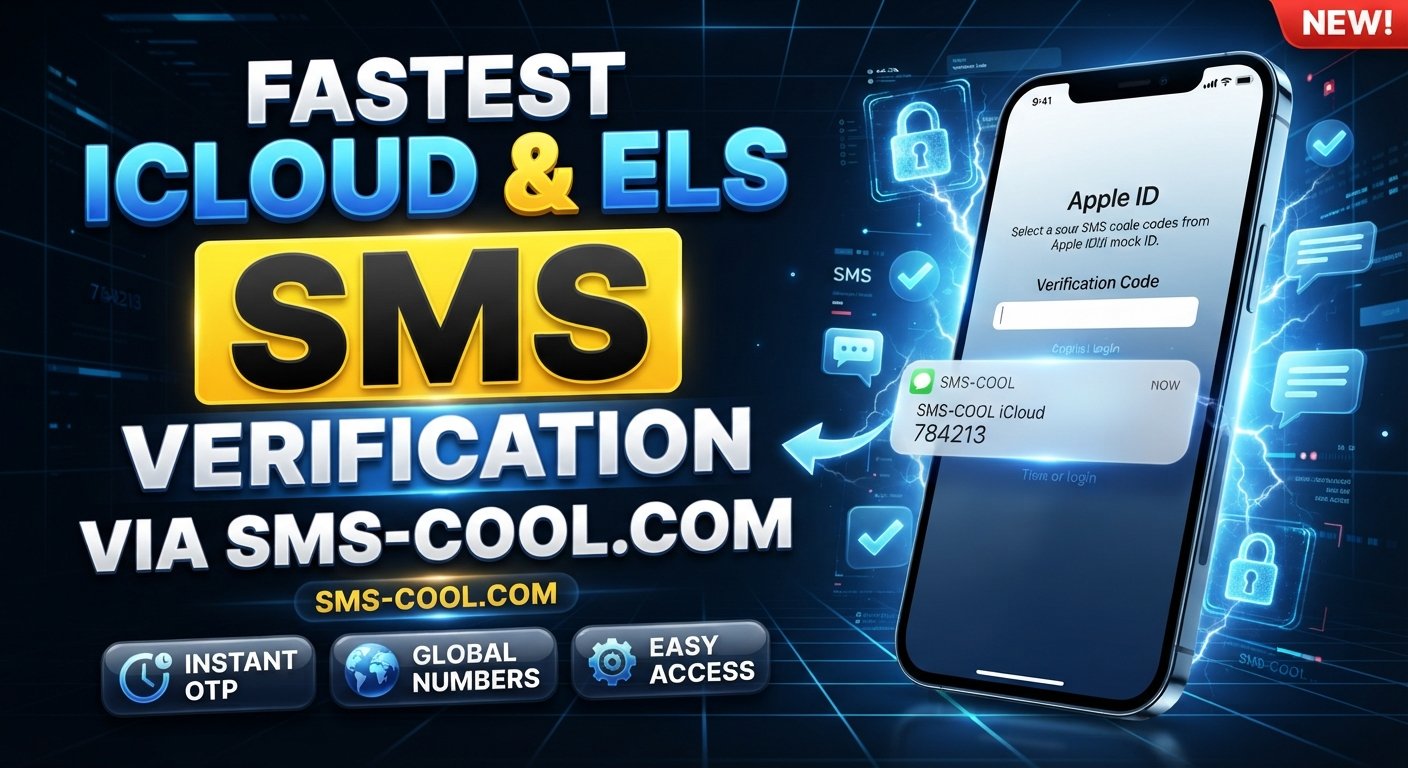
ELS iCloud Verification Service – Fast OTP Verification
Online account verification is supposed to be simple: enter your phone number, receive a verification code, and continue. In reality, OTP delivery can sometimes become a frustrating part of the process. Messages may arrive late, a number may not be accepted, or users may simply want a more convenient way to handle SMS-based verification.
That is where an ELS iCloud Verification Service can be useful for people looking for a streamlined verification workflow. Whether you need ELS verification for a legitimate account process, testing environment, or another supported use case, having access to a practical SMS verification service can make the process easier to manage.
SMS COOL provides a convenient option for users who need to receive SMS messages and OTP codes online. Instead of relying entirely on a personal mobile number, users can select an available number through the platform when the service and target application support that verification method.
The goal is straightforward: make SMS-based verification more accessible, organized, and convenient without making unrealistic promises about delivery or account approval.
What Is an ELS iCloud Verification Service?
An ELS iCloud Verification Service refers to an SMS-based verification solution intended for workflows where an ELS or iCloud-related process requires a phone number and a one-time verification code.
In a typical verification flow, a service asks for a phone number before allowing the user to proceed. The platform then sends an OTP, usually as an SMS. The user enters that code into the relevant verification screen.
An iCloud verification service can simplify the SMS portion of that process by providing access to a suitable phone number and displaying incoming messages through an online interface.
It is important to understand that an OTP service does not automatically guarantee account verification. The target platform determines whether a number is accepted, whether an OTP is sent, and whether the submitted code completes the verification process.
That distinction makes choosing a reliable provider especially important.
Why Can OTP Verification Be Difficult?
OTP verification sounds easy, but several practical issues can get in the way.
A verification message may take longer than expected to arrive. Some services may reject particular phone numbers, while others may have restrictions based on country, carrier, or previous usage.
Common problems include:
- Delayed SMS delivery
- Unsupported phone number types
- Expired verification codes
- Repeated OTP requests
- Network or carrier-related delays
- Temporary service restrictions
- Difficulty accessing a personal phone at the right moment
When verification is time-sensitive, even a small delay can become inconvenient.
This is why many users search for terms such as fast OTP verification, receive OTP online, and SMS verification service. They are generally looking for a simpler way to handle legitimate SMS-based verification without unnecessary friction.
How Does an iCloud Verification Service Work?
The basic process is relatively straightforward.
First, the user identifies the service or verification flow they need to complete. If the platform permits the use of an online or temporary phone number, the user can select a suitable number from an SMS verification provider.
The number is then entered into the relevant verification form. If the target service sends an OTP, the incoming message can appear within the provider's interface.
The user can then read the verification code and enter it into the original verification page.
A typical workflow looks like this:
- Choose a supported phone number.
- Enter the number on the relevant verification page.
- Request the OTP.
- Wait for the SMS to arrive.
- View the verification code online.
- Enter the code before it expires.
- Complete the legitimate verification process.
The exact experience depends on the target service, available numbers, network conditions, and verification policies.
Benefits of Fast OTP Verification
Speed is one of the biggest reasons people look for an online OTP verification solution.
When a verification code arrives promptly, users spend less time waiting and can move on with the task they were trying to complete.
A useful OTP verification service can offer several practical benefits:
Faster access to verification messages
Instead of waiting for a personal phone to be available, an online service can provide a centralized place to check incoming SMS messages.
Greater convenience
Online SMS verification can be useful when users prefer not to expose their personal number to every supported service or when a separate number is more appropriate.
Easy access
A web-based interface can make it simpler to check a verification code from a compatible device without repeatedly switching between applications.
Better organization
For users who frequently work with legitimate testing, registration, or verification workflows, separating verification messages from everyday personal SMS can make the process easier to manage.
Flexible phone number options
Depending on availability, an OTP verification service may provide numbers associated with different locations or services.
However, availability does not mean every number will work with every platform. Users should always follow the rules of the service they are trying to access.
Why Use an SMS Verification Service?
A dedicated SMS verification service can be useful when phone-based verification is part of a legitimate online workflow.
For example, developers and testers may need SMS messages while evaluating an application. Businesses may need separate numbers for testing user-registration flows. Individual users may also prefer an alternative number where the target service explicitly permits it.
A temporary phone number can provide a degree of separation between a personal number and a supported verification workflow.
The important consideration is responsible use. An SMS verification service should not be treated as a method for bypassing security controls, defeating identity checks, or violating the terms of a platform.
For legitimate verification needs, convenience and accessibility are the main advantages.
Why SMS COOL Is a Practical Solution
SMS COOL is designed around a simple idea: make receiving SMS messages for supported verification workflows more convenient.
Instead of managing every verification message through a personal phone, users can use the platform to access available numbers and check incoming SMS online.
Several aspects make this approach practical.
Convenient online access
The ability to view incoming messages online can be useful when a separate verification number is preferred or when a personal mobile number is not suitable for the workflow.
Straightforward verification process
The basic process is easy to understand: select a number, use it where permitted, request the OTP, and check the incoming message.
Useful for supported OTP workflows
SMS COOL can be considered when a service accepts the type of number provided and sends verification codes through SMS.
Less dependence on a personal number
Using a separate number can help keep verification traffic distinct from personal communications, where appropriate.
A focus on practical usability
The value of an OTP service is not simply the number of features it offers. The experience should be clear enough that users can quickly understand how to select a number, request an SMS, and locate the code.
SMS COOL fits this practical approach by focusing on the core task: accessing SMS messages for supported online verification needs.
How to Use SMS COOL for OTP Verification
Getting started with an online OTP verification service does not need to be complicated.
Here is a simple workflow:
Step 1: Choose the required service
Determine which platform or application requires SMS verification and confirm that its policies permit the type of number you intend to use.
Step 2: Select an available number
Use SMS COOL to find a suitable available phone number for the supported verification workflow.
Step 3: Enter the number
Enter the selected number into the verification form of the service you are using.
Step 4: Request the verification code
Submit the verification request and wait for the SMS message.
Step 5: Check SMS COOL
Return to the SMS COOL interface and look for the incoming verification message.
Step 6: Enter the OTP
Copy the verification code into the appropriate field before it expires.
If the message does not arrive, avoid repeatedly requesting codes without checking the platform's instructions. Excessive requests can sometimes create additional delays or temporary restrictions.
Traditional Verification vs. Fast OTP Verification
Traditional phone verification usually means using a personal mobile number and waiting for the SMS to arrive directly on the user's phone.
That approach works well for many everyday accounts, particularly when the phone number is intended to remain permanently associated with the account.
An online OTP verification service takes a different approach. It can provide a separate number and an online location for viewing incoming SMS messages, where supported.
The better option depends on the situation.
Traditional MethodOnline OTP ServiceUses a personal numberCan use a separate available numberSMS arrives on a personal deviceSMS can be viewed onlineConvenient for permanent accountsUseful for supported temporary workflowsNumber remains associated with the userNumber availability depends on the provider
For important personal accounts that require long-term recovery access, using a personal number may still be the more appropriate choice.
Security and Reliability Considerations
Convenience should never come at the expense of security.
Before using any iCloud OTP verification or SMS verification solution, consider the sensitivity of the account and the information involved.
Never share an OTP with another person. A verification code should be treated like a password: it is intended for the specific verification process that requested it.
Users should also understand that temporary or shared numbers may not provide the same long-term ownership or recovery benefits as a personal mobile number.
For sensitive accounts, always follow the platform's recommended security procedures. If a service requires a trusted personal number, recovery number, or additional identity verification, an online number may not be an appropriate substitute.
The best OTP verification service is therefore not simply the fastest one. It is one that fits the specific use case, works within the target platform's rules, and gives users a clear way to manage verification messages.
What Makes Fast SMS Verification Useful?
Fast SMS verification saves time, but speed should be considered alongside reliability and usability.
A useful service should make it easy to:
- Find an appropriate available number
- Understand whether the number supports the intended workflow
- Request an OTP
- Monitor incoming SMS messages
- Retrieve the verification code quickly
- Complete the verification process without unnecessary steps
Delivery can still depend on the destination service, carrier, network, and other technical factors. No responsible provider should promise that every OTP will arrive instantly or that every account will be successfully verified.
That is why realistic expectations matter.
Who Can Benefit From an OTP Verification Service?
An SMS verification service can be useful for several legitimate scenarios, including:
- Software and app testing
- Testing registration and login workflows
- Supported online account setup
- Separating verification messages from personal SMS
- Temporary verification needs where permitted
- Developers evaluating SMS-based user experiences
The key is to use the service for activities that comply with the policies and requirements of the relevant platform.
FAQ
What is an ELS iCloud Verification Service?
An ELS iCloud Verification Service is an SMS-based verification solution intended for supported ELS or iCloud-related workflows that require a phone number and one-time verification code. The exact requirements depend on the target service.
Can I receive iCloud OTP codes online?
If the relevant service accepts the type of phone number provided by an online SMS platform, you may be able to receive the verification code through an online interface. SMS COOL provides a convenient option for supported SMS verification workflows.
Is SMS COOL an OTP verification service?
SMS COOL can be used as an SMS verification service for supported workflows where users need access to incoming verification messages. Number availability and compatibility can vary by destination service.
Does fast SMS verification guarantee account verification?
No. Fast SMS verification does not guarantee that an account will be approved or verified. The destination platform controls its verification process, including whether a number is accepted and whether an OTP is issued.
Why would I use a temporary phone number for verification?
A temporary phone number can be useful when a supported workflow does not require a permanent personal number and the user wants to keep verification traffic separate from personal communications. Always check the destination service's rules before using one.
Conclusion
A smooth verification process can make a significant difference when an online service requires an OTP. Delays, unavailable personal numbers, and inconvenient SMS management can turn a simple step into a frustrating experience.
An ELS iCloud Verification Service provides a practical way to think about SMS-based verification, while an online OTP verification service can make receiving codes more convenient for supported use cases.
For users looking for a straightforward option, SMS COOL offers a practical way to access SMS verification numbers and receive OTP messages online where supported. It does not promise that every service will accept every number or that every code will arrive instantly, but it can simplify the process when an online SMS solution is appropriate.
If convenience, accessibility, and a separate verification number matter for your legitimate workflow, SMS COOL is worth considering for your next supported SMS verification task.