22 Sep 2026
How to Get Duolingo Login Without Phone Number With SMS COOL
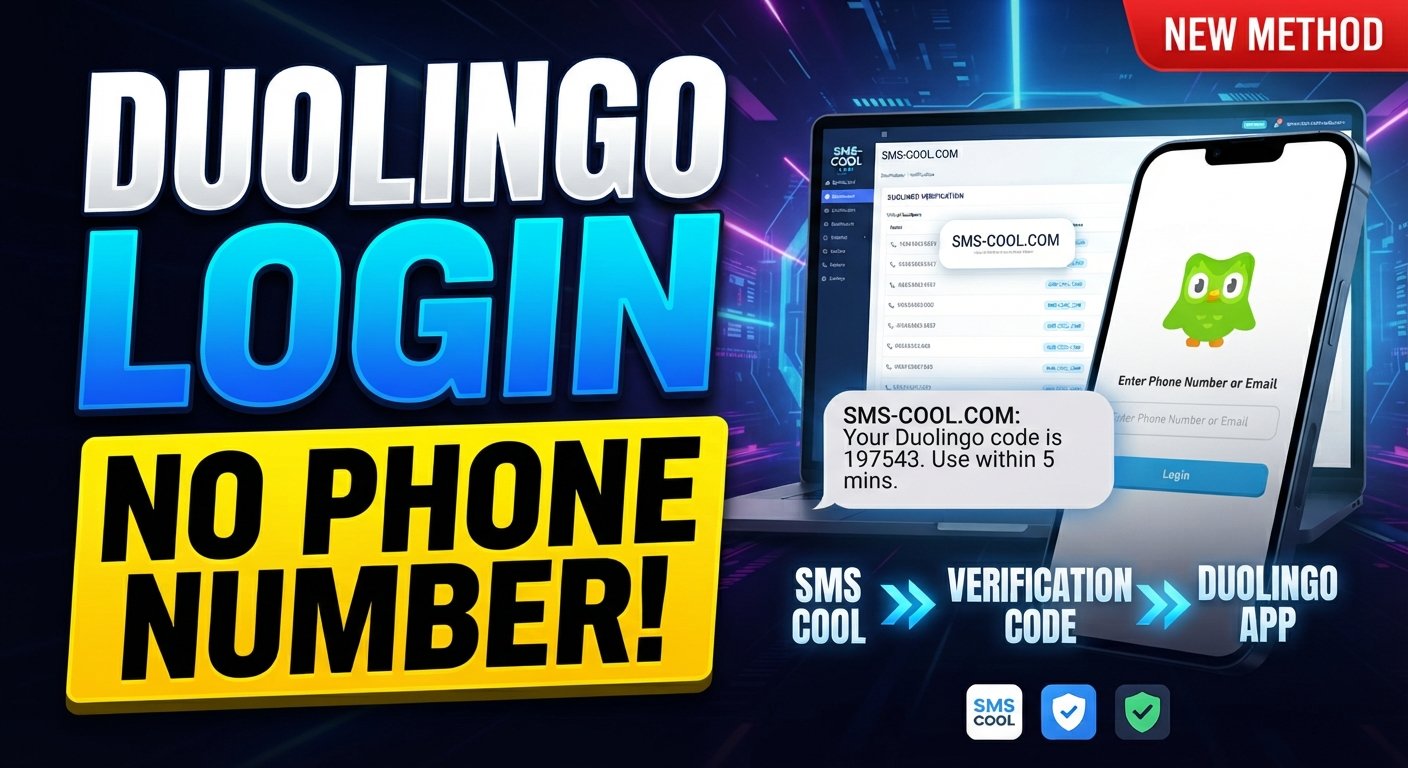
How to Get Duolingo Login Without Phone Number
Trying to create or access a Duolingo account but would rather not share your personal phone number? You are not alone. Some users want to keep their primary number private, while others simply need a convenient way to receive an SMS verification code without adding another number to their everyday communications.
The good news is that you may have an alternative: an online SMS verification service such as SMS COOL.
Instead of giving a website your personal mobile number, you can use an available temporary or virtual number to receive an SMS when the service supports that type of verification. This can make the process more convenient while helping you avoid unnecessary exposure of your personal number.
This guide explains how Duolingo SMS verification works, what to expect, how SMS COOL fits into the process, and what to do if the verification message does not arrive.
Why Does Duolingo Ask for Phone Verification?
Phone verification is commonly used by online services as an additional way to confirm that a user has access to a particular phone number.
Depending on the account, login flow, location, and security requirements, Duolingo may ask for a verification code sent by SMS. The code provides an additional confirmation step before you can continue.
There are several legitimate reasons someone may prefer not to use their personal number:
- You want to keep your personal number private.
- You do not want service-related messages sent to your main phone.
- You need a number specifically for online verification.
- You are testing an account or service workflow.
- You want to separate personal communications from online accounts.
The important point is that SMS verification is controlled by the service requesting it. A third-party number may or may not be accepted, depending on Duolingo's current verification requirements.
Can You Use Duolingo Without Your Personal Phone Number?
Whether you can use Duolingo without your personal phone number depends on what Duolingo requires during your particular sign-up or login process.
If phone verification is optional for your account, you may be able to continue without providing a number. If SMS verification is required, however, you need access to a number capable of receiving the verification message.
This is where an online SMS service can be useful.
With SMS COOL, users can look for an available number that supports SMS reception and use it where appropriate during the verification process. This does not bypass Duolingo's security. It simply provides another way to receive an SMS when third-party or temporary numbers are accepted.
How SMS Verification Works
The process itself is straightforward.
First, a service provides a phone number. You enter that number into the relevant verification field. The website then sends an SMS containing a unique verification code to the number.
If the message reaches the number, you can view the code through the SMS service and enter it into the verification screen.
In simple terms:
Number → SMS message → Verification code → Code entered into the service
For someone looking for a Duolingo login without phone number exposure, this approach can be useful because the verification message is received through the selected online number rather than your personal mobile number.
How to Get a Duolingo Verification Code Without Your Personal Number
Step 1: Visit SMS COOL
Start by accessing SMS COOL and reviewing the available SMS verification options.
Look for a service or number that is appropriate for the verification you need. Availability can change, so the options displayed to you may vary.
Step 2: Choose an Appropriate Number
Select an available temporary phone number or virtual number that supports incoming SMS messages.
Pay attention to the service, country, and other details shown by SMS COOL. Not every number is necessarily suitable for every website.
If Duolingo does not accept the selected number, you may need to try another available option.
Step 3: Enter the Number Where Required
When Duolingo asks for a phone number during its login, sign-up, or verification process, enter the number provided by SMS COOL in the required format.
Double-check the number before continuing. A single incorrect digit can prevent the verification message from reaching the intended destination.
Step 4: Wait for the Verification SMS
After submitting the number, wait for the SMS verification message.
The message may arrive quickly, but delivery can sometimes take longer. Avoid repeatedly requesting codes immediately, because doing so may create additional delays or trigger temporary verification restrictions.
If the message does not appear, check whether the selected number supports the requested service and whether SMS COOL shows an incoming message.
Step 5: Enter the Verification Code
Once the SMS arrives, locate the Duolingo verification code.
Enter the code exactly as displayed in the verification message. If the code has expired, request a new one through the normal Duolingo verification process rather than trying to reuse an old code.
Never share verification codes with other people.
Step 6: Complete the Duolingo Login or Verification Process
After the correct code is accepted, continue with the normal Duolingo account or login process.
Remember that successful SMS verification does not guarantee permanent account access. Duolingo may apply additional account, security, or login requirements depending on the situation.
Why Use SMS COOL for Duolingo Verification?
The main appeal of SMS COOL is convenience for users who need to receive SMS online without immediately exposing their personal mobile number.
Potential advantages include:
Privacy: You can avoid giving your everyday phone number to a service when an alternative number is accepted.
Convenience: Receiving SMS online can be easier than purchasing another physical SIM card solely for verification.
Simple workflow: The process generally involves selecting a number, entering it for verification, waiting for the message, and retrieving the code.
Accessibility: An online SMS verification service can be useful when you need access to a number for a specific verification task.
Separation: Keeping verification activity separate from your personal phone number can help organize your online accounts and communications.
However, these benefits should not be interpreted as guarantees. The acceptance of temporary or virtual numbers depends on the individual service and its current verification rules.
Important Things to Know Before Using SMS Verification
Before attempting Duolingo verification without phone number exposure, keep a few things in mind.
First, third-party and temporary numbers are not universally accepted. A website may identify a number as unsupported, previously used, unavailable, or otherwise unsuitable.
Second, temporary numbers can have limited availability. A number that works for one verification attempt may not be available later.
Third, you should follow Duolingo's account rules and security requirements. Using an online SMS number should not be viewed as a method for bypassing security controls.
Finally, consider account recovery. If an account later requires access to the same phone number, a temporary number may not be suitable for long-term account management. Always review the account's available recovery options before relying on a temporary verification number.
Common Problems With Duolingo SMS Verification
The verification SMS does not arrive
Wait a short while and confirm that the number was entered correctly. If the message still does not arrive, check whether the selected number supports Duolingo and whether another available number can be used.
The number is already being used
Some services may reject a number that has previously been associated with an account or verification attempt. In that situation, another available number may be necessary.
The temporary number has expired
Temporary numbers can have limited availability. If the number is no longer active, you may need to select another number and restart the verification process.
The verification code is incorrect
Make sure you are entering the newest code. If multiple codes were requested, an earlier code may no longer work.
The number is unsupported
Duolingo may not accept certain temporary or virtual numbers. This is a service-side restriction rather than necessarily a problem with SMS COOL.
The SMS is delayed
SMS delivery can occasionally take time. Avoid repeatedly requesting codes in quick succession. Give the existing request time to process before trying again.
Frequently Asked Questions
Can I use Duolingo without a phone number?
It depends on the verification requirements presented during your sign-up or login process. If Duolingo does not require phone verification, you may not need to provide a number. If SMS verification is required, you need access to an accepted number.
How can I receive a Duolingo verification code online?
If Duolingo accepts the type of number you select, you can use an online SMS verification service such as SMS COOL to receive the message. Enter the available number during verification and retrieve the code when the SMS arrives.
Can I use a temporary number for Duolingo?
A temporary number may work if Duolingo accepts it for the relevant verification process. Acceptance is not guaranteed, and some numbers may be rejected or already associated with previous verification activity.
What should I do if my Duolingo SMS code does not arrive?
Check the number, wait for possible delivery delays, and confirm that the selected number supports the requested service. If necessary, try another available number rather than repeatedly requesting codes.
Is SMS COOL useful for online SMS verification?
SMS COOL can be useful for users who need to receive SMS online and prefer not to use their personal phone number for a particular verification task. Availability and service acceptance can vary.
Can I use a virtual number for Duolingo?
You may be able to use a virtual number if Duolingo accepts it for your specific verification flow. Because services can restrict certain number types, there is no universal guarantee that every virtual number will work.
Why does Duolingo require SMS verification?
SMS verification can provide an additional way to confirm access to a phone number during certain account or security processes. The exact requirements can vary based on the account and verification flow.
Conclusion
Getting a Duolingo login without phone number exposure can be useful when you want to keep your personal number separate from online verification.
If Duolingo requires an SMS verification code, SMS COOL provides a convenient option for users who need to receive SMS online through an available temporary or virtual number. The basic process is simple: choose an appropriate number, enter it during verification, wait for the SMS, retrieve the code, and complete the normal Duolingo process.
Keep in mind that temporary and virtual numbers are not guaranteed to be accepted by every service, and availability can change. Use them responsibly and always follow Duolingo's account and security requirements.
If you need a practical way to receive a verification SMS without immediately exposing your personal phone number, explore SMS COOL and see which verification options are currently available.