25 Sep 2026
How to Get Docker Hub Login Without Phone Number: A Safe Guide
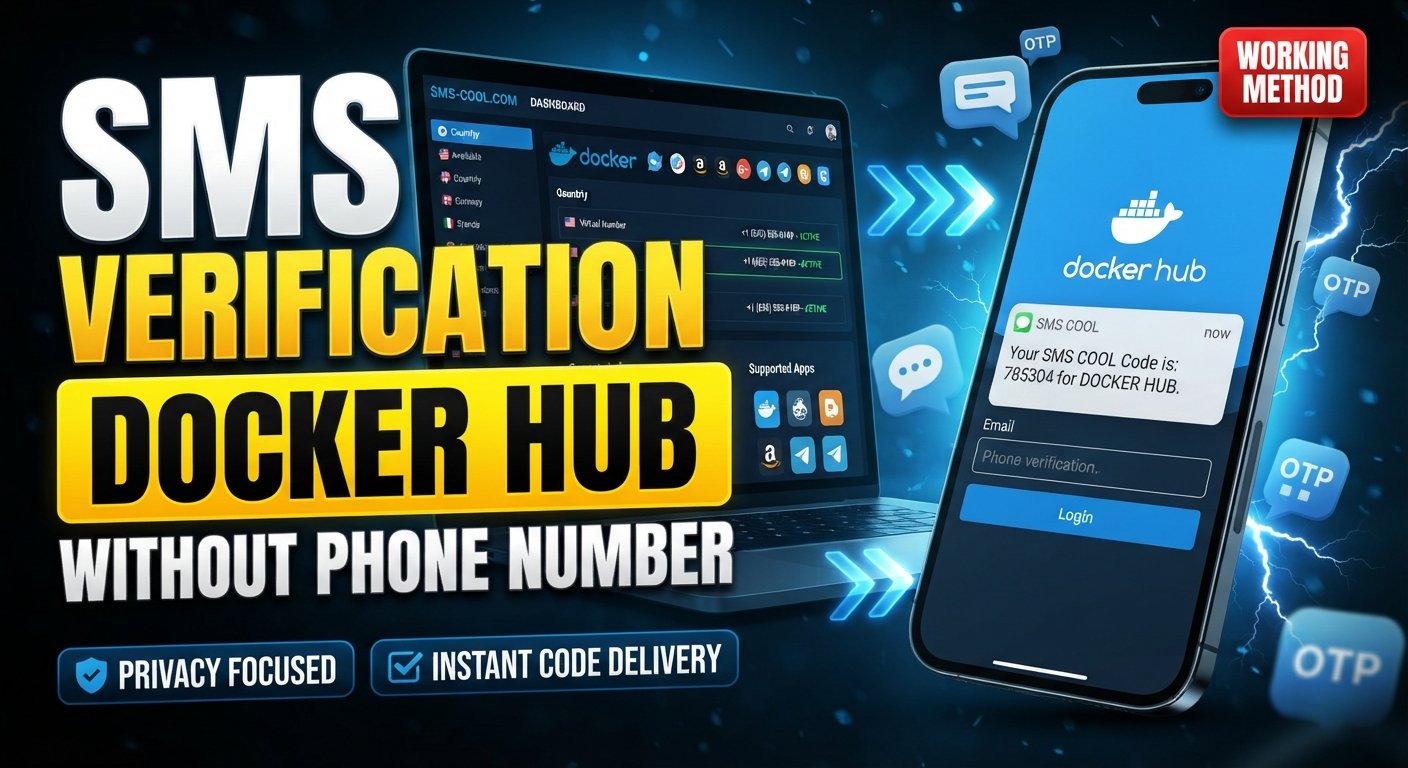
How to Get Docker Hub Login Without Phone Number
Creating or accessing a Docker Hub account can be straightforward until phone verification becomes part of the process. For developers, DevOps teams, students, testers, and privacy-conscious users, sharing a personal mobile number with another online service may not always be desirable.
That is where the search for Docker Hub login without phone number often begins.
Depending on the account, location, verification flow, and requirements presented by Docker Hub, you may encounter a request for a phone number or an SMS verification code. There is not necessarily a universal way to skip such a requirement, and verification policies can change.
However, if SMS verification is required and you prefer not to use your personal number, an online SMS verification service such as SMS COOL can be a practical option where the service and verification flow support it. These services provide access to numbers that can receive SMS messages online, allowing users to keep their everyday mobile number separate from account-related verification.
This guide explains how the process works, what to expect, and the important limitations to consider.
Why Does Docker Hub Ask for Phone Verification?
Phone verification is commonly used by online platforms as an additional account-security and verification measure.
An SMS code can help confirm that a person has access to the phone number being submitted. For an online platform such as Docker Hub, additional verification can also be part of efforts to protect accounts and maintain the integrity of its services.
The exact reason you see a phone verification request can depend on the account and the specific registration or login flow.
It is useful to distinguish account verification from your Docker Hub password. A verification code is generally an additional confirmation step rather than a replacement for your normal account credentials.
If Docker Hub asks you to verify a number, the safest approach is to follow the verification process presented by Docker Hub rather than attempting to circumvent its security controls.
Can You Get Docker Hub Login Without a Phone Number?
The short answer is: it depends on the verification requirements presented during your account process.
Some users may be able to use Docker Hub without encountering the same phone verification requirement, while others may be asked to provide a number and receive an SMS code.
Therefore, it would be inaccurate to claim that every Docker Hub account can be created or accessed with absolutely no phone number.
If phone verification is required, one possible approach is to use an online SMS verification service. This can allow you to use a number other than your personal mobile number, provided that the relevant number is accepted and the service supports the required verification message.
This is where SMS COOL may be useful.
Rather than looking for a method to bypass Docker Hub's security requirements, the idea is to satisfy the requested SMS verification step using an available number while keeping your personal number separate.
How SMS COOL Can Help
SMS COOL is an online SMS verification service that can provide access to phone numbers for receiving verification messages online, where supported.
The basic concept is simple: instead of entering your personal mobile number, you use an available number provided through the service for the relevant verification process. If the number supports the service you are verifying, an SMS containing a verification code may appear through the online service.
The process typically looks like this:
- Visit SMS COOL and review the available options.
- Choose an available number and relevant service where applicable.
- Enter the provided number in the appropriate Docker Hub verification field.
- Request the verification SMS through the Docker Hub process.
- Wait for the message to appear through the SMS service.
- Enter the received verification code where Docker Hub requests it.
- Complete the normal account or verification process.
The important point is that SMS COOL should be viewed as a way to receive an SMS, not as a guaranteed method of obtaining Docker Hub access.
Whether a particular number works depends on the verification system, number availability, and the requirements applied to the account.
How to Use SMS COOL for Docker Hub Verification
If you are trying to create a Docker Hub account without phone number access to your personal mobile number, the following workflow can help you understand the process.
Step 1: Visit SMS COOL
Start by accessing the SMS COOL service and reviewing the available SMS verification options.
Availability can vary, so look for an option appropriate for the service you are trying to verify.
Step 2: Select an Available Number
If a suitable option is available, select the number provided for the relevant verification purpose.
Before proceeding, make sure you understand the service's terms and any restrictions associated with using the number.
Step 3: Enter the Number During Docker Hub Verification
When Docker Hub presents a phone verification field, enter the selected number exactly as required.
Double-check the country code and number format if Docker Hub requests them separately.
Step 4: Request the Docker Hub Verification Code
Continue through the normal Docker Hub verification process and request the SMS.
At this stage, the message must actually be delivered to the selected number for the process to continue.
Step 5: Receive the SMS Online
Return to the SMS COOL interface and check whether the verification message has arrived.
If supported, the incoming message should contain the code required by the verification process.
Step 6: Enter the Verification Code
Copy the verification code into the appropriate Docker Hub field.
Do not share verification codes with other people, and only enter them into the service you intended to verify.
Step 7: Finish the Account Process
Once the code is accepted, continue with the normal Docker Hub registration or verification process.
You may still need to complete other account requirements, such as confirming your email address or signing in with your account credentials.
Benefits of Using SMS COOL
There are several reasons someone may prefer an online SMS verification service instead of immediately using a personal phone number.
Keep Your Personal Number Private
One of the main advantages is separation. If you do not want to provide your everyday mobile number for a particular online account, an alternative number can help keep your personal contact information private.
Receive SMS Online
An online SMS verification service can make receiving verification messages more convenient when supported. Instead of depending entirely on your physical phone, you can access the incoming message through the service.
Separate Personal and Account Verification
Developers and testers sometimes manage multiple services and accounts. Keeping account-related verification separate from a personal number can make account management easier.
Convenient Verification
For users who need online SMS verification, an internet-based service can provide a practical alternative to using their primary mobile number.
Useful for Privacy-Conscious Users
A virtual phone number for verification can be useful when the primary concern is limiting how widely a personal phone number is shared.
That said, convenience should not be confused with guaranteed compatibility. A virtual or temporary number may not be accepted by every platform or verification system.
Things to Keep in Mind
Using a temporary phone number for Docker Hub is not guaranteed to work in every situation.
Verification systems can apply different rules to different numbers, regions, accounts, or registration attempts. A number that works for one service may not work for another.
There are also several practical considerations:
- Number availability can change. A suitable number may not always be available.
- Verification support varies. Not every number is necessarily compatible with every SMS verification system.
- Messages can be delayed. SMS delivery is not always instantaneous.
- Some numbers may have restrictions. Review the conditions associated with any number before using it.
- Platform requirements can change. Docker Hub may modify its account or verification process.
- Account security still matters. Use strong, unique credentials and protect your account information.
- Follow Docker Hub's rules. Do not use an SMS service to evade account restrictions, security controls, fraud detection, or other platform safeguards.
If a personal mobile number is required by Docker Hub for your particular account and no alternative verification method is offered, the appropriate option may simply be to follow that requirement.
Alternative Options
An online SMS service is not the only possibility.
The most straightforward alternative is to use your personal mobile number if you are comfortable providing it and Docker Hub requires it.
You should also check whether Docker Hub offers another supported verification method during your particular account or login flow. If an alternative is officially presented, using that method may be preferable to relying on a temporary or virtual number.
For existing accounts, make sure you also have access to the email address and credentials associated with the account. Keeping recovery information current can make future Docker Hub login attempts easier.
9. Frequently Asked Questions
Can I create a Docker Hub account without a phone number?
It depends on the verification requirements shown during the account creation process. If Docker Hub requires phone verification for your particular registration, you should complete that requirement using an accepted number or another supported method if one is available.
How do I get a Docker Hub verification code?
If Docker Hub asks for SMS verification, enter an accepted phone number and follow the verification instructions. If an SMS is sent successfully, the message should contain the code needed to continue.
Can SMS COOL receive Docker Hub SMS?
SMS COOL may be able to receive a Docker Hub verification SMS when a suitable number is available and supported by the verification system. However, SMS COOL cannot guarantee that every number will receive every Docker Hub message.
Is a temporary phone number suitable for Docker Hub?
A temporary phone number may be suitable in some verification situations, but compatibility is not guaranteed. Some platforms may restrict or reject certain virtual, temporary, or previously used numbers.
How does online SMS verification work?
Online SMS verification generally involves selecting a number provided by an SMS service, entering that number into the website requesting verification, and viewing the incoming SMS through the service. You then enter the received code into the original verification form.
Can I use a virtual number for Docker Hub verification?
A virtual phone number for verification may work if Docker Hub accepts the number and the SMS can be delivered successfully. Acceptance depends on the platform's current verification requirements.
What should I do if I don't receive the Docker Hub SMS?
First, confirm that the number and country code were entered correctly. Check whether the SMS service shows an incoming message, and allow some time for delivery. If the message still does not arrive, try the supported troubleshooting options provided by Docker Hub or use another legitimate verification method.
Is using an SMS verification service the same as bypassing Docker Hub security?
Not necessarily. Using an available number to complete a verification step is different from attempting to defeat or circumvent security controls. Users should always follow Docker Hub's requirements and terms and should not use verification services to evade restrictions or security measures.
10. Conclusion
Finding a way to complete Docker Hub login without phone number access to your personal mobile number can be important for privacy, account separation, or convenience.
There is no universal guarantee that Docker Hub will allow registration or login without phone verification, and requirements can vary. If SMS verification is required, an online SMS verification service such as SMS COOL can provide a practical option when a suitable number is available and accepted.
The process is relatively straightforward: select an available number, use it during the relevant Docker Hub verification step, wait for the SMS, enter the verification code, and continue with the normal account process.
The key is to use the service responsibly. SMS COOL should not be treated as a way to bypass Docker Hub security or account restrictions. Instead, it can be considered a privacy-conscious option for users who need to receive Docker Hub verification code messages without immediately sharing their personal phone number.
For anyone searching for Docker Hub without phone number options, understanding the difference between legitimate SMS verification and security bypasses is essential. When supported, SMS COOL can help bridge that gap while keeping personal contact information separate.
11. Final SEO Checklist
- ✅ Primary keyword used naturally: Docker Hub login without phone number
- ✅ Secondary keywords used naturally throughout the article
- ✅ SMS COOL prominently featured as the central practical solution
- ✅ Meta description is exactly 160 characters
- ✅ SEO title is 62 characters
- ✅ No year appears anywhere
- ✅ Article is original, readable, informative, and publication-ready