26 Sep 2026
Constant Contact Login Without Phone Number: Easy SMS Guide
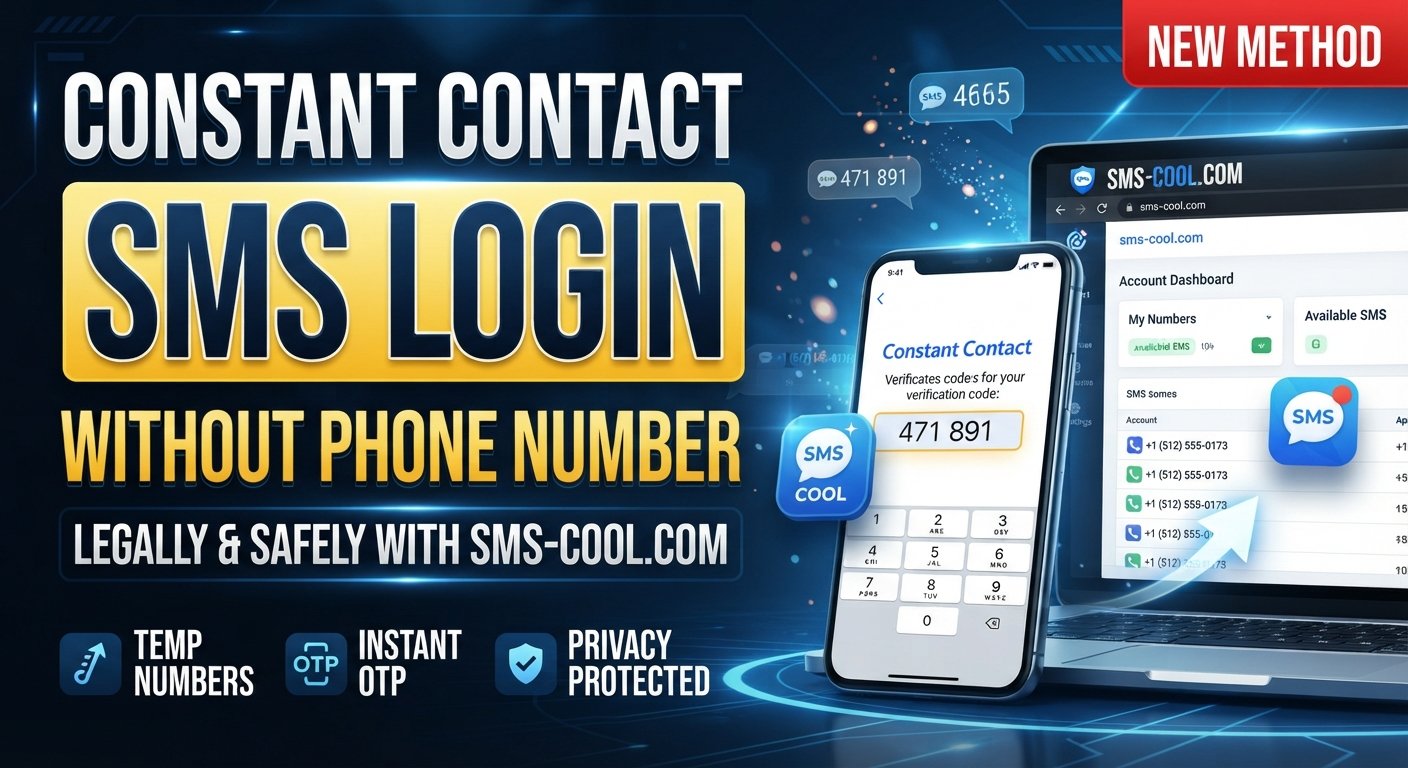
How to Get Constant Contact Login Without Phone Number
Trying to complete a Constant Contact login without phone number can be frustrating when the sign-in or account-access process asks you to verify a number or enter an SMS code.
If you do not want to use your personal mobile number, you may be looking for another legitimate way to receive a verification message. Depending on the verification method presented to you and whether the service accepts the number, an online SMS number can be one option to consider.
This is where SMS COOL can be useful. It provides access to SMS-enabled numbers that can be used for receiving verification messages where temporary or online numbers are permitted.
However, it is important to understand the distinction: SMS COOL does not bypass Constant Contact security, remove authentication requirements, or guarantee access to an account. It is simply a separate service that can provide a number for receiving SMS messages.
Let's look at how the process works and what you should know before trying it.
Why Constant Contact May Ask for Phone Verification
Online services can use additional verification steps to help protect accounts. Depending on the account, sign-in circumstances, or authentication method presented, you may encounter a request involving a phone number or verification code.
A Constant Contact verification code may be delivered by SMS when phone-based verification is part of the authentication process.
This means that knowing your username and password may not always be the only requirement presented during account access. If an additional verification step appears, you generally need to complete that step before continuing.
If you are having trouble accessing an existing account, the safest approach is to follow Constant Contact's official login, verification, or account-recovery instructions rather than attempting to work around its security controls.
Can You Access Constant Contact Without a Personal Phone Number?
The answer depends on the authentication method presented for your particular account.
If Constant Contact offers another supported authentication or account-recovery method, you may be able to use that option instead of SMS. The available choices can vary, so it is important not to assume that every account will have the same verification process.
For people specifically looking for Constant Contact without phone number, an online SMS number may be an alternative when the relevant verification flow accepts it.
This is not the same as removing phone verification. Instead, you are using a different phone number that can receive SMS messages.
For example, the general process could look like this:
- Open the official Constant Contact sign-in page.
- Enter your account credentials.
- If phone verification is requested, review the available options.
- If an SMS-capable number is accepted, obtain an appropriate number through an online SMS service.
- Enter the number in the relevant field.
- Wait for the verification message.
- Retrieve the code through the SMS service.
- Enter the code into the verification field.
- Continue if the service accepts the verification.
The key point is that Constant Contact controls whether a particular number and verification method are accepted.
Understanding SMS Verification for Account Login
SMS verification is a common form of phone-based authentication.
The basic concept is straightforward. A website sends a short verification message to a phone number. The message contains a code, and you enter that code into the corresponding verification field.
This can be useful when a service requires phone number verification but you prefer not to provide your personal mobile number.
There are several terms you may encounter when researching this process:
- SMS verification: Using a text message containing a code to confirm access or ownership.
- Receive SMS online: Reading an incoming text through an online platform instead of a personal phone.
- Virtual phone number: A number provided through an online communications service.
- Temporary phone number for verification: A number intended for short-term verification purposes.
- Online SMS verification: Receiving verification messages through an internet-based SMS platform.
- Receive verification codes online: Accessing SMS codes through an online number provider.
These services are not identical, and their availability and acceptance can differ from one website to another.
How SMS COOL Can Help With SMS Verification
SMS COOL is designed for users who need access to SMS-enabled numbers for verification and similar purposes where such use is permitted.
Instead of putting your personal mobile number into every service that requests one, you can use an appropriate number available through SMS COOL and check whether the relevant platform accepts it.
The important thing to remember is that SMS COOL is separate from Constant Contact. It does not control Constant Contact's authentication system and cannot guarantee that a particular number will be accepted.
When the verification method is compatible, however, an online SMS service can make the process more convenient.
Why Consider SMS COOL?
An online SMS solution can be useful when:
- You prefer not to share your personal mobile number.
- You need a number capable of receiving an SMS code.
- You want to manage verification messages online.
- You are testing a service where temporary or virtual numbers are permitted.
- You need access to an SMS message without relying on your primary phone.
For users specifically searching for SMS COOL verification, the main benefit is straightforward: obtain an SMS-enabled number, use it where permitted, and monitor the incoming message through the service.
Step-by-Step: Using SMS COOL for Verification
If an online number is permitted by the service you're trying to access, the process is generally simple.
Step 1: Choose an SMS-enabled number
Open SMS COOL and select an available number appropriate for your intended verification. Make sure the service and number type are suitable for receiving the type of SMS you need.
Step 2: Enter the number
When Constant Contact or another service asks for a phone number, enter the SMS COOL number if the verification page accepts online or virtual numbers.
Do not assume that every number will work with every service.
Step 3: Request the verification code
Continue through the legitimate verification process. If the service sends an SMS, wait for the message to arrive.
Step 4: Check SMS COOL
Return to SMS COOL and look for the incoming verification message.
The message may contain a short numerical code or other instructions required by the verification page.
Step 5: Enter the code
Copy the verification code into the appropriate verification field.
If the code is accepted, continue with the normal account-access process.
If it is rejected or never arrives, do not repeatedly submit random codes. Instead, check the number, verification instructions, and available recovery options.
Important Things to Know Before Using an Online SMS Number
Before using a virtual phone number for account verification, there are several considerations worth understanding.
Acceptance is not guaranteed
Some services may accept online numbers, while others may restrict certain number types. A number that works for one platform may not work for another.
That means you should never interpret an SMS COOL number as a guaranteed solution for Constant Contact login verification.
Temporary numbers may not be appropriate for long-term account recovery
If an account is important to you, consider how you will recover it later.
A temporary number may not remain available indefinitely. If a service later sends a security message to the same number, losing access to that number could create complications.
For important accounts, follow the platform's supported recovery and security options.
Check the service's rules
Always use online SMS numbers in accordance with the terms and policies of the service you're accessing.
An online number should not be used to impersonate another person, gain unauthorized access, or circumvent account-security controls.
Privacy and security still matter
Avoid sharing passwords, authentication codes, or other sensitive account information with third parties.
SMS COOL can provide access to an SMS-enabled number, but your Constant Contact credentials remain your responsibility.
Common Problems With SMS Verification
Even when you use a legitimate phone number, SMS verification can sometimes fail.
The verification code does not arrive
There can be several possible reasons. The number may not support the required message type, the message may be delayed, or the service may not accept that category of number.
Check the verification page and SMS service before requesting another code.
The code has expired
Many verification codes are time-sensitive. If a code expires, request a new one through the official verification process.
The number is rejected
Some platforms may identify or restrict certain online, temporary, or virtual numbers. If the number is rejected, an alternative supported verification or recovery method may be necessary.
Too many verification attempts
Repeated requests can sometimes create additional verification challenges or temporary restrictions. If this happens, stop repeatedly submitting requests and follow the service's instructions.
How to Login to Constant Contact Safely
If your goal is simply Constant Contact account access, the first step should always be the official Constant Contact sign-in process.
If you have forgotten your credentials or cannot complete verification, use the platform's official account-recovery options.
An online SMS service should be viewed as a separate tool for receiving SMS messages—not as a way to bypass authentication.
That distinction is particularly important for account security.
If the service accepts an online number and SMS verification is appropriate for your situation, SMS COOL can provide a convenient way to receive the required message online.
Final Thoughts
Searching for Constant Contact Login Without Phone Number usually means you want to access an account without relying on your personal mobile number.
Whether that is possible depends on the verification methods available to your account and what Constant Contact accepts during the sign-in process.
If SMS verification is required and an online number is permitted, SMS COOL offers a practical option for receiving verification messages online. The process is straightforward: select an appropriate SMS-enabled number, enter it where permitted, wait for the verification message, retrieve the code, and submit it through the official verification page.
Just remember that SMS COOL does not bypass Constant Contact security or guarantee account access. Always use the official Constant Contact login and recovery processes, and use online numbers only where they are permitted.
For users who need a convenient way to receive SMS with SMS COOL, exploring an appropriate SMS-enabled number can be a useful next step.
FAQs
Can I log in to Constant Contact without a phone number?
It depends on the verification options available for your account and the sign-in process presented to you. If Constant Contact provides another supported authentication or recovery method, you may be able to use it. If SMS verification is required, an online number may be an option only if that number type is accepted.
Why does Constant Contact require phone verification?
Phone-based verification can be used as an additional authentication step. The exact verification requirements can vary, so follow the instructions shown during your Constant Contact sign-in or account-recovery process.
Can I receive a Constant Contact verification code online?
If the verification process sends an SMS and accepts the online number you provide, you may be able to receive the code through an online SMS service such as SMS COOL. However, successful delivery and acceptance are not guaranteed.
Can SMS COOL provide a number for SMS verification?
SMS COOL provides SMS-enabled numbers that can be used for verification purposes where permitted. You can select an appropriate number and check incoming messages through the service.
Is an online SMS number suitable for account verification?
It can be suitable for some verification scenarios, but acceptance depends on the service. Some platforms may restrict temporary, shared, or virtual numbers. For important accounts, consider the long-term implications of using a number that you may not control permanently.
What should I do if my verification code does not arrive?
First, check that you entered the correct number and that the verification request was successfully submitted. Check the SMS service for incoming messages and follow the platform's instructions. If the message still does not arrive, use an available official recovery or alternative verification method.
Can every Constant Contact account be verified using an online number?
No guarantee can be made. Verification methods and number acceptance can vary. Constant Contact determines which numbers and authentication methods it accepts, so an online number should be treated as an option rather than a guaranteed solution.
Final CTA
If you need to receive an SMS verification code without relying on your personal mobile number, SMS COOL can be a convenient option where online numbers are permitted. Explore the available SMS-enabled numbers, choose one appropriate for your verification needs, and use it through the service's normal authentication process.