25 Sep 2026
How to Get Bitbucket Login Without Phone Number: Easy Online Guide
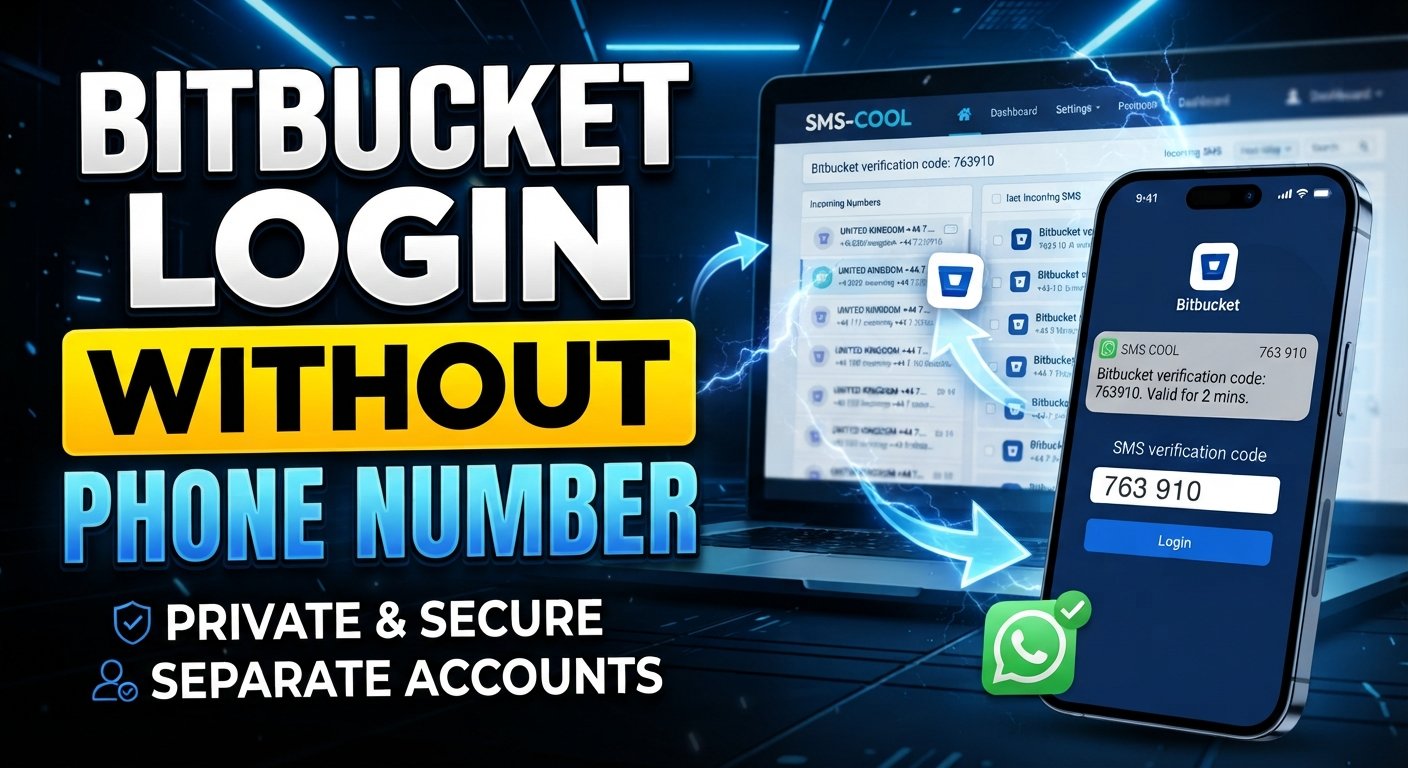
How to Get Bitbucket Login Without Phone Number
Need Bitbucket login without phone number? You may be trying to create an account, complete a verification step, or access Bitbucket without giving your personal mobile number to another online service.
There are several legitimate reasons for wanting an alternative. You might prefer to keep your personal number private, separate work and personal accounts, or simply need another number capable of receiving a verification SMS.
One possible option is SMS COOL, an online SMS verification service that can provide access to numbers for receiving verification messages where supported. However, compatibility depends on the platform, number availability, and the verification requirements presented by Bitbucket.
The important distinction is that an online number is not a way to defeat Bitbucket's security controls. It is simply an alternative way to receive an SMS when Bitbucket legitimately requests one and accepts the selected number.
Can You Use Bitbucket Without a Phone Number?
The answer depends on what you are trying to do.
A Bitbucket login using an existing username, email address, password, or other supported authentication method is different from creating a new account or completing an SMS verification request.
Consider these situations:
- Existing account login: You may be able to sign in using the authentication methods already associated with your account.
- New account creation: Bitbucket may request additional information or verification depending on the registration process.
- SMS verification: If a phone number is requested, you need a number that can receive the required verification message.
- Account recovery: Recovery can involve additional checks, particularly when normal login credentials are unavailable.
This means there is no universal promise that every user can complete every Bitbucket process without a personal phone number. Verification requirements can vary, and Bitbucket ultimately determines which checks apply to an account.
If a phone number is specifically required, an online SMS option may be worth considering where compatible with the service's requirements.
Why Do People Look for Bitbucket Login Without Phone Number?
Searching for Bitbucket without phone number is not necessarily about avoiding security. In many cases, users simply want more control over how their contact information is shared.
Common reasons include:
Privacy
Some users do not want their personal mobile number associated with every online account they use. Keeping personal contact details separate can reduce unnecessary exposure.
Work and personal separation
Developers may maintain separate accounts for professional projects, testing, or team activities. Using a dedicated verification number can help keep work-related services separate from personal communications.
International access
A user's regular mobile number may have limitations when receiving certain international messages or verification texts. An alternative number can sometimes provide another option.
Temporary verification needs
Not every account requires a phone number for long-term communication. Sometimes a user simply needs to receive a verification code during an account setup or verification step.
Problems receiving SMS
A regular mobile network may be unavailable, delayed, or unable to receive a particular verification message. In those situations, an alternative SMS reception method may be useful if the platform accepts it.
How SMS Verification Works
SMS verification is a straightforward process.
When a website requires phone verification, it sends a one-time code to a specified phone number. The user then enters that code into the website's verification field.
With an online SMS verification service, the basic workflow is similar:
- Select an available number that supports the required service.
- Enter the number where the website legitimately asks for a phone number.
- Wait for the verification message.
- View the incoming SMS through the service.
- Enter the verification code into the appropriate verification field.
The exact process can differ between services and websites.
An important point is that online SMS verification does not guarantee acceptance by every platform. Some websites may reject particular numbers, carriers, temporary numbers, or numbers that have already been used for other accounts.
How to Use SMS COOL for Bitbucket Verification
If Bitbucket presents an SMS verification step and you do not want to use your personal number, SMS COOL may be an option where the required number and verification process are supported.
The general process is simple:
1. Visit SMS COOL
Open SMS COOL and review the available SMS verification options.
Before choosing a number, check that the required service is supported and that the number is currently available.
2. Choose an available number or service
Select a number intended for the verification service you need.
Availability can change, so not every number will necessarily work with every platform.
3. Enter the number in Bitbucket
When Bitbucket legitimately asks for a phone number, enter the selected number according to the instructions provided by the verification process.
Do not enter a number where Bitbucket has not requested one.
4. Wait for the verification SMS
After submitting the number, wait for Bitbucket to send the verification message.
Depending on the service and network, messages may not arrive immediately.
5. View the code through SMS COOL
If the SMS is successfully received, the verification message should appear through the relevant SMS COOL interface.
Look for the one-time verification code associated with the request.
6. Enter the code into Bitbucket
Return to the Bitbucket verification screen and enter the received code exactly as requested.
Verification codes can expire, so use the current code rather than an older message.
7. Complete the normal verification process
Once the code is accepted, continue with the standard Bitbucket account or verification workflow.
If Bitbucket asks for additional information or another verification method, follow those instructions rather than attempting to work around them.
Benefits of Using SMS COOL
For users who need an alternative to their personal mobile number, an SMS verification service can offer several practical advantages.
Keep your personal number private
The most obvious benefit is separating your personal phone number from an online account when an alternative number is acceptable.
Receive SMS online
Instead of relying entirely on your personal handset, an online service can provide a way to view supported verification messages through the service.
Useful for temporary verification needs
A temporary phone number for verification may be useful when you only need to receive a one-time confirmation message and do not need ongoing communication through that number.
Simple verification workflow
The basic process is easy to understand: select a supported number, enter it into the relevant verification field, receive the SMS, and enter the code.
Separate personal and professional activity
Developers, freelancers, and teams may prefer to keep personal contact details separate from accounts used for projects or professional services.
The key consideration is compatibility. A service can be useful only when the number is accepted by the platform and the required SMS can actually be delivered.
Things to Know Before Using an Online SMS Number
Online numbers can be convenient, but they are not suitable for every situation.
First, not every online number works with every platform. Some verification systems may identify or reject certain types of numbers.
Second, numbers can have different usage conditions. Depending on the service, a number may be temporary, shared, or intended specifically for receiving verification messages.
You should also consider the importance of the account.
For an account containing important repositories, business information, credentials, or other sensitive resources, relying on a temporary or shared number may not be appropriate for long-term account recovery or security.
Other points to remember include:
- A verification code should never be shared with another person.
- Do not use an online number if Bitbucket's current requirements prohibit it.
- Check whether the number is intended for the specific verification service.
- If a verification message does not arrive, avoid repeatedly requesting codes without checking the problem.
- For important accounts, maintain appropriate recovery and authentication methods.
- Follow Bitbucket's applicable terms and account-security requirements.
An online number should be treated as a verification option, not as a method for bypassing account-security measures.
Bitbucket Login Without Phone Number: Common Problems
Even when an SMS verification service is compatible, problems can occur.
Verification SMS is not arriving
First, check that the selected number supports the required service. Then confirm that the number was entered correctly and that the verification request was actually submitted.
If the SMS still does not appear, the number may not be compatible with the verification system.
The number is unavailable
Online numbers can have limited availability. If the number you wanted is no longer available, you may need to select another supported option.
The code has expired
Verification codes are often time-sensitive. If an old code no longer works, request a new one through the normal Bitbucket verification process.
Bitbucket rejects the number
A rejected number does not necessarily mean that anything is wrong with your account. The platform may simply not accept that particular number or number type.
Check Bitbucket's instructions and, where permitted, use another legitimate verification method.
Verification is requested again
A platform may request verification again under certain circumstances. If that happens, complete the requested process rather than assuming the previous verification will always remain sufficient.
Account recovery requires more information
If you cannot access your account and Bitbucket requests additional recovery information, an SMS number alone may not resolve the problem.
Use the official account-recovery process and provide the information requested by the service.
8. Frequently Asked Questions
Can I use Bitbucket without a phone number?
Sometimes. Existing account login and account creation are separate processes, and phone verification may or may not be required depending on the current Bitbucket workflow and the circumstances of the account.
Can I receive a Bitbucket verification code online?
If Bitbucket sends the verification code by SMS and accepts the selected online number, you may be able to receive the code through an online SMS service. Compatibility is not guaranteed.
How does SMS COOL work for verification?
SMS COOL can provide access to available numbers for receiving supported SMS verification messages. You select an appropriate number, use it where the website requests a phone number, and check the service for the incoming code.
Is an online SMS number guaranteed to work with Bitbucket?
No. An online SMS number is not guaranteed to work with every platform. Bitbucket may reject certain numbers or require additional verification.
Why am I not receiving the Bitbucket verification SMS?
Possible causes include an unsupported number, temporary delivery delays, an incorrectly entered number, an expired request, or restrictions on the number type. Check the number and verification instructions before trying again.
Can I use a virtual number for Bitbucket verification?
A virtual phone number may work if Bitbucket accepts that number type and the number can receive the required SMS. Acceptance depends on the verification system.
What should I do if Bitbucket requires additional verification?
Follow Bitbucket's normal verification or account-recovery process. If an SMS code is only one part of the security process, receiving an SMS alone may not complete the account verification.
9. Final Conclusion
Getting Bitbucket login without phone number can be possible in some situations, but it depends on the specific Bitbucket workflow and whether phone verification is required.
For users who prefer not to provide their personal number, an online SMS verification service such as SMS COOL can be a practical option when a compatible number is available and Bitbucket accepts it.
The process is straightforward: choose a supported number, enter it when Bitbucket requests phone verification, receive the SMS, and submit the verification code through the normal process.
Just remember that online numbers are not guaranteed to work with every platform, and they should not be used to circumvent security requirements. If you need an alternative way to receive verification code online, exploring SMS COOL can be a reasonable starting point while following Bitbucket's current verification requirements.