11 Aug 2026
Are Virtual Numbers Safe for Verification? What You Need to Know
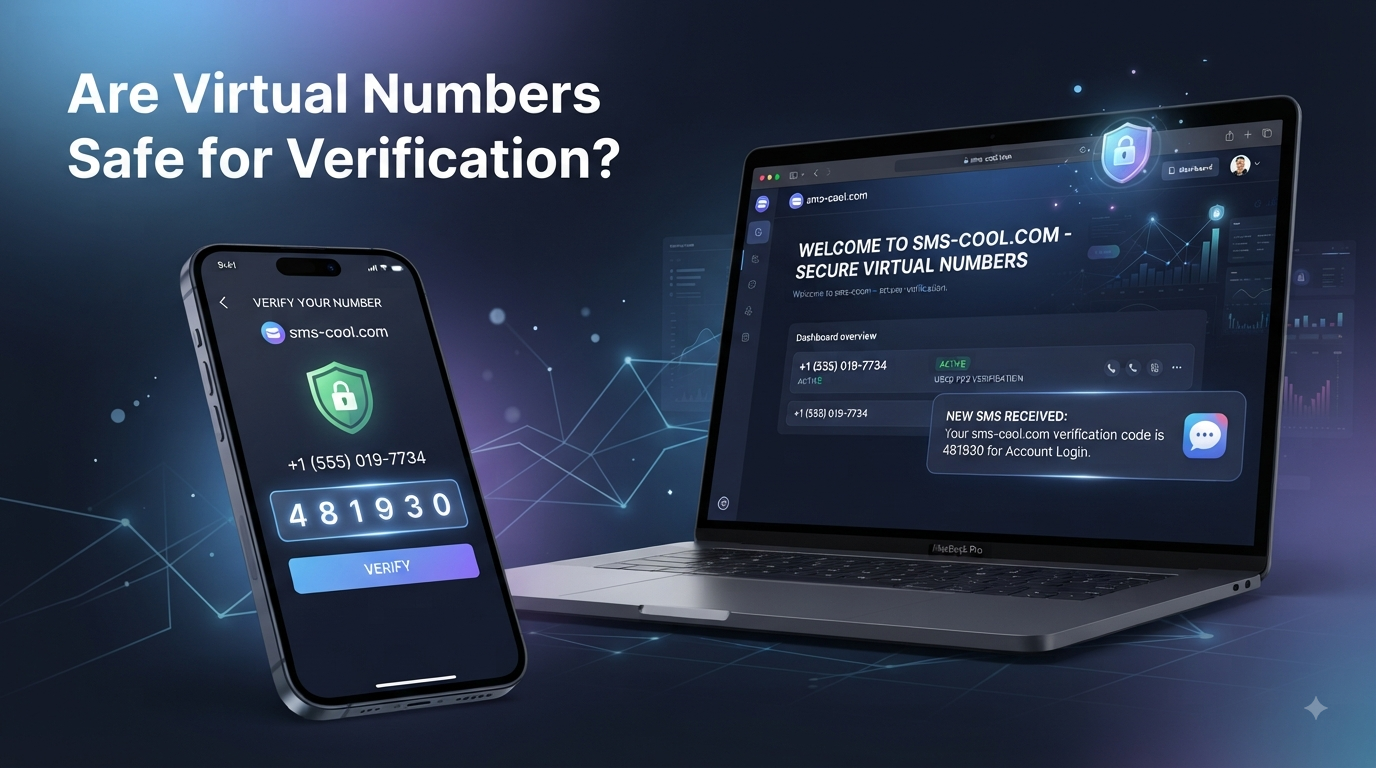
Are Virtual Numbers Safe for Verification?
When a website or app asks for your phone number, you may hesitate before entering your personal number. That is where virtual numbers can be useful. They allow you to receive SMS messages without necessarily exposing the phone number you use every day.
Are virtual numbers safe for verification? In many situations, yes—but their safety depends on the provider, how the number is managed, whether it is reused, and what type of account you are verifying. A reputable virtual number service can be a practical alternative to sharing your personal phone number, but temporary or shared numbers are not appropriate for every situation.
For everyday registrations, low-risk services, testing, and situations where you simply want to reduce unnecessary exposure of your personal number, a service such as SMS COOL can make online phone verification more convenient.
What Are Virtual Numbers?
A virtual number is a telephone number that operates through an online service rather than requiring you to keep a traditional physical SIM card in your phone.
Depending on the provider, a virtual phone number may be used to receive SMS messages, calls, or both. Some numbers are designed for longer-term use, while others are offered as a temporary phone number for a specific verification task.
This makes virtual numbers useful when you want an alternative to your personal phone number.
For example, imagine that you want to register for a website that requires phone number verification, but you do not want to give the website your primary mobile number. If the website permits virtual or VoIP numbers, you could use a suitable virtual number instead.
The important point is that a virtual number is not automatically private, secure, or suitable for every website. Those qualities depend on how the number is provided and managed.
How Does SMS Verification Work?
SMS verification is a common method of confirming that a person can access a particular phone number.
The basic process is straightforward:
- You enter a phone number during registration or login.
- The service sends a verification code by SMS.
- You receive the message on the associated phone or virtual number.
- You enter the code into the website or app.
- The service confirms the number.
This process is often called OTP verification, where OTP means one-time password.
With online SMS verification, the SMS may appear inside a provider's website or dashboard instead of your regular messaging application. That can be convenient if you need to receive verification codes online without using your primary mobile number.
A service such as SMS COOL is designed around this basic use case: obtain a suitable virtual number and use it to receive an incoming verification message when the target service permits that type of number.
Are Virtual Numbers Safe for Verification?
Virtual numbers can be safe for verification, but there is no universal guarantee.
The biggest factor is the quality and practices of the virtual number service you choose. A reputable provider should clearly explain how its numbers are supplied, how messages are handled, and what happens to numbers after use.
Safety also depends on the account you're verifying.
Using a temporary number for a low-risk newsletter or trial account is very different from using one for an account containing sensitive financial, business, or personal information.
Before choosing a virtual number, consider:
- Provider reputation: Is the service established and transparent?
- Number ownership: Is the number dedicated to you or shared?
- Number reuse: Could another customer receive the same number later?
- Privacy practices: How does the provider handle incoming messages?
- Account sensitivity: What happens if you lose access to the number?
- Platform rules: Does the website allow virtual numbers for verification?
These factors matter more than simply asking whether a number is “virtual.”
When Is It Safe to Use a Virtual Number?
A virtual number can make sense when privacy and convenience are more important than maintaining a permanent recovery channel.
Common examples include:
Online registrations
If a service legitimately allows a virtual phone number, you may prefer one rather than exposing your everyday number.
Testing and development
Developers and businesses sometimes need numbers for testing SMS workflows or phone verification features. A dedicated testing number can keep these activities separate from personal communications.
Temporary services
A temporary number for SMS can be useful when you need to receive one verification message and do not expect to need the number afterward.
Separating personal and online activity
A virtual phone number can provide an additional layer of separation between your primary contact information and websites you do not regularly use.
However, always follow the rules of the platform you're registering with. A virtual number should not be used to bypass identity checks, fraud controls, account restrictions, or other security requirements.
What Are the Risks of Using Virtual Numbers?
Understanding the risks is essential if you are considering a disposable phone number or another type of virtual number.
Number reuse
Some temporary numbers may eventually be assigned to someone else. If an account depends on that number for future recovery, losing access can become a serious problem.
Shared numbers
Public or heavily shared numbers can present privacy concerns because messages may potentially be accessible to multiple users.
For this reason, a private or appropriately managed number is generally preferable to a publicly displayed SMS number.
Service compatibility
Not every website accepts every type of virtual number. Some platforms distinguish between mobile, landline, VoIP, and other number types.
You may therefore find that a particular SMS verification number works for one service but is rejected by another.
Verification codes are sensitive
An OTP or verification code should be treated as confidential. Anyone who gains access to the message may potentially use the code to complete an authentication step.
Never share a verification code with another person simply because they claim to be customer support.
Account recovery problems
A temporary number can be convenient for initial verification but unsuitable for long-term account recovery. If an account is important, use a recovery method that you can reliably control for as long as you need the account.
Temporary Numbers vs. Permanent Virtual Numbers
Not all virtual numbers serve the same purpose.
A temporary phone number is generally intended for short-term use. You might obtain one, receive an SMS verification code, complete an allowed registration, and then stop using the number.
A more permanent virtual number is intended for ongoing access. It may be better suited to business communications, recurring authentication, or accounts where you need continued control of the number.
The right choice depends on your goal.
Choose a temporary number when:
- You only need a one-time verification.
- The account is low-risk.
- You do not need the number for recovery later.
- The platform permits temporary or virtual numbers.
Consider a longer-term number when:
- You expect repeated verification messages.
- You need reliable account recovery.
- You want consistent access to the same number.
- The account has long-term value.
If an account is important, convenience should not come at the expense of recoverability.
How to Choose a Reliable SMS Verification Service
The provider behind a virtual number matters enormously.
Before using an SMS verification service, look for practical signs of reliability rather than choosing solely because a service is cheap.
A good provider should offer:
- Clear information about available numbers
- A straightforward process for receiving SMS
- Transparent pricing
- Reasonable privacy practices
- Clear information about number duration or reuse
- Responsive customer support
- A user-friendly dashboard
- Appropriate options for your intended verification use
You should also be cautious about services making unrealistic claims such as guaranteed acceptance everywhere, complete anonymity, or permanent access to every number.
No legitimate provider can control every website's verification policy.
Why Use SMS COOL for SMS Verification?
If your goal is simply to receive SMS online without immediately exposing your personal number, SMS COOL can be a practical option to explore.
The appeal is straightforward: instead of relying on your primary phone number for every online registration, you can use an available virtual number when the website or application permits it.
Convenience
SMS COOL can simplify the process of obtaining a number and checking for an incoming SMS code online. This is useful when you want to complete phone verification without managing another physical SIM.
Greater separation
Using a virtual number can help reduce unnecessary exposure of your personal phone number. That can be particularly useful for websites or services you do not expect to use as a primary communication channel.
Flexible verification
For suitable accounts, SMS COOL can be useful when you need a virtual number for verification, an SMS verification number, or a temporary number for a specific registration.
Less dependence on a personal number
If you frequently encounter websites that request phone number verification, having access to virtual numbers gives you another option besides providing your everyday number.
That said, SMS COOL should be viewed as a practical verification tool—not as a guarantee that every platform will accept every number or that every account will remain accessible indefinitely.
How to Receive SMS Verification Codes Online with SMS COOL
The general process for using a virtual number service is simple.
Step 1: Identify the verification requirement
First, determine what website or application you need to verify and whether its policies permit virtual numbers.
Step 2: Select an appropriate number
Choose an available virtual phone number that matches your legitimate verification needs.
Step 3: Enter the number
Use the number in the phone verification field on the website or application.
Step 4: Request the verification code
The platform sends its SMS verification message to the number.
Step 5: Receive the SMS online
Check your SMS COOL interface for the incoming message and locate the verification code.
Step 6: Complete verification
Enter the code into the original website or application.
If the message does not arrive, avoid repeatedly requesting codes in rapid succession. Delivery can depend on the target platform, carrier, number type, and other technical factors.
Best Practices for Using Virtual Numbers Safely
A few simple habits can significantly reduce potential problems.
1. Use reputable providers.
Do not choose a service solely because it offers the lowest price.
2. Avoid shared numbers for sensitive accounts.
If other users can access incoming messages, the privacy risk is obvious.
3. Never share OTP codes.
Treat verification codes like passwords.
4. Check platform policies.
Some websites restrict or reject certain virtual numbers.
5. Do not use temporary numbers for accounts you cannot afford to lose.
If you need long-term recovery, maintain control of the number or use another supported recovery method.
6. Protect your provider account.
Use a strong password and any available security features.
7. Understand number reuse.
Know whether a number is temporary, rented, dedicated, or potentially reassigned.
8. Use virtual numbers responsibly.
They are useful privacy and convenience tools, but they should not be used to defeat fraud prevention, identity verification, or account restrictions.
Final Verdict: Are Virtual Numbers Safe for Verification?
So, are virtual numbers safe?
They can be, provided you choose a trustworthy provider and use the number for an appropriate purpose. A virtual number can reduce unnecessary exposure of your personal phone number, make phone verification online more convenient, and help you receive SMS verification codes without relying on your primary SIM.
The biggest risks come from poorly managed providers, shared or reused numbers, weak privacy practices, and using temporary numbers for accounts that require permanent recovery access.
For users looking for a convenient way to receive SMS online, SMS COOL can be a practical solution to consider. Just remember that safety is not determined by the word “virtual” alone. Provider quality, number ownership, privacy practices, account sensitivity, and the policies of the service being verified all matter.
Used thoughtfully, virtual numbers for verification can be a useful alternative to giving your personal phone number to every website that requests one.
8. FAQ Section
Are virtual numbers safe for SMS verification?
Virtual numbers can be safe for SMS verification when provided by a reputable service and used for appropriate accounts. However, shared, reused, or poorly managed numbers can create privacy and account-recovery risks.
Can I receive verification codes with a virtual number?
Yes, many virtual numbers are designed to receive SMS messages, including verification codes and OTPs. Whether a particular number works depends on the target website, its verification policies, and the type of number being used.
What is a virtual number for verification?
A virtual number for verification is a phone number provided through an online service that can receive SMS messages without requiring you to use your primary personal mobile number.
Can I use a temporary phone number for OTP verification?
You can use a temporary phone number for OTP verification when the target service permits it and when you do not need the number for future account recovery. Temporary numbers are generally better suited to low-risk, short-term uses.
Is it safer to use a virtual number instead of my personal number?
A virtual number can reduce unnecessary exposure of your personal number, but it is not automatically safer in every situation. The provider's privacy practices, number ownership, reuse policy, and the sensitivity of the account all need to be considered.
How does SMS COOL work?
SMS COOL provides access to virtual numbers that can be used for appropriate SMS verification needs. You select a suitable number, enter it on the service you are verifying, and check for the incoming verification message through the available SMS interface.
Can I receive SMS online with SMS COOL?
Yes, SMS COOL is intended to make receiving SMS online more convenient when using a suitable virtual number. Availability and compatibility can vary by service, country, number type, and the verification policies of the website or application.